The Endgame for New Car-Making Forces Is Set: Only a Three-Year Window Remains, Who Will Be Completely Eliminated?
 08/27 2026
 559
559
Introduction
Introduction
NIO, Li Auto, XPeng, and Leapmotor each have their own way of surviving.
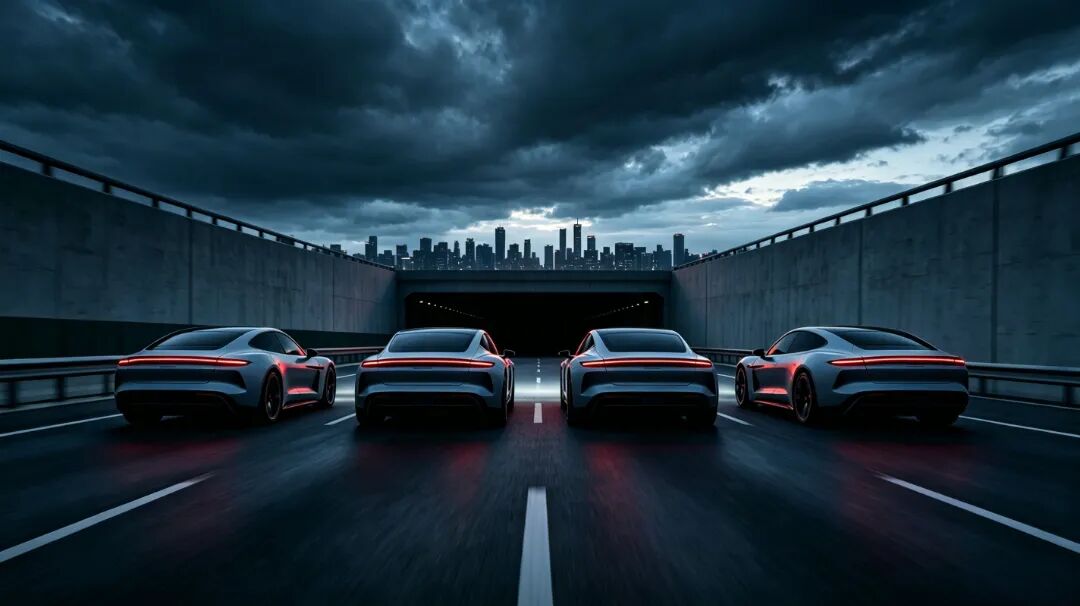
"We are about to enter the most brutal stage of the finals. In the next three to five years, the final players in the entire automotive industry will be determined,"
A few days ago, at the 2026 China Chief Economists Fudan School of Management Science and Technology Innovation Forum, Li Bin once again predicted the final battle in the Chinese automotive industry and set the "final period" for the automotive industry between 3 to 5 years.
In fact, since the beginning of this year, we have indeed witnessed various "bleak" scenes in the automotive industry: intense competition, price wars... Especially under the influence of the broader environment, the automotive market demand has shrunk, putting pressure on the entire automotive industry chain.
According to data from the China Passenger Car Association, from January to June, the domestic automotive market saw cumulative retail sales of 8.701 million vehicles, a year-on-year decline of 20.2%; wholesale sales reached 12.547 million vehicles, a year-on-year decline of 5.7%. However, export volumes surged significantly, reaching 4.252 million vehicles, a year-on-year increase of 71%.
It is evident that the composition of the Chinese automotive market is changing. Although the market pie has not disappeared, it has shifted from "incremental competition" to "elimination competition."
In the past, Chinese automakers competed for the domestic market, but now they need a more far-reaching strategy. Whether in terms of technology or development strategy, automakers must extend their reach further, turning to the red ocean of existing users and the global market.
Faced with this situation, NIO, Li Auto, XPeng, and Leapmotor, the four established new car-making forces, stand at the same crossroads.
In the early era of new energy vehicles, success was often measured by sales volume. Even now, a threshold is set for new car-making forces—monthly sales of 30,000 units.
However, compared to sales volume, the application of technological capabilities by automakers remains the key to stable and long-term development.
With the advent of the new energy vehicle era, high configuration and intelligence are no longer the privileges of a few brands. Especially on the issue of "technological equalization," Leapmotor and XPeng, two new car-making forces, can undoubtedly be considered pioneers.
01 Technological Equalization: Leapmotor Goes Left, XPeng Goes Right
Leapmotor uses full-domain self-research to achieve inclusivity through economies of scale. Adhering to the philosophy of "good but not expensive" car manufacturing, Leapmotor has surpassed its peers among new car-making forces. In July just passed, Leapmotor delivered 101,267 new vehicles in a single month, becoming the first new car-making brand in China to exceed 100,000 monthly sales.
This success is, of course, inseparable from the "methodology" of full-domain self-research, but Leapmotor does not do everything itself. Its technological capabilities prioritize cost reduction, such as independently developing core components that directly affect costs and the overall vehicle experience, including the vehicle's electrical and electronic architecture, battery BMS, and electric drive systems, while outsourcing mature supply chain links like interior and exterior trim to external suppliers.
This model further supports Leapmotor's "technological equalization."
Leapmotor does not confine functional configurations such as LiDAR, advanced intelligent driving, central domain control, and 800V fast charging to high-end models. Instead, it brings experiences that were previously only available in models priced above 250,000 yuan down to the mainstream price range of 100,000 to 150,000 yuan, and even models under 100,000 yuan can be equipped with full-featured advanced intelligent driving.
Eleven years on the path of cost-effectiveness has allowed Leapmotor's reputation to continue to grow, bringing opportunities for brand elevation. The fact that Leapmotor D19's monthly sales exceeded 10,000 units is a clear signal that under technological equalization, Leapmotor is not only growing in scale and expanding its boundaries but also embarking on a journey of brand elevation driven by this strong momentum.
However, where there is praise, there is also skepticism. Especially in terms of profitability and brand enhancement, there is no shortage of noise surrounding Leapmotor. It cannot be denied that whether Leapmotor's brand strength can gain recognition from more high-end users remains uncertain. However, Leapmotor's financial reports can already prove many things.
The financial report for the first half of 2026 shows that Leapmotor achieved operating revenue of 38.11 billion yuan and a net profit of 210 million yuan, marking three consecutive half-year periods of profitability. The gross profit margin in the second quarter increased sequentially to 12.6%. Even though 1.09 billion yuan of this revenue mainly came from carbon credit trading and related subsidies, the fact that Leapmotor can make these calculations is itself a sign of "strength."
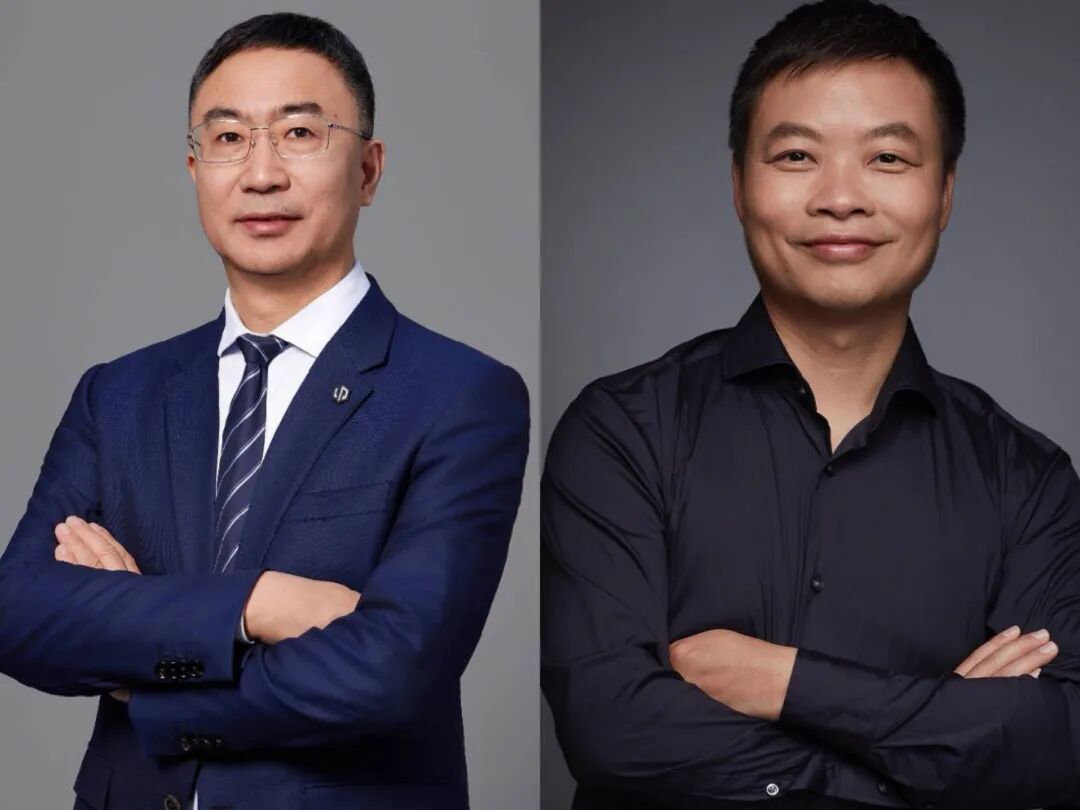
In contrast, XPeng is also deeply engaged in technological development but has taken a different path from Leapmotor.
In the past, XPeng's most prominent labels were "technology" and "intelligent driving," even claiming to be the new car-making force most similar to Tesla. Even now, XPeng persists in full-stack self-research of algorithms and large models, continuously pursuing generational differences in intelligent driving experiences, attempting to gain more brand premium through technological barriers.
However, the reality is somewhat contradictory. The MONA series, boosted by various intelligent driving technologies, has sold more popular (which means "popular" or "hot-selling") than XPeng's main brand models. XPeng is increasingly becoming unlike itself.
According to statistics, in the first half of this year, XPeng Group delivered a total of 165,977 new vehicles. Among them, the XPeng MONA M03 delivered 62,300 units in the first half of the year, accounting for 37.5% of the group's total deliveries. Multiple main brand models such as the XPeng P7+, G6, X9, and GX delivered approximately 103,700 units combined.
It is foreseeable that as the production capacity of the XPeng MONA L03 ramps up, the MONA series will further increase its sales proportion. The reason for MONA's strong sales lies in its low pricing; on the other hand, the decentralization of advanced intelligent driving has also attracted more young consumers.
As for brand image, perhaps there is no need to be overly concerned about whether MONA or XPeng's main brand models sell better. Both are XPeng, two sides of the same coin. What matters now is to let MONA drive up the brand's total sales to further dilute high research and development costs.
Additionally, concerns about XPeng "straying from its core business" by investing in humanoid robots have now seen a turning point. It is reported that XPeng's robotics business has secured "hot money" with over $900 million in financing and a post-investment valuation exceeding $6.3 billion, setting a new record for single-round private equity financing in China's embodied artificial intelligence industry.
Although XPeng's Q2 financial report still shows losses, the Coming one after another (which means "one after another") good news can indeed alleviate many concerns.
In summary, Leapmotor is committed to "scale efficiency," while XPeng bets on "technological premium." These two directions of technological self-research and technological equalization do not have a clear right or wrong.
However, it must be clear that under technological equalization, self-research does not equal victory. Whether self-research can be converted into sales volume, gross profit, and cash flow is the first threshold for survival.
02 NIO and Li Auto Are Devoted Followers of Pure Electric Vehicles
This year, there has been a significant shift in the Chinese automotive market: the pure electric vehicle market stands out with continuously rising sales, while the markets for hybrid, extended-range, and fuel-powered vehicles are all declining. Clearly, "pure electric is a must" has become a reality.
As one of the only two pure electric automakers globally, perhaps no one is more qualified to speak about the pure electric track than NIO. When it comes to pure electric vehicles, NIO's logic is straightforward: since it believes pure electric is the future, it will build the necessary infrastructure in advance.
From its first model, NIO has firmly bet on pure electric vehicles and established a unique energy replenishment system different from traditional automakers around the battery-swapping model.
In summary, the value of battery swapping is not just about "recharging in minutes" but also about solving the core energy replenishment problem in the pure electric era through battery swap stations, battery assets, standardized battery packs, and an operational system.
This is one of NIO's most difficult-to-replicate barriers and also its largest investment in recent years. Now, this heavy-asset, high-investment approach has found support.
In August, NIO Power and Wuhan Optics Valley Transportation Group completed the delivery of the first batch of 36 charging and battery swap stations. All existing battery swap station assets in Wuhan were transferred to local state-owned holding, with NIO retaining operational rights, implementing a new model of "state-owned holding, NIO operation."
It is believed that in the near future, this new battery-swapping model of "state-owned holding, NIO operation" will be fully rolled out. By then, the unique energy replenishment moat built by battery swapping will bring NIO an even more stable high-end brand strength.
Of course, it would be even better if the sales of Leapmotor and Firefly could increase further, driving profitability improvements with higher sales volume.
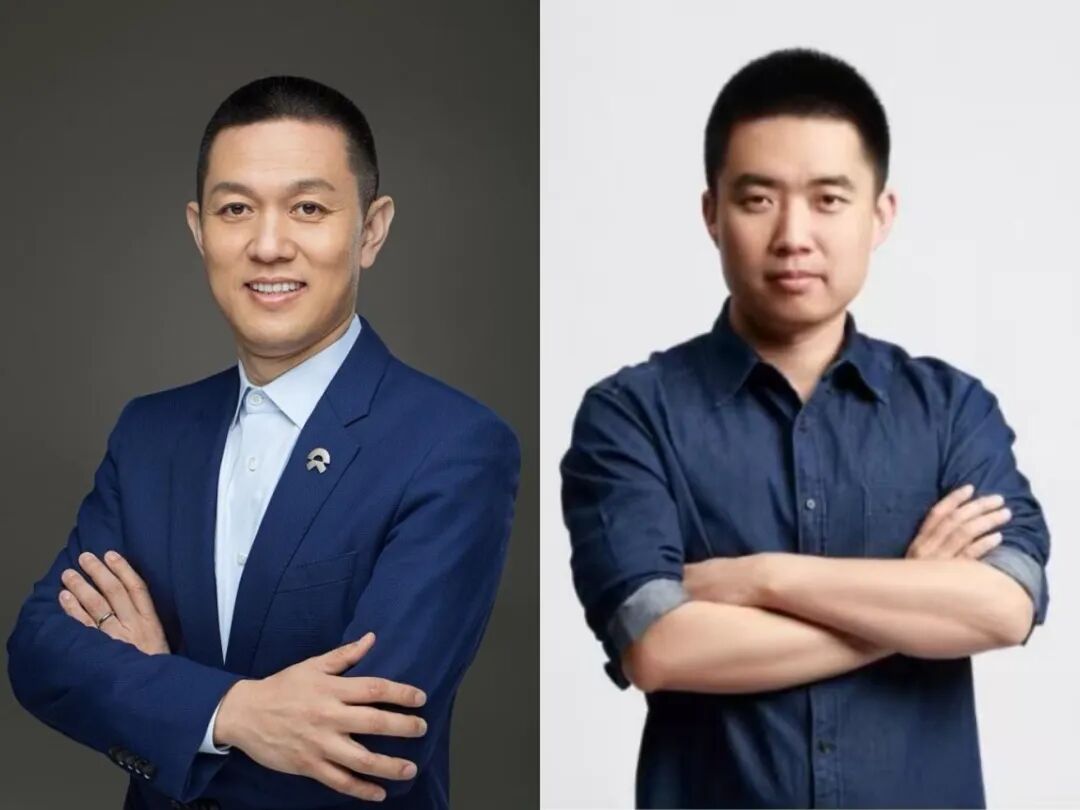
Interestingly, despite the frequent "arguments" between Li Auto and NIO, they appear to be surprisingly consistent in their emphasis on pure electric vehicles.
Over the past few years, extended-range technology has helped Li Auto precisely capture the needs of mid-to-high-end family users, allowing Li Auto to reap substantial profits. More importantly, Li Auto has not relied solely on its powertrain but has established a strong user mindset through spacious interiors, intelligence, and family-oriented scenarios.
This is Li Auto's greatest advantage as it shifts to pure electric vehicles but also its biggest challenge. Because no one can say for sure whether users recognize "Li Auto" or "Li Auto's extended-range technology."
If users choose Li Auto because they recognize it as a family-oriented brand, then this mindset can definitely be further transferred to the pure electric vehicle market. However, if users' core reason for choosing Li Auto is the "absence of range anxiety," then Li Auto must re-prove itself in the pure electric market.
Clearly, Li Auto's transition to pure electric vehicles is not simply about adding a few pure electric models but about re-accepting the challenges of three-electric technologies, energy replenishment efficiency, product pricing, and cost control.
Not long ago, Li Xiang announced the launch of the new-generation Li Auto MEGA on September 2, claiming, "We firmly choose originality. The unique design of MEGA is our answer."
As Li Auto's first pure electric model, MEGA has been both praised and criticized, even recalled... It has experienced both highs and lows, witnessing all kinds of events. This also precisely reflects Li Auto's pure electric journey—past brand strength and user mindset do not equal a free pass in the pure electric market. Product, energy replenishment, cost control, and quality assurance are all indispensable.
03 Only a Three-Year Window Remains: Who Will Be Left Behind?
Returning to Li Bin's statement at the beginning of this article about the "3 to 5-year final period," in the past, automakers could buy time with a hit model, a leading technology, or even a round of financing. However, after entering the elimination phase, single-point advantages are no longer sufficient to support a company's long-term survival.
It is no exaggeration to say that even NIO, XPeng, Li Auto, and Leapmotor, the four seemingly stable new car-making forces, face the risk of being left behind.
Stable sales volume, healthy cash flow, and continuously improving profitability have become the foundations for automakers' survival. If you are still hovering around 30,000 monthly sales, you are in danger. If you still cannot turn a profit and your losses continue to grow, you are equally in danger.
There is no need to talk empty talk about "research and development investment."
Technology itself does not represent advancement; only when it is truly converted into products can it demonstrate value. Products do not represent victory; only when they are converted into tangible sales volume can they gain market recognition. Sales volume is not the final answer; only achieving sustainable profits is success.
This is why NIO, Li Auto, XPeng, and Leapmotor still need to continue proving themselves.
Leapmotor needs to prove that scale efficiency can be continuously converted into brand elevation capabilities.
XPeng needs to prove that technological advantages can truly form brand premium and commercial returns.
NIO needs to prove that the heavy-asset barriers built by battery swapping and a high-end brand are truly impregnable.
Li Auto needs to prove that the user mindset accumulated in the extended-range era can smoothly transition to the pure electric era.
As for second growth curves such as humanoid robots and Robotaxi, they are certainly worth anticipating. However, they ultimately cannot replace the fundamentals of the automotive industry.
Although NIO, XPeng, Li Auto, and Leapmotor have all confirmed their entry into the humanoid robot race, the real final battle is not about who tells the biggest story to win but about whose business model first gains market certification and becomes viable, allowing them to survive longer and better.
"Technology-Product-Sales Volume-Profit-Cash Flow" forms a complete closed loop (which means "closed loop"). The next three-year window is the final time for all automakers to prove themselves and achieve this closed loop.
This is the true final battle for the new car-making forces.
Editor-in-Chief: Shi Jie Editor: He Zengrong

THE END
-
![]()
Too Pessimistic! MiniMax Isn't Doing That Badly
-
![]()
The 150,000-Yuan SUV Market: A Tempting yet Elusive Prize
-
![]()
The Endgame for New Car-Making Forces Is Set: Only a Three-Year Window Remains, Who Will Be Completely Eliminated?
-
![]()
Who Crossed the 'Kill Line' After DeepSeek's Price Adjustment?
-
![]()
Profits Plunge by 61% in the First Half of the Year! The Rise and Challenges of Great Wall Motors
-
![]()
BYD Han Unveiled for Pre-sale with Striking Design, Sparking Netizen Debate: Is It Merely an Enhanced Version of a Ride-Hailing Vehicle?
-
![]()
BAIC Taitan 700 vs. Xiangjie G9: A Clash of Kin, How Will Yu Chengdong Navigate This Challenge?", "Taitan 700, Xiangjie G9, BAIC, Huawei Intelligent Driving, Pricing Showdown", "BAIC has unveiled its
-
![]()
Volkswagen's Layoffs and Factory Closures: What Should Car Owners Make of It?