From 2014 to 2026: The Gradual Decline of Meizu
 02/27 2026
 615
615
According to Jiemian News, the Meizu mobile phone business has effectively come to a halt and is set to be officially delisted in March this year. Furthermore, Meizu's Flyme Auto in-car system will operate independently, while the Meizu brand may persist within Geely's ecosystem. This development implies that the Meizu 23, initially slated for release this year, may never see the light of day, with the Meizu 22, launched in September last year, marking Meizu's final act in the mobile phone industry.
The news immediately ignited heated public debate, with some mourning the end of an era, others expressing regret, and some recalling classic slogans like "No Meizu Fans, No Meizu" and "Pursuit Stems from Passion." It is reported that Meizu officially resumed operations on the tenth day of the lunar new year. While outsiders anticipated an official statement from Meizu in response to the rumors, the company remained conspicuously silent, leaving people to wonder whether it was silently acknowledging the rumors or simply delaying its response.
Frankly speaking, even if Meizu were to release the Meizu 23 as planned this year, given the sales and influence of the Meizu 22, it is destined to have a minimal impact on the mobile phone market and will not alter its market standing. In fact, Meizu's decline is not entirely unexpected. The reason is straightforward: it missed too many opportunities and made too many mistakes, ultimately slipping step by step into the abyss of business cessation.
In my opinion, Meizu's decline did not occur overnight. From 2014 to 2026, its decline can be broadly categorized into three main phases:
The first phase spans from 2014 to 2019. After the 2014 Spring Festival, Meizu founder Huang Zhang made a high-profile return, and Meizu embarked on a transformative journey. It not only expanded its product lineup—for instance, launching the sub-brand Meilan in December 2014, positioned as "Youth's Finest Choice" and following a high-cost-performance route—but also began leveraging external capital for rapid expansion, with a significant milestone being the USD 590 million strategic investment from Alibaba in February 2015.
Under Huang Zhang's product leadership and Alibaba's financial support, Meizu's shipments witnessed a qualitative leap. From August 2014 to August 2015, its annual sales surpassed 20 million units, a 350% year-on-year increase, propelling it into the top 10 of domestic mobile phone brands. Among them, Meilan accounted for as much as 70% of sales. After tasting success, Meizu continued to pursue a "machine gun strategy," releasing multiple models in a year, but shipments did not see a significant uptick.
In 2016, Meizu's shipments reached 22 million units, marking its final moment of glory. From 2017 onwards, it began a steady decline, dropping to around 20 million units in 2017 and further falling below 10 million units in 2018. From my observation, Meizu's sales fluctuations were not only influenced by the fiercely competitive mobile phone market but also closely tied to its own strategic vacillation.
Have you noticed? In recent years, Meilan has played a pivotal role in Meizu's sales ups and downs, reflecting Huang Zhang's repeated vacillation between scaling up and adhering to a niche, boutique approach, which blurred the brand's positioning. To be precise, Huang Zhang is a staunch advocate of the niche, boutique route, while Li Nan, Meizu's former senior vice president and the mastermind behind Meilan, believes in economies of scale.
Their fundamental disagreement not only left Meizu adrift, struggling with fluctuating sales amid intense competition, but also became the direct catalyst for Li Nan's resignation. In July 2019, Li Nan announced his departure. Surprisingly, Huang Zhang not only failed to express gratitude for Li Nan's contributions or wish him well but instead sharply criticized him, saying, "For the company, those who make money are talents, and those who lose money are liabilities." His remarks sparked significant controversy.
At first glance, Huang Zhang was openly expressing dissatisfaction with Li Nan, but in reality, it was a rejection of the excessive pursuit of scale. Perhaps, in his view, relying on Meilan to pursue a machine gun strategy not only diluted Meizu's brand tone but also dragged down the company's performance due to the high costs of offline channel expansion, which he could not tolerate. Therefore, you will observe that after Li Nan's departure, Meizu directly discontinued Meilan and shifted its focus to the mid-to-high-end market. Without Meilan as a sales driver, Meizu's overall sales naturally remained low, gradually becoming a marginal brand with a market share of less than 1%.
The second phase is from 2020 to 2022. One month before Li Nan's departure, a major event occurred in the mobile phone industry: the issuance of 5G licenses, marking China's official entry into the 5G commercialization era. At that time, Huawei, Xiaomi, OPPO, and Vivo were all accelerating their 5G mobile phone layouts, but Meizu was slow to respond, failing to release a single 5G mobile phone in 2019 and only introducing its first 5G model, the Meizu 17, in May 2020. In 2021, Meizu launched the Meizu 18 series and the Meizu 18s series.
Without comparison, there is no harm. Compared to its competitors, Meizu released a disappointingly small number of new models, and in 2022, it did not release any new models at all. Coupled with its weak brand presence and limited channel resources, its sales remained sluggish, firmly entrenched in the "Others" category. Considering that the mobile phone industry places great emphasis on scale, without scale, it basically means being out of the game. Meizu, with its smaller volume, had significantly weaker control over the supply chain than its competitors, facing higher costs and later access to core components. The result was predictable: its products were left behind from the start.
During this period, Meizu also faced severe core talent loss. Due to internal management issues and poaching by competitors, Meizu lost a large number of core technical personnel, leading to a stagnation in innovation in key areas such as system optimization and imaging R&D. This was undoubtedly a double blow to product refinement and market launch. Clearly, at this point, Meizu could no longer stand alone in the mobile phone market and had to rely on external support to rise again.
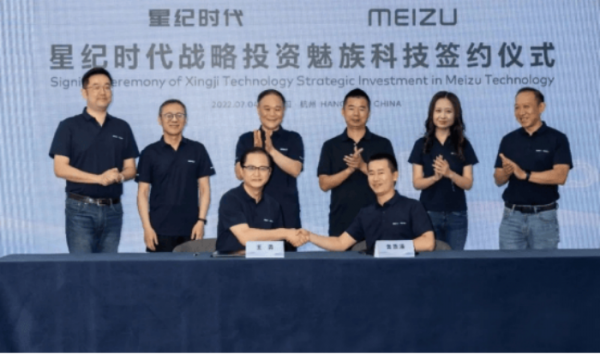
Ultimately, after careful consideration, Meizu accepted the olive branch extended by Geely and embraced its fate of being acquired. In July 2022, Xingji Era, a subsidiary of Geely Holding, acquired a 79.09% controlling stake in Meizu, forming the Xingji Meizu Group, with Xingji Era's vice chairman Shen Ziyu serving as CEO, and Huang Zhang stepping down. Geely Holding Chairman Li Shufu stated at the time that by venturing into mobile phones, they aimed to achieve seamless interaction between in-car systems and mobile phone software technologies.
In my view, 2022 marked a low point for Meizu, struggling even to survive. At this time, Geely's acquisition of Meizu was akin to rescuing this veteran mobile phone manufacturer from the brink. Although the acquisition deprived Meizu of independent development space, it was still preferable to being on the verge of collapse. Backed by the financially robust Geely, Meizu now had the confidence and capital to re-enter the mobile phone market, but the drawbacks would gradually emerge over time.
The third phase spans from 2023 to 2026. In fact, in the first year after Meizu's acquisition by Geely, i.e., 2023, it finally regained its former passionate momentum, not only releasing the long-awaited Meizu 20 series but also recruiting several senior executives from other mobile phone manufacturers, including Deng Bin, former president of Honor's R&D management department, and Liu Yi, former general manager of Xiaomi's China e-commerce department. It set the goal of "returning to the top 5 in the mid-to-high-end mobile phone market within three years," showcasing its high-spirited determination.
However, starting from 2024, Meizu's development strategy underwent some subtle changes. Amid the rise of the AI large model trend, on the first workday after the 2024 Spring Festival, Shen Ziyu announced that Meizu would cease traditional smartphone R&D and fully invest in "tomorrow's devices," with its first new AI terminal product set to be officially released in 2024. In his view, Meizu should use its limited resources and time to pursue a grander cause, namely, going all-in on AI.
Unfortunately, neither the Meizu 21 Pro released 11 days later, the Meizu 21 Note released three months later, nor the Meizu Lucky 08 released in September 2024 were strictly AI devices but remained smartphones, albeit with a strong emphasis on AI in their promotion. In fact, whether they are called smartphones or AI devices is not important; what matters is how to boost sales.
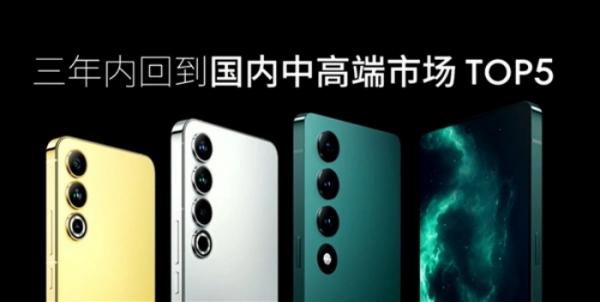
Regrettably, none of these three highly anticipated mobile phones became bestsellers, which was not good news for Meizu, desperately seeking a breakthrough. In 2025, Meizu also released only three new models—the Meizu Note 16, Meizu Note 16 Pro, and Meizu 22—with annual sales of less than one million units, failing to make a significant impact in the mid-to-high-end market. The goal of "returning to the top 5 in the mid-to-high-end mobile phone market within three years" became a laughingstock in the industry. In my view, the reason Meizu's mobile phone dream did not come true cannot be solely attributed to the ruthless competition in the market but also to its own predicament.
The reason is straightforward: Geely pulled Meizu back from the brink, but at the cost of Meizu now serving Geely's strategic needs. Geely's core objective in acquiring Meizu was to gain access to the interactive capabilities of its Flyme system to empower its own in-car cockpits. This meant that from the acquisition date onward, the mobile phone business was no longer Meizu's focus, and its strategic center of gravity shifted to Flyme Auto, with core resources such as R&D and supply chain continuously tilted toward Flyme Auto.
By 2025, the proportion of R&D investment in Meizu's mobile phone business had plummeted from 40% before the acquisition to less than 10%, directly resulting in significant shortcomings in screen and imaging aspects of its subsequently launched mobile phone products, making them unable to compete with mainstream players. When its own product strength could not keep up, even if Meizu played the nostalgia card, it could not move the vast majority of Meizu fans and naturally could not translate into actual sales.
At the same time, frequent leadership changes and team turmoil further made Meizu's foray into the mobile phone market an arduous journey, with its brand presence and sales completely out of sync with Huawei, Xiaomi, OPPO, and Vivo, further marginalizing it in the market. By this point, Meizu's mobile phone business losses had become increasingly severe, to the point where Geely was no longer willing to continue investing. The memory price hike that began at the end of last year became the final straw that broke the camel's back. With its weak bargaining power in the supply chain, Meizu was unable to withstand the massive impact of the sharp rise in memory chip prices, leading to the cancellation of the Meizu 22 Air's launch plan.
Even if memory prices had not risen, Meizu, already showing signs of decline, would have had little hope of making a name for itself in the mobile phone market. After all, after missing one opportunity after another due to its own messy mess around, it no longer had any capital or time window for a comeback. Farewell, Meizu mobile phones!
-
![]()
Hardware is the skeleton, AI is the soul, and data integrates the two
-
![]()
China’s AI Industry: A Unified Pivot Towards Monetization?
-
![]()
New Progress! Infineon Completes Acquisition of ams OSRAM's Non-Optical Sensor Business
-
![]()
35 Million Bet on an Optical Future! Tengjing Technology Makes a Move in AR
-
![]()
Why World Models Get Stuck on Construction Roads in Autonomous Driving Applications
-
Alibaba Initiates Cultural Transformation: Is Jack Ma Making a Strategic Comeback?
-
Tianfeng Heads to Hong Kong for IPO with RMB 3.8 Billion in Funds: Xingyu's Cross-Border Foray into Embodied AI Faces Uncertain Future
-
![]()
Mengshi Auto’s High-End Aspirations Dashed: Huawei Partnership Fails to Revive Sales, New Model’s Entry Price Dips Below 300,000 Yuan