Qualcomm: Can This 'AI Stimulant' Offset the Smartphone's 'Achilles' Heel'?
 05/07 2026
 367
367
Qualcomm (QCOM.O) released its second-quarter financial report for fiscal year 2026 (ending March 2026) after the market closed on the morning of April 30, 2026, Beijing time. The key points are as follows:
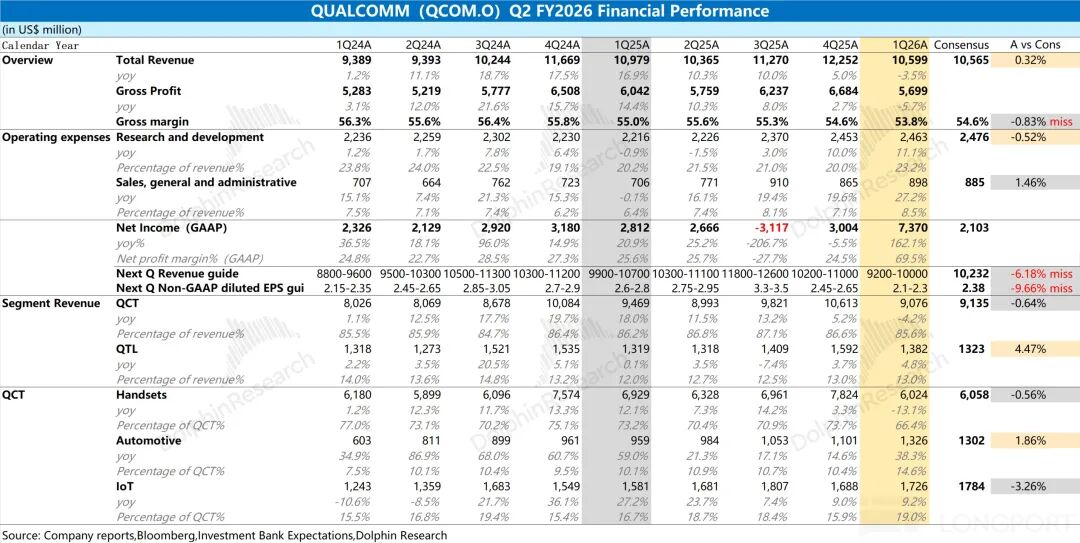
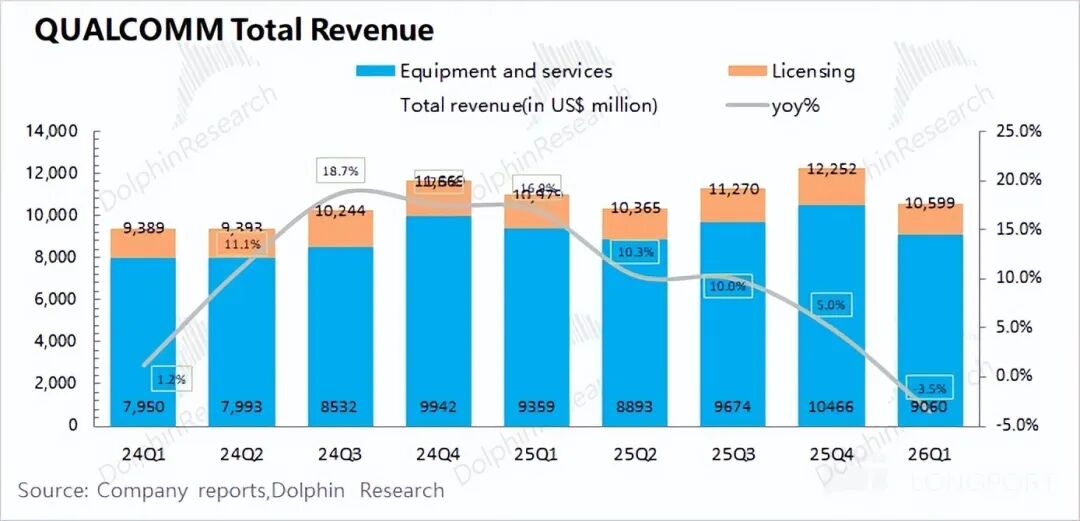
1. Core Data: Qualcomm's revenue for this quarter was $10.6 billion, down 3.5% year-over-year, in line with market expectations ($10.56 billion). The company's decline this quarter was mainly due to the sluggish downstream smartphone market.
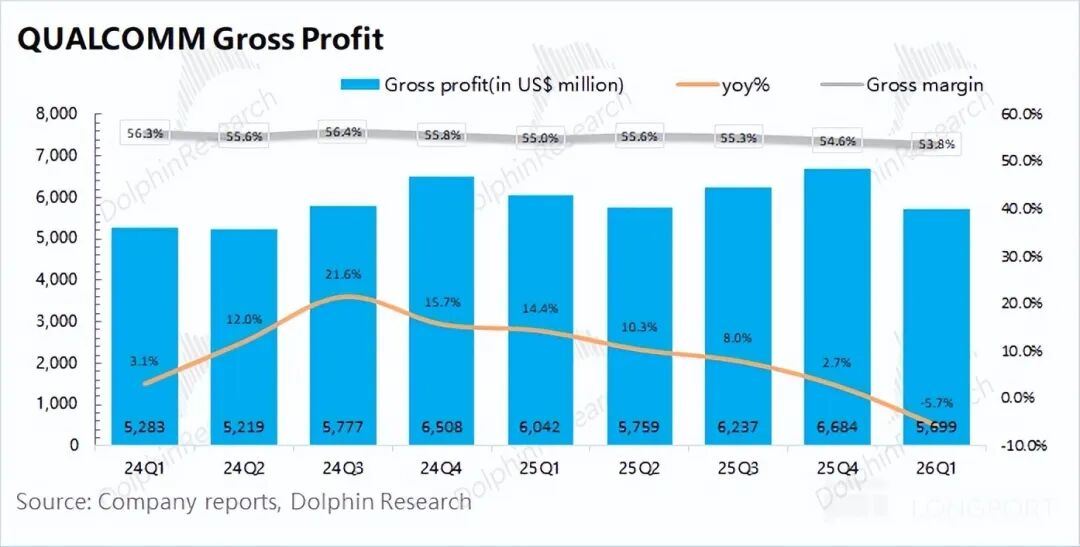
The company's gross margin for this quarter was 53.8%, down 1.2 percentage points year-over-year, falling short of market expectations (54.6%). The impact of memory shortages led to a decline in the gross margin of the company's hardware business (QCT).
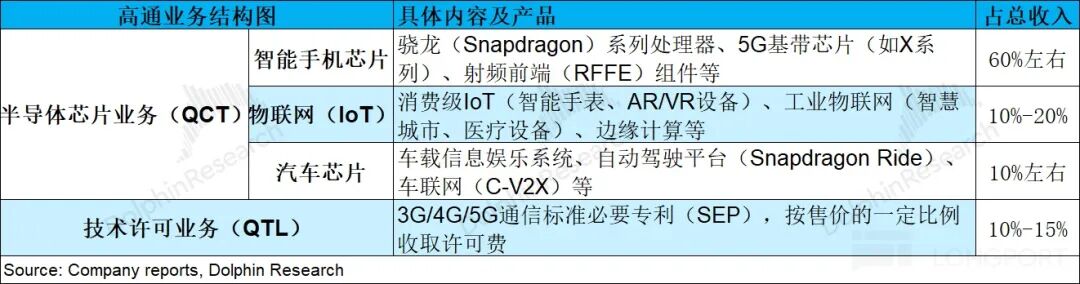
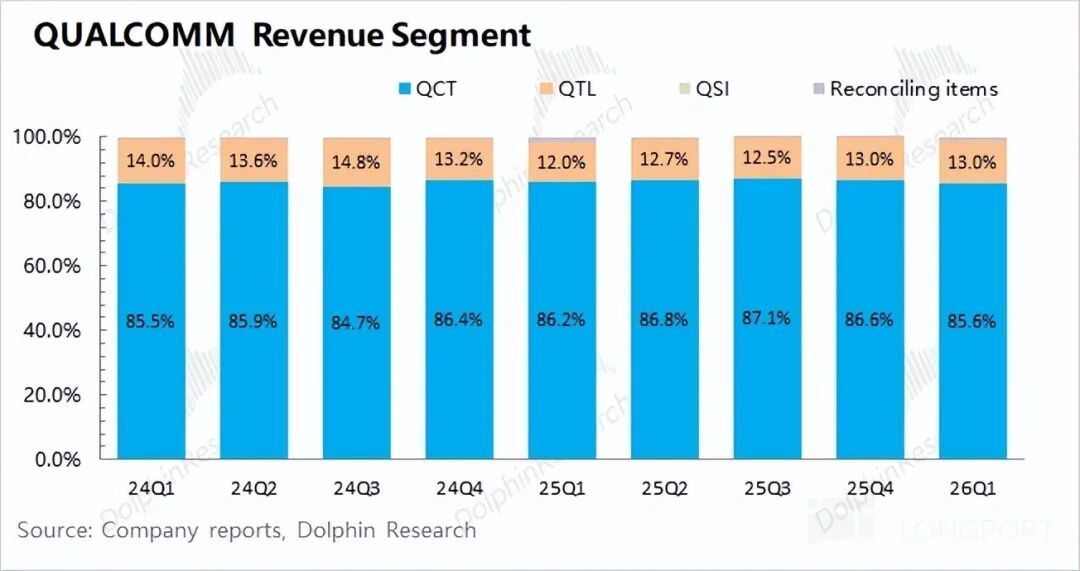
2. Specific Business Performance: $Qualcomm (QCOM.US)'s business is mainly divided into two parts: semiconductor chip business (QCT) and technology licensing business (QTL), with the semiconductor chip business being the company's largest revenue source, accounting for nearly 90%.
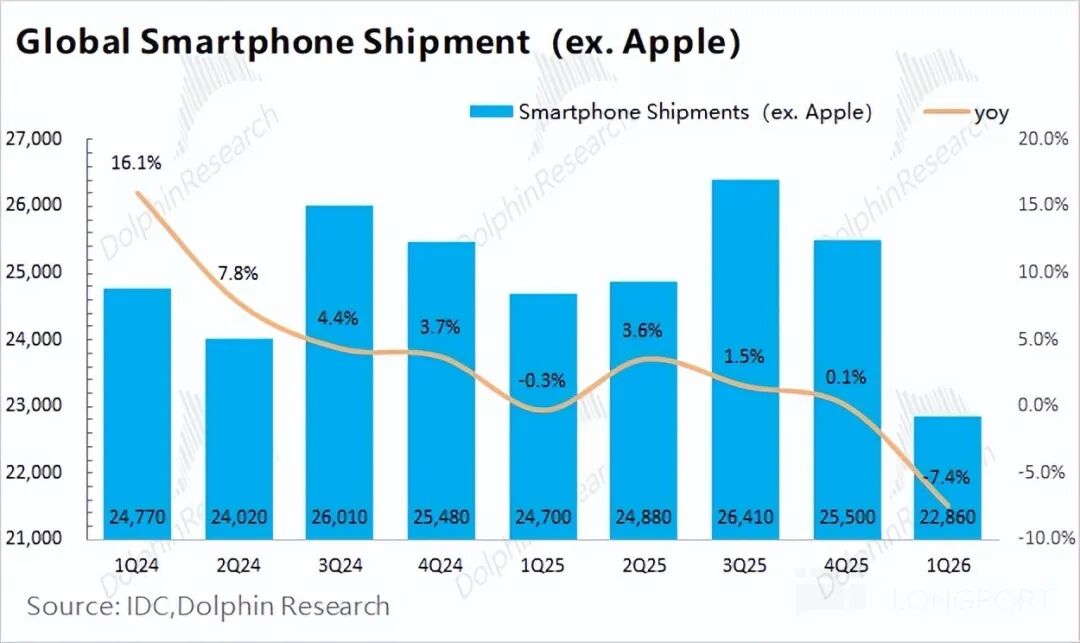
Within the semiconductor chip business: ① Smartphone business revenue for this quarter was $6 billion, down 13% year-over-year. The decline in the company's smartphone business was mainly influenced by two factors: on the one hand, industry-wide factors, with smartphone shipments (excluding Apple) down 7% this quarter; on the other hand, the company's earlier release of flagship new products led to some demand being brought forward.
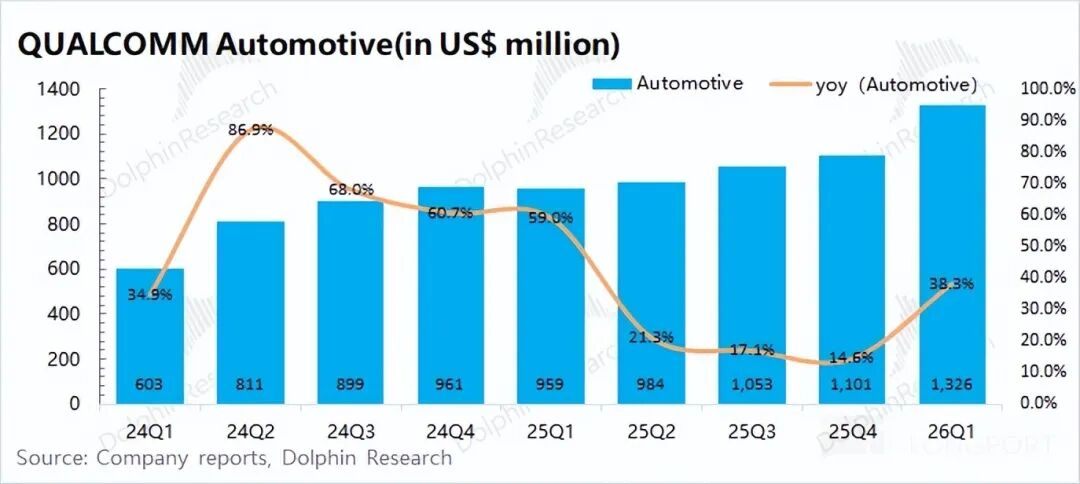
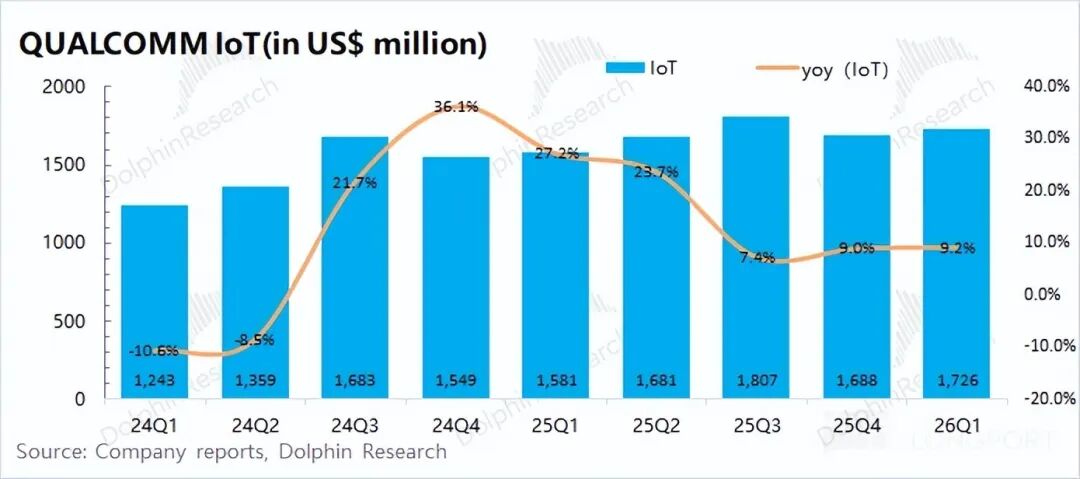
② Automotive business revenue for this quarter was $1.3 billion, up 38.3% year-over-year, driven by increased shipments of the Snapdragon fourth-generation digital cockpit; ③ IoT business revenue for this quarter was $1.7 billion, up 9% year-over-year, driven by demand for consumer and industrial-grade products. Affected by tightened national subsidies and memory shortages, the company's IoT revenue growth rate has significantly declined.
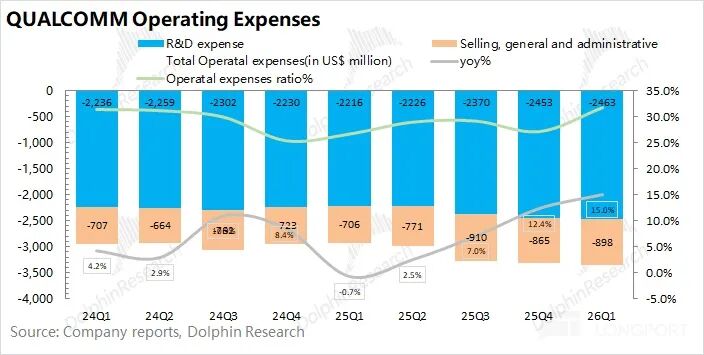
3. Operating Expenses: The company's core operating expenses increased to approximately $3.36 billion, with R&D expenses rising to $2.46 billion this quarter and quarterly sales expenses at $900 million.
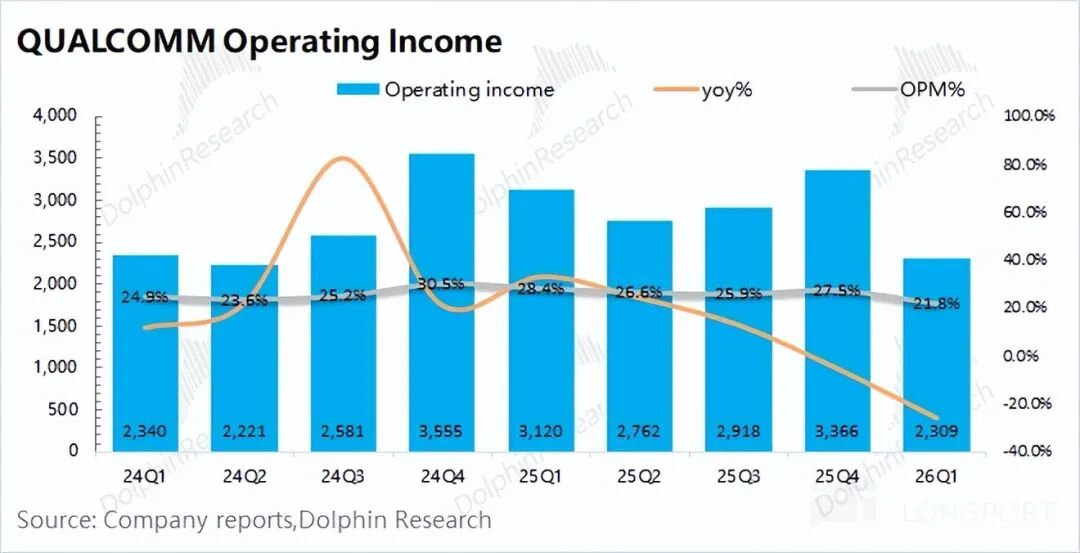
The company reported a net profit of $7.37 billion for this quarter, mainly due to the release of previously accrued deferred tax asset valuation allowances (approximately $5.7 billion). From an operational perspective, the company's core operating profit for this quarter was $2.3 billion, down 26% year-over-year.
4. Next Quarter Guidance: Qualcomm expects revenue of $9.2-10 billion for the third quarter of fiscal year 2026, falling short of market expectations ($10.2 billion). The company expects Non-GAAP earnings per share of $2.1-2.3 for the next quarter, also below market expectations ($2.38).
Dolphin Research's Overall View: Guidance 'Disappointment' Cannot Hide AI Ambitions, Valuation Logic Has Changed
Qualcomm's revenue for this quarter met market expectations, while the decline in gross margin was mainly due to factors such as the sluggish downstream smartphone market and memory shortages/price increases, which dragged down the gross margin of the company's hardware business (QCT).
Beyond this quarter, the company's guidance for the next quarter remains 'unfavorable.' The company expects revenue of $9.2-10 billion for the next quarter, falling short of market expectations ($10.2 billion); Non-GAAP earnings per share of $2.1-2.3, also below market expectations ($2.38). This implies that the company's revenue and gross margin will continue to decline next quarter.
The largest source of the company's performance decline is the smartphone business. The company expects smartphone business revenue of only about $4.9 billion next quarter, down more than 20% year-over-year, mainly due to tight supply in the memory industry.
Qualcomm's current poor performance was expected, and the market mainly focuses on the following aspects of Qualcomm:
a) Traditional Sector: Core Business Will Continue to Face Pressure
The smartphone business is the largest segment of Qualcomm's business, accounting for more than half. Given the overall sluggish performance of the smartphone market, this has placed significant pressure on the company's performance. Global smartphone shipments remained at 290 million units this quarter, down 5% year-over-year.
The smartphone market mainly consists of two major camps: Apple and Android. Breaking it down, Apple's smartphone shipments increased by 5% year-over-year this quarter, while shipments from the remaining Android camp declined by 7% year-over-year, directly impacting Qualcomm's smartphone business performance this quarter.
The pressure on smartphones, IoT, and other categories in the first quarter was mainly due to the dual impact of memory shortages and tightened national subsidies. From the company's current guidance, the issue of memory shortages persists.
The company expects smartphone business revenue of only about $4.9 billion next quarter, down approximately 22% year-over-year. Company management discussed memory issues last quarter, noting that they not only 'eroded' gross margins but also escalated into 'shortages,' which will directly impact smartphone shipments on the supply side (memory shortages → inventory/shipment disruptions → revenue decline). The impact of this 'memory shortage cycle' will continue to place pressure on Qualcomm's traditional core business.
b) AI Sector: On-Device AI and Data Centers Are Potential Growth Markets
The layout in the AI sector will have little short-term impact on the company's performance but can bring growth prospects and new narrative logic.
① Collaboration with OpenAI: On April 27, news emerged that 'Qualcomm and OpenAI are teaming up with MediaTek to jointly develop a custom chip specifically for AI-native devices,' providing a boost to the company's sluggish market sentiment.
OpenAI plans to launch an AI smartphone that breaks away from the traditional 'App model,' with AI Agent at its core. This phone will directly run OpenAI's models at the system level, potentially advancing on-device AI.
For Qualcomm, collaboration with OpenAI can weaken the impact of the 'Android camp' on the company while also upgrading the narrative logic of the company's traditional business to become a 'core supplier of on-device AI.'
This news has not yet been officially confirmed, and attention should be paid to the company's management response.

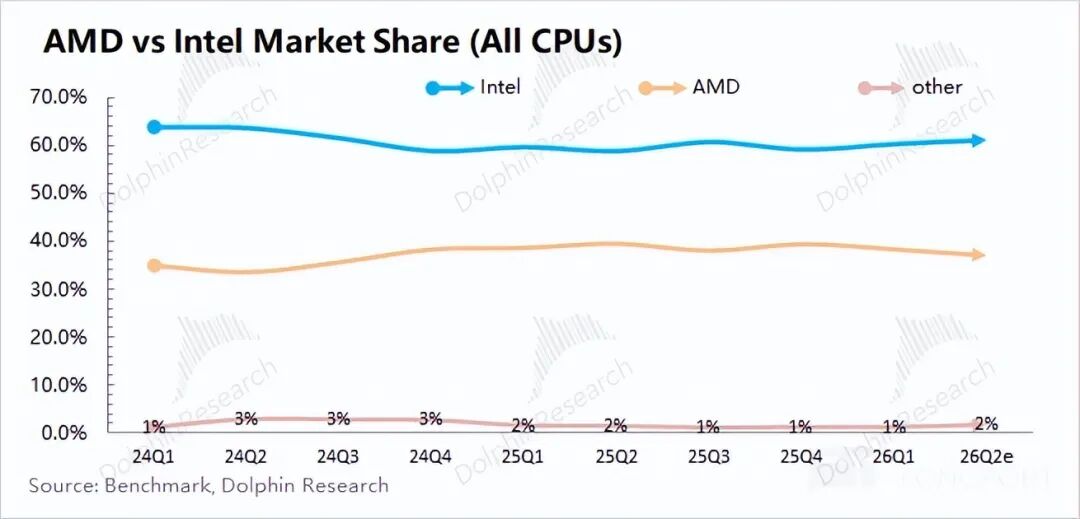
② AI PC (vs. Intel): The company's 2026 Snapdragon X2 PC platform has entered mass production, featuring the Orion CPU with an NPU performance of up to 85 TOPS, making it the fastest NPU for notebooks.
With the maturation of the Windows on Arm architecture, Qualcomm has established collaborations with giants like Microsoft, Dell, and Lenovo, entering mainstream price segments. Although the company has now entered the PC market, its current market share remains low and is unlikely to pose a threat to Intel and AMD yet.
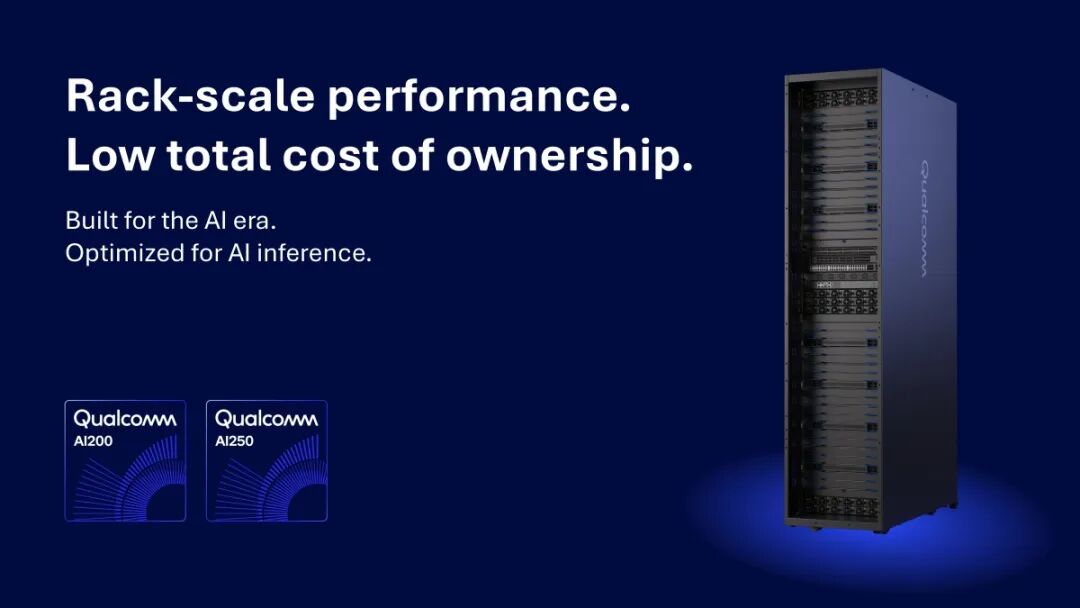
③ AI Data Centers: Qualcomm has announced the launch of two new AI chips—AI200 (mass production in 2026) and AI250 (mass production in 2027), expected to contribute $5-7 billion in annual revenue starting in 2027.
From current information: 1) The AI200 is a rack-level solution focusing on 'high memory capacity + low total cost of ownership (TCO),' specifically optimized for inference scenarios of large language models (LLMs) and multimodal models; 2) The AI250 adopts a near-memory computing architecture, with core advantages of 'over 10x effective memory bandwidth improvement + lower power consumption,' focusing on inference scenarios with extremely high memory bandwidth requirements.
After this financial report, the company announced mass production collaboration with leading supercomputing service providers, with the first shipments expected in the December 2026 quarter, marking multiple generations of collaboration. This signifies that the company will become one of the key players in the AI chip sector.
Considering Qualcomm's current market capitalization ($166.5 billion), it corresponds to approximately 21x PE for core operating profit after tax in fiscal year 2026 (assuming revenue down 4% year-over-year, gross margin of 53.4%, tax rate of 13%). Referencing the company's historical range, which mostly falls between 10x and 25x PE, it is currently roughly positioned above the midpoint of the range.
The company's valuation range was relatively low previously, mainly because its business revolved around traditional sectors, lacking growth prospects. Coupled with the impact of 'memory shortages,' the company's traditional business faced significant pressure. As a result, the company is eager to join the AI industry chain to enhance market expectations and valuation.
For Qualcomm, the pressure on traditional businesses is well-known, such as the impact of tightened national subsidies, memory shortages, and Apple's self-developed baseband chips. The company's Continuous decline (continuous decline) in stock price also reflects that the 'sluggishness' of its traditional business has been fully priced in by the market.
Compared to the company's financial report data, the market is more concerned about the prospects of the AI business, including the layout of AI PC, AI data centers, and on-device AI. Although these businesses have little short-term impact on performance, new collaborations and orders can bring new expectations to the company. For example, the market-reported collaboration with OpenAI on on-device AI directly drove a double-digit increase in the company's stock price.
After the market widely accepts the company's short-term performance pressure, recent poor performance will not have a significant impact on the stock price again. Currently, the company mainly pins its hopes on breakthroughs in new AI businesses.
As long as the company secures large AI orders with major clients (on-device or data center side), it will bring a 'narrative' shift for the company. The company's valuation logic will transform from a 'traditional smartphone chip company' to an 'on-device AI/data center AI chip player,' breaking free from traditional historical valuation limits and providing greater growth potential.
The following is a detailed breakdown:
1. Overall Performance: Memory Tightness Continues to Pressure Traditional Performance
1.1 Revenue
Qualcomm achieved revenue of $10.6 billion in the second quarter of fiscal year 2026 (26Q1), down 3.5% year-over-year, in line with market expectations ($10.56 billion). QCT (semiconductor chip business) saw a significant decline this quarter, mainly due to factors such as the sluggish smartphone market and memory shortages.
1.2 Gross Profit
Qualcomm achieved a gross profit of $5.7 billion in the second quarter of fiscal year 2026 (26Q1), down 6% year-over-year.
The company's gross margin for this quarter was 53.8%, down 1.2 percentage points year-over-year, falling short of market expectations (54.6%), mainly due to a significant decline in the gross margin of the hardware business (QCT business) amid memory price increases.
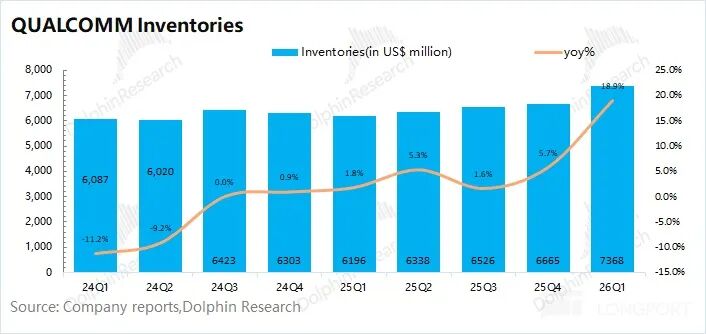
Qualcomm's inventory reached $7.37 billion in the second quarter of fiscal year 2026 (26Q1), up 19% year-over-year.
The company's inventory continued to rise this quarter, mainly due to relatively cautious production plans from smartphone OEM manufacturers. The company is still in the process of actively digesting channel inventory, with downstream clients reducing procurement and orders. Company management expects Q3 to be the 'bottom.'
1.3 Operating Expenses and Profit
Qualcomm's operating expenses for the second quarter of fiscal year 2026 (26Q1) were $3.36 billion, up 15% year-over-year.
Among them: ① R&D expenses for this quarter were $2.46 billion, up 11% year-over-year, remaining the company's largest investment; ② Sales and management expenses for this quarter were $900 million, up 27% year-over-year.
Since the company's profit is affected by tax adjustments, core operating profit is more valuable. Qualcomm's core operating profit for this quarter was $2.3 billion, down 26% year-over-year, with a core operating profit margin of 21.8%. The decline in profit this quarter was mainly due to the impact of declining gross margins and increased expenses.
2. Business Segments: Smartphones Mired in "Slump", AI Gains Major Clients
From Qualcomm's business segment performance, QCT (CDMA business) remained the company's largest revenue source this quarter, accounting for 85%, primarily comprising revenue from chip semiconductors. The remaining revenue mainly came from the QTL (technology licensing) business, accounting for approximately 13%.
The QCT business is the most crucial part of the company. A detailed breakdown is as follows:
2.1 Smartphone Business
Qualcomm's smartphone business achieved revenue of $6 billion in the second quarter of fiscal year 2026 (26Q1), representing a 13% year-over-year decline, largely in line with market expectations ($6.06 billion).
Dolphin Research attributes the slowdown in the company's smartphone business growth this quarter to two primary factors: (1) The overall smartphone market performed "sluggishly" due to factors such as memory shortages and tightened government subsidies; (2) Apple's strategy of offering "more for the same price" with its new devices squeezed market share from Android brands.
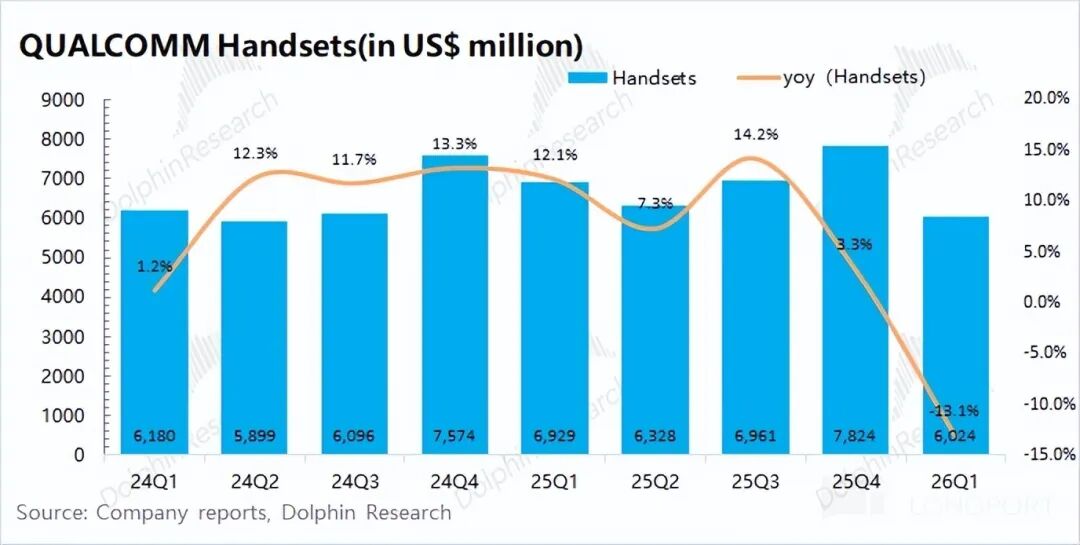
Industry data shows that smartphone shipments (excluding Apple) reached 229 million units in the first quarter of 2026, a 7% year-over-year decline, indicating a considerable slump in the Android smartphone market.
Compared to this quarter's performance, the company provided a revenue guidance of $4.9 billion for the smartphone business in the next quarter, implying a potential decline of around 22%, still pressured by memory supply constraints.
Qualcomm's smartphone business accounts for over half of the company's total revenue and is the most significant factor affecting its performance. Given the current multiple pressures on the smartphone business, such as memory shortages, tightened government subsidies, and declining market share among major clients, the company's performance is unlikely to improve significantly in the short term.
On the other hand, the over-reliance on the traditional smartphone business has gradually become a burden on the company's performance and valuation. The company is also looking to create new growth drivers while reducing the weight of the smartphone business (i.e., the Android market) and developing a "second growth curve."
2.2 Automotive Business
Qualcomm's automotive business achieved revenue of $1.3 billion in the second quarter of fiscal year 2026 (26Q1), representing a 38% year-over-year increase, in line with market expectations ($1.3 billion), primarily driven by increased shipments of the fourth-generation Snapdragon Digital Chassis.
The company expects to commence commercial shipments of the fifth-generation Snapdragon Digital Chassis platform by the end of fiscal year 2026. This will be the most significant upgrade in Qualcomm's history, featuring a 3x increase in CPU throughput, a 3x increase in GPU capability, and a 12x increase in NPU performance, supporting in-vehicle intelligent agents and L3 and L4 autonomous driving processing.
The company's business model will shift from chip sales to module sales, expanding revenue potential. The company expects automotive business revenue to grow by around 50% year-over-year next quarter, though it will still account for only 10-20% of total company revenue.
2.3 IoT Business
Qualcomm's IoT business achieved revenue of $1.7 billion in the second quarter of fiscal year 2026 (26Q1), representing a 9% year-over-year increase, slightly below market expectations ($1.78 billion). Affected by tightened government subsidies and memory shortages, the growth rate of the company's IoT business has slowed to single digits.
Qualcomm's IoT business primarily includes consumer electronics, edge networking, and industrial products. This quarter's IoT business growth was mainly driven by consumer and industrial-grade products.
In addition to conventional products, the market is also focused on the company's AI PC and data center businesses:
(1) AI PC Business: Currently included in the IoT business segment due to its relatively small scale. The company's 2026 Snapdragon X2 PC platform has entered mass production, featuring the Orion CPU and an NPU performance of up to 85 TOPS, making it the fastest NPU for notebooks.
The company hopes that AI PCs will become a new growth driver. However, its current market share in the PC segment remains low, making it difficult to compete with Intel and AMD.
(2) Data Center Business: The company previously announced its entry into the data center market. Dolphin Research believes that related revenue may be included in the IoT segment or disclosed separately in the future.
Qualcomm previously announced the launch of two new AI chips—the AI200 (mass production in 2026) and the AI250 (mass production in 2027)—expected to contribute $5-7 billion in annual revenue starting in 2027.
Following this earnings report, company management announced that Qualcomm has entered the custom chip sector and begun collaborating with a leading hyperscale client, with the first shipments expected in the fourth quarter of 2026. This marks Qualcomm's entry into the data center AI market. The company plans to disclose more project progress and collaboration details at its Investor Day on June 24.
- END -
// Reproduction Authorization
This article is an original work by Dolphin Research. Reproduction requires authorization.
// Disclaimer and General Disclosure
This report is for general comprehensive data purposes only, intended for general viewing and data reference by users of Dolphin Research and its affiliated institutions. It does not consider the specific investment objectives, investment product preferences, risk tolerance, financial situation, or special needs of any individual receiving this report. Investors must consult with independent professional advisors before making investment decisions based on this report. Any investment decisions made using or referencing the content or information in this report are at the investor's own risk. Dolphin Research shall not be liable for any direct or indirect responsibilities or losses that may arise from the use of the data contained in this report. The information and data in this report are based on publicly available sources and are for reference purposes only. Dolphin Research strives to ensure but does not guarantee the reliability, accuracy, or completeness of the information and data.
The information or opinions mentioned in this report shall not, under any jurisdiction, be regarded or construed as an offer to sell or a solicitation to buy securities, nor shall they constitute recommendations, inquiries, or endorsements of relevant securities or related financial instruments. The information, tools, and data contained in this report are not intended for or proposed for distribution to jurisdictions where such distribution, publication, provision, or use of the information, tools, and data would contravene applicable laws or regulations or result in Dolphin Research and/or its subsidiaries or affiliated companies being subject to any registration or licensing requirements in such jurisdictions, or to citizens or residents of such jurisdictions.
This report merely reflects the personal views, insights, and analytical methods of the relevant creators and does not represent the stance of Dolphin Research and/or its affiliated institutions.
This report is produced by Dolphin Research, and the copyright is solely owned by Dolphin Research. Without the prior written consent of Dolphin Research, no institution or individual shall (i) make, copy, reproduce, duplicate, forward, or create any form of copies or reproductions in any manner, and/or (ii) directly or indirectly redistribute or transfer them to other unauthorized persons. Dolphin Research reserves all relevant rights.
-
![]()
Rivian: Weathering the Pain, Can R2 Lead Rivian to a 'Turnaround Against the Wind'?
-
![]()
Reddit: Reaping the Rewards of Accelerated Commercialization
-
![]()
Qualcomm: Can This 'AI Stimulant' Offset the Smartphone's 'Achilles' Heel'?
-
![]()
Zhu Xiaohu’s Misjudged Bet on Zhang Yutong
-
![]()
Doubao Implements Fees, and the Rationale is Sound!
-
The Tales of Capital for New Energy Vehicle Companies: No Longer So Simple to Spin
-
![]()
Tesla's Greatest Brand Contribution, Signs Off
-
![]()
Can Doubao, a Popular Snack-like App, Command Premium Prices?