Doubao Implements Fees, and the Rationale is Sound!
 05/07 2026
 510
510
During the May Day holiday, the most talked-about AI news in China was undoubtedly "Doubao facing criticism on Weibo"!
The strong backlash against Doubao from netizens is not unexpected. Most were unaware that AI applications might require payment, a stark contrast to the earlier generosity of major AI companies that offered giveaways such as milk tea and cash red packets during the Lunar New Year.
Some seasoned internet users, while recognizing that paid AI applications were inevitable, did not anticipate their arrival so soon—especially from ByteDance, a company known for its financial prowess, being the first to adopt such a model. While some netizens accepted the idea of paid services, they could not tolerate Doubao's perceived "reduction in intelligence."
The convergence of these two emotional responses, coupled with a noticeable error rate, led to widespread calls to "uninstall Doubao" and criticisms like "dumb yet expensive." This raises a pointed question:
If Doubao starts charging, do AI applications like Yuanbao and Qianwen have a golden opportunity? Or will they eventually follow suit and "wield the scythe" at consumers?
01. Doubao Tests AI Paid Services
Under the combined influence of multiple factors, domestic consumers have become highly sensitive to terms like "price" and "fees," particularly towards brands/products that are the first to raise prices or announce charges. They generally respond negatively:
A few months ago, the OnePlus 15T faced significant criticism for its unprecedented price hike of RMB 900–1,200. Despite its decent product strength, it found itself in a situation where it was neither praised nor popular.
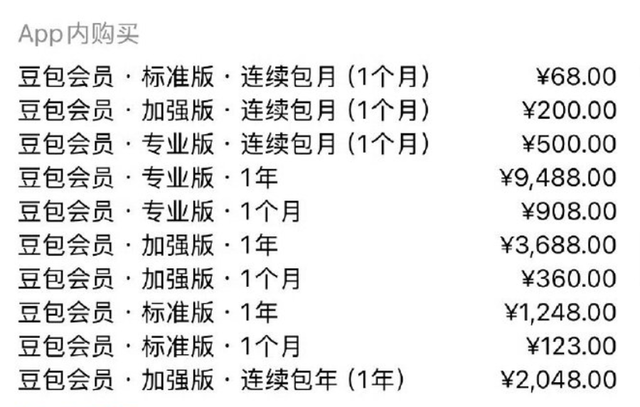
On May 4, news of Doubao's fee-based model trended at the top of Weibo. Using the App Store's updated subscription policy as an example, the cheapest tier is RMB 68 for a continuous monthly subscription or RMB 688 for a continuous annual subscription (standard version). The most expensive tier is the professional version's one-year package, costing RMB 9,488.
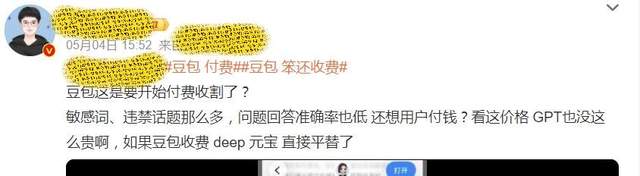
Doubao's move to charge fees predictably triggered strong backlash from netizens, followed by sharp criticism from influential figures. Many netizens threatened to "uninstall Doubao if it charges, no negotiations," while some humorously tagged Yuanbao, stating they would switch to it if Doubao charged. Yuanbao even responded in the comments, adding a touch of darkly humorous commercial rivalry to the online outcry.

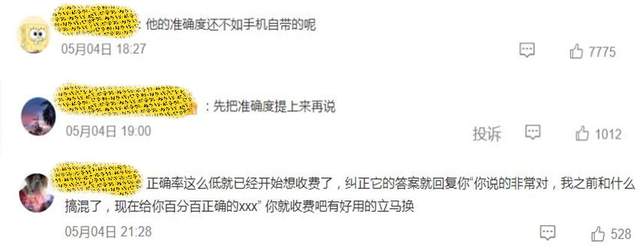
Whether this benefits competitors like Yuanbao remains to be seen, but it is undeniable that dissatisfaction with "accuracy" dominated netizens' complaints. In the comment sections of related trending reports, such evaluations often received thousands of likes.
On May 6, The Paper reported that on May 5, the topic "using Doubao to search for Li Yuanhong yields PSed images of actor Fan Wei" trended again. The Paper also bluntly suggested that before AI applications charge fees on a large scale, they should "clean the house before inviting guests."
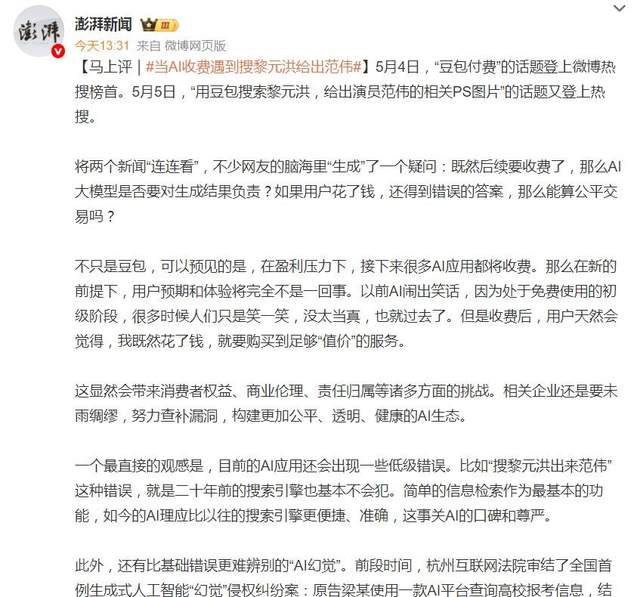
Coincidentally, a reporter from Modern Express conducted multiple searches using Doubao and found that different accounts received varying photo results. "Some showed PSed images of Fan Wei, some showed both PSed images of Fan Wei and actual photos of Li Yuanhong, while others only showed actual photos of Li Yuanhong."

By the afternoon of May 6, before this article's publication, Doubao responded that the relevant issues had been optimized. After testing, the author confirmed that searching for Li Yuanhong no longer displayed images of actor Fan Wei.
This raises the question: Knowing that "the first bird gets shot," and that being the first to introduce paid services would invite backlash, why is Doubao so insistent?
02. The Era of AI Paid Services Is Inevitable!
From a business perspective, the core reason behind Doubao's "unspoken difficulties" lies in profitability pressure. As previously reported by National Business Daily, internal voices at ByteDance have acknowledged that Doubao's "commercialization lacks a clear path, and the reasoning costs of its large DAU pose pressure on company profits."
According to QuestMobile's latest data, in Q1 2026, Doubao's monthly active users reached 345 million, equivalent to the combined total of the 2nd to 5th-ranked apps (Qianwen with 166 million, DeepSeek with 127 million, plus Yuanbao, Afu, etc.). During the 2026 CCTV Spring Festival Gala, Doubao's DAU surged to 145 million.
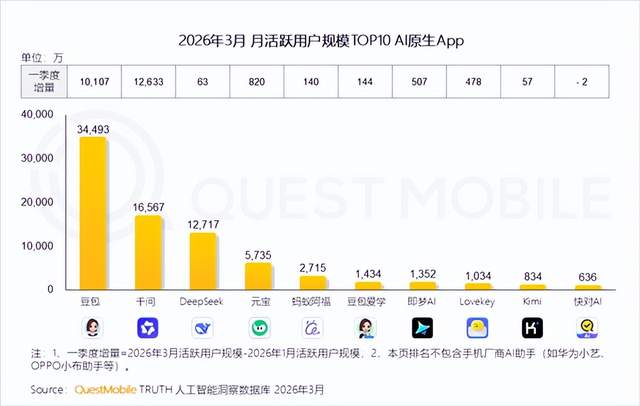
As a nationally popular AI application, Doubao's influence among consumers is clearly leading among competitors, as evidenced by quantifiable MAU and DAU metrics. While this is a significant advantage for ByteDance, it also brings immense cost pressure.
According to Volcano Engine's latest data, Doubao's large model's daily Token usage has surpassed 120 trillion, 1,000 times that of May 2025. Every additional daily active user and every "generate a PPT" command burns GPU clusters.
Additionally, a cost breakdown circulating on CSDN shows that in Doubao's single-inference cost structure, hardware depreciation accounts for 58%, and electricity accounts for 29%. This means every additional user consumes more resources on H800/A100 clusters.
Combined with Doubao's pricing policy, paid features will primarily focus on complex tasks and productivity scenarios, such as PPT generation (which requires orders of magnitude more Tokens than daily conversations), data analysis, and film and television production. These three scenarios are all highly compute-intensive, making the logic sound.
If Doubao's MAU were below 200 million, putting it in the same tier as Qianwen and DeepSeek, perhaps the "wealthy" ByteDance could continue to bear the costs for a while longer. However, with Doubao's MAU now exceeding 300 million, Token consumption has become unsustainable.
If Doubao's paid strategy proves effective and becomes a clarion call for full commercialization, Qianwen, Yuanbao, and other domestic competitors will undoubtedly face the decision of whether to follow suit!
For now, Doubao faces both opportunities and challenges.
Currently, Qianwen (ranked 2nd by MAU) and Yuanbao have not introduced C-end paid services. After Doubao's pioneering move, theoretically, Doubao users without the willingness to pay who need advanced features like PPT or video generation may switch to Qianwen or Yuanbao.
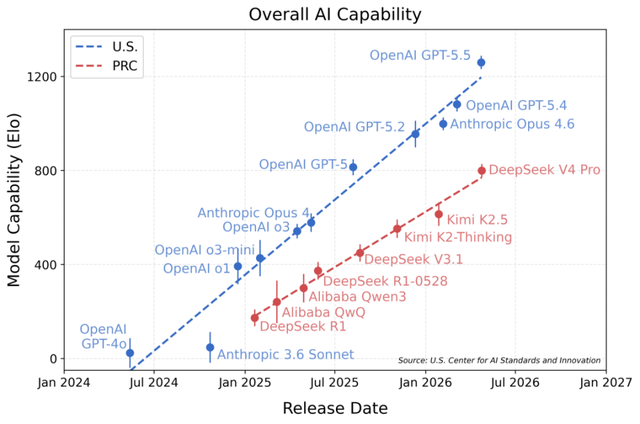
An evaluation report released by CAISI in May 2026 stated that DeepSeek V4 Pro, one of the strongest open-source models, lags about eight months behind global top models in overall capability. In tests closer to real-world application complexity, such as abstract reasoning and software engineering migration, it significantly underperforms.
Moreover, even for overseas top models like GPT, Claude, and Gemini, the proportion of paid members remains unimpressive.
In April 2026, OpenAI disclosed 900 million weekly active users and 50 million paid users, still less than 10% paid. Earlier, in October 2025, the Financial Times reported that ChatGPT had over 800 million active users, but only 5% were paid subscribers.
If the target is AI coding, Doubao is not a strong contender. Internationally, Anthropic's Claude dominates, and even in the domestic market, competitors like Kimi and Zhipu are formidable. Thus, programmers may not be Doubao's primary target audience for paid services.
If the target is video production, the B-end Seedane 2.0 has already established a strong reputation. How much of Seedance's compute resources can the C-end Doubao access? This remains uncertain, but if confirmed, it would bode well for Doubao's paid user conversion.
It should also be noted that even in professional film and television production, current AI applications can only serve as auxiliary tools.
Taking post-production in the film and television industry as an example, Tim, the founder of Film Storm, stated, "For our Great White Shark episode, we had to film real people underwater. AI couldn't replicate that sense of authenticity." This creative philosophy aligns with that of his idol, Hollywood "practical effects enthusiast" Christopher Nolan.
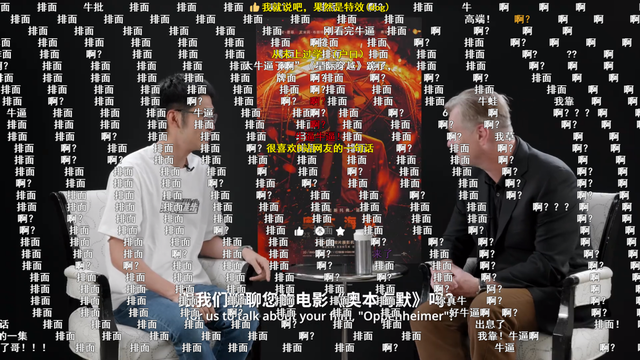
Tim's team's attitude toward AI can be summarized as follows: Aesthetics, judgment, and authenticity still rely on humans! Therefore, even as major tech giants launch powerful C-end AI apps, humanity need not despair.
In the long run, Doubao's exploration of paid services remains commendable!
As former Guojin Securities analyst Pei Pei noted, Doubao is essentially solving a multiplication problem of "user base x willingness to pay proportion." The Doubao team has likely conducted extensive internal research and calculations, believing the proposed paid model is feasible to some extent.
Moreover, Doubao may be the Chinese AI native application with the most comprehensive coverage and highest practicality across learning, office, and lifestyle scenarios. Its consumer mindshare moat could potentially provide long-tail assistance to paid conversions.
It is still too early to declare success or failure!
References:
"300 Million MAU: Doubao Can No Longer Afford It" - NetEase Finance
"Annual Fee of RMB 9,488! Will You Still Use Doubao After It Charges? Here's the Official Response" - PCPOP
"Doubao Charges Fees: Opportunities and Constraints for China's Large Model Commercialization" - Sun Yongjie
"My Take on Doubao's Paid Version" - Internet Thieves' Guild
-
![]()
Proposed to Raise 955 Million Yuan through Private Placement! Huicheng Vacuum Boosts Localization of Ultra-Precision Optical Coating Equipment
-
![]()
Cash Flow Soars 13-Fold! What Major Strategic Move is Wuhan Five Square Optoelectronics Planning?
-
![]()
Leaked Design of vivo X500: Reverts to Circular Camera Module in Top-Left Corner, Pays Homage to Classic X90 Aesthetic
-
![]()
DeepSeek Shows Signs of Foraying into Code Agents, Launches WeChat Official Account Focused on Harness
-
![]()
Auto Companies Deny Claims That ‘Cooperation with Huawei Is Non-Essential’, as Huawei Transforms into a ‘Public Platform’
-
![]()
Starship to Independently 'Return to the Launch Tower': SpaceX's Ambitions Extend Beyond Rocket Building to Dominating Space Transportation
-
![]()
Starship Set to Independently 'Return to the Launch Tower': SpaceX is Revolutionizing Space Transportation, Not Just Building Rockets
-
![]()
Anthropic and OpenAI Face Off Against Deepseek