Tesla's Greatest Brand Contribution, Signs Off
 05/07 2026
 651
651
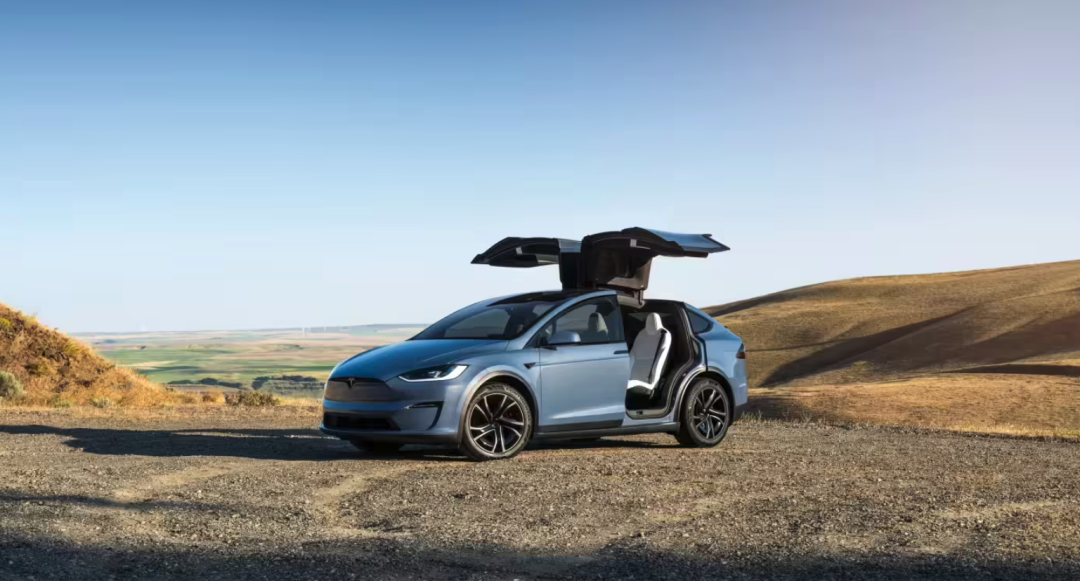
The Last Model X Rolls Off the Line
Author|Wang Lei
Editor|Qin Zhangyong
An era-defining symbol has completed its mission.
During the May Day holiday, at Tesla's Fremont factory in California, the last Tesla Model X in the truest sense officially rolled off the production line.
With this, Tesla's first luxury electric SUV, mass-produced for 11 years, has officially completed its historical mission, and it also means that the Model S has exited the stage of history.
Perhaps to commemorate this moment, Tesla employee Steve Pennewell posted on social media with an image, sigh with emotion (which means "reflecting with emotion"): Farewell to the last Model X. This is the production line where I started working nearly 10 years ago. Time flies.
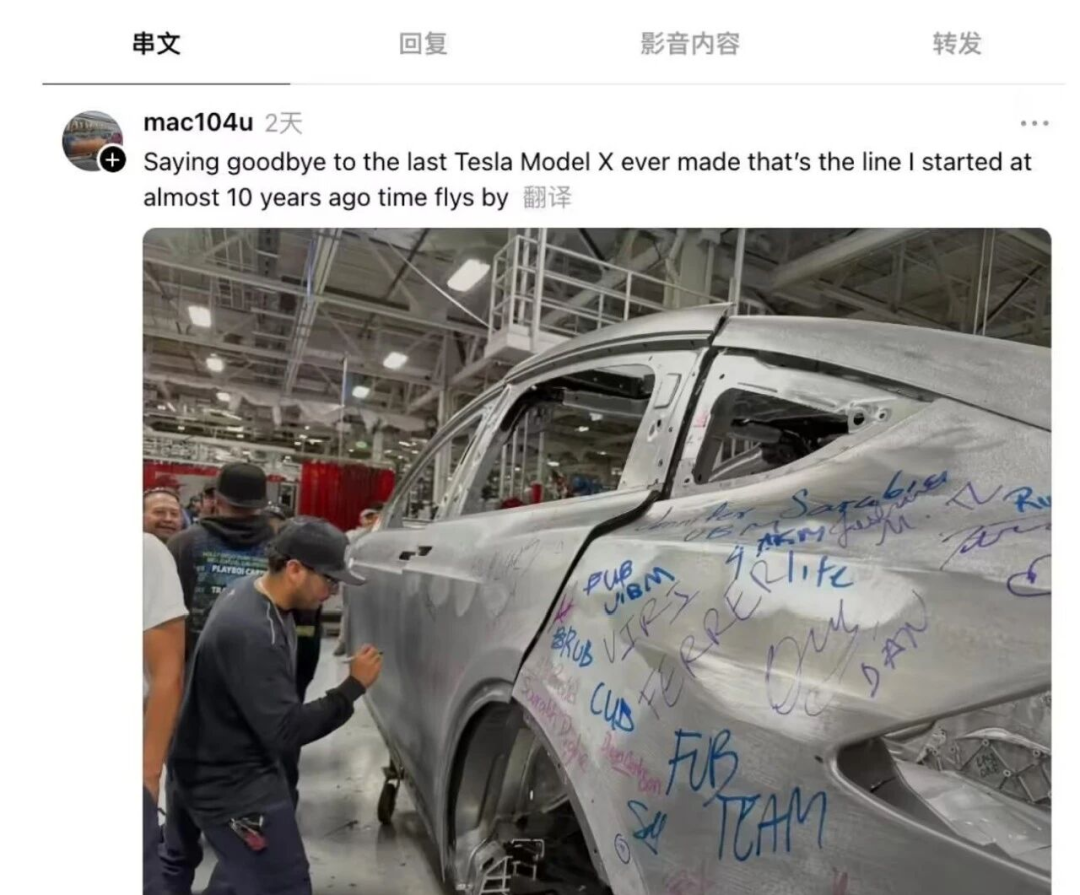
From the accompanying image, it can be seen that before the last Model X entered the painting workshop, the bare, original factory metal body was signed by a dense array of factory employees' names, with the striking commemorative inscription 'Last One' signed on the rear.
Although the car is no longer being produced, the production line will not stop—workers will next dismantle molds, rewire, and debug equipment. Soon after, this production line will be used to manufacture another product:
A humanoid robot capable of walking, carrying, and operating tools.
01
Tesla's Luxury Brand Creator
Steve Pennewell revealed that this last Model X to roll off the line will not enter the market for sale. It will later be painted with an exclusive 'Garnet Red' finish and fitted with a dedicated center console plaque, preserved as a commemorative Model X Plaid.
Elon Musk also stated in an email that Tesla plans to hold a commemorative event at 'sunset' on a day in May, officially declaring the end of the Model S/X era.
This poetic metaphor seems to suggest that an old era is coming to an end, while another brand-new technology ushers in the dawn.
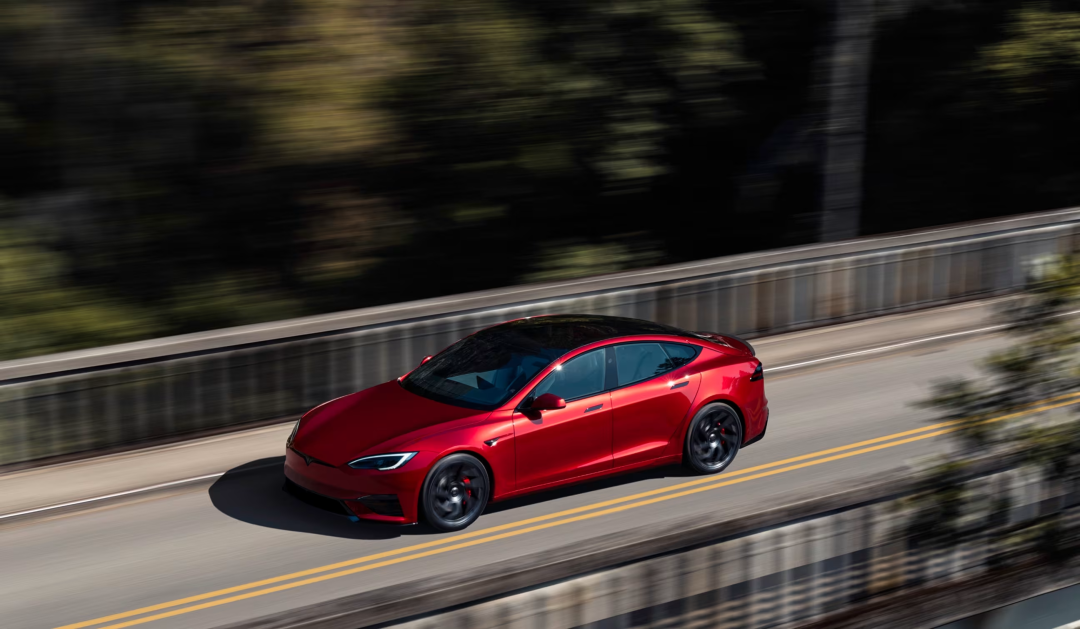
Looking back, the Model X/S were not standalone models; they almost perfectly represented Tesla's early vision for 'high-end flagship electric vehicles.'
With spacious interiors, Plaid high-performance capabilities, and exaggerated acceleration, the Model X's innovative Falcon Wing doors became a classic symbol of Tesla's technological prowess. Combined with Tesla's early sci-fi aura, the Model X was once seen by many as one of the models that best represented Tesla's brand ethos.
Although many now joke that Tesla's current offerings are 'bare-bones,' it cannot be denied that the significance of the Model S and Model X transcends the models themselves. To a certain extent, they sounded the dawn of the new energy vehicle era, driving the electric transformation of the entire automotive industry.
Before the Model S's debut, the electric vehicle market faced long-standing pressures from high costs and technological bottlenecks. The lack of charging infrastructure and limited market awareness also restricted the market's development.
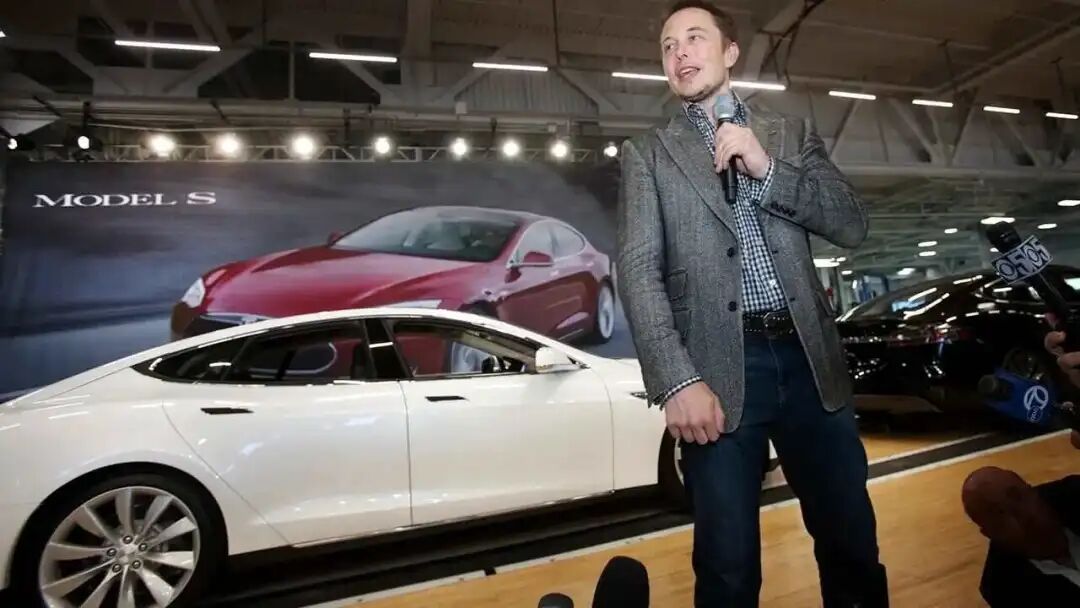
In 2012, the Model S officially entered mass production. As the world's first truly long-range electric vehicle, with an 85kWh battery and an EPA-rated range of 265 miles (426 kilometers)—far exceeding other electric products in 2012, double that of the Honda Fit EV and nearly four times that of the Nissan Leaf—it shattered consumers' inherent cognition (which means ' inherent cognition ' or 'ingrained perceptions') that pure electric vehicles had short ranges and weak performance. With a starting price of $57,400-$87,400, Tesla successfully entered the luxury car segment.
In November 2012, the Model S was named 'Car of the Year' by Motor Trend magazine, the first time the magazine used a secret ballot to select a winner, breaking through competition from Porsche, BMW, Lexus, Subaru, and others. It was also the first non-internal combustion engine vehicle to receive this honor.
The Model X/S, through their success, completed the most difficult 'market education,' turning 'electrification' from a distant concept into a tangible reality.
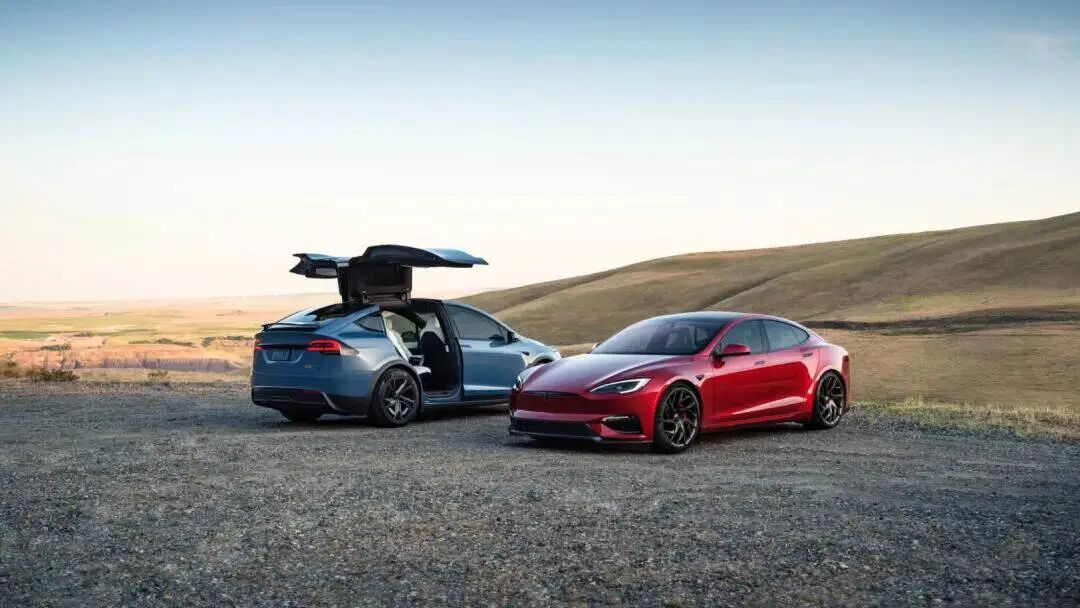
Before the Model S's debut, some automakers had attempted electrification, but most were products born out of compliance with government regulations, such as the Nissan Leaf, which could only be used for short trips.
It was the Model S that first made consumers realize that electric vehicles could offer an experience fully comparable to internal combustion engine vehicles in the same class.
Three years later, in 2015, the Model X followed, entering the Chinese market in 2016. Its sci-fi 'Falcon Wing' doors planted the concept of 'high-performance pure electric luxury' in many people's minds. Even with a starting price of 961,000 yuan, the Model X still garnered significant consumer interest.
At its peak, the Model X and Model S together supported Tesla's high-end product lineup, witnessing the initial rise of the pure electrification wave and laying the technological and brand foundation for the subsequent popularity of the Model 3 and Model Y.
The success of the Model X/S also forced traditional luxury brands to accelerate their electrification transitions. Back then, traditional powerhouses like Mercedes-Benz, BMW, and Audi dismissed electric vehicles, but the popularity of the Model S and Model X made them realize the inevitable trend of electrification, prompting them to launch their own pure electric flagship models.
It can be said that the Model S and Model X not only defined Tesla but also drove the upgrading of the entire automotive industry.
But now, they are officially reaching their endpoint.
02
Will They Ever Return?
The decision to discontinue was not made suddenly.
The Model S proved that electric vehicles could offer performance and luxury. The Model X demonstrated that electric SUVs could be truly special. But today, Tesla's sales are largely driven by the Model 3/Y, with the high-end flagship models becoming increasingly irrelevant.
Now, the Model 3/Y account for 97% of Tesla's sales, making it logical for the old flagships to retire gracefully. Moreover, Tesla no longer needs the Model S/X to prove its brand stature; it now prefers to allocate resources toward new directions like AI, autonomous driving, and robotics.
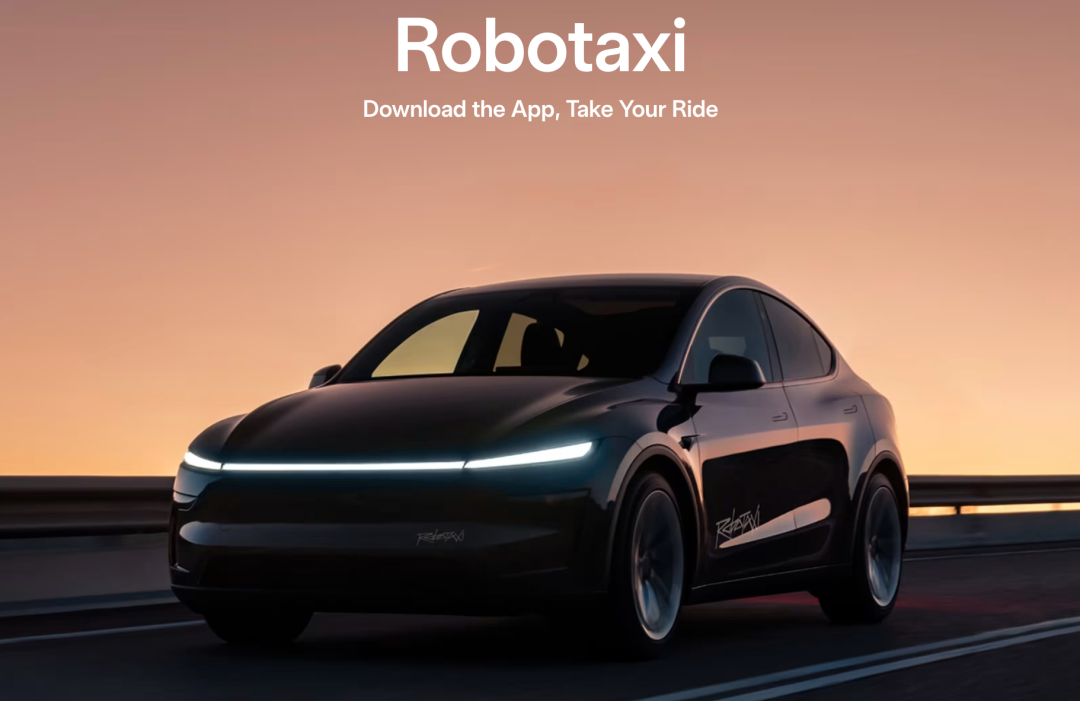
As early as the earnings call in late January this year, Elon Musk announced that the Model S and Model X would officially cease production by the end of the second quarter of 2026, with the factory production line undergoing a comprehensive transformation to produce Optimus humanoid robots, aiming for annual production capacity of one million units.
Musk admitted during the meeting that shutting down the Model S and Model X projects was 'somewhat sentimental, but it's indeed time to end them.'
From a market logic perspective, although the Model S/X remain technically formidable, their share of Tesla's overall deliveries has Shrinking year by year (which means 'declined year by year') since the Model 3 and Model Y were launched.
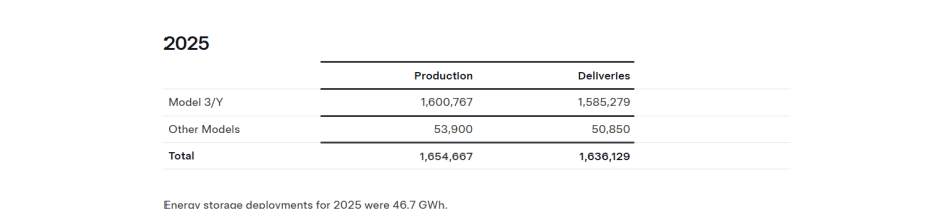
Tesla's global delivery data for 2025 shows that the Model 3 and Model Y combined delivered approximately 1.6 million units, while other models, including the Model S and Model X, totaled around 50,000 deliveries, accounting for less than 3% of Tesla's total sales. This is far below the Fremont factory's annual production capacity of 100,000 units, making them financially insignificant edge products. Continuing to maintain the production line under these circumstances would be a waste of resources.
For Musk, who pursues scale effects and industrial efficiency, fully shifting production lines and R&D efforts toward the next generation of more explosive products is a logical strategic choice.
Of course, a deeper reason is Tesla's transformation into an 'AI and robotics technology company.' Musk has straightforward (which means 'stated bluntly') that the Optimus humanoid robot will be 'Tesla's most important product ever.'
Musk even did the math: 'If we continue to allocate production capacity for 30,000 units annually here (S/X), we're wasting space that could produce 1 million robots, with each robot ultimately creating far more value than a Model S.'
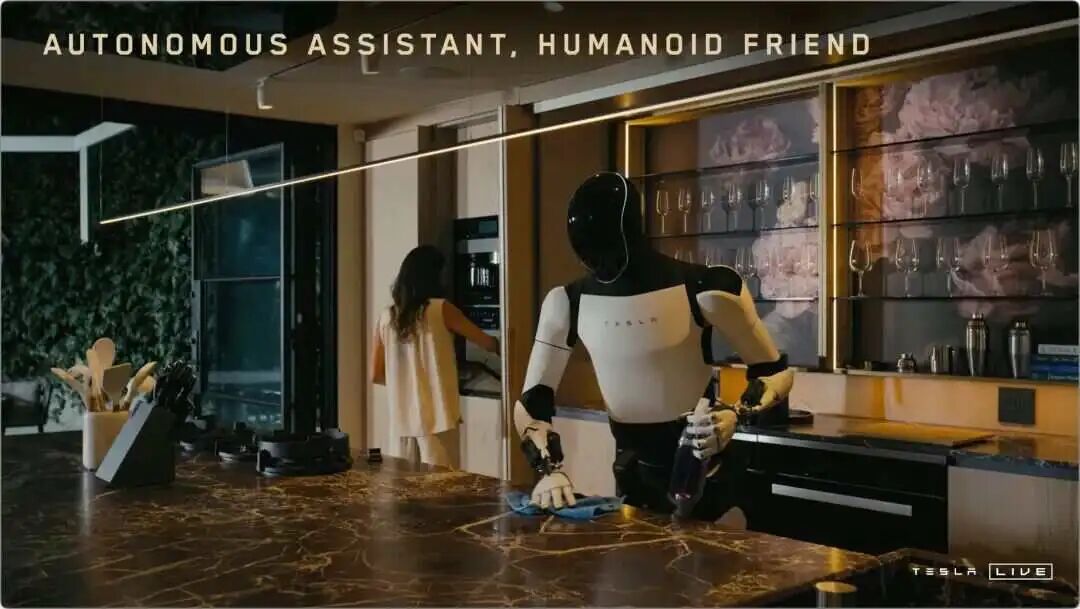
He also emphasized, 'The future value of Tesla will no longer depend on how many vehicles it delivers but on the scale and efficiency of AI technology implementation.'""According to disclosures during Tesla's first-quarter earnings call, the Fremont factory's S/X production line will be transformed into an Optimus humanoid robot production line by summer 2026, with the V3 version expected to debut in July-August.
The exit of the Model S/X does not mean Tesla is abandoning the high-end market. Tesla still has the Roadster 2 supercar, boasting a 1,000-kilometer range, a top speed of over 400 km/h, acceleration from 0-100 km/h in under 2.1 seconds, and an optional SpaceX rocket thruster for further acceleration.
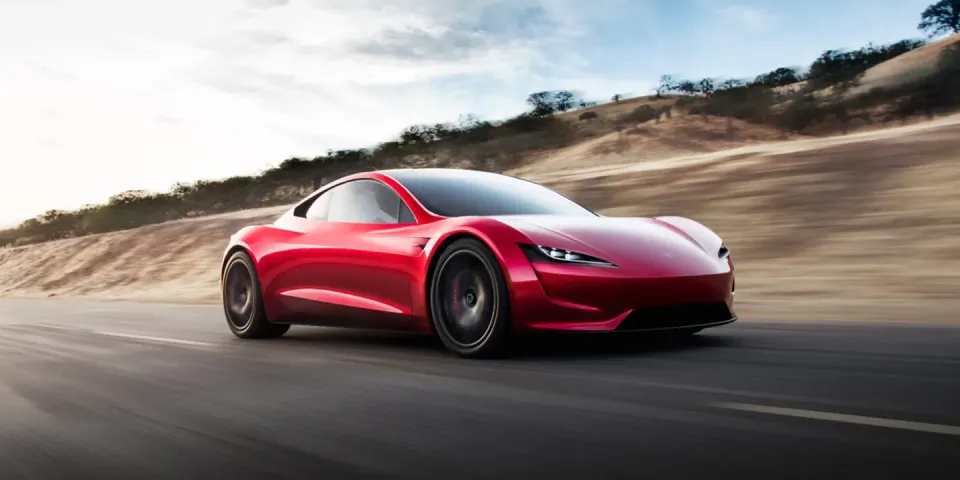
However, the Roadster 2, originally scheduled for release on April 20, has been delayed yet again.
Musk revealed during the first-quarter earnings call that the new timeline might be 'about a month away,' marking at least the 10th promise Musk has made regarding the Roadster's debut since 2017.
Moreover, for a more high-end and niche model like the Roadster, even if produced, how long will Musk keep it alive? After all, in Musk's 'new book' of all-in on AI and robotics, vehicles are no longer the core of growth.
-
![]()
Total Investment Hits Nearly 3.28 Billion! Goertek Launches Mass Production of 12-Inch Transparent Substrate Wafer for AR Glasses’ Micro-Nano Optical Components
-
![]()
Why Is This Precision Optical Film Leader Worth Reevaluating with a Tens of Millions Procurement?
-
![]()
AI Costs Plummet by 90% Over Nine Years: Key Insights from Davos You Shouldn’t Miss
-
Doubao, Your Late-Night AI Companion, Now Eyes Profitability
-
![]()
SRC Empowers SEER Intelligence to Reach a Market Cap of Tens of Billions, Yet Fails to Sustain Profitability
-
![]()
China’s Embodied AI Industry Faces Fierce Domestic Competition, Making Overseas Expansion Essential for Survival
-
![]()
32.8 Billion Yuan Investment! Goertek’s 12-Inch AR Glasses Optical Wafer Base in Lingang Begins Operations
-
![]()
How Far is the All-New Li Auto L8 from Being the Best Five-Seat SUV with In-House Full-Stack Development?