Doubao and OpenAI: Both Aiming for the Same Future
 12/04 2025
 747
747
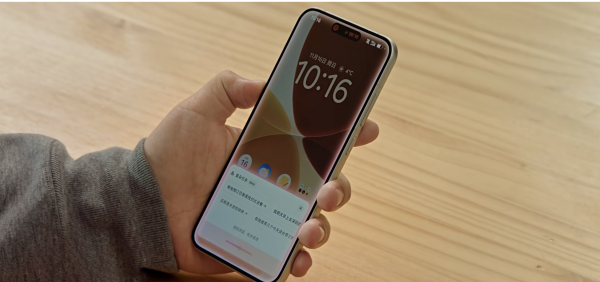
Imagine scrolling through social media and spotting a shampoo you'd like to purchase. Simply tell your phone, "Help me compare prices for this shampoo across all shopping apps and order the cheapest one."
Your AI assistant will then handle the complex task of cross-platform price comparison and automated ordering in the background, leaving you with just the task of confirming the payment.
This is just one of the many scenarios made possible by the preview version of Doubao's mobile assistant.
On December 1, Doubao unveiled the preview version of its mobile assistant. Powered by the Doubao large model and authorized by mobile phone manufacturers, users can now issue voice commands to their phones, prompting the Doubao mobile assistant to perform complex tasks such as comparing prices and placing orders across the internet, checking parking availability, retrieving package pickup codes, making restaurant reservations, and opening car trunks.
Currently, the official price stands at 3,499 yuan. After quickly selling out through official channels, third-party platforms like Xianyu have begun reselling at higher prices, with second-hand prices generally ranging from 3,999 to 4,999 yuan. Some sellers are even reselling purchase eligibility F-codes for around 300 yuan.
Although Doubao emphasizes that it has no plans to develop its own mobile phone and is collaborating with multiple mobile phone manufacturers to advance mobile assistant implementations, its strategic intent is evident.
Once users become accustomed to delegating AI tasks through conversation, the prominence of mobile apps as the primary traffic entry points in the mobile internet will significantly diminish, with apps like Taobao and Meituan becoming mere tools invoked by AI.
However, users quickly encountered issues. For instance, some reported encountering risk control restrictions when attempting to log in to WeChat using Doubao's mobile assistant. Subsequently, Doubao's mobile operation features ceased to support WeChat. A WeChat representative stated to the media, "No special actions were taken; it might have triggered existing security risk control measures."
I. Beyond a Mobile Assistant
Large models are transitioning from technological competition to practical scenario implementation, with AI applications entering the agent stage and beginning to compete based on their ability to accomplish tasks in real life.
Yet, in the consumer market, a killer application capable of fundamentally changing user habits and achieving widespread adoption has yet to emerge.
This time, Doubao is not content with just the application layer but is extending its reach to the underlying operating system through collaboration with mobile phone manufacturers, gaining cross-application scheduling permissions. This means it can not only answer questions but also perform tasks on your phone: automatically opening apps, comparing prices and placing orders, making restaurant reservations, and more, creating an entire consumption chain.
For example, a person can walk and say to Doubao, "Doubao, help me open the front trunk of my Tesla and make a reservation for 8:30 PM at the Spanish restaurant in the Future Center." Doubao can then open the Tesla's front trunk and complete the restaurant reservation on Dianping.
Moreover, with Doubao's memory function enabled, the user experience becomes even more seamless. Users can simply say to Doubao, "Help me recommend a few gifts for my daughter and add them to the shopping cart." If Doubao has relevant information, there's no need to specify the daughter's age and preferences in detail; Doubao can directly select and add them to the shopping cart.
This represents a 'dimensional strike' on traffic.
The core assets of the mobile internet are entry points and traffic distribution rights. Whoever occupies the user's first touchpoint gains the ability to attract user attention and subsequently control commercialization.
However, when Doubao is invoked by default in the system, the first touchpoint will shift from apps to the natural language instructions of the AI assistant. The AI assistant will directly serve as the sole intermediary between users and services, autonomously completing a series of complex actions such as price comparison, jumping, and ordering in the background.
This is highly disruptive.
Imagine that once users become accustomed to this interaction mode without the need to open apps, the value of traditional apps as traffic entry points will face collapse, with apps like Taobao, Meituan, and Pinduoduo becoming objects invoked by AI.
Now, imagine even more boldly: current traffic advertising will also lose its value because the AI mobile assistant, as a new entry point, will bring new business models. For example, will it be possible to directly charge 'agent commissions' instead of traditional advertising fees?
However, the ambition of system-level AI seems grand, but its actual implementation is fraught with challenges.
The most direct challenge is the direct conflict with existing stakeholders in the traffic ecosystem. Are top mobile phone manufacturers willing to cede such a crucial entry point to other companies?
Admittedly, for small and medium-sized mobile phone manufacturers, this collaboration solves the pain point of their insufficient large model capabilities and difficulty in providing differentiated experiences in the AI era, using external advanced AI capabilities to stimulate phone sales.
However, this collaboration model is difficult to persuade top mobile phone manufacturers with strong self-research capabilities. Currently, top mobile phone manufacturers each have their own voice assistants, such as Xiaomi's Xiao Ai, Huawei's Xiaoyi, Honor's YOYO, and OPPO's Xiaobu. These voice assistants are the core hubs for top mobile phone manufacturers to embed into their operating systems and service ecosystem closures.
A mobile AI expert interviewed by First Financial Journal stated that these voice assistants are not simple voice command tools but are now deeply integrated into their respective operating systems. They represent the mobile phone manufacturers' distribution rights over ecosystem traffic and control over future service business models. Larger mobile phone manufacturers, especially those with self-research capabilities in software, are unlikely to cede this capability when collaborating with large model manufacturers.
Last year, Honor's Magic7 series already realized some of the functions currently found in Doubao's mobile assistant. For example, simply saying to YOYO, "Help me order a Starbucks coffee with no extra sugar and less ice," and the AI will automatically select and place the order, with only the payment requiring manual intervention.
Additionally, Doubao's cross-application scheduling capabilities threaten the core traffic of super apps like WeChat and Taobao. WeChat and Taobao will never willingly be scheduled; currently, Doubao's mobile operation features no longer support WeChat.
II. The Next Battle Among Tech Giants
Doubao's penetration into the underlying permissions of the operating system through collaboration with mobile phone manufacturers is undoubtedly a typical case of software driving hardware in the agent era.
Currently, although AI models are already powerful, the two major terminal hardware devices we use most frequently, mobile phones and PCs, are still in a very early stage of deep AI integration. Doubao's mobile assistant may become a tipping point.
Globally, the deep integration of AI and hardware is becoming the next revolutionary opportunity, even regarded as the next 'iPhone moment.' It will redefine the future mobile interaction entry points and is becoming the next battleground for global tech giants.
On one hand, mobile phone manufacturers, such as Apple, have demonstrated their determination to catch up with agent capabilities in the AI field at any cost.
In November of this year, Bloomberg reported that Apple is expected to release an upgraded Siri next spring, using a customized version of Google's Gemini artificial intelligence model to drive some of Siri's new features. For this, Apple will pay approximately $1 billion annually to obtain the right to use Google's technology.
This model will be responsible for core functions such as information summarization, task planning, and complex multi-step instruction execution for Siri. Compared to the current 150 billion parameter cloud model used by Siri, its processing power and contextual understanding depth will achieve a quantum leap, supporting multimodal interaction and ultra-long text processing of 128K tokens.
Just in December, Apple announced that John Giannandrea, the head of intelligent technology, will step down from his position. Amar Subramanya will serve as Apple's Vice President of Intelligent Technology. Before joining Microsoft's Intelligent Technology Department as an Enterprise Vice President, Subramanya worked at Google for 16 years.
Tech giant Google is deeply integrating Gemini into the Android operating system, hoping to make Gemini the system-level AI assistant for Android. Currently, the Android version of Gemini can already complete some tasks, such as generating captions for photos, asking questions about articles users are reading, and performing other generative AI tasks.
If Apple and Google focus on upgrading existing terminals, then AI companies represented by OpenAI are attempting to completely break free from the existing frameworks of mobile phones and PCs and define the next generation of AI terminals from scratch.
OpenAI CEO Sam Altman stated that the company is developing an AI-centric device that will be as revolutionary as the iPhone but will not impose additional burdens on users.
"When I use current devices or most apps, I feel like I'm walking through Times Square in New York—a constant stream of small distractions and lights flashing in my face... It's an unsettling experience," Sam Altman said. He believes that this anxious experience is precisely the problem with technological development, and the experience brought by OpenAI's new device will be vastly different.
He even invited Jony Ive, the designer of the original iPhone, to participate in the research and development. OpenAI hopes that Ive, the former chief designer of Apple, can replicate the success he achieved when designing iconic products such as the iPod, iPhone, and iPad.
This global competition has escalated from a mere technological race to a redefinition of the future mobile internet entry points.
III. Conclusion
Against the backdrop of years of stagnant competition in the mobile phone industry, AI-native phones represent a rare growth story. For the internet industry, the battle for entry points has never ceased, shifting from browsers to apps and now to AI.
Doubao's bet on system-level entry points may seem radical, but it aligns with structural opportunities in the industry: when user habits shift from consulting apps to issuing voice commands, the rules of the mobile internet game may fundamentally change.
The outcome of this competition is full of uncertainties. Will AI assistants exist within the current two major terminals, mobile phones and PCs, evolving slowly, or will a native AI terminal emerge, completely revolutionizing human-computer interaction? These are unpredictable, but regardless of the outcome, this will be one of the most noteworthy stories in the future of the mobile internet.
-
![]()
A Week with QianWen Office: The Highs and Lows
-
![]()
It's Time to Invest in China's Auto Industry
-
![]()
An AI Position with an Annual Salary of 1.7 Million Yuan Suddenly Becomes Highly Sought-After
-
![]()
Chevrolet and Skoda Exit China Before Mazda and Peugeot-Citroen
-
![]()
Zuckerberg's Concerns About Superintelligence: Who Holds the Power When the Technology Arrives?
-
![]()
Auto Scene Competition in Full Swing
-
![]()
Just Hit with a $1.4 Trillion Lawsuit, Meta Open-Sources Its 30B "Pocket Rocket" Overnight: Zuckerberg Calls Out DeepSeek, Qwen, Kimi
-
![]()
Samsung Z Fold 8 Ultra Review: A $2,100 Foldable Flagship—What Justifies the Price?