Quark, Qianwen, and Linguang Operate Independently: Alibaba Needs Another Jiang Fan
 12/05 2025
 637
637
Recently, everyone has been talking about Alibaba's third-quarter report and AI, so I thought I'd join in the discussion.
I won't dwell on the data; instead, I'll share my overall perspective.
Overall, Taobao has handled this battle quite impressively. Although Alibaba sacrificed profits, it has captured a significant market share. In the third quarter, the food delivery and flash sale businesses grew by 60%, a remarkable rate.
The growth in flash sales appears to be another display of Alibaba's 'financial prowess.' However, the deeper integration of organizational structures is far more crucial than the visible growth rates.
Since then, e-commerce, food delivery, flash sales, and travel have merged into a unified Alibaba large consumer platform.
In the past, Alibaba's biggest challenge was the 'independent operations' of its various units, or, bluntly put, 'departmental silos.' After Jiang Fan took charge of Alibaba's e-commerce division, integrating Ele.me and Fliggy under the e-commerce umbrella, he addressed Alibaba's core issue, significantly advancing the large consumer strategy.
Unfortunately, Alibaba has only one Jiang Fan.
Now, a similar issue seems to be emerging in Alibaba's AI strategy.
Three Questions About Alibaba's AI-to-C Implementation
Previously, Alibaba placed its hopes for AI on Quark, promoting AI search, then renaming Tongyi Qianwen, followed by the simultaneous release of the Qianwen APP and Linguang APP. Over the past two years, Alibaba's actions in its AI strategy have been perplexing.
Currently, the issues mainly concentrate on three points:
Question 1: From a user perspective, Alibaba has effectively organized its large consumer business, so why is there confusion in its AI division?
Before the large consumer strategy was unveiled, Alibaba struggled to compete with Meituan in the local life sector. At that time, Gaode and Fliggy had already proven that independent operations were ineffective. Now, the AI large model seems to be repeating this mistake.
In implementing AI, Alibaba initially bet on Quark, then shifted to Qianwen and Linguang, creating multiple fronts with each operating independently.
Times have changed. The initial growth phase of AI model APPs has ended. Users have developed habits of using large model APPs daily, and the market is entering a phase of deep user engagement. At this point, what's the point of dispersing efforts?
From a user's perspective, focusing on a single APP would likely lead to faster user growth than developing two separate ones.
After all, Yuanbao and Doubao have substantial user bases. For Alibaba, the priority is for its AI large model APP to grow rapidly.
Question 2: The market for consumer-facing large models is already well-established. Why is Alibaba sounding the charge now?
Today, most users engage with large model products in a few scenarios: conversation, answering questions, searching, generating images, and creating PPTs, each corresponding to the strengths of different large model APPs.
Doubao excels in creative generation. I often use Doubao to generate article illustrations, and the quality is high. With just a prompt, it can create the desired image, which is very convenient.

Yuanbao AI's strength lies in its robust ecosystem, with access to WeChat. It can summarize WeChat Official Account articles and video content, facilitating easy collection and sharing.
DeepSeek specializes in logical reasoning and coding capabilities, so many users frequently rely on DeepSeek for programming assistance. Additionally, its reputation ensures that its influence in the consumer market remains on par with ChatGPT, maintaining a strong position.
From an average user's perspective, since people have already adopted large models for daily use and the results generated are similar, is there still growth potential when sounding the charge now?
Question 3: Can Alibaba still compete with Doubao and Yuanbao by burning money for growth at this stage?
Today, Doubao, with 172 million monthly active users, has started collaborating with mobile phone manufacturers, taking AI large model APPs to the next level.
Doubao's partnership with hardware manufacturers aims to explore the possibilities of integrating AI with hardware.
While AI large model APPs serve as an entry point, they are not the primary one. Especially with mobile phone manufacturers investing in AI, there's a risk that large model APPs could be disrupted. Doubao AI's deep integration with mobile phones is paving the way for the next phase. This move by ByteDance is forward-looking.
In other words, Doubao is already planning its next move, while Alibaba is still figuring out its opening strategy, possibly lagging behind.
After considering these questions, I don't see a clear direction. To understand these issues, perhaps we need to look within Alibaba.
Is the 'Jack Ma Effect' Too Strong?
Why is Alibaba 'charging ahead' in consumer-facing AI at this moment?
One reason might be that Alibaba has reached a point where it 'has to charge.'
Alibaba's journey into AI for consumers started early. After AI search gained popularity, Alibaba began using Quark to attract consumer users. Although there was user growth, it didn't become a new super entry point.
The idea behind betting on Quark for AI isn't hard to guess. For Alibaba, despite having super APPs like Alipay and Taobao, Quark represented the only opportunity to create a super content platform.
Alibaba needs a new super content entry point.
Alibaba's past failure to develop an AI large model APP might be due to the lack of a super content platform as a 'launcher' in terms of traffic.
Let's recall how Tencent developed Yuanbao. Before Yuanbao AI rose to prominence, Tencent did one crucial thing: integrating DeepSeek's open-source AI capabilities into the WeChat ecosystem.
WeChat acts as an amplifier. By integrating with the vast content ecosystem of WeChat Channels, Yuanbao didn't have to worry about growth.
Similarly, how did ByteDance's Doubao succeed?
Doubao's response is: 'It relies on the internal ecological synergy within ByteDance, creating a positive cycle of technology-product-traffic. In reaching users, products like Douyin and Toutiao provide core traffic entry points for Doubao, completing its cold start. Then, it continuously iterates based on user needs.'
Summarizing Tencent and ByteDance's experiences, the core message is: 'Break down barriers and achieve ecological synergy.'
This might be what Alibaba's AI business line currently lacks.
Alibaba doesn't lack technical capabilities. Patent information from Tianyancha APP shows that Alibaba has filed over 1,000 patents in the past five years.
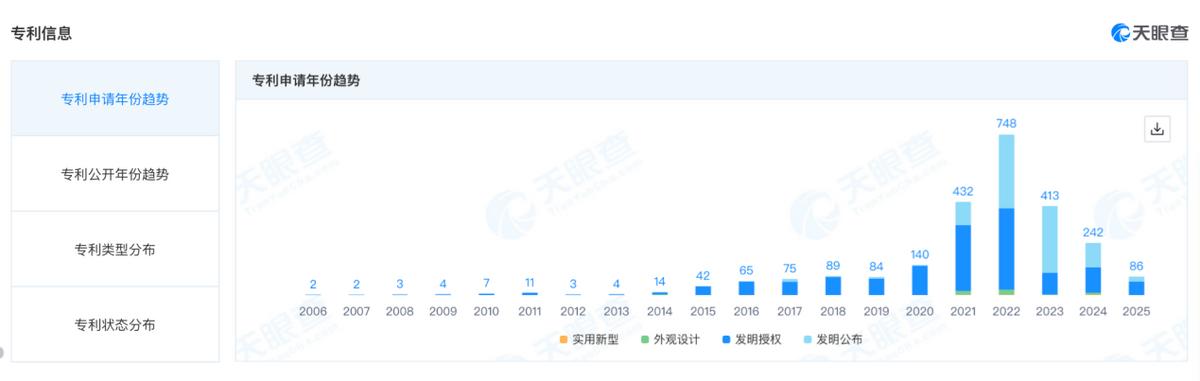
For companies like Alibaba, ByteDance, and Tencent, implementing a strategy isn't about developing products; it's about coordinating at the organizational level.
Once the organizational structure is clear, it can concentrate its efforts, and departmental silos will naturally disappear.
This is particularly evident in Alibaba's AI endeavors.
After Alibaba released the Qianwen APP, Ant Group launched Linguang. Although management claims they are 'both searching for water in the desert,' from an external perspective, there's a lack of synergy in the underlying strategic approach.
Of course, this is Alibaba's internal competition mechanism in the AI field. However, the issue is that too many products are being launched externally, from Quark to Qianwen, from Wanxiang video model to Linguang, which highlights generating programs.
In summary, Alibaba's AI strategy isn't focused on a single point; instead, it seems disperse (fēn sàn, dispersed) across several internal directions.
Additionally, another reason might be the strong 'Jack Ma Effect' in implementing AI.
Although Jack Ma has stepped back from Alibaba's day-to-day management for some time and doesn't frequently visit Alibaba campuses, he remains Alibaba's spiritual totem and soul figure. Wherever he goes, he naturally becomes the focal point.
In February, Ma visited Quark, which became Alibaba's AI focus. Some time ago, he visited Ant Group's campus, followed by the release of Linguang.
From another perspective, is this a form of 'strategic upward management'?
Ma undoubtedly hopes that Alibaba doesn't miss the historic opportunity in AI and that Ant Group can find a new direction beyond finance.
By frequently visiting Alibaba, Ma might hope to break down barriers across various lines from the top. However, sometimes things don't go as planned.
A question worth reflecting on is: If the 'Jack Ma Effect' becomes a 'management strategy' for departments to compete for resources, what's the point of implementing Alibaba's AI strategy?
Alibaba's AI Needs Another Jiang Fan
For Alibaba, perhaps the most crucial thing isn't to implement a 'horse racing' mechanism but to concentrate all resources and capabilities into a single APP. Then, leverage superior model capabilities and user experience to achieve a decisive victory.
What's the current situation in the AI large model industry?
User growth has initially entered a phase of inventory (cún liàng, existing user base) competition, and it's highly competitive.
Several mainstream models on the market have stable user bases and their own moats. Meanwhile, Alibaba's efforts are disperse (fēn sàn, dispersed), and creating multiple entry points doesn't add incremental value beyond disperse (fēn sàn, dividing) users.
In other words, the market has long passed the initial horse racing stage, and user mindshare is already occupied.
Today, Alibaba's AI large model needs to grow rapidly to a certain scale, such as reaching 100 million DAUs. Regardless of its future potential, it must first cross the survival threshold. At this point, internal competition is counterproductive.
From this perspective, Alibaba doesn't need an overly complex AI large model; it needs 'another Jiang Fan.'
Why was the large consumer platform successful? Because Jiang Fan integrated Taobao, Fliggy, and Ele.me, aligning efforts and improving resource utilization efficiency. Every budget dollar spent yielded results.
Now, Alibaba's AI division needs this capability the most.
If, in a parallel universe, 'another Jiang Fan' were responsible for Alibaba's AI business, he might prioritize these two things:
1. Abandon various product names and unify under 'Qianwen AI.'
At least currently, platforms that frequently change names don't perform well. Look at Wenxin Yiyan, which renamed to Wenxiaoyan and recently back to Wenxin. What happened? Doubao became the industry leader.
Alibaba doesn't need a specific AI product; it needs a unified AI strategy, just like the large consumer platform. Breaking down barriers might not be easy, but unifying user perceptions of Alibaba's AI shouldn't be too difficult.
2. Spin off Linguang from Ant Group, merge the Qianwen team into a single AI team, elevate its status to be on par with Ant Group and Alibaba Cloud, and concentrate resources to develop a universal AI large model product.
For Alibaba, the most urgent need is to create a universal application. Developing an AI super APP should target the entire population from the start.
The strategic positioning of this product should be on par with Alipay and Taobao.
Ultimately, developing a large model APP isn't about satisfying a niche audience; it's about meeting universal needs like Alipay and Taobao. From this perspective, the current Qianwen and Linguang might not meet these requirements.
Additionally, driving Alibaba's AI strategy forward requires more ecological synergy to leverage Alibaba's core strengths.
With two super APPs and years of AI investment, Alibaba has strong technical and financial capabilities. There's no reason it can't develop a product like Doubao AI.
Ultimately, Alibaba lacks a Jiang Fan-like figure to lay the foundation.
As the saying goes, 'It's easy to find a thousand soldiers, but hard to find a general.'
Ma's totemic influence on Alibaba is too strong, and his stepping back came a bit early. Unfortunately, he didn't find a 'substitute' before leaving.
Implementing a foundational strategy like AI requires a bold and visionary leader, similar to how Lu Qi laid the groundwork for Baidu's AI for the next decade.
The same applies to Alibaba today.
In the tech sector, no one doubts Alibaba's technical capabilities or its ability to execute strategies. Alibaba remains a leader among Chinese tech companies.
It's certain that Alibaba will secure a place in the AI field in the future.
However, as a loyal Alibaba user, I still hope that Alibaba can deliver a truly impressive product to usher in the next era of AI. I sincerely hope that day arrives soon.
Disclaimer: This article is based on publicly disclosed information and available data, offering commentary. However, the author doesn't guarantee the completeness or timeliness of this information. Additionally, the stock market involves risks, and caution is advised when entering. This article doesn't constitute investment advice; investment decisions should be made independently after careful consideration.
-
![]()
A Week with QianWen Office: The Highs and Lows
-
![]()
It's Time to Invest in China's Auto Industry
-
![]()
An AI Position with an Annual Salary of 1.7 Million Yuan Suddenly Becomes Highly Sought-After
-
![]()
Chevrolet and Skoda Exit China Before Mazda and Peugeot-Citroen
-
![]()
Zuckerberg's Concerns About Superintelligence: Who Holds the Power When the Technology Arrives?
-
![]()
Auto Scene Competition in Full Swing
-
![]()
Just Hit with a $1.4 Trillion Lawsuit, Meta Open-Sources Its 30B "Pocket Rocket" Overnight: Zuckerberg Calls Out DeepSeek, Qwen, Kimi
-
![]()
Samsung Z Fold 8 Ultra Review: A $2,100 Foldable Flagship—What Justifies the Price?