Doubao AI Phone Faces 'Ban': Are Internet Behemoths the True Challengers to Xiaomi, Huawei, OPPO, and Vivo?
 12/12 2025
 665
665
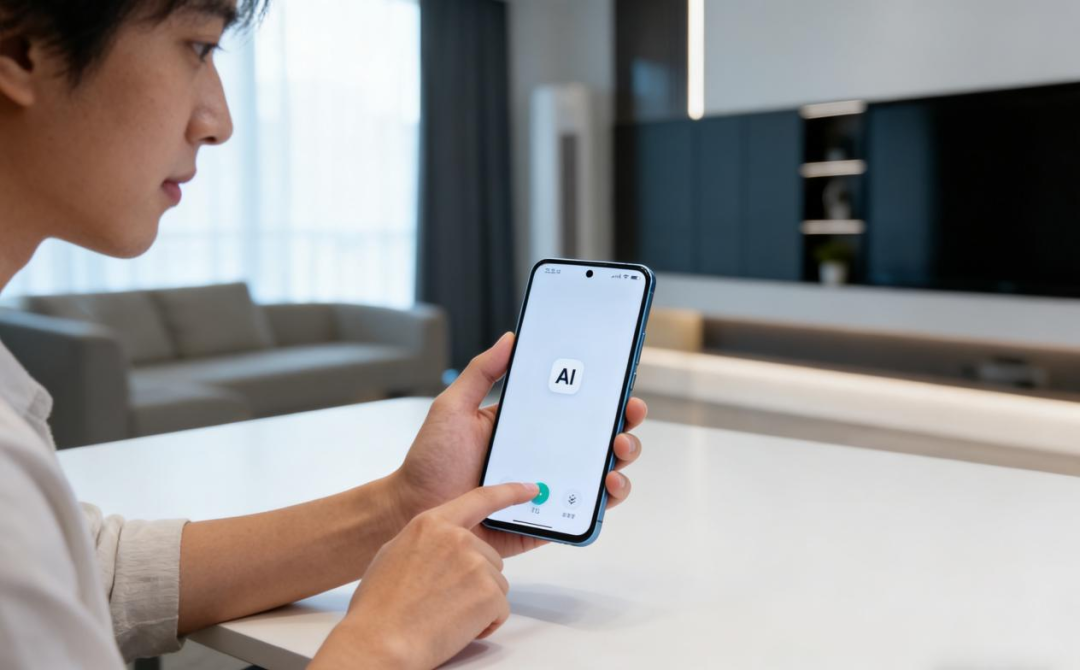
Unveiling the 'Access War' in the AI Era
Written by/ Meng Huiyuan
Edited by/ Chen Dengxin
Formatted by/ Annalee
From 'AI phones priced at 3,499 yuan being resold for up to 36,000 yuan in the secondary market' to 'widespread out-of-stock conditions for Doubao AI Phones offline,' from 'daily rental prices ranging from 70 to 300 yuan' to 'restrictions imposed by multiple mainstream apps,' the market turmoil triggered by the Doubao AI Phone since its launch has been a series of waves.
The strong market reaction to the Doubao AI Phone stems from its clearer vision of 'phone autonomous driving' compared to the initial batch of AI phones introduced by phone makers. It enables cross-app operations, such as replying to messages, ordering takeout, and searching for information via voice control. Although sensitive operations like payments still require manual input, it has, to a certain extent, met the core demand of freeing users' hands.
Consequently, super apps sensing the threat have initiated an 'access defense war.' Apps like Taobao, Meituan, Alipay, and Pinduoduo can no longer be logged in using the Doubao AI Phone, displaying messages like 'Your device login environment is abnormal.' Apps like WeChat and Gaode Maps cannot perform AI operations on the Doubao AI Phone, showing messages like 'Cannot open due to restrictions.'
However, the storm extends beyond these software application providers. For hardware device makers in the phone industry, the new cooperation model of internet companies 'using shells' to build phones also poses a challenge to their traditional market patterns and business logic.
'Phone Autonomous Driving' Redefines the AI Phone Experience
The concept of 'AI phones' is not new in the phone industry. Amid the AI application boom sparked by DeepSeek, many phone makers launched their own AI phone products early in the year, attempting to seize the initiative in this emerging blue ocean.
These phones either featured more powerful AI chips, developed intelligent voice assistants, or offered AI functions like intelligent photography and optimization. During that period, AI phones were almost the hottest topic in the phone market.
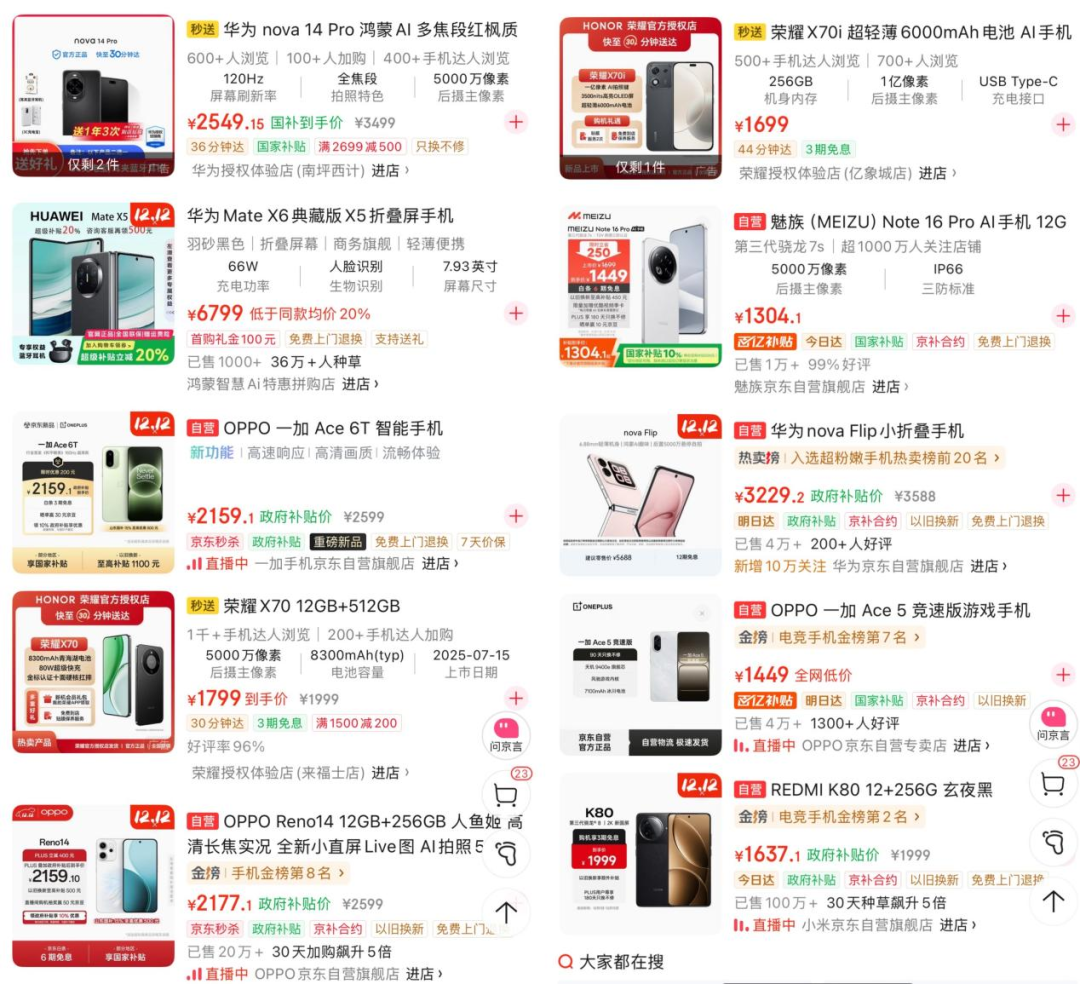
Numerous 'AI Phones' Already on the Market
Of course, from a usage perspective, they fell far short of the perfect vision of AI phones freeing users' hands. Intelligent voice assistants sometimes failed to accurately understand user commands, intelligent photography functions did not perform well in complex lighting environments, and intelligent optimization functions were often criticized by users for being overly aggressive and somewhat distorting.
Moreover, AI functions consumed a large amount of computing resources, necessitating more powerful AI chips and other hardware, which led to higher prices for some AI phones. Consequently, users had to pay more for limited AI functions.
However, with ByteDance's collaboration with ZTE, resulting in the launch of the engineering prototype Nubia M153 equipped with a technical preview version of the Doubao phone assistant, a new business model has begun to challenge the phone market landscape established by 'Huawei and its peers.' Internet companies 'using shells' to build phones can bypass the cumbersome hardware R&D cycles and high R&D costs, quickly entering the market and directly competing with traditional hardware device makers.
Although ByteDance has repeatedly clarified that it will not develop its own phones and will focus on AI technology output, collaborating with phone makers to implement on-device experiences, the demonstration effect of this cooperation model is clear. Internet companies, leveraging their strong software ecosystems and user bases, can enter this field by collaborating with hardware makers or directly launching their own branded phones, potentially sparking an unprecedented transformation.
For a long time, hardware device makers have held significant sway in the market through their R&D, production, and sales of phone hardware. However, the participation of internet companies not only means they can utilize their advantages in software, services, and user data to provide more personalized and intelligent experiences but also, to some extent, breaks down the market barriers long constructed by hardware device makers.
For hardware device makers, they must re-evaluate their market positioning and competitive strategies, considering how to strengthen the integration of software and services while maintaining their hardware advantages to enhance user experience and withstand the impact of competitors collaborating with internet companies.
This is very similar to the 'Huawei HI Mode' or 'Smart Selection Car Mode' in the smart car industry, where tech companies provide core intelligent solutions, and traditional automakers handle vehicle manufacturing. Therefore, it is not difficult to see a new trend: the specialized division of labor between 'intelligence' and 'manufacturing' is spreading from the automotive industry to the consumer electronics sector.
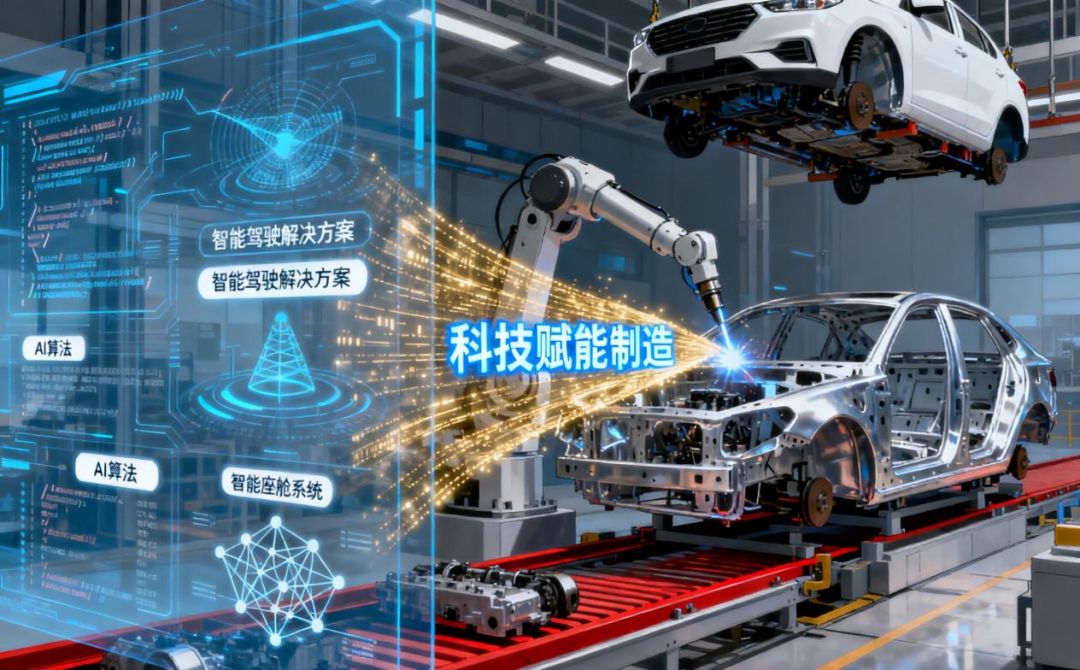
In other words, under the aforementioned cooperation model, internet companies provide AI experience definition, software ecosystems, traffic access points, and brand identity, while hardware makers are responsible for hardware design, supply chain management, production, manufacturing, distribution, and after-sales service.
This has led to a triple-win scenario: internet companies can ensure their AI assistants have the highest privileges and the most deeply integrated experiences by defining phones and seize traffic access points at the phone operating system level. Against the backdrop of converging hardware innovation and market intensification, hardware makers with weaker brand momentum can create differentiated selling points and enhance product premiums by combining with top-tier AI. Users may not need to choose between the 'Apple closed ecosystem' or 'an Android maker's ecosystem' but can opt for a combination of 'a top-tier AI service + open hardware,' giving rise to new market segments.
The Battle for Dominance Under the 'Using Shells' Model
The advantages of cooperation are evident, but numerous contradictions have also begun to surface.
Firstly, the Doubao AI Phone has faced a siege from leading apps like WeChat, with restricted usage privileges and core operations leading to a decline in its secondary market premium.
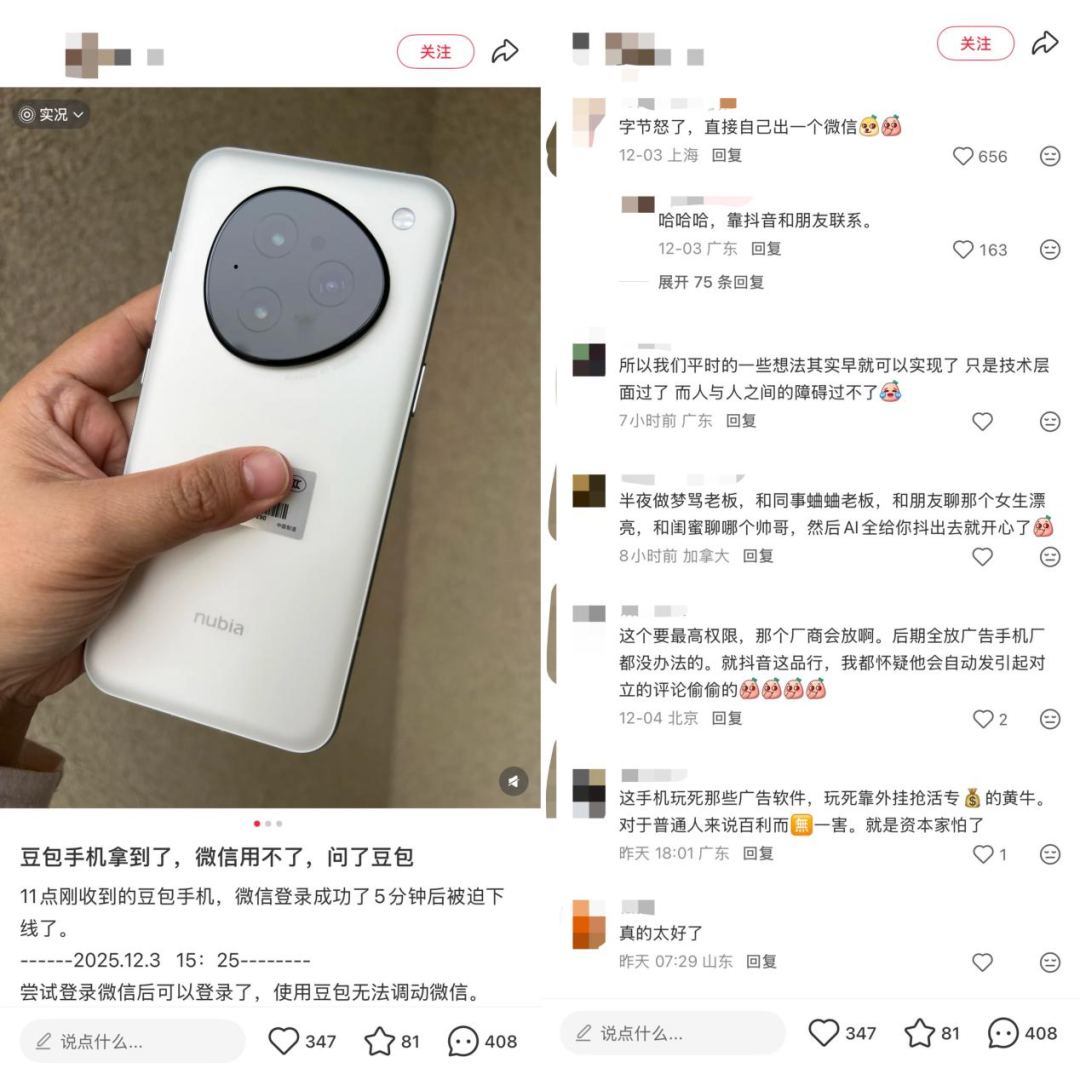
Image Source: Xiaohongshu
The reason behind this is not hard to guess. The core value that users originally valued was the cross-app automation capability of its AI assistant. Once leading apps restrict this, the assistant's core functions are significantly 'downgraded,' and its usage value shrinks, making the decline in premium reasonable.
Therefore, AI phones produced using this cooperation model, if unable to achieve stable synergy with mainstream apps and become a unified system-level standard interface, may end up as isolated islands within the ecosystem of the cooperating internet company, confined to specific app circles and unable to reach a broader user base and market space. Alternatively, they may have to face frequent adaptations and adjustments, expending significant human, material, and time costs to meet the interface standards and functional requirements of various mainstream apps, yet still struggling to achieve the desired seamless integration.
Crucially, this unstable synergy also poses security risks. Due to the lack of a unified standard interface, different apps may have vulnerabilities in data transmission and interaction processes, exposing users' personal information and privacy data to the risk of leakage. Once a data leakage incident occurs, it will not only cause huge losses to users but also severely damage the reputation of relevant makers, further affecting their competitiveness in the market.
Secondly, there is the issue of brand identity ownership. The AI experience of internet companies using shells to build phones is strongly tied to the system privileges and data openness of phone makers. However, leading makers, driven by their core interests in ecosystems, data, and commerce, will inevitably not open up underlying privileges, which is the fundamental ceiling of this model. Moreover, they are fully committed to developing their own on-device AI (such as Xiaomi's Xiaoai and Huawei's Xiaoyi), aiming to become the interaction access point in the AI era rather than becoming 'hardware contract manufacturers' for internet companies.
As for phone makers with weaker brand momentum and smaller market shares, although they can regain some market share through this cooperation model and temporarily alleviate pressure in the fierce market competition, it is not a long-term solution.
On the one hand, excessive reliance on internet companies' AI technology will gradually erode their autonomy in product innovation and differentiation. On the other hand, internet companies often have their own strategic layouts and product rhythms, making it difficult for phone makers to flexibly adjust the development direction and progress of AI functions according to their own market positioning and user needs. By then, will users remember the 'phone equipped with Doubao' or the 'Nubia phone'?
Finally, there is the reasonable speculation about the profit model. Based on the exploration of this cooperation model in the new energy vehicle sector, if AI phones become the mainstream form of future intelligent terminals, their profit model may undergo unprecedented transformation and expansion.
Similar to how new energy vehicles provide value-added services such as autonomous driving, remote control, and intelligent connectivity through software subscriptions, AI phones will offer a series of highly personalized and intelligent software subscription services tailored to users' daily lives, work, and entertainment needs. These services may include, but are not limited to, advanced voice assistants, intelligent health management, personalized content recommendations, and efficient office tools, each becoming a highlight to attract user payments.
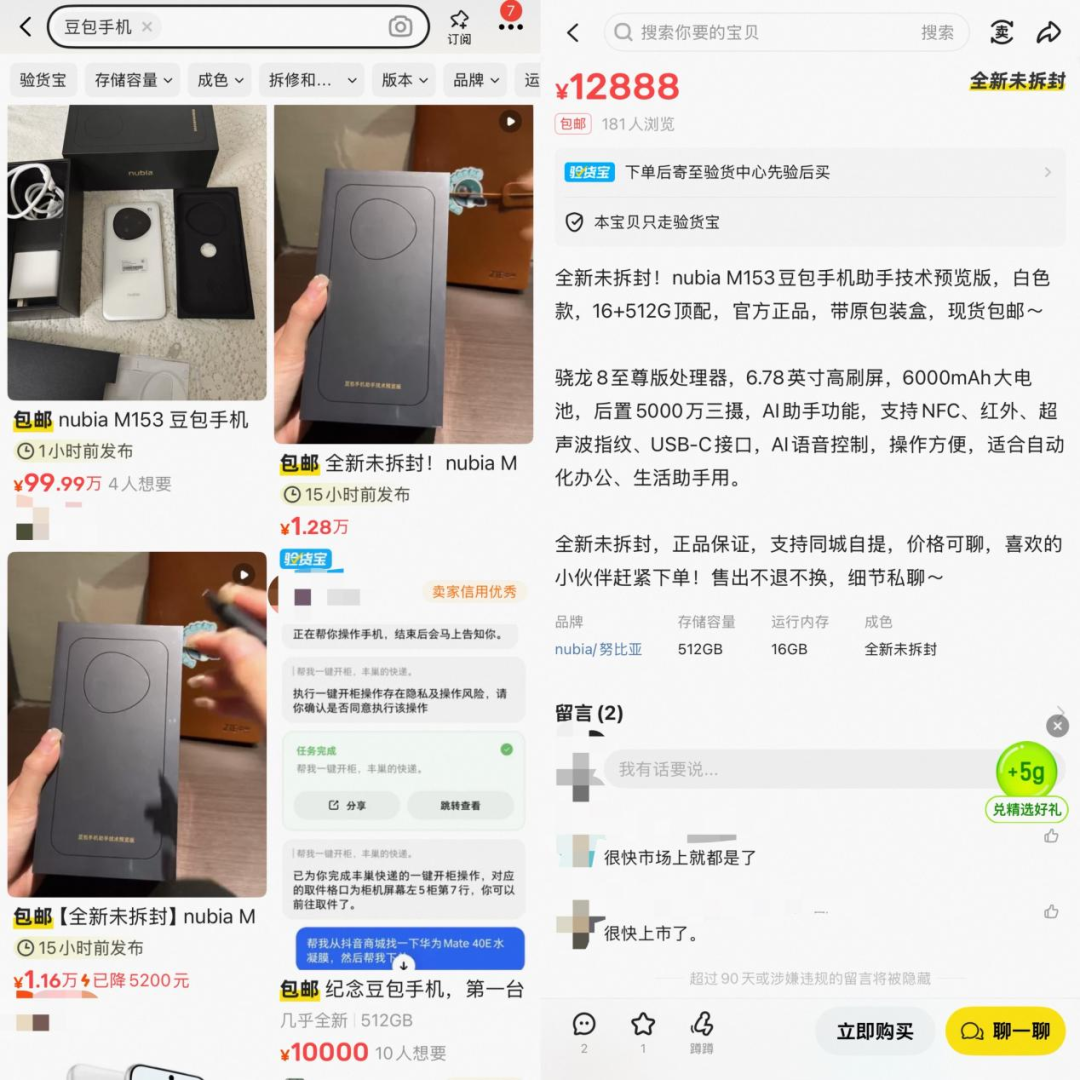
The Doubao AI Phone Commands a High Secondary Market Premium
It is foreseeable that if this software subscription model proves successful, there may be closer 'equity cooperation' or 'joint ventures,' forming new brands that integrate software and hardware and truly challenging the existing landscape.
Of course, many issues need to be resolved beforehand: Can users' willingness to pay for software and their renewal rates support the long-term development of this business model? How will hardware partners obtain a reasonable share of software revenue? When user experience issues arise (such as AI misoperations or privacy breaches), who is responsible—the AI provider or the hardware maker?
Currently, the Doubao AI Phone is primarily available in limited quantities to developers and tech enthusiasts. Whether it can trigger a disruptive experience and spawn more imitators remains to be seen over time. However, one thing is certain: the challenge launched by 'AI-first phones' against traditional flagship phones has already begun.
-
![]()
Chevrolet and Skoda Exit China Before Mazda and Peugeot-Citroen
-
![]()
Zuckerberg's Concerns About Superintelligence: Who Holds the Power When the Technology Arrives?
-
![]()
Auto Scene Competition in Full Swing
-
![]()
Samsung Z Fold 8 Ultra Review: A $2,100 Foldable Flagship—What Justifies the Price?
-
![]()
Rocket Lab: Neutron Launch May Be Postponed. How Can RKLB Compete with SpaceX?
-
![]()
The Wealthiest Individual Critiques E-commerce: 'Championing the People' or 'Falling Prey to Business Theft?'
-
![]()
The 10-Trillion-Parameter Behemoth is Still Elusive, but ByteDance is Leading the Charge with a New Top-Tier Department
-
Who Will Be the Talent for the Commercial Space Industry?