Only the iPhone Stays the Same Price! The Surge in Smartphone Prices 'Wipes Out' Low- and Mid-End Models, Will Sub-$150 Phones Be the First to Go?
 02/28 2026
 481
481
The 'wait-and-see' crowd finally loses out.
Smartphone prices are about to rise.
According to Sina Tech, the domestic smartphone industry is poised for an across-the-board price hike, with most brands and models expected to increase their prices. Information from suppliers, internal sources at smartphone brands, and market research firms indicates that smartphones are entering a phase of accelerated price increases. Not only will new models become more expensive, but prices of older models may also rise.
Such a significant price hike is unprecedented in China's smartphone industry.
Why Are Storage Prices Soaring? Is AI to Blame?
The primary reason for the widespread smartphone price hikes is the skyrocketing cost of memory and storage, which has increased the overall production costs. According to TrendForce, DRAM prices surged by over 80% in the first quarter of this year, with some models seeing prices multiply several times over. For example, the cost of 12GB LPDDR5X memory jumped from 200 yuan to nearly 600 yuan.
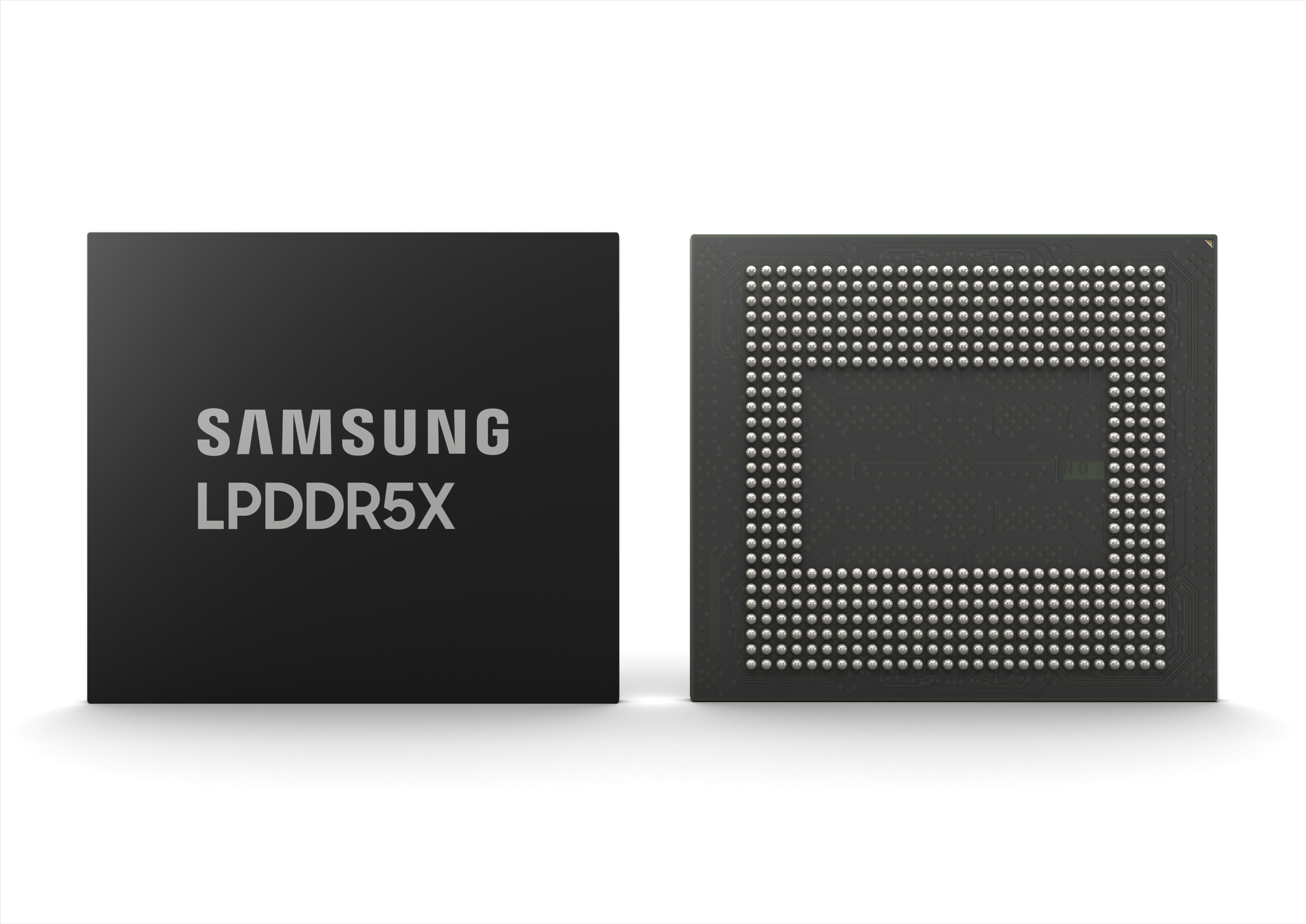
(Image source: Samsung)
The situation in the flash storage market is similar, with the cost of 256GB UFS4.0 storage nearly doubling. What's even more challenging for smartphone manufacturers is that not only have memory and storage prices surged dramatically, but they have also increased frequently, with some prices adjusting twice within a single month.
This means that the overall material cost of a smartphone with 12GB+256GB storage can fluctuate by over a thousand yuan. In today's fiercely competitive smartphone industry, where even flagship models struggle to maintain profit margins of a thousand yuan, brands face astronomical losses if they do not raise prices.
The primary culprit behind the sustained increase in memory and storage prices is AI. Specifically, AI requires massive computational power, which relies on AI chips and storage chips. In recent years, the arms race among AI giants has intensified, with large language models quickly scaling from billions to trillions of parameters.
At the same time, large models are evolving toward multimodality, with more complex applications like text-to-image and text/image-to-video generation emerging, demanding even greater computational power. Currently, several leading domestic video generation models are overwhelmed by user demand, with wait times for video generation stretching to several hours or even over a dozen hours.
(Image source: Leikeji)
Moreover, under the AI boom, tech giants are experiencing widespread AI anxiety, leading to increased investment in the AI sector. This has translated into more chips, larger memory capacities, and greater storage to support the ever-growing demand for computational power.
As a result, market demand for storage chips has surged to unprecedented levels. Once supply and demand balance is disrupted, price hikes become the inevitable outcome. In fact, it's not just the smartphone industry that's being 'plagued' by AI; graphics cards, PCs, and other hardware are facing similar situations. NVIDIA, the world's largest graphics card brand, has prioritized resources for its more profitable AI chips, even sacrificing production capacity for gaming graphics cards and possibly skipping the release of new-generation graphics cards this year.
Apple Caves, Chinese Brands 'Cut Off Arms to Survive'
Different brands are adopting varying strategies in response to the memory and storage price hikes. Smaller brands are the first to buckle under this wave of price increases. On February 27, Meizu Technology officially announced the suspension of its domestic smartphone business. Recently, rumors have been circulating about Meizu abandoning its smartphone business and laying off employees.
Meizu's Meizu 22, released last year, sparked controversy for its use of a near-flagship chip and a starting price of 2,999 yuan. Despite this, the Meizu 22 experienced shortages at one point. Kyle Huang, CEO of StarV Meizu, revealed that the 2,999 yuan pricing for the Meizu 22 was still loss-making after deducting marketing and channel costs.
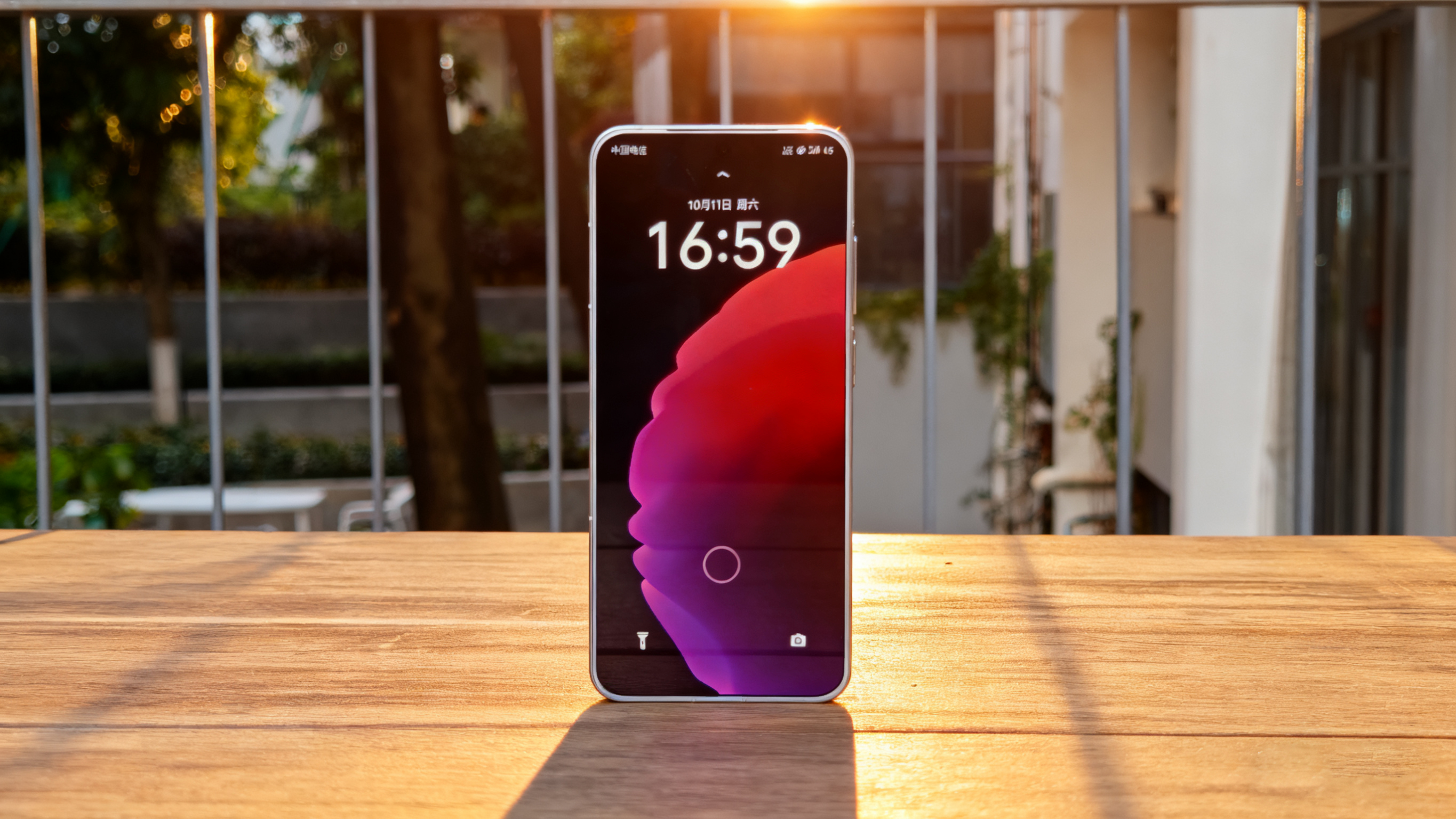
(Image source: Leikeji)
Compared to larger manufacturers, Meizu has weaker bargaining power and struggles to amortize per-unit costs, making it more vulnerable to memory and storage price hikes. For Meizu, there is no hope of breaking through in the mature smartphone market dominated by leading brands, and temporarily withdrawing is the most rational way to cut losses.
Major smartphone brands are also deeply affected by the price hikes but can still manage. Among them, Apple is likely the most resilient. According to supply chain sources, Apple has negotiated procurement prices with memory suppliers like Samsung and SK Hynix. Specifically, Apple has accepted a nearly 100% increase in memory prices.
On the surface, Apple seems to have taken a significant hit, but this is currently the best choice Apple can make, and it even gives Apple an advantage over competitors.
First, iPhone pricing is generally higher, and memory and storage costs account for a relatively small portion of the overall material costs, so the impact is smaller. iPhone models also have smaller memory capacities compared to Android devices. For example, the iPhone 17 has only 8GB of memory, while the top-end iPhone 17 Pro Max has 12GB.
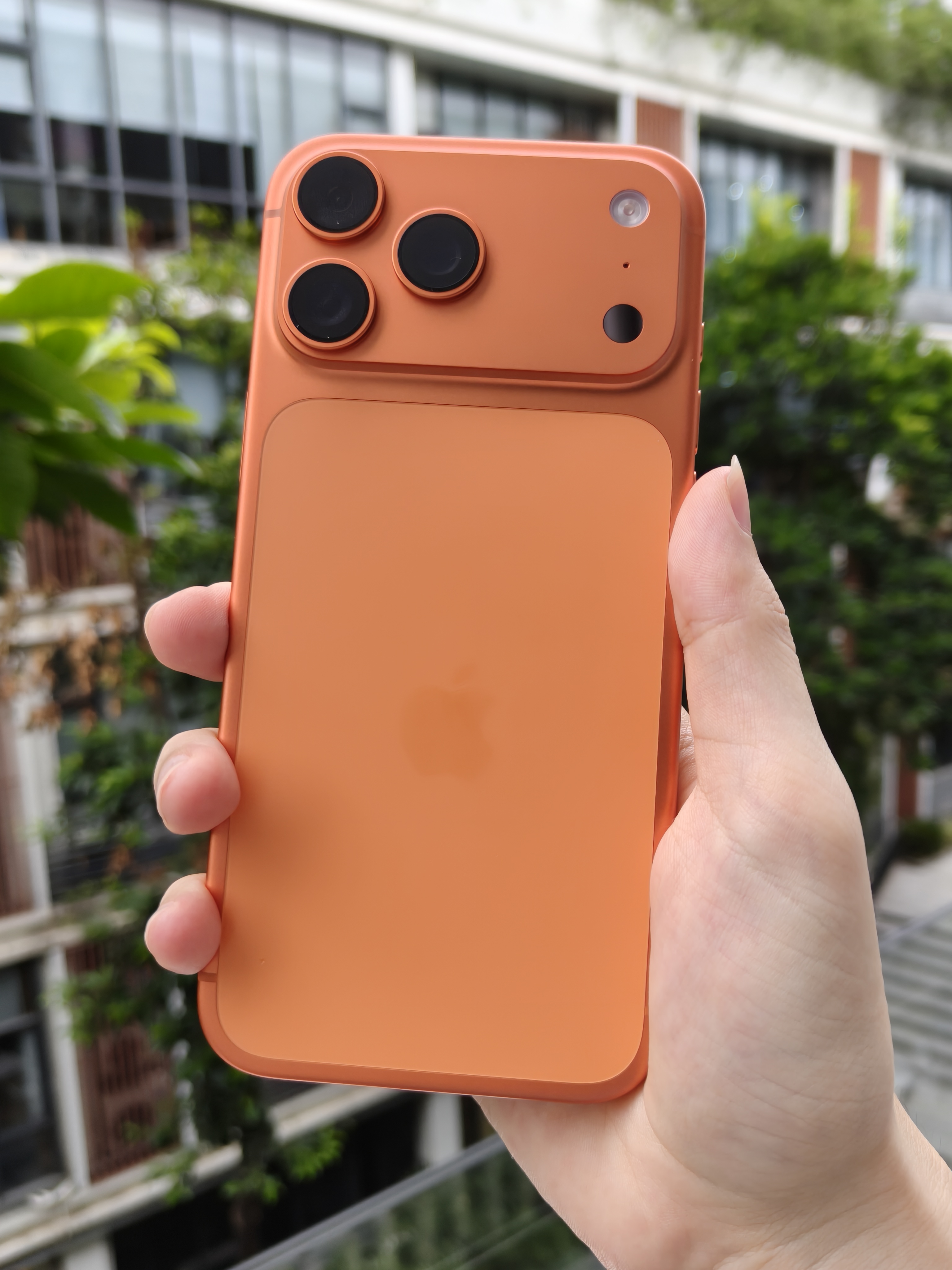
(Image source: Leikeji)
Second, the 100% price increase provides Apple with long-term cost certainty. With iPhone annual shipments exceeding 200 million units, the demand for memory is enormous. Securing prices at this level is optimal for Apple, at least eliminating concerns about cost fluctuations and shortages for a considerable period.
Additionally, Apple's high-capacity versions have long commanded a premium. For example, the 512GB version of the iPhone 17 Pro costs 2,000 yuan more than the 256GB version. Even with flash storage costs multiplying several times over, Apple remains profitable, albeit with slightly reduced margins.
With stronger supply chain bargaining power and larger profit margins, Apple is the least affected smartphone brand in the memory and storage price hike and is likely the only brand that won't raise prices in 2026.
Android brands, however, face greater pressure. Recently, Samsung released its flagship S26 series, with the standard model's starting price increasing by 1,000 yuan compared to the previous generation, and the top-tier model rising by 300 yuan. Interestingly, Samsung is a major memory and storage manufacturer and one of the biggest beneficiaries of this price hike. Samsung Electronics' stock price has surged, inching closer to a trillion-dollar market cap.
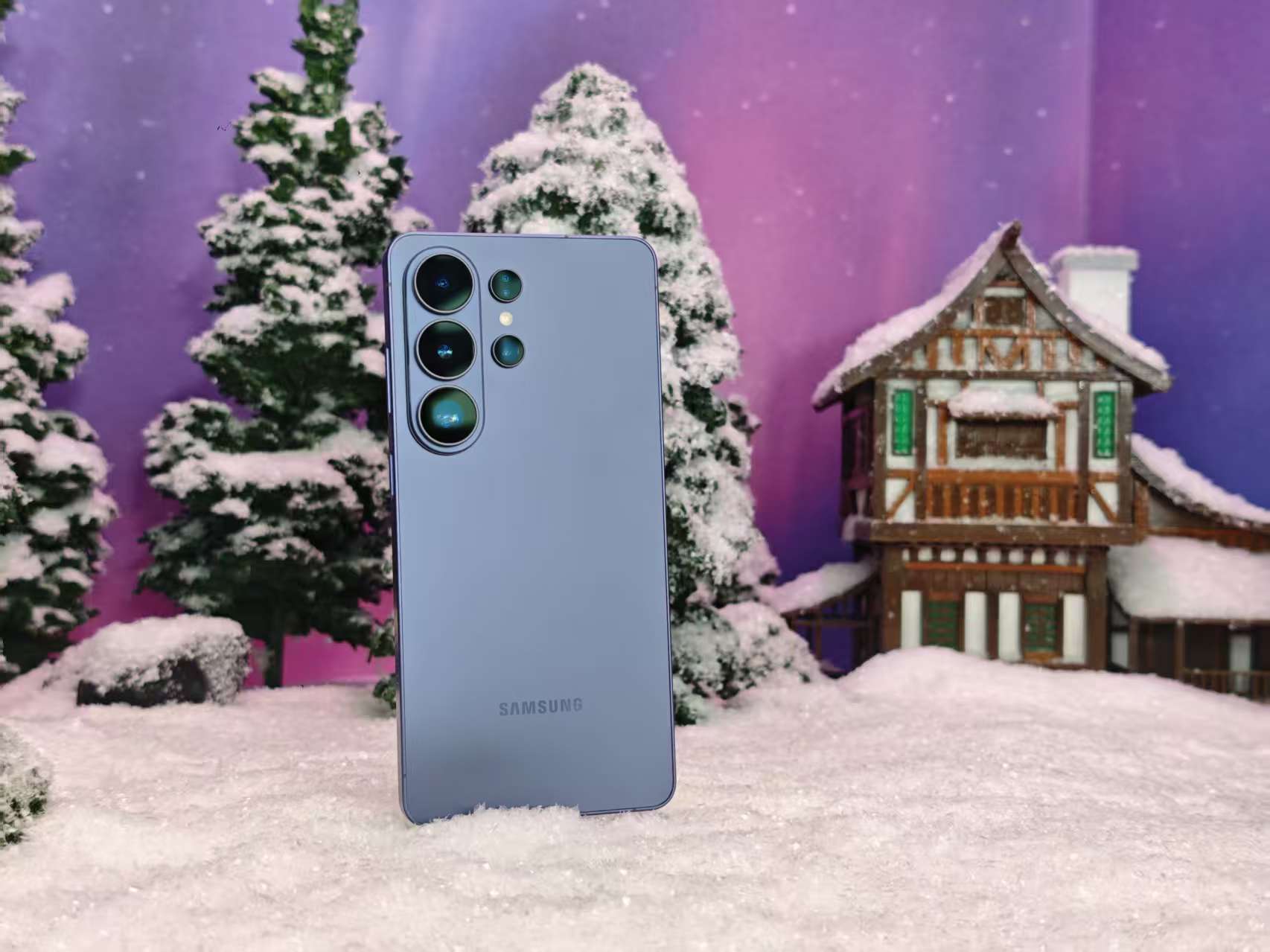
(Image source: Leikeji)
However, Samsung's smartphone and storage businesses are separate departments, and the smartphone division must still pay market prices for memory and storage, making it unable to escape the price hikes.
Other Chinese brands are also likely to raise prices and may even discontinue some models. As early as early February, well-known leaker @DigitalChatStation revealed that the industry consensus is that releasing new models equals losing money, with more releases leading to greater losses. He explicitly stated that in 2026, more than just Meizu will abandon next-generation flagship development or even exit certain regional markets. Additionally, cost-effective models released in 2025 will be discontinued, and successor models will see price increases.
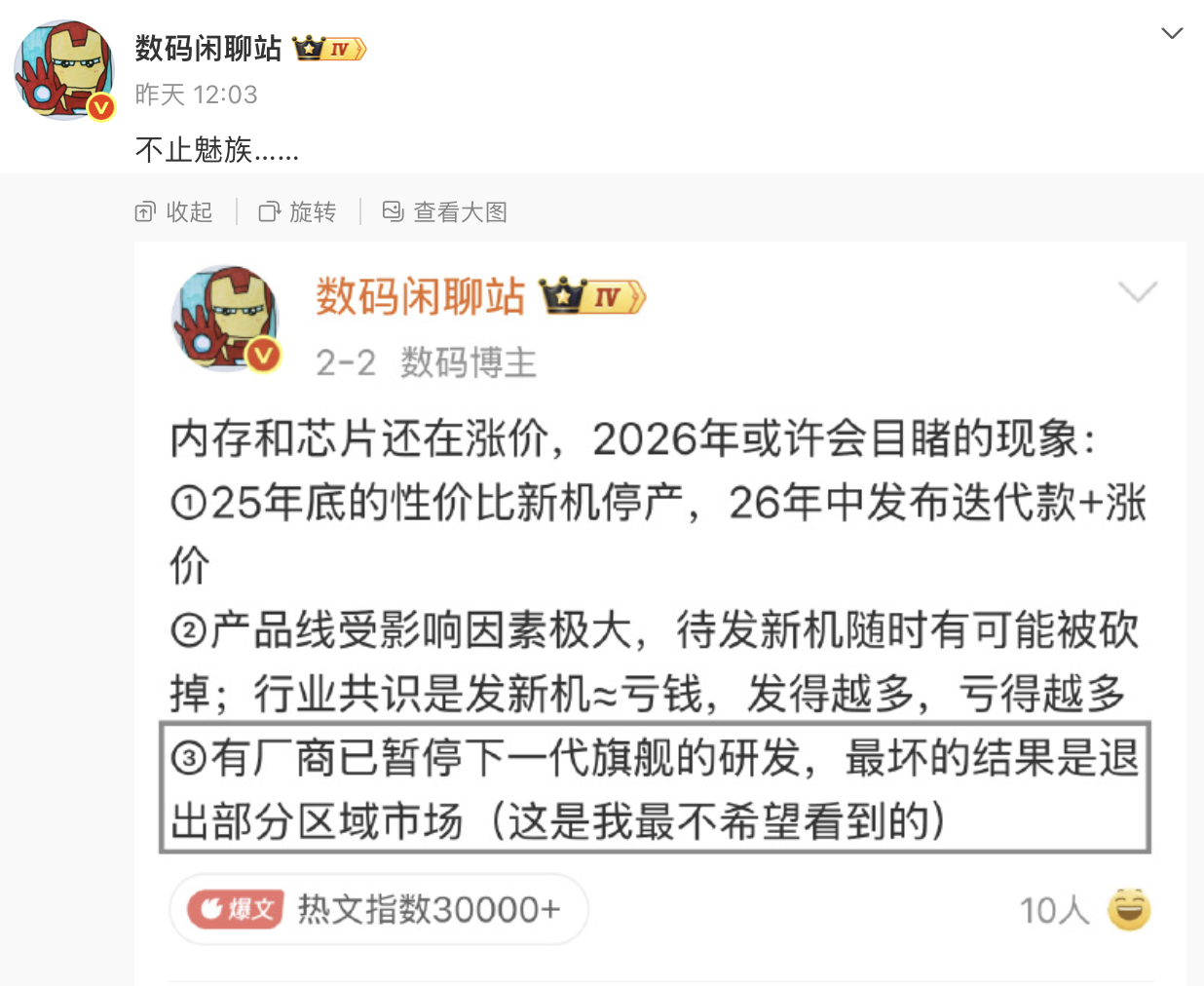
(Image source: Weibo)
Due to fierce competition, Chinese smartphone pricing has long hovered near cost, with profits heavily squeezed, especially for low- and mid-end models. The issue is that cost-effective models target price-sensitive users, and direct price hikes would likely face resistance. Continuing to sell at original prices would result in unsustainable losses, making discontinuation the best option.
Flagship models, on the other hand, have relatively larger profit margins, and users are more accepting of price increases. However, models with maximum storage configurations like 16GB+1TB, which were mass-released in previous years, will likely become rare.
Longer Replacement Cycles: Will Everyone Become a 'Wait-and-See' Consumer?
The discontinuation of older models and price hikes for new ones are not scenarios consumers hope to see. As ordinary users, the only thing we can do is adjust our purchasing decisions. It is almost certain that the replacement cycle for domestic users will further lengthen. According to data from the China Academy of Information and Communications Technology, in the first half of 2025, the average replacement cycle for domestic users approached 33 months, with more people waiting two to three years before upgrading their phones.
In my view, the extended replacement cycle reflects 'overcapacity' in smartphone performance and features. In earlier years, the concept of performance overcapacity for smartphones was a misnomer because rapidly improving performance was quickly consumed by new apps and games.
But today, even in the most demanding high-load gaming scenarios, older flagship or near-flagship models can handle them relatively easily, while the excess performance of new models lacks sufficient scenarios to utilize. The same applies to features, with upgrades in imaging, charging, and displays showing clear diminishing marginal returns. As a result, user willingness to upgrade is low, naturally extending the replacement cycle.
In the face of the impending collective smartphone price hikes, ordinary consumers' rational decision may be to delay replacement plans until upstream component and smartphone prices return to normal levels. As mentioned earlier, low- and mid-end models are most affected, while high-end models may see smaller price fluctuations. Users planning to buy high-end or top-tier flagship models will likely not be significantly influenced in their purchasing decisions.
The biggest winners in this wave of price hikes are undoubtedly storage manufacturers. The three storage chip giants—Samsung, Micron, and SK Hynix—account for 95% of the global DRAM market. The super bull market for storage chips has brought them immense profits. In 2025 alone, Micron's stock price surged by 240%, and SK Hynix's by over 275%, with Hynix even distributing an average year-end bonus of 640,000 yuan to employees.
(Image source: SK Hynix)
Since storage markets are undersupplied, shouldn't storage giants expand production capacity?
They have indeed signaled such intentions. Recently, Chey Tae-won, chairman of SK Group (parent company of SK Hynix), pledged to expand storage chip capacity, while Samsung plans to increase 280-layer V9 NAND production capacity in the second quarter, focusing on its Xi'an production line.
However, expanding wafer fab capacity requires significant time and financial investment, with relatively long payback periods. Moreover, increased capacity and supply will inevitably lead to storage product price declines and reduced profit margins. During capacity expansion, storage giants will carefully consider input costs and profit changes, controlling production rhythms to maximize benefits.
Currently, the AI arms race continues. Tech giants including Google, Microsoft, Amazon, and Meta plan to invest $650 billion in AI infrastructure in 2026. For the foreseeable future, AI demand for hardware will remain robust, and storage giants need not worry about memory oversupply in the short term.
As for when storage chip prices will stop surging and smartphone prices will fall, no one can provide a definitive answer yet.
-
![]()
Proposed to Raise 955 Million Yuan through Private Placement! Huicheng Vacuum Boosts Localization of Ultra-Precision Optical Coating Equipment
-
![]()
Cash Flow Soars 13-Fold! What Major Strategic Move is Wuhan Five Square Optoelectronics Planning?
-
![]()
Leaked Design of vivo X500: Reverts to Circular Camera Module in Top-Left Corner, Pays Homage to Classic X90 Aesthetic
-
![]()
DeepSeek Shows Signs of Foraying into Code Agents, Launches WeChat Official Account Focused on Harness
-
![]()
Auto Companies Deny Claims That ‘Cooperation with Huawei Is Non-Essential’, as Huawei Transforms into a ‘Public Platform’
-
![]()
Starship to Independently 'Return to the Launch Tower': SpaceX's Ambitions Extend Beyond Rocket Building to Dominating Space Transportation
-
![]()
Starship Set to Independently 'Return to the Launch Tower': SpaceX is Revolutionizing Space Transportation, Not Just Building Rockets
-
![]()
Anthropic and OpenAI Face Off Against Deepseek