China’s Auto Industry Goes Global: Balancing Scale and Value
 02/28 2026
 548
548
In 2025, China’s auto exports continued to grow, but the real shift may not be in the sheer volume of vehicles sold, but rather in the destinations and the methods of market entry. The varied pace of expansion across different markets is reshaping the growth logic of China’s auto industry on the global stage.
In 2025, China’s auto exports maintained their steady growth trajectory. According to data from the China Association of Automobile Manufacturers, full-year exports reached approximately 7.098 million units, marking a year-on-year increase of about 21.1% and setting a new record. This included 6.038 million passenger vehicles and 1.06 million commercial vehicles.
However, looking back from early 2026, the significance of this year lies not in the increase in the number of vehicles sold, but rather in where these vehicles were exported, how they entered those markets, and who is responsible for long-term operations.
If early overseas expansion was primarily driven by opportunities and natural spillover, then 2025 marked a year of global market reallocation. Some regions have emerged as definitive main battlefields, others are in a phase of patient cultivation, while some have seen deliberate slowdowns and reassessments of risk. Within this differentiated pace, China’s auto industry is no longer solely focused on increasing volume but is transitioning toward a “value era” that emphasizes structure, quality, and sustainability.
Export strategies are finally beginning to align with the pace of different markets.
Southeast Asia and the Middle East: Two Distinct Logics
Among all overseas regions, Southeast Asia remained the fastest-growing and most clearly defined market in 2025.
Countries like Thailand, Indonesia, and Malaysia are no longer just destinations where Chinese brands attempt to enter; they are shifting toward systematic volume growth. Taking Thailand as an example, by April 2025, the penetration rate of new energy vehicles (NEVs) had reached the 15% range and showed a continuous upward trend. Chinese brands occupied a significant position in this market, ranking among the top in NEV sales in multiple monthly registration statistics. Meanwhile, their year-on-year performance in the Singapore market was also exceptionally strong, reflecting the rapidly accelerating penetration of Chinese NEVs in Southeast Asia.
Localized production has become a key driver. Changan Automobile deeply penetrated the ASEAN market through a right-hand-drive production system, with its 2025 overseas sales reaching approximately 637,000 units, up nearly 19% year-on-year. The commissioning of its localized factory in Rayong, Thailand, marked an important step in extending its export markets to the production end.
GAC Aion, meanwhile, entered the top tier by leveraging ride-hailing and operational scenarios, forming stable growth in the operational vehicle segment. In Thailand’s registration data, GAC Aion also emerged as one of the leading Chinese NEV brands, contributing significantly to the registration volume in the NEV sales rankings for the first half of 2025. This further demonstrates the multi-point volume growth of Chinese brands in Southeast Asia.
The “speed” of the Southeast Asian market stems not only from demand release but also from its well-defined entry path: a relatively friendly policy environment, a mature right-hand-drive market, price bands that overlap significantly with Chinese models, and the phased sluggishness of Japanese brands in NEV transformation have collectively driven Chinese automakers to achieve a rapid transition from exports to localized production.
However, it is worth noting that this “speed” is more reflected in scale and penetration rather than per-unit profit. The Southeast Asian market resembles a “stabilizer” for China’s NEV exports—for most Chinese automakers, the significance of Southeast Asia lies not in profit maximization but in its combination of scale, institutional stability, and an NEV transformation window, making it one of the few regions where product-channel-manufacturing continuous validation can be completed with relatively low systemic risk.
In contrast, the Middle East market exhibits strategic characteristics of “high value and strong demand.” Data from the China Passenger Car Association shows that in 2025, the United Arab Emirates ranked among the top core destinations for China’s auto exports, with December monthly export volume ranking high. According to AutoData Middle East estimates, Chinese brands’ market share in the UAE’s new vehicle market has also risen to about 15%, reflecting their growing market position.
In this market, the paths of Chinese automakers have clearly diverged: one category, represented by Great Wall Motors, taps into high-premium segments with pickup trucks and off-road vehicles, with the Tank series gradually establishing a clear brand identity; the other category targets urban commuting, shared mobility, and mid-to-high-end family vehicle scenarios with NEV and intelligent configurations.
The common features of the Middle East market are high per-unit value, a clear user structure, and extremely high requirements for product completeness and service capabilities. This makes it unsuitable for “trial-water entries” and more like a mature market that requires simultaneous alignment of products, brands, and systems. Therefore, in 2025, the Middle East resembles a “profit validation zone” for Chinese automakers going global—not fast in pace but continuously increasing in value.
The European Market Still Requires Patience
If there is one market that best tests the long-term capabilities of Chinese automakers, the answer remains Europe.
According to the latest statistics from market research firm Dataforce, in 2025, Chinese brands sold approximately 810,000 vehicles in Europe (including EU, UK, and EFTA countries), up about 99% year-on-year, with a market share of about 6.1%, a new record high. Among them, SAIC MG remained the leader with approximately 307,000 units sold, while BYD, Chery, and Geely also achieved significant growth, showing a multi-point breakthrough trend for Chinese brands in Europe. Notably, despite the impressive growth, the 6.1% market share still lags significantly compared to European local and mainstream global brands, reflecting that Chinese automakers are still in the early stages of accumulation and penetration in Europe.
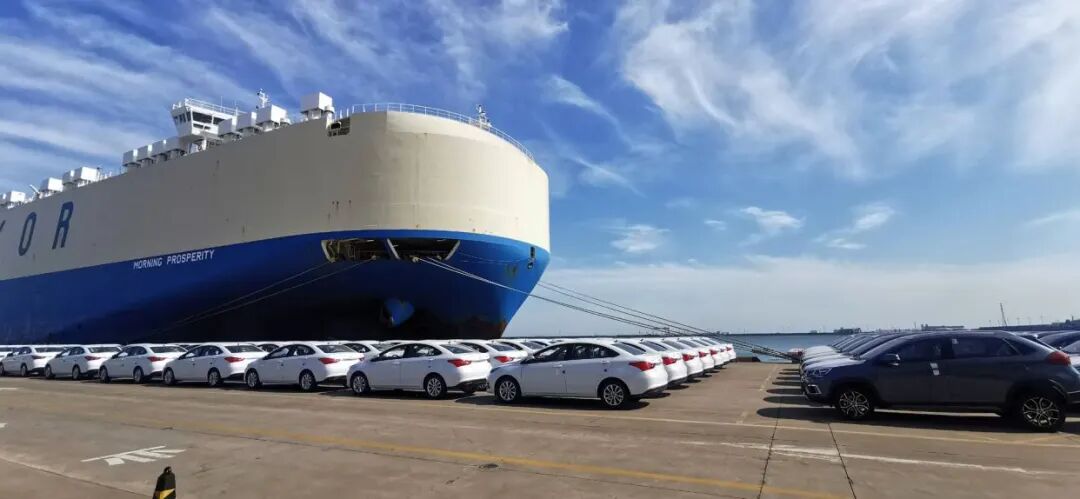
Meanwhile, Dataforce statistics show that in December 2025, Chinese automakers’ sales in the European market exceeded 100,000 units for the first time, reaching approximately 109,864 units, with a market share of nearly 9.5% for the month. This milestone not only marks the ability of Chinese brands to achieve short-term concentrated volume growth in mature markets but also reflects effective synergy between their products and channels during key sales cycles.
The “slowness” of the European market does not stem from insufficient demand but is determined by its stringent regulatory system, mature carbon emission mechanisms, deep-rooted brand recognition, and highly structured channel networks. Therefore, the most profound change in the European market in 2025 is not just reflected in sales figures but also in the quiet transformation of Chinese automakers’ entry models.
More and more Chinese brands are actively acquiring a “European identity” through localized production, joint ventures, or contract manufacturing to shorten market acceptance cycles and enhance regulatory compliance and safety. For example, BYD’s vehicle factory construction in Hungary continues to progress, while CATL’s battery production capacity in Thuringia, Germany, has further increased; brands like Great Wall Motors and NIO have also gradually built service systems by deeply binding with local dealer groups. Although such layouts may not directly reflect in sales surges in the short term, they are the critical foundations for achieving long-term sustainable operations in Europe.
Entering early 2026, there are also signs of marginal improvement in the external policy environment: China and Europe have replaced direct anti-subsidy tariffs with a price commitment mechanism, bringing some stability to the trade environment; Germany’s new NEV subsidy policy, which is open to all eligible products, has enhanced market access fairness. While these changes will not suddenly “accelerate” the European market, they release clearer policy signals for medium- to long-term layouts, helping automakers make more robust localized investments.
Overall, while Europe did not progress rapidly in 2025, it remains the core market determining whether China’s auto industry going global can advance to a “value stage.” It does not offer the rapid volume growth seen in Southeast Asia or the high-value segment focus of the Middle East but continuously tests the globalization quality and long-term competitiveness of Chinese automakers through its systematic, standardized, and brand-threshold characteristics. Here, speed gives way to depth, and scale depends on foundations. Truly winning the market still requires time, patience, and systematic localized capabilities.
Structural Growth and Contraction Coexist
Compared to the cautious progress in the European market, Latin America showed clearer signs of accelerated growth and structural deepening in 2025, becoming an important pole for driving incremental growth in China’s auto industry going global.
Mexico has surged as the top overseas destination for China’s passenger vehicle exports. According to data from the China Passenger Car Association, in 2025, China exported approximately 625,187 complete vehicles to Mexico. The country serves not only as an important end-consumer market but also as a strategic hub for radiating into the North American market due to its location and trade policy advantages. Mexico Business News reported that Chinese brands have rapidly penetrated multiple segments in the local market, occupying nearly 20% of sales volume in some segments and price bands, with NEVs and high-intelligence-configured models particularly popular among young consumer groups.
Brazil, meanwhile, has become a key scenario for the landing of China’s NEV and hybrid technologies. According to regional analysis firm Argus Media, in 2025, Chinese brands exported an estimated 140,000 electric vehicles to Latin America, with a significant portion flowing into the Brazilian market. Companies like Chery and BYD have not only seen sales climb but also deepened brand recognition, with multiple projects entering localized production preparation stages.
The most representative progress in the region is the strategic cooperation between Geely and Renault in Brazil. In November 2025, Geely acquired a 26.4% stake in Renault Brazil and jointly established a joint venture company, planning to invest approximately 3.8 billion reais to advance localized production of NEV models. Some models have already been launched through Renault’s mature dealership network, with future plans to produce all-new models locally based on Geely’s GEA NEV architecture, achieving deep integration of technology, products, and channels.
Mexico and Brazil, through their respective models of “export hub” and “localized deep cultivation,” collectively point to a more mature and sustainable path for going global: achieving compliant operations and rapid scale expansion in target markets through platform cooperation and system binding with mature multinational automakers. This is transforming Latin America from a high-potential emerging market into a stable region with structural growth foundations.
In stark contrast to Latin America’s expansion is the strategic contraction in the Russian market. Data from the China Passenger Car Association shows that in 2025, China’s auto exports to Russia declined sharply by about 50% year-on-year. This change does not stem from weakened product competitiveness but reflects Chinese automakers’ proactive rebalancing of risks and rewards in a complex environment.
Previously, Russia served as a “high-growth engine” for China’s auto exports after Western brands withdrew, leaving market space. However, in recent years, the Russian government has significantly increased import costs and operational complexity for complete vehicles through measures like raising recycling taxes and strengthening localization production requirements. Coupled with restricted financial settlement channels and pressure on policy continuity, Chinese automakers have begun systematically reducing their reliance on this single high-risk market, reallocating resources to regions with more stable institutional environments and stronger operational sustainability.
Therefore, the Russian market is shifting from a rapid-growth market dependent on short-term opportunities to a normal market requiring meticulous cultivation and selective operations. This proactive pacing adjustment precisely reflects an important sign of maturity in China’s auto industry going global: companies are no longer solely chasing short-term sales but are making more rational and structurally sound global resource allocations based on risk assessments and long-term layouts.
Auto Industry Going Global Enters the “Value Era”
Looking back at 2025, China’s auto industry going global has clearly presented a globally differentiated map: Southeast Asia advances the fastest with the highest certainty; the Middle East moves slowly but offers high value and clear profit structures; Europe has the slowest pace but serves as a touchstone for rules, standards, and long-term competitiveness; Latin America has become a new structural growth pillar; while Russia is being reincorporated into a rational weighing of risks and rewards through deliberate slowdowns.
This differentiation itself is an important signal that China’s auto industry going global has entered a new stage.
If the past decade of going global resembled a “global diffusion of production capacity and products,” then starting in 2025, Chinese automakers are facing not just the question of how many vehicles to sell but whether they can be integrated into the long-term operating systems of local markets:
- Whether to engage in the local industrial chain's division of labor;
- Whether to shoulder local responsibilities concerning employment, taxation, and manufacturing;
- Whether to establish a stable foothold in areas such as regulations, energy structures, channel systems, and user services.
At this juncture, exporting has ceased to be the ultimate goal and has instead become merely the entry point into the global system. Sales volume is no longer the sole yardstick for success. Instead, metrics such as per-unit value, compliance costs, brand trust, and organizational resilience have taken on greater significance. Companies are no longer vying solely on the basis of price and configurations. Rather, the competition now hinges on who can more effectively integrate themselves into diverse systems, cultures, and industrial frameworks. More crucially, this transformation is not merely a strategic recalibration by individual companies; it represents an upgrade in the overall role of China's auto industry. The industry is transitioning from being a mere 'important supplier' in global auto trade to becoming a long-term participant and rule-adapter within the global auto industrial system.
When venturing globally, the ability to discern between speed and slowness, advances and retreats, as well as priorities, becomes paramount. China's auto industry has genuinely transcended the realm of mere trade and is progressing from 'quantitative accumulation' towards a more resilient and internationally sophisticated 'value era'.
Note: This article was initially published in the 'Industry Report' column of the February 2026 issue of Auto Review magazine. Stay tuned for more insights.
Image: Sourced from the Internet
Article: Courtesy of Auto Review
Layout: Designed by Auto Review
-
![]()
AI Predicting the World Cup? It’s Time to Stop Insulting AI
-
![]()
iPhone 18 Pro Memory Costs Soar Threefold! Apple Seeks Trump Administration Approval for CXMT Memory Chips
-
![]()
AI Tutoring: A Crack in the Intense Competition of East Asia
-
![]()
Weekly Stock Review | Li Bin Sounds Alarm on 'Toughest' Year, Casting a Shadow Over Lei Jun's Noodle Moment
-
![]()
Car Manufacturing Paused, Yet Dreame’s Automotive Dream Marches On
-
![]()
Can the Brand-New Hongqi H7 Forge Its Own Identity in the Hybrid Vehicle Market?
-
![]()
Challenges in Redeeming Certificates for New Cars: Mercedes-Benz Dealership Group Grapples with Operational Hurdles Once Again
-
![]()
Porsche Returns to Volkswagen, Ending the 'Electric Ferrari' Story