Earning Foreigners' Money Is a Breeze: China's Car Exports Rock Europe and America!
 07/29 2026
 371
371
With the meteoric rise of China's new energy vehicle sector, coupled with international oil price volatility triggered by the Middle East situation, China's automobile exports have soared in the first half of this year. However, the half-year financial reports of established automakers like Toyota, Volkswagen, and General Motors have painted a less-than-rosy picture, leading many to perceive a tectonic shift in the automotive market, reminiscent of the awakening of an 'Eastern Industrial Leviathan.'
5.1 Million Exports from January to June, 65% Growth Rate Astounds the World
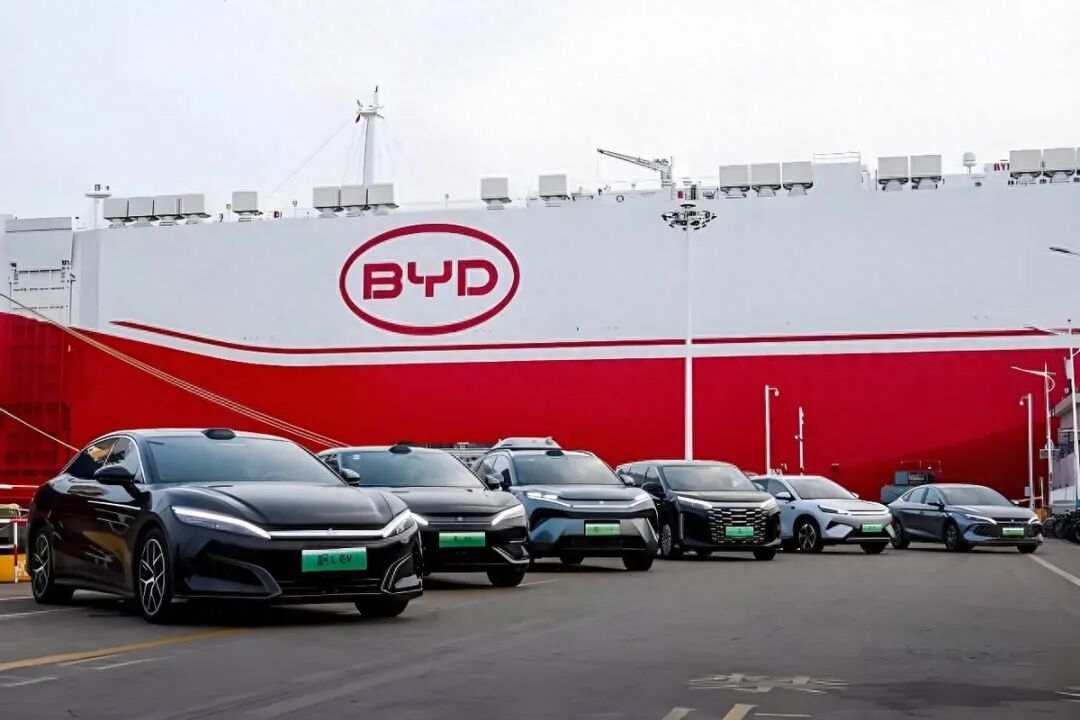
According to data released by the China Association of Automobile Manufacturers, in June this year, China exported a staggering 1.04 million vehicles, marking a 75% year-on-year surge and the first time the monthly export volume surpassed one million. Combining this with the export data from January to June, automobile exports in the first half of the year reached 5.1 million, with a year-on-year growth rate of 65%, essentially locking in the 10 million export milestone for 2026 well in advance.
Exports Account for 35% of Total Sales, Marking a Significant Shift
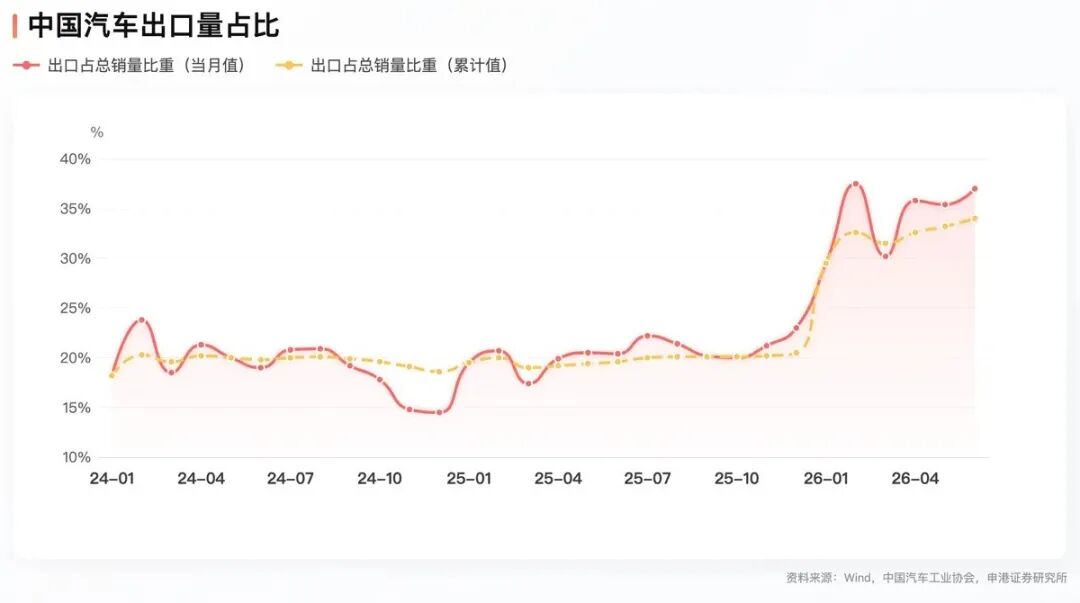
Looking at the proportion of exports to total sales, China's automobile exports accounted for approximately 35% of the total production and sales volume this year. That is, for every 100 cars produced in China, 65 were consumed domestically, while 35 were sold abroad, compared to only 20 in 2025.
Domestic Automakers Seek Overseas Growth Amid Intense Competition
From the perspective of domestic automakers, facing a fiercely competitive domestic market, the profit margin per vehicle has been significantly squeezed. Exporting has emerged as a new growth avenue for automakers' revenue, particularly in the European market, which is highly sensitive to factors such as energy, environmental protection, and costs. It's no exaggeration to say that exporting to Europe is like 'picking money off the ground,' which explains why major automakers and new entrants are eager to expand overseas.
Chery: High Volume, Premium Pricing, Profit Driven by Exports
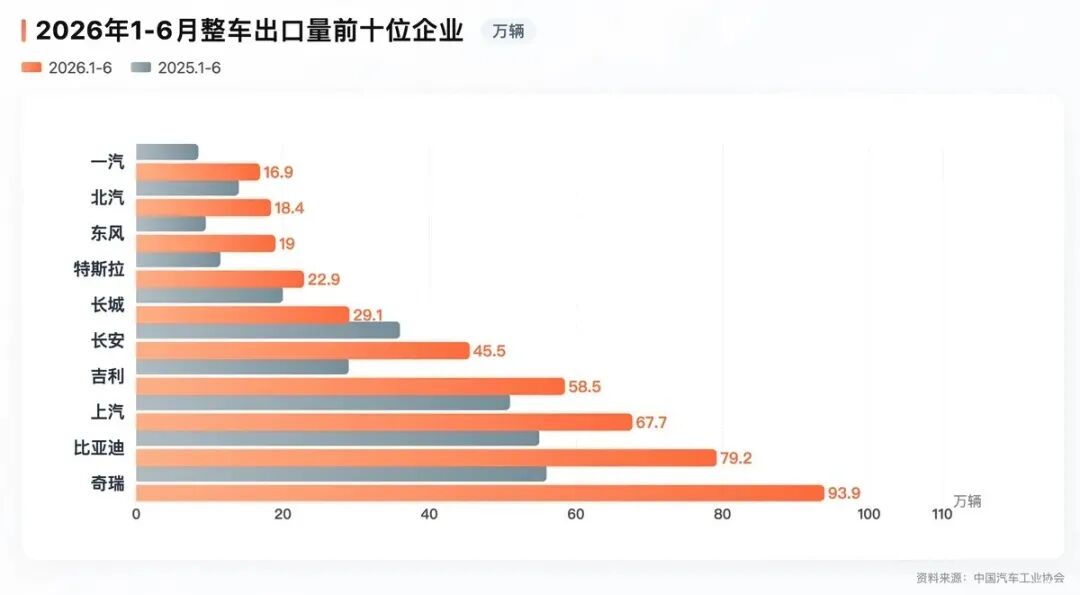
Specifically, Chery Group claimed the top spot among Chinese automakers with 944,000 exports from January to June, a 71% year-on-year increase. As a seasoned export automaker, Chery boasts a robust distribution system across various countries and regions worldwide, laying a solid foundation for its soaring export volume.
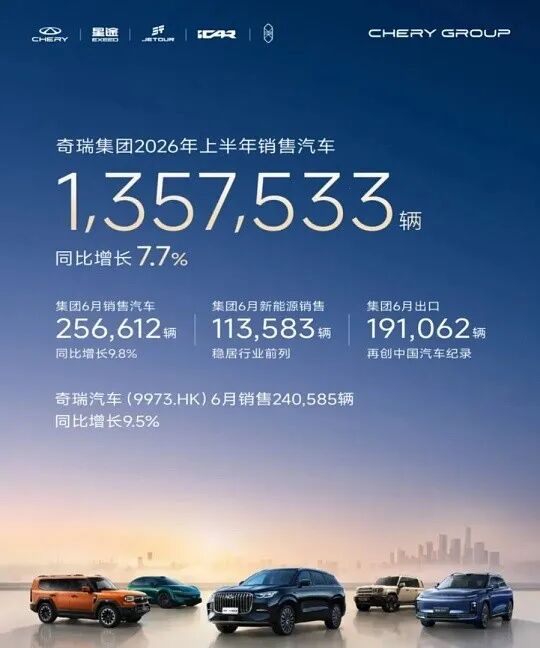
In the first half of this year, Chery Group's total sales reached 1.358 million vehicles, with overseas sales accounting for approximately 70% of the total. This means that for every 10 cars sold by Chery, 7 were destined for foreign markets, and only 3 were purchased by Chinese consumers. No other automaker, including FAW, SAIC, or BYD, can match this feat.
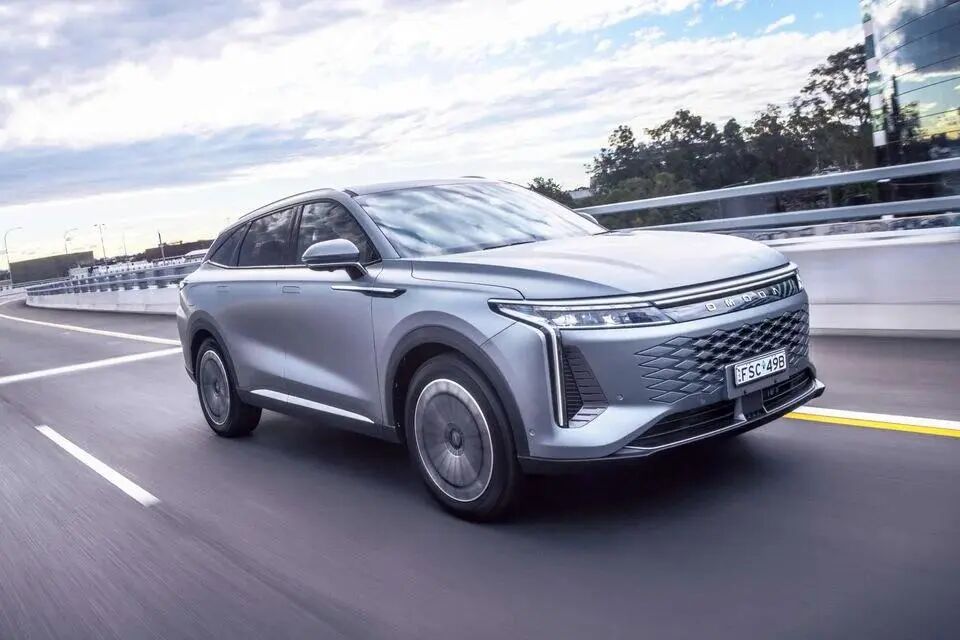
For context, the OMODA 9 (Exceed TXL) exported to the European market has a starting price of €51,900 for its Super Hybrid version in Italy, equivalent to approximately RMB 423,900 at the current exchange rate, directly competing with luxury cars like the BMW X3 and Audi Q5. In contrast, the hybrid version is priced at only RMB 137,900 in China. From an automaker's standpoint, it's evident that earning foreigners' money is indeed a lucrative proposition.
BYD: Building Global Factories, Aiming for Automotive Market Supremacy
As a rising star, BYD Auto cannot hope to catch up with Chery by simply following in its footsteps (channel expansion). In response, BYD has adopted a highly ambitious development strategy, simultaneously engaging in self-operated overseas trade and vigorously pursuing global factory construction, clearly aiming to 'go all in' on brand internationalization and become the undisputed leader among global automakers.
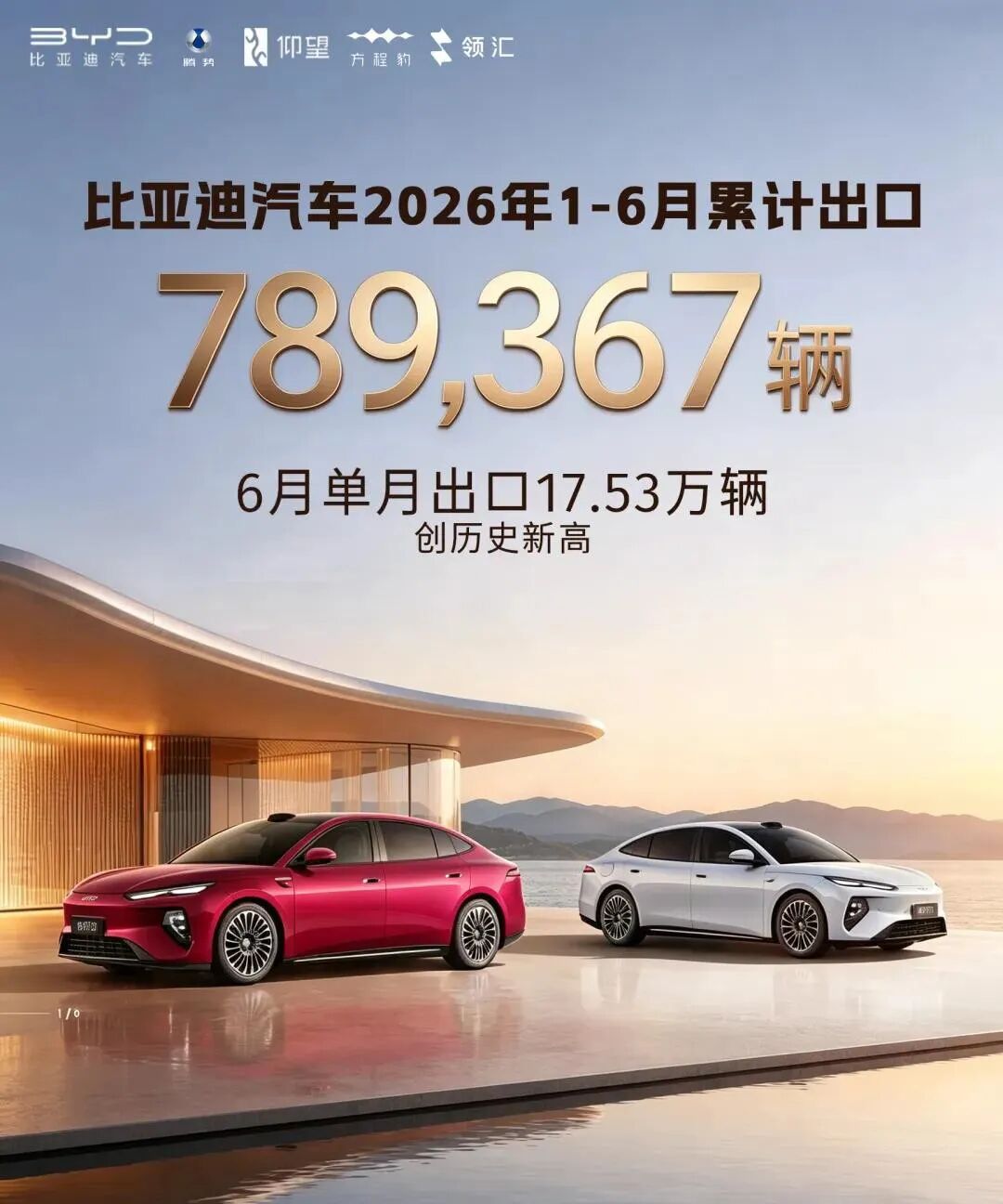
Currently, BYD Group's overseas sales stand at 792,000 vehicles, slightly lower than Chery's total volume but with a similar growth rate of approximately 70%. However, compared to its total sales of 1.809 million vehicles in the first half of the year, BYD's export proportion is still relatively modest.
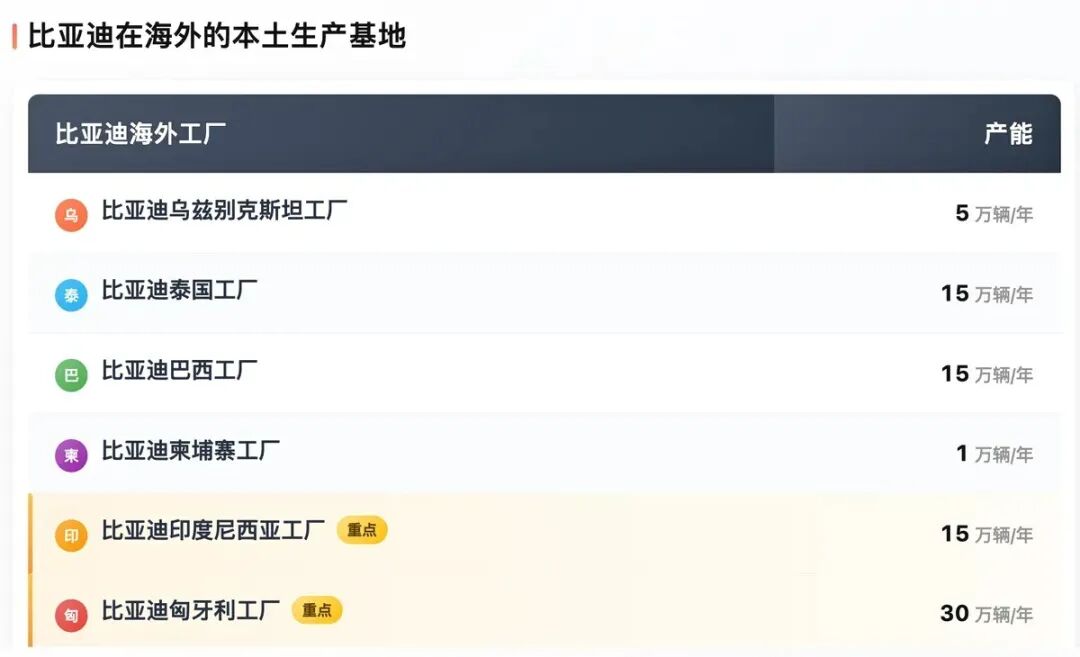
Looking ahead, as overseas factories in Hungary, Brazil, Indonesia, Thailand, and other countries ramp up production, BYD's production and sales potential in overseas markets will be further unleashed. Moreover, the profit margin per vehicle in localized production modes is approximately 10% higher than in export trade, with lower political risks.
Volkswagen: Positive Growth in Europe and America Cannot Offset China's Slump
Finally, let's turn our attention to the established automaker 'leader' - Volkswagen Group. In the first half of the year, it sold 4 million new vehicles globally, an 8.4% year-on-year decrease, with pure electric vehicle deliveries at 438,500 units, a 5.8% decline. Financial reports reveal that the group's operating profit in the first half of the year was €5.931 billion, an 11.6% year-on-year decrease.
In terms of specific market segments, deliveries in Western Europe (+1.3%), Central and Eastern Europe (+9.6%), North America (+0.9%), and South America (+5.2%) all achieved positive growth. The crux of the issue lies in the Chinese market, where sales of joint ventures (SAIC Volkswagen, FAW-Volkswagen) plummeted by 31.1% year-on-year to 856,000 units in the first half of the year.
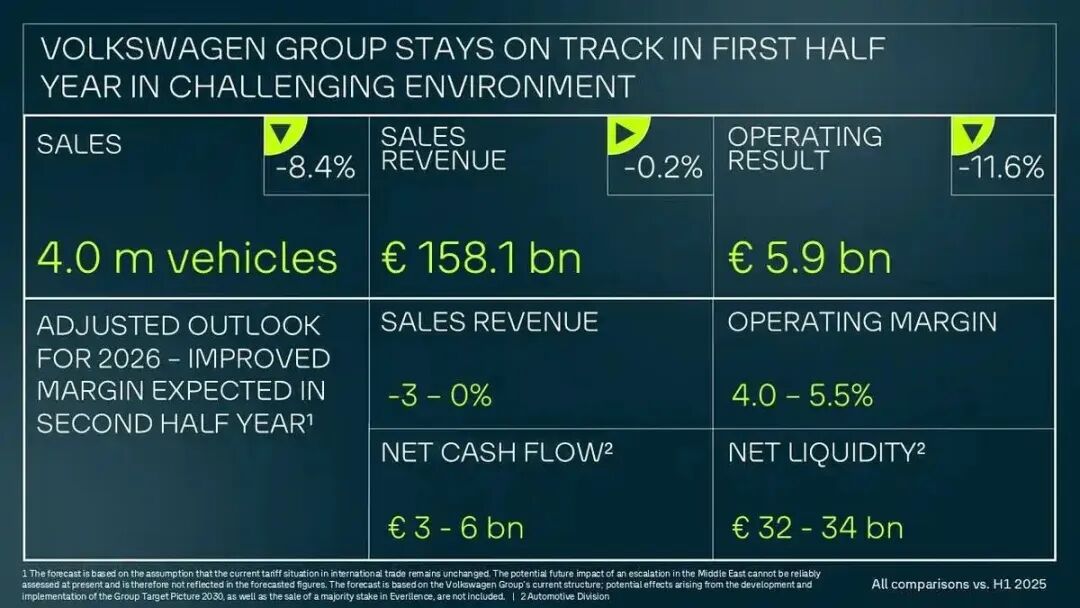
Clearly, Volkswagen's modest growth in European and American markets cannot compensate for the decline of its Chinese joint ventures. Nowadays, Volkswagen's electric vehicles in the ID. series are struggling to gain traction in China, and even classic fuel-powered vehicles like the Passat, Magotan, and Tiguan are gradually being shunned by young consumers due to the erosion of the brand's value.
In Conclusion:
Driven by the national new energy development strategy, China's automobiles are not only undergoing a rapid electrification transformation in the domestic market but also experiencing a simultaneous surge in brand and product presence on the international stage. From the broader perspective of global developments, it is evident that the Communist Party of China is steering the Chinese nation back to its rightful historical eminence, and Chinese goods and culture, bearing this radiant halo, are steadily advancing towards the global 'leader' position (with the notable exception of football).
-
![]()
Sales Soar: Has Ora Staged a Remarkable Comeback?
-
![]()
What Kind of AI Phones Do We Actually Need?
-
![]()
DingTalk, Feishu, and WeCom's Silent 'March Eastward'
-
![]()
Is 'Data Scarcity' More Fatal Than 'Computing Power Shortage'? Is It Bringing Disaster?
-
![]()
Yutong Bus Steps Up the Rollout of an External Circulation Marketing Model Among Listed Companies
-
![]()
The US Wants to Strangle Chinese Automakers, but Mercedes-Benz Becomes the First 'Sitting Duck'
-
![]()
Earning Foreigners' Money Is a Breeze: China's Car Exports Rock Europe and America!
-
![]()
"Meituan Retreats into the Background of AI", "Meituan, AI, API, local services, business strategy", "Meituan has announced a partnership with Tencent Yuanbao, enabling users to place takeout orders t