Seres' November Sales Skyrocket by 50%, AITO Series Shines, and Profits Soar!
 12/03 2025
 633
633
Produced by | Dali Finance
Author | Dali
Automakers Report Record-Breaking Sales!
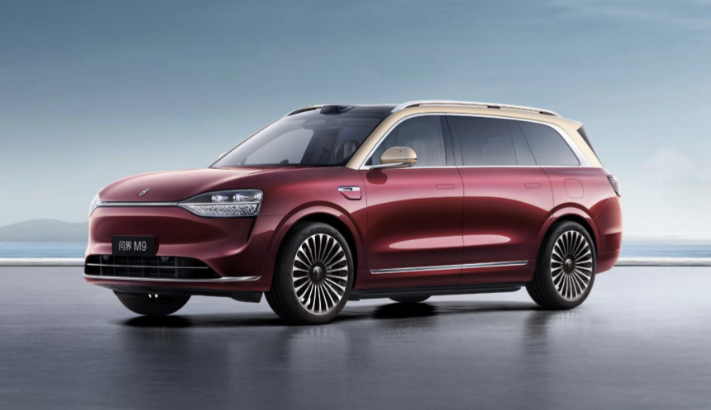
On December 1, Seres announced that its sales of new energy vehicles soared to 55,203 units in November, marking a 50% year-on-year increase and reaching an all-time high. The primary driver behind this remarkable growth is the AITO series, which is closely linked to Huawei. In particular, the flagship M9 model has been a game-changer, single-handedly boosting sales and enabling Seres to achieve substantial profits in the premium market segment.
The performance of the AITO M9 has been nothing short of extraordinary: cumulative deliveries have surpassed 260,000 units, establishing it as the best-selling high-end SUV priced over 500,000 yuan. It also tops the charts in the Net Promoter Score (NPS) for its category. The success extends beyond the M9; the entire AITO lineup is thriving. The M8 has delivered over 130,000 units, maintaining its position as the champion in the 400,000-yuan segment. Meanwhile, the all-new M7 secured 90,000 firm orders within just 41 days of its launch, with cumulative deliveries exceeding 350,000 units. From January to November, Seres' cumulative sales of new energy vehicles reached 411,288 units, up 5.58% year-on-year, forming a robust portfolio of premium products. The underlying strategy is evident: deep collaboration with Huawei is the key to success. Huawei provides intelligent technology support, while Seres contributes manufacturing expertise and range-extending technology. This "technology complementarity + ecosystem synergy" model has enabled the AITO series to achieve rapid breakthroughs. Data indicates that AITO contributes over 90% of Seres' revenue, helping the company turn a profit in 2024 with annual earnings exceeding 5.5 billion yuan.
Seres Group's latest announcement revealed that new energy vehicle sales reached 39,187 units in November, surging 49.84% year-on-year. The standout performer was the AITO M9 series, a luxury model priced at 469,800 yuan, which became an instant success upon launch, easily exceeding 10,000 monthly deliveries and emerging as the most formidable "profit magnet" in the high-end new energy market.
From a struggling brand to today's growth star, has Seres staged a "miraculous recovery" driven by Huawei, or has it truly unlocked the secret to sustainable success?
Dali Finance argues that Seres' surge is essentially a concentrated manifestation of Huawei's technological brand influence, rather than a victory for traditional automakers. This impressive sales turnaround conceals deeper concerns: over-reliance on a single partner, fragile profitability, and insufficient momentum in the high-end market. The race to eliminate underperforming players in the new energy vehicle sector is far from over; Seres' true test has just begun.
01
The Myth of a Comeback: From "Near-Collapse" to "Overwhelming Demand"
A few years ago, Seres (formerly Xiaokang Corporation) struggled in its transition to new energy vehicles, with a weak brand presence and mounting performance pressures. The turning point came with its deep partnership with Huawei. From the Seres SF5 trial to the launch of the AITO brand, especially the M5 and M7 series, Huawei's industrial design, intelligent cockpit technology, and channel empowerment transformed Seres' product competitiveness.
The true "game-changer" was the AITO M9. Dubbed the "best SUV under 10 million yuan" by Yu Chengdong, this flagship model integrates Huawei's cutting-edge intelligent driving, intelligent cockpit, and luxury tech features. Its success was no accident but a precise result of Huawei's years of technological accumulation and brand momentum in the high-end automotive market. Consumers aren't just buying a car; they're investing in the technological trust embodied by the "Huawei" brand.
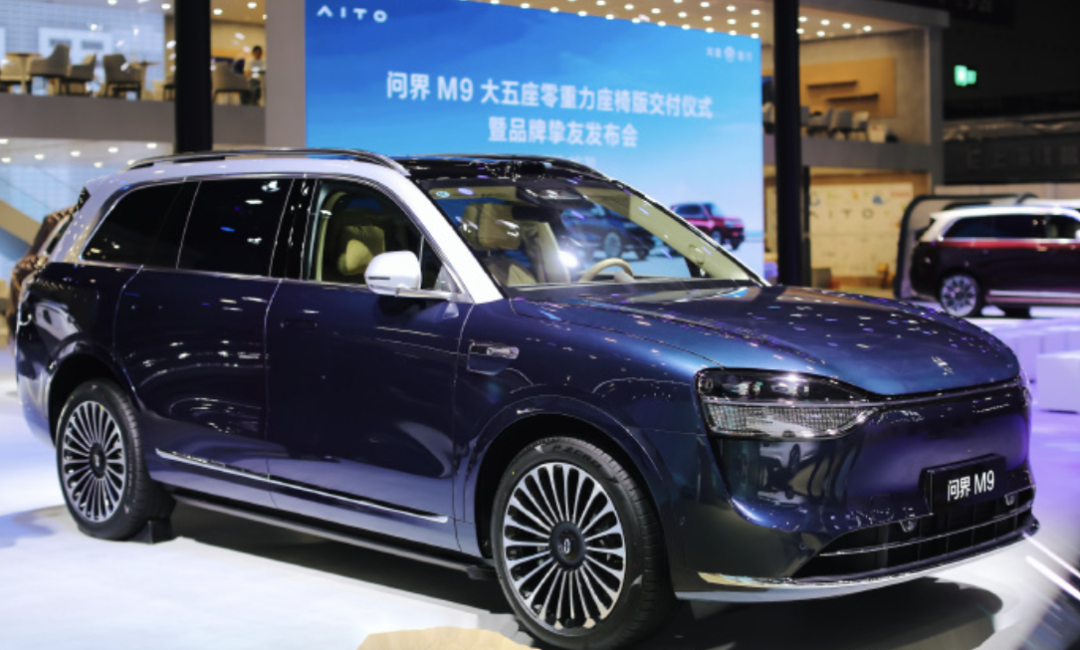
November's nearly 50% year-on-year growth is an "outlier" in today's fiercely competitive market. Especially when the 200,000-300,000 yuan segment is a battleground, the AITO M9 carved out a path in the 500,000 yuan premium tier, catching traditional luxury brands off guard and showing new energy vehicle startups a new path to brand ascension. It turns out that leveraging a top-tier tech IP to break through price ceilings is indeed feasible.
The capital market reacted swiftly. Seres' stock price has fluctuated wildly over the past year, but with the M9's explosive orders, its market value soared. Investors excitedly discussed the revaluation of the "Huawei ecosystem," as if finding another certainty in the new energy vehicle race.
02
Under the Halo: Is Seres Truly "Profit-Optimized?"
Sales are soaring, and stock prices are taking off, painting a picture of prosperity. But a pointed question must be asked: Is Seres truly "profit-optimized?" A closer look at its financials reveals another side of the story.
Despite significant revenue growth, Seres' net profit margin remains razor-thin. Its collaboration model with Huawei means that most high-value profits, especially from intelligent software, brand premiums, and channel services, are likely shared with its partner.
Seres primarily acts as a high-end manufacturing integrator. The more it sells, the more it may earn in "hard-earned fees," but it's still far from controlling the core profits of the value chain.
How far can "borrowed wings" carry Seres? Is its core competitiveness rooted in its automotive manufacturing capabilities or the brand and tech halo bestowed by Huawei? This question determines its future potential.
Currently, consumers flock to AITO stores for "Huawei-selected cars."
This deep binding is a double-edged sword: it can create miracles in the short term but also tightly links Seres' fate to Huawei's strategic choices. If Huawei partners with more "selected car" brands or enters manufacturing itself, could Seres' halo quickly fade?
The success of the AITO M9 proves the viability of the 500,000 yuan new energy market. However, this market has limited capacity, heavily reliant on a small pool of high-net-worth individuals, and competition is surging. Models like the Li MEGA, NIO ET9, and Yangwang U8 are lurking, while traditional BBA brands are intensifying their electric counterattacks.
The initial surge in M9 orders may have absorbed accumulated demand and early adopters. Sustaining monthly sales of over 10,000 units will be a massive challenge.
If high-end market growth stalls and Seres faces fierce competition in the mid-range segment (relying on the M5 and M7), its high-growth narrative will crumble.
03
The Future Game: After the Celebration, Where Does the Path Lead?
Seres' case poses a soul-searching question for all traditional automakers: In the era of smart electric vehicles, should they stubbornly pursue full-stack self-research and independent branding, or humble themselves and deeply partner with tech giants, becoming "contract manufacturers?" The former, like BYD, controls everything but carries heavy burdens; the latter, like Seres, moves lightly but risks its fate being tied to others.
Can this "Huawei-selected car" path be replicated? Will collaborations between other tech companies (e.g., Xiaomi, Baidu, NIO, XPeng, Li Auto) and automakers yield similar chemistry? This will be a crucial variable shaping China's automotive industry landscape.
Seres' popularity has excited the "Huawei automotive supply chain." From intelligent cockpit suppliers to LiDAR firms, all hope for a piece of the pie. However, for second- and third-tier parts makers without giant partnerships, the increasing concentration of head automakers means further squeezed survival space. A profound industry reshuffle may accelerate as this collaboration model deepens.
Finally:
Seres' November sales triumph is undoubtedly a morale booster, proving the immense potential of "tech + manufacturing" cross-border integration. It has propelled a marginal brand into the spotlight, deserving applause.
But this is far from the finale, not even an intermission. Behind the sales growth lie profit anxieties, dependency concerns, and market skepticism.
When Huawei's halo becomes routine, Seres must answer: Who are you? Dali Finance argues that Seres' phased success is a perfect case of Huawei's tech brand momentum conversion.
The Seres-Huawei partnership has reaped cross-border dividends! Going forward, its greatest risk doesn't come from competitors but internally: can it rapidly learn and solidify irreplaceable intrinsic value during the collaboration? This will determine whether it remains an eternal "Huawei supporting actor" or truly steps onto center stage to perform its independent chapter.
The new energy vehicle race is a marathon; claiming victory now is premature.
Matrix Accounts
-
![]()
ByteDance, DJI, and Xiaohongshu Secure Top Three Positions Among China’s Fastest-Growing Unicorns
-
Tesla's in-car voice system in China is finally learning to 'understand human language'
-
![]()
Foreigners Are Amazed: Chinese Electric Vehicle Drive Systems Unveil Innovative 'Poses'
-
![]()
700,000 Brothers and the Future of Robots: Behind JD.com's 'Nirvana Plan'
-
![]()
Zhipu's Trillion-Dollar Valuation: A New Chapter for China's AI
-
![]()
Is Laifen, a 'Dyson Alternative' on the Rise, Now Ensnared by the 'Alternative Curse'?
-
![]()
Beyond Patents: Insta360 and DJI Compete in Retail
-
![]()
Piercing Through Industry Chaos: The Curtain Rises on Compliance for Autonomous Driving