Can Dongfeng Nissan N6 Outshine BYD Qin L and Bring Glory to the Joint-Venture Plug-In Hybrid Market?
 12/04 2025
 599
599
As we step into the era of new energy vehicles, Chinese-brand cars have generally surged ahead of joint-venture vehicles, comprehensively outperforming them in sales. However, the landscape is now shifting. Joint-venture vehicles, which previously shied away from producing extended-range vehicles, plug-in hybrid models, or even lagged in pure electric models, have now entered the fierce battleground of new energy vehicles.
On December 1st, Dongfeng Nissan unveiled its inaugural "plug-in hybrid model," the Nissan N6, boasting five variants: 180Air, 180Pro, 180Max, 180Max+, and the 170Max+ flagship. The official price range spans from 99,900 to 129,900 yuan, with limited-time promotional prices dipping to between 91,900 and 121,900 yuan. The market widely perceives the arrival of a formidable rival to the BYD Qin L DM-i. But is this perception truly justified?

Firstly, let's delve into the body dimensions. The Dongfeng Nissan N6 measures 4831mm in length, 1885mm in width, and 1491mm in height, with a wheelbase of 2815mm. In contrast, the BYD Qin L measures 4830mm in length, 1900mm in width, and 1495mm in height, with a wheelbase of 2790mm. While the body sizes of the two models are nearly identical, the Dongfeng Nissan N6 boasts a longer wheelbase, translating to a slight edge in interior space.
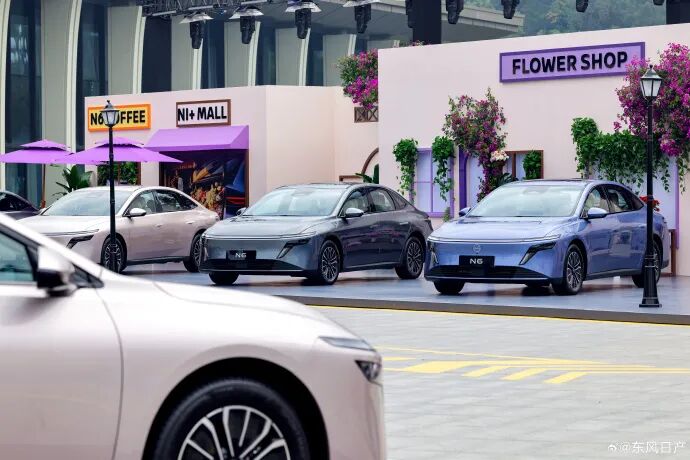
When it comes to pricing, the Dongfeng Nissan N6 is priced between 99,900 and 129,900 yuan, while the 2026 BYD Qin L DM-i ranges from 96,800 to 153,800 yuan. The starting prices of both models are almost on par. From a pricing standpoint, the Dongfeng Nissan N6, as a joint-venture vehicle, has essentially matched the price of the BYD Qin L, enhancing its competitiveness among consumers who favor joint-venture brands.
Now, let's turn our attention to battery range and performance. Battery range is a pivotal factor for plug-in hybrid models. The Dongfeng Nissan N6 is equipped with two battery capacities: 20.3kWh and 21.1kWh, sourced from CATL and Ruipu Lanjun, respectively. The minimum WLTC pure electric range stands at 125 kilometers. On the other hand, the BYD Qin L DM-i (2026 model) is equipped with a 15.87kWh battery, supplied by BYD's own Fudi. The WLTC pure electric range just meets the national standard at 100 kilometers. According to the latest national policy, starting from 2026, plug-in hybrid models must have a WLTC pure electric range of at least 100 kilometers to qualify for purchase tax subsidies. From this vantage point, the Dongfeng Nissan N6 enjoys a higher margin.
In terms of charging speed, taking the entry-level models as a reference, the Dongfeng Nissan N6 boasts a fast-charging power of up to 42kW and a fast-charging time of 0.28 hours. In contrast, the BYD Qin L DM-i has a fast-charging power of 23kW and a fast-charging time of 0.42 hours.
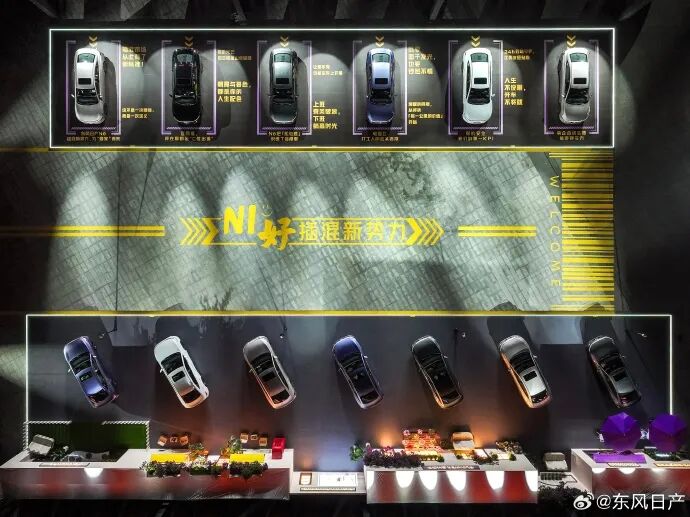
Regarding power, the Dongfeng Nissan N6 is powered by a 1.5L naturally aspirated engine and a 155-kilowatt motor, delivering a combined horsepower of 211. The BYD Qin L DM-i also features a 1.5L naturally aspirated engine, with total motor power available in two versions: 120kW and 160kW, delivering combined horsepower of 163 and 218, respectively. From an entry-level perspective, the Dongfeng Nissan N6 holds a significant advantage, with performance closely rivaling that of the BYD Qin L DM-i.

From the perspective of active and passive safety features and configurations, taking the entry-level models as an example, the Dongfeng Nissan N6 lacks front and rear head airbags but includes roadside assistance calling and a rollover prevention system. The BYD Qin L DM-i, conversely, includes two front and rear parking radars, six millimeter-wave radars, a transparent chassis, and three cameras, along with an active grille shutter. Furthermore, the BYD Qin L features a multi-link independent rear suspension, while the Dongfeng Nissan N6 is equipped with a torsion beam non-independent rear suspension. From a configuration standpoint, the BYD Qin L DM-i holds the upper hand.
Based on the aforementioned comparison points, the Dongfeng Nissan N6 (entry-level model) is priced approximately 3,000 yuan higher but offers substantial advantages in power performance, battery performance, and other aspects. However, it does have certain drawbacks in terms of active and passive safety features and technological configurations.
From the perspective of plug-in hybrid technology, both the Dongfeng Nissan N6 and the BYD Qin L DM-i utilize single-gear plug-in hybrid systems, which have been validated in the global market. The BYD Qin L DM-i also employs a single-gear plug-in hybrid system and has withstood the test of the Chinese market.
Data reveals that the BYD Qin L DM-i has showcased robust sales performance since its launch in May 2024, with cumulative sales reaching 284,000 units in 2024 and securing the annual sales championship for mid-size sedans in the Chinese market. From January to November 2025, cumulative sales surged to approximately 160,900 units, continuing to lead the plug-in hybrid market.
From a brand perspective, from January to November this year, BYD's cumulative sales soared to 4.182 million units, marking a year-on-year increase of 11.3%. As the November sales data has not yet been released, Dongfeng Nissan's cumulative sales from January to October 2025 stood at 524,993 units, reflecting a year-on-year decrease of 5.9%. In comparison, the two brands exhibit contrasting trends, with one on the rise and the other in decline. Notably, all of BYD's models are new energy vehicles, while Dongfeng Nissan has only introduced two new energy vehicles this year: the pure electric N7 and the plug-in hybrid N6. The proficiency of Dongfeng Nissan's plug-in hybrid and pure electric technology still awaits validation by the Chinese market.
Therefore, does the Dongfeng Nissan N6 truly possess the strength to compete? Unraveling the answer to this question evidently requires more time.
-
![]()
Surpassing the 'Storage Storm': Xiaomi’s Pivotal Moment
-
![]()
2026 China Auto Market: A 'Major Reshuffle' — Small Cars Decline, Large Cars Flourish, Is the Era of Fuel Vehicles Over?
-
![]()
Non-Recurring Items-Adjusted Net Profit Soars by 72.59%! Dongtianwei Records 502 Million Yuan in Revenue
-
![]()
Securing 2 Billion Yuan in Financing and Supplying Inno-Light: This Optical Device Company Launches Its IPO!
-
![]()
Farewell to 'Card Stacking': 2026 Marks China's Computing Power Shift to 'Token Value Output' Era
-
![]()
Xiaomi Weathers Storage Price Surge, Q2 2026 Revenue Tops 100 Billion Yuan Again
-
![]()
Geely Bids Farewell to the 'Li Shufu Era': A Historic Power Transition in China's Auto Industry | Auto Circle
-
![]()
Baidu Prepares for Inclusion in Southbound Trading: Wall Street Reassesses the Value of 'AI ETF'