November’s New Energy Vehicle Sales Data Released, Highlighting Growing Divide Among Emerging Players: Some Forge Ahead, Others Feel the Squeeze
 12/04 2025
 620
620
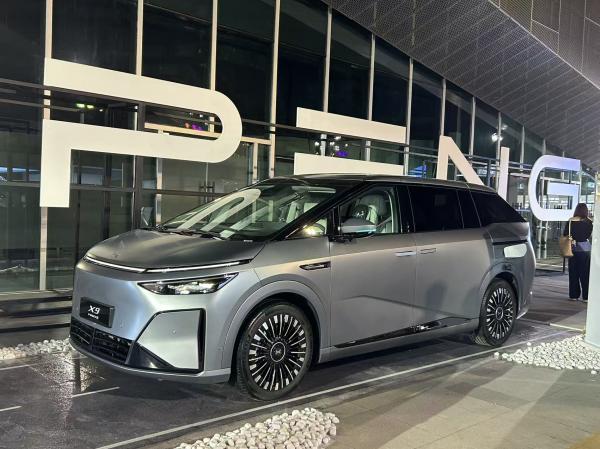
As 2025 draws to a close, major automakers have duly unveiled their November sales figures.
Overall, the performance of emerging automotive forces in November was remarkable. Among them, BYD maintained its global leadership in the new energy market, with sales surpassing 480,000 units.
Moreover, several brands achieved record-breaking delivery volumes. Leapmotor once again exceeded 70,000 units, marking nine consecutive months of robust growth. VOYAH surpassed 20,000 monthly deliveries for the first time. Xiaomi consistently delivered over 40,000 units, bringing its cumulative deliveries past the 500,000-unit milestone. Avatr also hit a new all-time high in November sales.
BYD Leads the Pack as Traditional Automakers Speed Up New Energy Transition
BYD continues to dominate the competition by a wide margin. In November, BYD’s sales reached 480,200 units, a 5.25% year-on-year decrease. From January to November this year, cumulative sales stood at 4.18 million units, representing an 11.3% year-on-year increase.
In terms of product lineup, BYD’s new energy vehicles fall into two categories: passenger vehicles and commercial vehicles. In November, passenger vehicle sales hit 474,900 units, with pure electric models performing exceptionally well at 237,500 units sold—a nearly 20% year-on-year increase.
Behind BYD, traditional automakers are stepping up their new energy transitions. In November, SAIC’s new energy vehicle sales reached 209,000 units, setting a new historical high after September and October, with a 19.7% year-on-year increase. Cumulative sales from January to November reached 1.499 million units, up 38.8% year-on-year.
Specifically, in November, IM Motors sold 13,000 units, a 34.3% year-on-year increase, exceeding 10,000 units for three consecutive months. SAIC-GM delivered 11,000 new energy vehicles, a 60.4% year-on-year increase. SAIC-GM-Wuling sold 120,000 new energy vehicles, with cumulative sales of the Wuling Binguo family surpassing 600,000 units.
Geely Auto also delivered an impressive performance. In November, its new energy sales (including Geely, Lynk & Co, and Zeekr) reached 187,800 units, a 53% year-on-year increase. The monthly new energy penetration rate hit a record high of 60.5%. In the first 11 months of this year, Geely’s total new energy sales reached 1.5335 million units, surging 97% year-on-year.
Amid the new energy transition wave, Great Wall Motors has also made significant strides. In November, sales of new energy models reached 40,000 units, accounting for over 30% of total sales—meaning one in every three vehicles sold was a new energy vehicle.
Growing Divide Among Emerging Players: Some Lead, Others Struggle
Within the emerging automotive forces, November’s delivery data clearly highlighted a trend of “the strong getting stronger.” Among them, Leapmotor once again led the pack in deliveries.
On December 1, Leapmotor announced its latest delivery figures: in November, full lineup deliveries reached a new high of 70,327 units, continuously breaking the monthly sales record for emerging automakers. Since March this year, Leapmotor has maintained robust growth for nine consecutive months.
Zhu Jiangming, founder, chairman, and CEO of Leapmotor, stated in the November sales video, “Leapmotor’s November deliveries achieved remarkable results. We also completed our annual sales target of 500,000 units 45 days ahead of schedule. Thank you all for your trust and support. In 2026, Leapmotor will aim for 1 million units in sales.”
Seres’ performance is also noteworthy.
According to Seres’ announcement, the company produced a total of 58,900 vehicles in November, a 30.36% year-on-year increase. Sales reached a total of 58,100 vehicles, a 36.34% year-on-year increase. From January to November 2025, Seres produced a total of 460,400 vehicles, a 0.73% year-on-year increase. Sales reached a total of 453,100 vehicles, a 0.52% year-on-year decrease.
Xiaomi Auto maintained steady growth.
On December 1, Xiaomi officially announced that its November deliveries consistently exceeded 40,000 units. Notably, this marked the third consecutive month that Xiaomi’s sales remained above 40,000 units. Lei Jun posted on Weibo, “In November 2025, Xiaomi Auto’s deliveries consistently exceeded 40,000 units. We will continue to work hard. Thank you all for your choices and support!”
NIO, XPeng, and Li Auto each sold over 30,000 units in November but faced different challenges.
NIO delivered 36,000 new vehicles in November, a 76.3% year-on-year increase. Among them, the NIO brand delivered 18,393 new vehicles, the Onvo brand delivered 11,794 new vehicles, and the firefly brand delivered 6,088 new vehicles. Thanks to the continuous and stable growth of new orders for the all-new ES8, NIO’s brand deliveries have grown for four consecutive months. NIO stated that production and deliveries of the all-new ES8 will significantly accelerate in December.
XPeng delivered 36,000 vehicles in November, a 19% year-on-year increase. From January to November this year, XPeng’s cumulative deliveries reached 392,000 units, a 156% year-on-year increase, having already achieved its annual sales target of 350,000 units in October. XPeng delivered 39,800 vehicles overseas in November, a 95% year-on-year increase.
Li Auto delivered 33,000 vehicles in November, a 31.9% year-on-year decrease but a 4.45% month-on-month increase. Li Auto announced that cumulative orders for its all-electric SUVs, the i6 and i8, have surpassed 100,000 units. To cope with production ramp-up, Li Auto’s i6 batteries have officially adopted a dual-supplier model, ensuring consistent battery performance and quality standards between the two suppliers.
Not only did Li Auto’s November deliveries decline year-on-year, but its latest financial results also faced pressure. In Q3 2025, Li Auto’s revenue was RMB 27.4 billion, a 36.2% year-on-year decrease. Its net loss was RMB 624 million, compared to a net profit of RMB 2.8 billion in the same period last year, turning from profit to loss.
Additionally, VOYAH’s November deliveries exceeded 20,000 units for the first time, while Avatr’s sales also reached a new all-time high of 14,057 units, having sold over 10,000 units for nine consecutive months, indicating the continuous expansion of the high-end smart electric vehicle market segment.
Overall, the new energy vehicle market in November has shifted from “universal growth” to “structural differentiation”: leading companies continue to expand their lead with scale, technology, and channel advantages, while emerging players must rely on product strength, cost control, or globalization capabilities to stand firm in the fierce competition.
-
![]()
Surpassing the 'Storage Storm': Xiaomi’s Pivotal Moment
-
![]()
2026 China Auto Market: A 'Major Reshuffle' — Small Cars Decline, Large Cars Flourish, Is the Era of Fuel Vehicles Over?
-
![]()
Non-Recurring Items-Adjusted Net Profit Soars by 72.59%! Dongtianwei Records 502 Million Yuan in Revenue
-
![]()
Securing 2 Billion Yuan in Financing and Supplying Inno-Light: This Optical Device Company Launches Its IPO!
-
![]()
Farewell to 'Card Stacking': 2026 Marks China's Computing Power Shift to 'Token Value Output' Era
-
![]()
Xiaomi Weathers Storage Price Surge, Q2 2026 Revenue Tops 100 Billion Yuan Again
-
![]()
Geely Bids Farewell to the 'Li Shufu Era': A Historic Power Transition in China's Auto Industry | Auto Circle
-
![]()
Baidu Prepares for Inclusion in Southbound Trading: Wall Street Reassesses the Value of 'AI ETF'