Valued at Over 20 Billion! Avatr Makes a Dash for Hong Kong Stock Exchange IPO
 12/08 2025
 727
727
The new - energy vehicle industry is on the fast track to development.
As the domestic industry penetration rate surpasses 50%, the era of unbridled growth is drawing to a close.
Recently, media reports have revealed that Avatr has submitted its listing application to the Hong Kong Stock Exchange, officially embarking on a sprint for a Hong Kong IPO.
As a high - end new - energy brand backed by three industry giants—Huawei, CATL, and Changan Automobile—Avatr's move has attracted significant market attention.
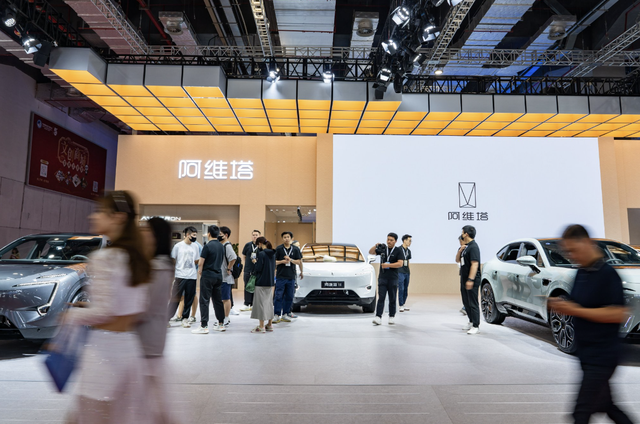
In fact, as early as 2021, Avatr executives disclosed plans for an IPO between 2024 and 2025. However, likely due to the increased volatility in the capital market, its listing plans were postponed until now.
For Avatr, launching an IPO at this crucial juncture is timely, but there are still numerous issues to tackle. From a sales perspective, Avatr's total sales in the first 10 months of this year reached approximately 97,000 units. With a monthly sales target of 10,000 units widely considered the “survival threshold,” Avatr is still barely meeting the minimum requirement. Operationally, over the past three and a half years, Avatr has accumulated losses exceeding 11.3 billion yuan, with a loss of 1.585 billion yuan in the first half of this year. In other words, Avatr needs a clear timeline to achieve profitability.
Currently, a Hong Kong IPO is merely the first step. To achieve favorable stock performance after listing, Avatr clearly has a long way to go.
Born with a 'Silver Spoon'
Looking back, Avatr's history can be traced to the establishment of Changan NIO New Energy Vehicle Technology Co., Ltd. in July 2018. It was a joint venture between Changan Automobile and NIO, with each holding a 50% stake.
The establishment of Changan NIO represented Changan Automobile's dream of transforming into a high - end new - energy vehicle brand. However, at that time, NIO was still struggling for survival, causing Changan NIO to stagnate shortly after its inception.
The turning point came in 2021. That year, Changan Automobile decided to rebrand Changan NIO and brought in two industry giants, CATL and Huawei, forming the well - known “CHN” alliance. Changan NIO was also renamed Avatr Technology that year, with its brand positioning shifting to “new luxury new - energy passenger vehicles.”
Changan Automobile Chairman Zhu Huarong publicly stated, “Avatr will receive whatever it needs—funds, personnel, and technology.”
Besides Changan Automobile, many also had high expectations for Avatr, as the collaboration among the three represented an innovative “technology aggregation + capital aggregation” model. Changan Automobile provided vehicle R & D, manufacturing, and supply chain systems; Huawei contributed its leading intelligent vehicle solutions, covering core technologies such as intelligent cockpits and assisted driving; and CATL served as the backbone for battery technology, ensuring competitiveness in the three - electric systems.
Notably, Avatr subsequently became an early partner in Huawei's HI mode. In August 2022, the first model adopting the HI mode, the Avatr 11, was launched, featuring Huawei's assisted driving system with lidar.
From a financing perspective, capital has shown immense enthusiasm for this “emerging aristocrat” with a strong background. According to the prospectus and public reports, since 2021, Avatr has completed four rounds of financing, raising over 19 billion yuan in total. Among them, the Series C financing in December 2024 alone exceeded 11 billion yuan, setting a record for the largest single financing deal in China's automotive sector that year.
The prospectus reveals that Avatr currently offers four mass - produced models for sale, with prices ranging from 200,000 to 700,000 yuan. All models offer both pure - electric and extended - range powertrain options, covering sedans and SUVs. The first product, the Avatr 11, began deliveries in December 2022. By the end of the first half of this year, Avatr's cumulative deliveries reached 138,000 units, with 20,021 units sold in 2023, 61,588 units in 2024, and 56,729 units in the first half of 2025.
According to the latest data, Avatr sold 13,506 units in October this year, with cumulative sales of approximately 97,000 units in the first 10 months. Although sales picked up in the second half of the year, they still lagged far behind AITO's October sales of over 40,000 units, as well as NIO's 40,400 units, Li Auto's 31,700 units, and XPeng's 42,000 units.
Additionally, Avatr set a sales target of 220,000 units for this year, but its sales target completion rate for the first 10 months was only 47.4%. Based on current sales, the annual sales target completion rate is estimated to be around 60%, still falling short of the initial plan.
The prospectus shows that Avatr's net losses were approximately 2.015 billion yuan, 3.693 billion yuan, 4.018 billion yuan, and 1.585 billion yuan for 2022, 2023, 2024, and the first half of 2025, respectively. Meanwhile, Avatr expects to continue incurring losses in 2025.
Breaking Through with a Hong Kong IPO
Why has a new - energy vehicle brand that brings together China's top manufacturing, battery, and intelligent technologies fallen short of expectations?
This can be largely attributed to its product positioning.
From its inception, Avatr has aimed to compete with “BBA” (BMW, Mercedes - Benz, Audi) and become a global leader in high - end intelligent electric vehicles.
However, establishing a foothold in the high - end electric vehicle market is no easy task. Compared to the mid - to - low - end electric vehicle market, the high - end segment has a limited market capacity.
According to 2024 survey data, the penetration rate of high - end pure electric vehicles remains low. From January to August 2024, the average penetration rate for pure electric vehicles priced between 300,000 and 400,000 yuan and those over 400,000 yuan was less than 15%, far below the overall pure electric vehicle penetration rate of 26%.
In other words, in the high - end new - energy vehicle market, consumers prefer extended - range or plug - in hybrid models that eliminate range anxiety, showing less enthusiasm for pure electric vehicles.
Avatr, which initially focused on the high - end pure electric new - energy vehicle market, was destined for a relatively challenging development path. However, after realizing the limited capacity of the high - end pure electric new - energy vehicle market, Avatr began to proactively adapt by launching extended - range models instead of solely relying on pure electric vehicles and introducing models priced around 200,000 yuan. This strategic shift was key to its sales rebound in the second half of this year.
Furthermore, besides product positioning issues, Avatr currently faces another major challenge: its once - proud “technological moat” is rapidly being leveled, and its unique advantages are diminishing.
Overall, Avatr's core selling points lie in Huawei's intelligent driving and cockpit systems and CATL's cutting - edge battery technology. However, these features have now become widespread. For instance, Huawei's intelligent driving and cockpit systems are currently featured in over 10 brands and more than 20 models. Similarly, CATL's batteries are even more widely adopted. For example, the “Xiaoyao Super Extended - Range Battery,” initially equipped on the Avatr 12, was followed by a series of automakers, including direct competitor Luxeed R7, within just a few months.
As these once - exclusive technologies become increasingly “standardized” and Avatr fails to establish a strong moat through its first - mover advantage, its product competitiveness risks being overshadowed in a homogenized market.
In summary, Avatr's current predicament is evident and requires timely change. Avatr has officially begun its sprint for a Hong Kong Stock Exchange IPO. Despite its valuation still exceeding 20 billion yuan, this largely reflects market recognition of its “CHN” background and future potential.
As the IPO process advances, Avatr will transition from the “storytelling” phase in the primary market to the “accountability” phase in the secondary market. Secondary market investors will scrutinize its monthly delivery figures, gross margin changes, and loss reduction pace with stricter and more short - term perspectives. If sales growth falls short of expectations or losses do not narrow effectively after listing, Avatr's stock price will face significant pressure. Thus, launching a Hong Kong listing is just the beginning, and more market tests lie ahead.
-
![]()
Optical Industry Chain's 'Little Giant' Faces the Listing Challenge! Yuanli Optoelectronics Set for BSE IPO Review Tomorrow
-
![]()
There's No Such Thing as a Free DeepSeek
-
Five Consecutive Quarters of Revenue Decline: Baidu Sets Sights on 'Reclaiming Top-Tier Status in Foundational Large Models'
-
![]()
Global Vehicle-Mounted Optics Leader Reports RMB 358 Million Loss in H1!
-
![]()
Global Computing Power Behemoth Nvidia Faces Emerging, Formidable Rivalry!
-
![]()
Generative AI Fuels Global Cloud Market Boom, Three Cloud Titans Amass Trillions in Pending Orders
-
![]()
Semi-annual Report | Global Large-Size Interactive Flat Panel Market Grows by 9.4% in H1 2026; Analysis of Domestic and International Brand Strategies
-
![]()
Can Tencent Still 'Buy a Ticket' Onboard with an Extra 20 Billion?