Losses Surpass 2 Billion: Can Autowatts New Energy Break Through with Its Listing?
 01/12 2026
 450
450
Surrounded by Formidable Competitors
Zhang Wei, Investor Network
The 'Toy King' Steps into a New Arena: What Are the Chances of Success in the Battery Swap Sector? At present, the company is far from profitable and is deeply entrenched in losses.
In December 2025, Autowatts New Energy Co., Ltd. (hereinafter referred to as 'Autowatts New Energy' or 'the Company'), a frontrunner in the domestic battery swap industry, officially filed its Prospectus for listing on the Main Board of the Hong Kong Stock Exchange. If successful, Autowatts New Energy will earn the title of the 'first battery swap stock on the Hong Kong Stock Exchange.'
The 'Toy King' Makes a Foray into the Battery Swap Business
According to available information, the actual controller of Autowatts New Energy is Cai Dongqing, a Guangdong Chaoshan entrepreneur who founded Alpha Animation (002292.SZ). Currently, Alpha Animation boasts well-known animation IPs such as 'Pleasant Goat and Big Big Wolf,' 'Super Wings,' and 'Balala the Fairies.'
Meanwhile, leveraging its animation IPs, Alpha Animation has launched card toys like Armored Warriors and Super Wings, which enjoy immense popularity among young consumers. As a result, Cai Dongqing has earned the moniker 'Toy King.' In 2016, the 'Toy King' Cai Dongqing joined forces with technical expert Zhang Jianping to establish Autowatts New Energy, with a focus on the battery swap business for new energy vehicles.
In layman's terms, battery swapping is an energy replenishment model where new energy vehicles drive into designated stations to have their batteries replaced. According to the Prospectus, Autowatts New Energy's subsidiary, Shanghai Dianba, commenced the construction of battery swap stations and the manufacturing of battery swap modules as early as 2009, making it one of the earliest domestic companies to venture into battery swapping.
However, at that time, the new energy vehicle industry was still in its nascent stages, with charging being the predominant energy replenishment method, and battery swapping was a niche exploration. Against this backdrop, Autowatts New Energy's early development focused more on the accumulation and verification of core technologies.
As the ownership of new energy vehicles increased and concerns over energy replenishment anxiety grew, the battery swap model gradually garnered market attention, and Autowatts New Energy entered a phase of rapid expansion. Leveraging its early technological advancements, the company took the lead in industrializing battery swap technology and gradually constructed a battery swap system catering to various vehicle models and application scenarios.
2021 marked a pivotal turning point for Autowatts New Energy. In May of that year, the company announced a collaboration with Sinopec to expand its battery swap station network using Sinopec's extensive resources. In November, it inked a joint venture agreement with British Petroleum, laying the groundwork for overseas market expansion. These collaborations positioned Autowatts New Energy as one of the leading companies in the domestic battery swap industry.
According to the Prospectus, as of the end of June 2025, Autowatts New Energy's energy service platform had connected 521 battery swap stations, served over 130,000 electric vehicles, and collaborated with automakers such as FAW, Dongfeng, Changan, and SAIC to develop over 30 battery swap vehicle models, establishing a business model centered around 'automaker collaboration and diverse scenarios.'
Cumulative Losses Surpass 2 Billion Over Three and a Half Years
Statistical data reveals that in 2024, Autowatts New Energy held a 42% market share in the commercial vehicle battery swap market, establishing itself as the undisputed leader in this niche segment. However, its industry position has not translated into profitability, as the company's financial data has raised red flags.
Financial reports indicate that from 2022 to 2024 and the first half of 2025 (hereinafter referred to as the 'reporting period'), Autowatts New Energy's revenue stood at 1.106 billion yuan, 1.155 billion yuan, 926 million yuan, and 324 million yuan, respectively, highlighting a lack of revenue growth momentum.
From a revenue composition perspective, the decline in Autowatts New Energy's revenue may be attributed to business structure adjustments.
Autowatts New Energy's revenue primarily stems from battery swap equipment sales and battery swap operation services. Battery swap equipment sales were once the company's cornerstone business, accounting for 66% in 2022, but this proportion has dwindled year by year, reaching only 17% in the first half of 2025. During the reporting period, while the revenue share of battery swap operation services increased significantly, its growth was insufficient to offset the decline in battery swap equipment sales, resulting in an overall revenue decline for Autowatts New Energy.
More severely, the company's profitability is a cause for concern, with net losses of 785 million yuan, 655 million yuan, 419 million yuan, and 157 million yuan during the reporting period, culminating in cumulative losses exceeding 2 billion yuan over the past three and a half years. Analysts believe that the heavy asset model and continuously expanding gross losses are the primary reasons for Autowatts New Energy's persistent losses.
It is understood that battery swapping is a quintessential heavy asset model. The large-scale construction and operation of battery swap stations have kept Autowatts New Energy's fixed costs elevated. From 2022 to 2024, the company's gross loss amounts were 174 million yuan, 39.85 million yuan, and 34.1 million yuan, with gross loss rates of 15.7%, 3.4%, and 3.7%, respectively. In the first half of 2025, the gross loss amount was 28.72 million yuan, and the gross loss rate rebounded to 8.9%, exerting pressure on profitability.
Minsheng Securities believes that the key to profitability for battery swap companies lies in scale effects and operational efficiency. Autowatts New Energy's current scale of battery swap stations has not yet reached the breakeven point, and ongoing expenses such as battery procurement, station maintenance, and personnel costs may prolong the company's loss-making situation in the short term.
Opportunities and Challenges Abound in the Battery Swap Industry
Despite the short-term profitability pressures faced by Autowatts New Energy, the battery swap industry is poised to seize development opportunities driven by both policies and markets, with broad industry prospects underpinning the company's current IPO.
From a policy perspective, the battery swap model has received robust policy support. The national '14th Five-Year Plan' for the modern energy system proposes 'developing the battery swap model,' and relevant departments have formulated guidelines to promote its development, with multiple regions introducing special subsidies to drive the construction of battery swap infrastructure.
As early as 2023, the Ministry of Finance and other three ministries proposed a vehicle purchase tax calculation method for the 'vehicle-battery separation' model, providing standardized guidance for industry development. In 2025, the first batch of vehicle-grid interaction scaled application pilots were launched, and battery swap stations, with their flexible and controllable energy dispatching advantages, have broad application prospects in the V2G (Vehicle-to-Grid) field.
Data shows that the number of domestic battery swap stations has surged from fewer than 500 in 2020 to 5,036 in October 2025, serving over 3 million vehicles. The industry has transitioned from early pilots to scaled expansion. Especially in high-frequency operation scenarios such as taxis and ride-hailing services, the battery swap model has witnessed a rapid increase in penetration due to its ability to significantly enhance operational efficiency.
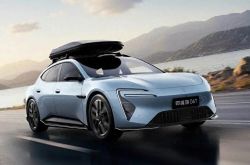
Autowatts New Energy states that it holds over a 60% market share in the taxi battery swap market in cities like Beijing and Guangzhou, demonstrating the market potential in niche scenarios. On the other hand, the prices of battery swap vehicle models continue to decline. By the end of 2025, the rent-to-buy price of the Aion UT super, a battery swap vehicle model launched by JD.com in collaboration with GAC and CATL, dropped to as low as 45,400 yuan, offering high cost-effectiveness and opening up the mass consumer market, which is expected to drive the popularization of the battery swap model.
However, the battery swap industry is also fiercely competitive, and Autowatts New Energy finds itself surrounded by formidable competitors.
When it comes to battery swapping, consumers often first think of NIO. Data shows that NIO has dominated the high-end passenger vehicle battery swap market, with 3,576 battery swap stations deployed as of 2025, accounting for approximately 71% of the market share. Additionally, CATL, with its modular 'Chocolate Battery Swap' solution, is attempting to dominate industry standards. Autowatts New Energy, on the other hand, focuses on the third-party commercial vehicle battery swap market, carving out a differentiated competitive advantage.
Currently, the domestic battery swap industry has formed a pattern led by four major players: NIO, CATL, Autowatts New Energy, and Yiyi Internet, which collectively account for over 90% of the market share. However, the battery swap industry still faces core bottlenecks: the lack of unified battery swap standards makes cross-brand services difficult, hindering scale effects; the heavy asset model leads to overall industry losses, with related companies generally expecting longer profitability cycles.
Minsheng Securities believes that with leading companies driving the standardization of battery swapping and scaled operations reducing costs, the battery swap industry is expected to reach a profitability inflection point around 2028 and form a pattern where battery swapping, home charging, and public charging stations 'share the market' by 2030.
For Autowatts New Energy, if the country implements unified battery swap standards in the future, the company may face the risk of having to retrofit its existing battery swap equipment or even being technically replaced. After going public, Autowatts New Energy also needs to provide a feasible path to profitability to dispel market doubts about its ability to generate profits. (Produced by Thinker Finance) ■
Source: Investor Network
-
![]()
Enflame Tech's IPO Journey: Navigating Over 5.9 Billion Yuan in Losses and Soaring Debt in Q1 This Year
-
![]()
Trillion-Yuan Giant Li Shufu 'Streamlines': Could Levc Be the Casualty?
-
![]()
AI Competes for Electricity and Generates Power in the Gobi Desert
-
![]()
The First Batch of Victims of the AI Bubble: Programmers
-
![]()
ByteDance, DJI, and Xiaohongshu Secure Top Three Positions Among China’s Fastest-Growing Unicorns
-
Tesla's in-car voice system in China is finally learning to 'understand human language'
-
![]()
Foreigners Are Amazed: Chinese Electric Vehicle Drive Systems Unveil Innovative 'Poses'
-
![]()
700,000 Brothers and the Future of Robots: Behind JD.com's 'Nirvana Plan'