Surging by 30%! Hyundai Motor's Market Value Rockets by $24 Billion in 2026, with AI, Autonomous Driving, and Robotics Mounting a Tri-Pronged Assault, Riding the Wave of South Korea's 'Historic Bull M
 01/19 2026
 538
538
Introduction
At the dawn of 2026, South Korean automakers have left an indelible mark on the global stock market landscape.
Hyundai Motor has defied the traditional automaker stereotype, experiencing a meteoric rise in its stock price. Since the year's commencement, its market value has catapulted by $24 billion, a feat equivalent to directly acquiring the valuation of Rivian. With a staggering 30% increase in its stock price, Hyundai is firmly entrenched in 'money-printing machine' territory.
Even more impressive is its emergence, alongside Samsung and SK Hynix, as a key driver behind the KOSPI index's 8% surge at the start of the year, shattering the historical high of 4,693 points.
This 'hidden gem' of a stock, boasting a price-to-earnings ratio of a mere 8.3 times, has quietly amassed the three hottest investment themes: AI, autonomous driving, and humanoid robots, riding the crest of the global tech bull market.
The Self-Driving Car Era Has Arrived (WeChat Official Account: The Self-Driving Car Era Has Arrived) is eager to delve into this phenomenon with all of you!
(For reference, please click: 'Hyundai Motor: Negotiating Autonomous Driving Technology Cooperation with XPENG Motors, Aiming to Establish Two Global Autonomous Driving Technology Networks in the US and China')
I. Bull Market Engine: The South Korean Stock Market Frenzy Behind the $24 Billion Market Value Surge
To comprehend Hyundai Motor's remarkable ascent, one must first grasp the essence of this 'historic bull market' in the South Korean stock market.
In 2025, the KOSPI index soared by 76%, marking its strongest increase in 25 years.
In just over ten days at the start of 2026, the index surged by another 8%, consecutively breaking through the 4,300, 4,500, and 4,600 milestones, reaching a historical peak of 4,693 points on January 13th.
In this stock market extravaganza, Samsung Electronics and SK Hynix contributed nearly half of the gains, while Hyundai Motor emerged as a new 'engine' of growth.
During trading on January 13th, Hyundai Motor's stock price skyrocketed by 10% in a single day, reaching a historical high. This surge propelled its logistics subsidiary Hyundai Glovis, parts supplier Hyundai Mobis, IT company Hyundai Autoever, and other chain enterprises to all-time highs as well.
Top-tier Wall Street brokerages have already sensed the opportunity, with Citigroup, JP Morgan, and Nomura collectively bullish, predicting at least a 20% increase in the South Korean stock index next year.
Nick Ferres, Chief Investment Officer of a Singaporean asset management company, bluntly stated that the valuations of Asian AI computing power enterprises remain low, while the global AI capital expenditure cycle is less than halfway through, offering immense upside potential for companies like Hyundai Motor.
II. Deeply Bound to NVIDIA: The 'Physical AI' Ambition Bolstered by 50,000 GPUs
Hyundai Motor's counterattack hinges on aligning with the right 'partner'—AI chip giant NVIDIA.
Their cooperation extends beyond mere technological integration to a deeply intertwined 'AI factory' co-construction plan.
In late October 2025, NVIDIA CEO Jensen Huang visited South Korea, forging significant cooperation agreements with Hyundai, Samsung, and SK Group. The plan entails supplying hundreds of thousands of high-performance GPUs for South Korea's AI infrastructure.
Among these collaborations, Hyundai Motor's partnership with NVIDIA stands out:
The two entities will deploy 50,000 Blackwell architecture AI GPUs to construct a next-generation AI superfactory, focusing on technological innovations in autonomous driving, smart factories, and robotics. This will achieve an integrated closed loop for AI model training, validation, and deployment.
(For reference, please click: 'The 'Butterfly Moment' of Autonomous Driving: NVIDIA's Bet from Open-Source Models to Super Chips, Behind Which Lies Jensen Huang's $10 Trillion Gamble')
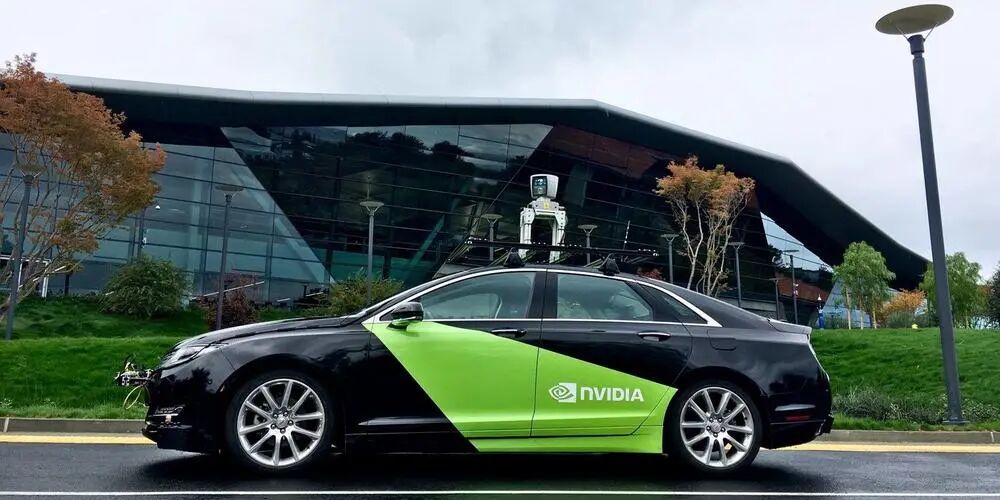
The core of this cooperation lies in betting on what Jensen Huang terms the 'Physical AI' era—
Enabling robots and autonomous systems to perceive, reason, and act in the real world, transforming AI from a 'model that can only converse' into a 'tool that can work'.
As Eugene Investment analyst Huh Jae-hwan stated, investors' perception of Hyundai has fundamentally shifted. AI projects have shed its 'old automaker' label, while its low valuation provides ample upside imagination for the market.
III. Triple Threat: The Synergistic Impact of AI, Autonomous Driving, and Robotics
If aligning with NVIDIA is 'leveraging the trend,' then Hyundai's own AI, autonomous driving, and robotics businesses form the 'solid foundation' underpinning its stock price.
At the 2026 CES show, Hyundai unveiled two major game-changers, completely igniting market sentiment.
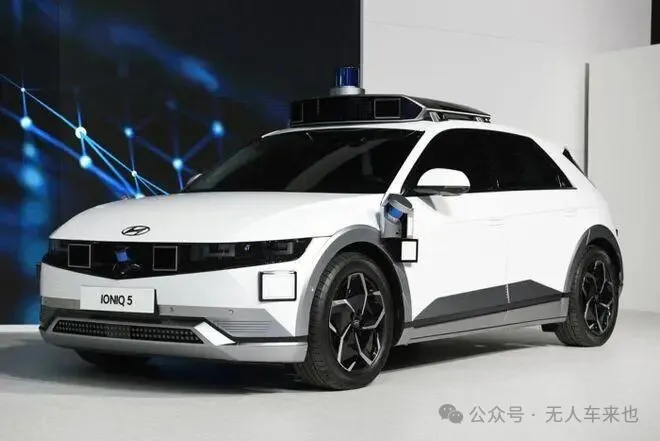
The first is the autonomous driving technology jointly advanced with NVIDIA.
Based on NVIDIA's newly released Alpamayo open-source large model, the two parties are exploring fully autonomous driving cooperation akin to Tesla's FSD.
This visual-language-action model, boasting 10 billion parameters, overturns the logic of traditional autonomous driving systems:
Not only can it plan routes, but it can also explain decision-making reasons like humans, such as stating through natural language, 'The brake lights of the vehicle ahead are on; maintain a safe distance.' Jensen Huang even calls it the 'ChatGPT moment of Physical AI.'
Paired with NVIDIA's AlpaSim simulation tools and datasets, it forms a closed loop of 'model + simulation + data,' significantly enhancing the safety and verifiability of autonomous driving.
The second is the heavyweight launch of the Atlas humanoid robot.
This product, jointly developed with Boston Dynamics, has set a clear commercialization timeline:
Deployment will commence in 2028 at Hyundai's electrification superfactory in Georgia, USA, handling tasks such as parts sorting, assembly, and machine maintenance.
By 2030, application scenarios will expand to component assembly, ultimately achieving full production process coverage.
Atlas features fully rotating joints and humanoid tactile hands, capable of autonomously handling high-intensity, highly repetitive complex tasks, reducing labor risks while boosting production efficiency.
To support its robotics business, Hyundai has also collaborated with Kia, Hyundai Mobis, and Hyundai Glovis to establish a complete industrial chain:
Kia provides manufacturing infrastructure, Hyundai Mobis researches and develops high-performance actuators, and Hyundai Glovis optimizes logistics distribution.
The goal is to achieve an annual production capacity of 30,000 robots by 2028, seizing the global industrialization lead in humanoid robots.
It's worth mentioning that Hyundai's Boston Dynamics currently boasts a valuation of $68 billion, becoming a hidden 'behemoth asset.'
IV. Valuation Lowland: A Tech Giant Potential Stock with an 8.3 P/E Ratio
What drives investors wild is that Hyundai Motor's 30% surge has not exhausted its valuation potential but remains in a 'value lowland.'
Its current forward price-to-earnings ratio is a mere 8.3 times, not only below the KOSPI index's average of 10 times but also far below the valuations of tech giants like NVIDIA and Tesla.
This combination of 'low valuation + high growth' is exceptionally rare against the backdrop of soaring global tech stock valuations.
It's crucial to note that Hyundai's business layout has long surpassed automobile manufacturing, forming an ecological closed loop of 'AI factories empowering autonomous driving and robotics, with robots feeding back into smart factories.'
As the Atlas robot formally enters mass production in 2028, autonomous driving technology gradually lands, and AI factory computing power continues to upgrade, its profit growth points will continuously broaden.
Meanwhile, policy stimuli from the South Korean government and the continuation of the memory chip supercycle also provide a favorable external environment for Hyundai Motor.
More importantly, global capital is accelerating its flow into Asian tech stocks. Against the backdrop of peaked valuations for US tech giants and a weakening US dollar, companies like Hyundai, which hold three top investment themes and reasonable valuations, have undoubtedly become the coveted targets of capital.
From acquiring Boston Dynamics to laying out a robotics strategy, deeply aligning with NVIDIA to bet on AI, to advancing next-generation autonomous driving technology, Hyundai Motor has completed its transformation from a traditional automaker to a tech giant through a series of strategic maneuvers.
This $24 billion market value surge is essentially the market's recognition of its 'AI + Autonomous Driving + Robotics' strategy.
In conclusion, The Self-Driving Car Era Has Arrived (WeChat Official Account: The Self-Driving Car Era Has Arrived) believes:
Hyundai Motor's $24 billion market value surge tells us: When cars start to 'think,' the steering wheel becomes history; when robots start to 'work,' factories become AI playgrounds. In the future, perhaps we won't need drivers, just AI. What do you think, dear readers?
#TheSelfDrivingCarEraHasArrived #AutonomousDriving #SelfDriving #SelfDrivingCar
-
![]()
Enflame Tech's IPO Journey: Navigating Over 5.9 Billion Yuan in Losses and Soaring Debt in Q1 This Year
-
![]()
Trillion-Yuan Giant Li Shufu 'Streamlines': Could Levc Be the Casualty?
-
![]()
AI Competes for Electricity and Generates Power in the Gobi Desert
-
![]()
The First Batch of Victims of the AI Bubble: Programmers
-
![]()
ByteDance, DJI, and Xiaohongshu Secure Top Three Positions Among China’s Fastest-Growing Unicorns
-
Tesla's in-car voice system in China is finally learning to 'understand human language'
-
![]()
Foreigners Are Amazed: Chinese Electric Vehicle Drive Systems Unveil Innovative 'Poses'
-
![]()
700,000 Brothers and the Future of Robots: Behind JD.com's 'Nirvana Plan'