1,000 MINIEYE Autonomous Vehicles Make Their Middle East Debut! China's Autonomous Driving Launches the Overseas Expansion 2.0 Era, Shifting from 'Product Export' to 'Ecosystem Deployment' in a Multid
 01/22 2026
 651
651
Introduction
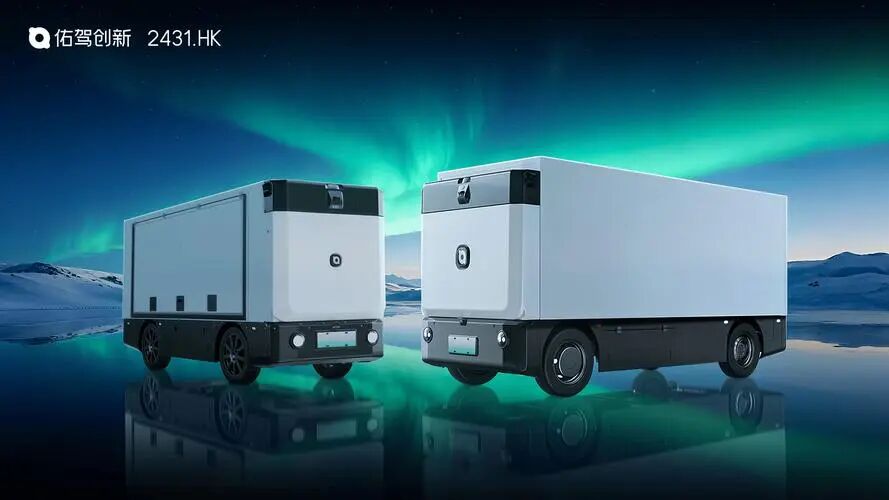
On January 21, 2026, against the backdrop of the Hong Kong Central Ferris Wheel, a historic handshake took place between Liu Guoqing, Chairman of MINIEYE, and Shao Minhua, Partner at eWTP Arabia Capital. This moment marked the announcement of deploying up to 1,000 L4 autonomous logistics vehicles in Saudi Arabia by 2030. This move not only signifies the largest single order for a Chinese autonomous driving enterprise in the Middle East market but also represents the industry's leap from 'small-scale' pilot projects to 'large-scale deployment' and 'extensive overseas expansion' into uncharted territories.
From the UAE to Qatar, and now to Saudi Arabia, a wave of 'Overseas Expansion 2.0,' led by Chinese autonomous driving technology, is sweeping across the Middle East with unprecedented breadth and depth. Let's delve into this topic with everyone at 'Autonomous Vehicles Are Coming' (WeChat Official Account: wrcly666666)!
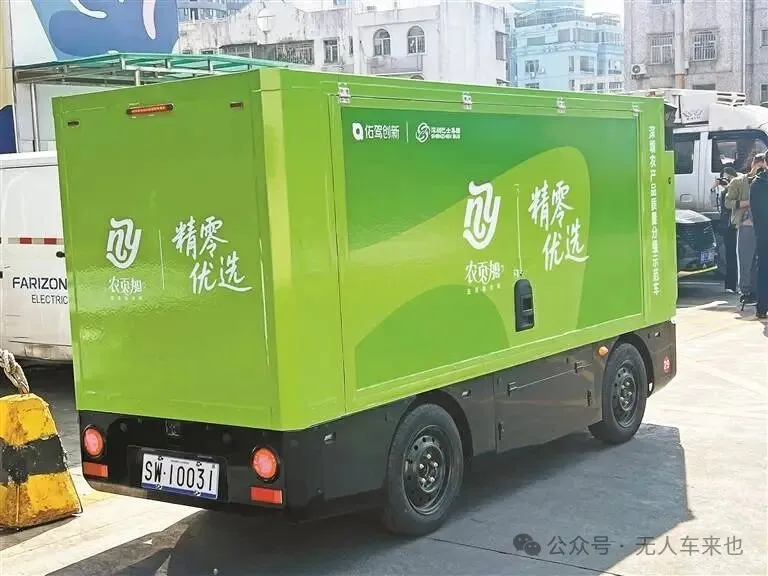
(For more information, please click: 'Shenzhen Launches Nation's First Demonstration Store for Grading Agricultural Product Quality; MINIEYE Autonomous Vehicles Ensure Safe and Timely Delivery of Fresh Produce to Citizens')
I. Strategic Shift Eastward: Saudi Arabia's 'Vision 2030' and the Ideal Timing for China's Autonomous Driving
The Middle East market's enthusiasm for China's autonomous driving technology is not a fleeting trend but is deeply rooted in a multi-trillion-dollar economic and social transformation plan driven by national top-level strategies.
Saudi Arabia, an ambitious kingdom, is placing its bets on logistics and technology for its 'post-oil era' future.
Its core blueprint, 'Vision 2030,' along with the accompanying National Transport and Logistics Strategy, aims to position the country among the top 10 in the global Logistics Performance Index.
To achieve this, Saudi Arabia plans to invest approximately SAR 1.6 trillion in the transport and logistics sector between 2023 and 2034 and to construct 59 logistics centers covering over 100 million square meters.
(For more insights, please click: 'Global Future Transport in Focus: CoMotion Global 2025 Summit Held in Riyadh, Saudi Arabia; Neolix Autonomous Vehicles Shine in the Middle East')
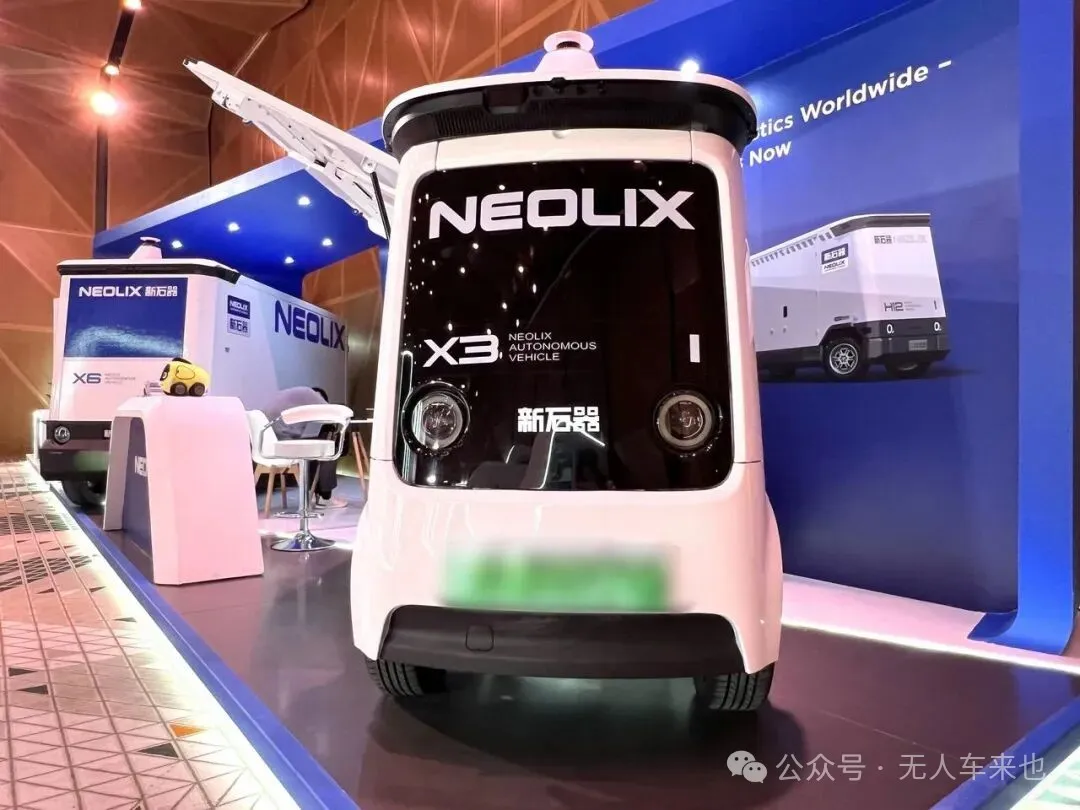
This logistics market, valued at USD 20.47 billion with a near 7% compound annual growth rate, has an unprecedented appetite for automation and intelligent technologies.
Saudi Minister of Transport and Logistics Saleh Al-Jasser explicitly stated: Starting from 2023, to realize 'Vision 2030,' Saudi Arabia's sea, land, and air transport systems will vigorously adopt smart interconnected technologies, including autonomous vehicles.
This provides the perfect 'timing' and 'location' for Chinese autonomous driving enterprises.
Zhou Guomin, Managing Partner at eWTP Arabia Capital, describes the current Middle East as 'a land of opportunities,' pointing out that Middle Eastern countries are actively leveraging China's technology and capabilities to achieve economic diversification.
MINIEYE's plan for a thousand autonomous vehicles precisely capitalizes on this historic window of opportunity.
II. Extreme Testing Ground: How the Middle East's Scorching Heat and Sandstorms Forge the 'Resilient Body' of Chinese Technology
Transporting autonomous vehicles from China's urban roads to the Middle East's desert highways is far from a simple relocation; it's a 'forging' of technological limits.
This region presents the world's most rigorous natural testing ground: sustained temperatures above 45°C in summer, sudden sandstorms, and intense ultraviolet radiation pose ultimate tests on sensor sensitivity, computing chip stability, battery thermal management systems, and even the durability of mechanical components.
The Pony.ai operational team in Doha, Qatar, has firsthand experience. At noon, when temperatures soar above 48°C and heatwaves distort vision, their Robotaxi must ensure that LiDAR sensors remain uncovered and functional amidst sand, and millimeter-wave radar signals are not disrupted by high temperatures.
(For more details, please click: 'Pony.ai Forms Strategic Partnership with Qatar National Transport Company; Autonomous Robotaxi Launches in Capital Doha')
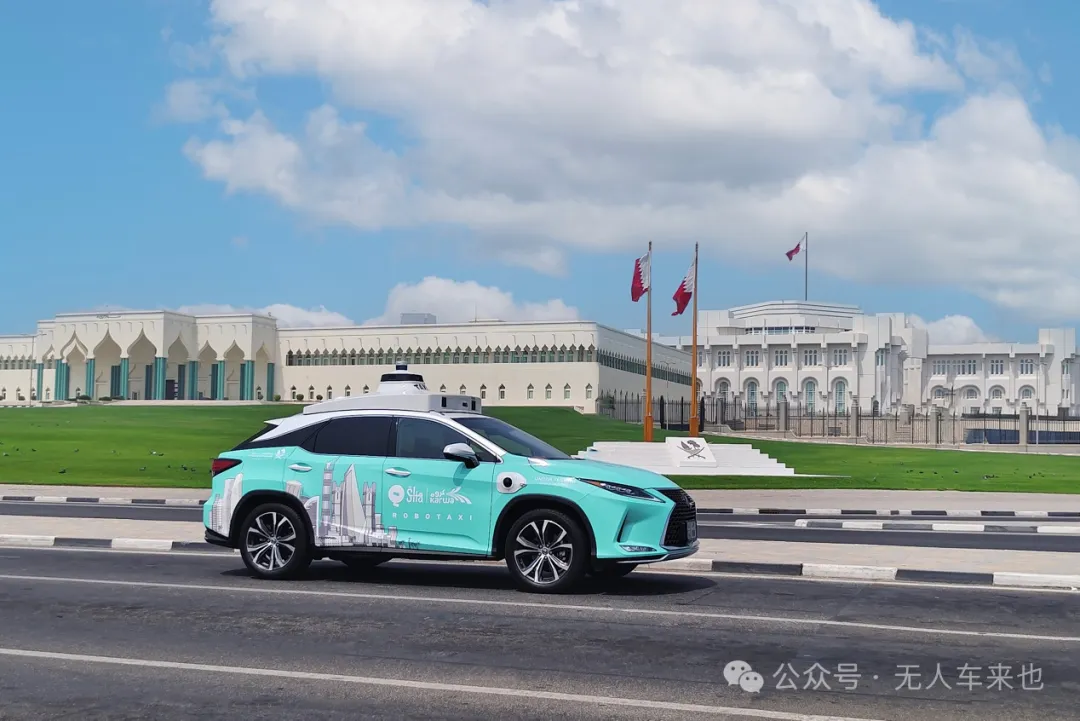
To tackle these challenges, they have adopted a multi-sensor fusion solution and self-developed sensor self-cleaning technology, and subjected the entire vehicle system to rigorous desert environment automotive-grade testing.
Similarly, MINIEYE has conducted specialized optimizations for its upcoming 'Xiaozhu' autonomous logistics vehicles bound for Saudi Arabia, targeting extreme high temperatures and sandy climates.
(For more information, please click: '1.2 Trillion Yuan Sector; Operating from 6 PM to 5 AM, 4 Trips/Night to Stock Shelves with Fresh Produce! 'Xiaozhu' Autonomous Vehicles Dive into Cold Chain Logistics')
This 'localization' of technological adaptation is a crucial task for China's autonomous driving overseas expansion.
The Middle East market acts as a technological amplifier: stable operation here implies that the product possesses the capability to conquer most harsh environments globally.
Every successful drive by Chinese enterprises in the Middle East's extreme climates crowns their technology with global versatility and reliability.
III. Chinese Approach: Multidimensional Competition from 'Product Export' to 'Ecosystem Deployment'
Unlike traditional automotive exports, Chinese autonomous driving companies in the Middle East are employing a more sophisticated 'combination play': technology + operations + capital + localization, each aspect is indispensable.
This is referred to as the 'Overseas Expansion 2.0' strategy by Liu Guoqing, Chairman of MINIEYE, which upgrades from simple product exports to localized, large-scale commercial operations in overseas markets.
The essence of this approach lies in deeply binding local core resources rather than going it alone.
WeRide is a pioneer in this model.
In Abu Dhabi, instead of operating its fleet independently, it formed a strategic alliance with global mobility giant Uber and local operator Tawasul.
Passengers can hail autonomous vehicles through the Uber App, with WeRide providing technology and vehicles, and Tawasul handling local operations and compliance.
(For more insights, please click: 'Abu Dhabi, UAE: One Step Closer to the 'City of Autonomous Driving'! WeRide, Uber, EHang, and Westwell Lab All Implement Projects')

This model swiftly achieved a commercial closed loop, even reaching vehicle-level break-even in the service area of Yas Island.
The partnership plans to expand the autonomous vehicle fleet to thousands in the coming years and reach tens of thousands by 2030.
MINIEYE has replicated and strengthened this path. Its chosen partner, eWTP Arabia Capital, is a cross-border investment institution deeply rooted in Saudi Arabia's political and business circles.
eWTP Arabia Capital not only brings capital but, more crucially, acts as a 'super connector' and 'super value-adder.'
It assists Chinese enterprises in breaking through market access barriers, effectively communicating with local regulatory authorities, and linking with the most suitable local scenarios and partners.
This 'Chinese technology + Saudi capital and scenarios' joint fleet model significantly reduces the policy and market risks of overseas expansion.
Just as Lenovo Group established a regional headquarters and manufacturing base in Riyadh, and Alibaba Cloud jointly built the largest data center cluster in the Middle East and North Africa with Saudi Telecom, Chinese autonomous driving enterprises are transforming themselves into part of Saudi Arabia's 'Vision 2030' through deep localization, thereby achieving an identity shift from 'outsiders' to 'co-builders.'
IV. Gold Rush and Hidden Reefs: The Ambitions of the Thousand-Vehicle Plan and the Uncharted Deep-Water Zone Ahead
The ambitious plan for a thousand autonomous vehicles is undoubtedly thrilling, but the journey to the golden sea is never without reefs and storms.
China's autonomous driving enterprises' gold rush in the Middle East still faces multiple deep-level challenges in technology, commerce, and geopolitics.
The foremost challenge is long-term profitability.
Despite WeRide achieving vehicle-level break-even in specific regions, the deployment of large-scale fleets, high research and development adaptation costs in extreme environments, and revenue sharing with local partners continuously test enterprises' cash flows.
Pony.ai accumulated losses exceeding billions of RMB before going public, with high overseas operational costs being a hurdle it must overcome.
Next is the gray area of regulations and liability.
Despite positive policy attitudes from countries like Saudi Arabia and the UAE, the entire Middle East region has yet to form unified standards for autonomous driving technology, testing norms, and frameworks for accident liability determination.
In the event of a traffic accident, who bears the responsibility—the operator, the technology provider, or the vehicle manufacturer? How will insurance claims be handled? These legal gaps may act as 'brake pads' for large-scale operations.
Broader risks stem from geopolitical and global trade uncertainties.
Relevant research reports point out that geopolitical turmoil in the Red Sea shipping lanes has already forced shipping companies to adjust routes and bear higher insurance costs. Meanwhile, the rise of global trade protectionism casts a shadow over the logistics industry, which is highly dependent on international cooperation.
Furthermore, fierce regional competition cannot be overlooked.
Saudi Arabia aspires to become a global logistics hub, but neighboring countries like Dubai and Abu Dhabi in the UAE are already regional centers and are also making strides in smart logistics.
Chinese companies need to precisely position themselves in this 'hub competition' and balance their layouts across different countries.
In conclusion, 'Autonomous Vehicles Are Coming' (WeChat Official Account: wrcly666666) believes:
On the streets of Dubai, Doha, Riyadh, and Abu Dhabi, autonomous vehicles from China are increasingly becoming part of the urban fabric.
They are not merely transporting passengers or goods but are also verifying a proposition: Can the 'Chinese Solution,' centered on intelligence and automation, achieve a comprehensive output from technology to commerce and from products to ecosystems in a completely new market and cultural context?
As the deserts of Saudi Arabia begin to embrace the intelligent wheels from the East, the significance of this expedition far surpasses the thousand-vehicle order of MINIEYE's 'Xiaozhu' autonomous vehicles.
What do you think, dear readers?
#AutonomousVehiclesAreComing #AutonomousDriving #SelfDriving #AutonomousVehicles
-
![]()
Enflame Tech's IPO Journey: Navigating Over 5.9 Billion Yuan in Losses and Soaring Debt in Q1 This Year
-
![]()
Trillion-Yuan Giant Li Shufu 'Streamlines': Could Levc Be the Casualty?
-
![]()
AI Competes for Electricity and Generates Power in the Gobi Desert
-
![]()
The First Batch of Victims of the AI Bubble: Programmers
-
![]()
ByteDance, DJI, and Xiaohongshu Secure Top Three Positions Among China’s Fastest-Growing Unicorns
-
Tesla's in-car voice system in China is finally learning to 'understand human language'
-
![]()
Foreigners Are Amazed: Chinese Electric Vehicle Drive Systems Unveil Innovative 'Poses'
-
![]()
700,000 Brothers and the Future of Robots: Behind JD.com's 'Nirvana Plan'