Robotaxi on the Brink of Large-Scale Rollout: Mobileye's Pivotal Battle and Its Physical AI Aspirations
 01/23 2026
 639
639
Author | Dexin
Editor | Wang Bo
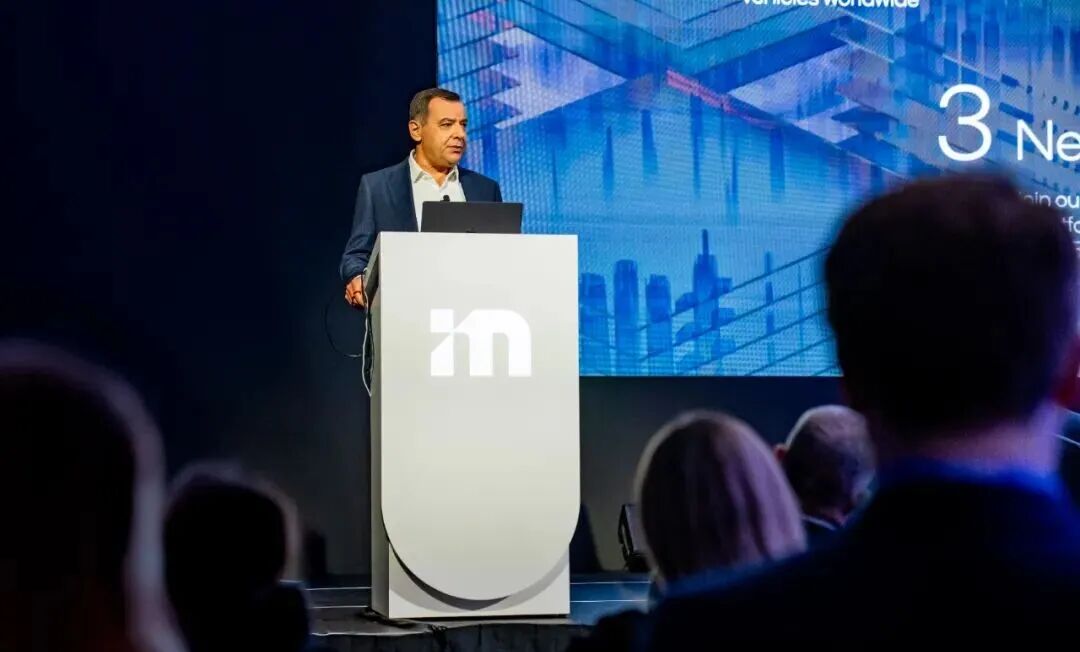
Professor Amnon Shashua, the founder and CEO of Mobileye, regards 2026 as a watershed year. His company is poised to reach two significant milestones:
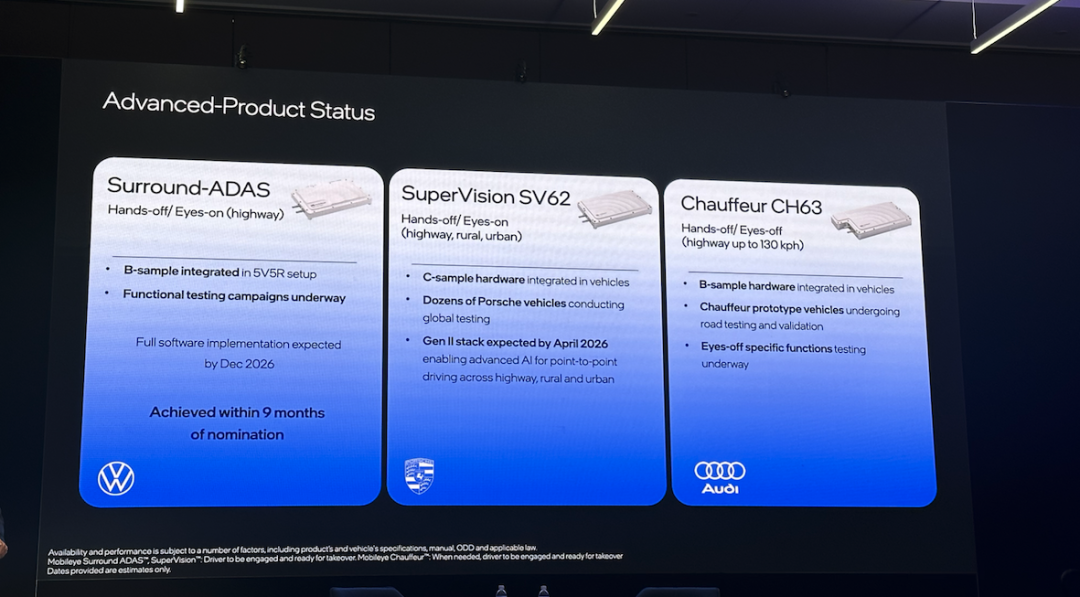
Firstly, Robotaxi will attain autonomous driving without the need for a safety operator. Secondly, the software stack development for the SuperVision (SV62) project, in collaboration with Porsche, and the Chauffeur (CH63) project with Audi, will be finalized, setting the stage for mass production.
Beyond its high-level driving automation ambitions, Mobileye continues to lead the global L2+ market.
At CES, Mobileye unveiled that its surround ADAS solution has clinched a design win from a prominent U.S. automaker, augmenting its previous success with Volkswagen. This L2+ solution, powered by the single Eye6H, has garnered over 19 million orders.
Considering the entire EyeQ series, over 230 million vehicles globally are outfitted with EyeQ chips, representing one-eighth of the global car fleet—a remarkable figure in terms of scale.
In essence, this ADAS company, with a history spanning over two decades, is progressing from L2 to L2++, L3, and L4. During CES, Mobileye also announced its acquisition of humanoid robot firm Mentee Robotics, broadening its business to comprehensively encompass the physical AI sector.
The business expansion of this seasoned giant mirrors the broader trend of AI's integration into the physical realm—large models are propelling the maturity of L3 and L4, while humanoid robots are starting to make their mark in real-world scenarios.
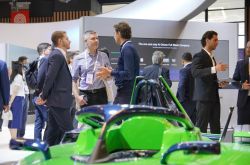
We had the opportunity to interview Professor Amnon Shashua, the founder and CEO of Mobileye, at CES. This seasoned professor and business leader, with extensive experience in machine learning and computer vision, delved into the critical role of surround ADAS in advancing driving automation, the pivotal commercial turning point for Robotaxi, and how robots will initially be deployed in structured settings.
I. 19 Million Design Wins: Global L2+ Business Opportunities
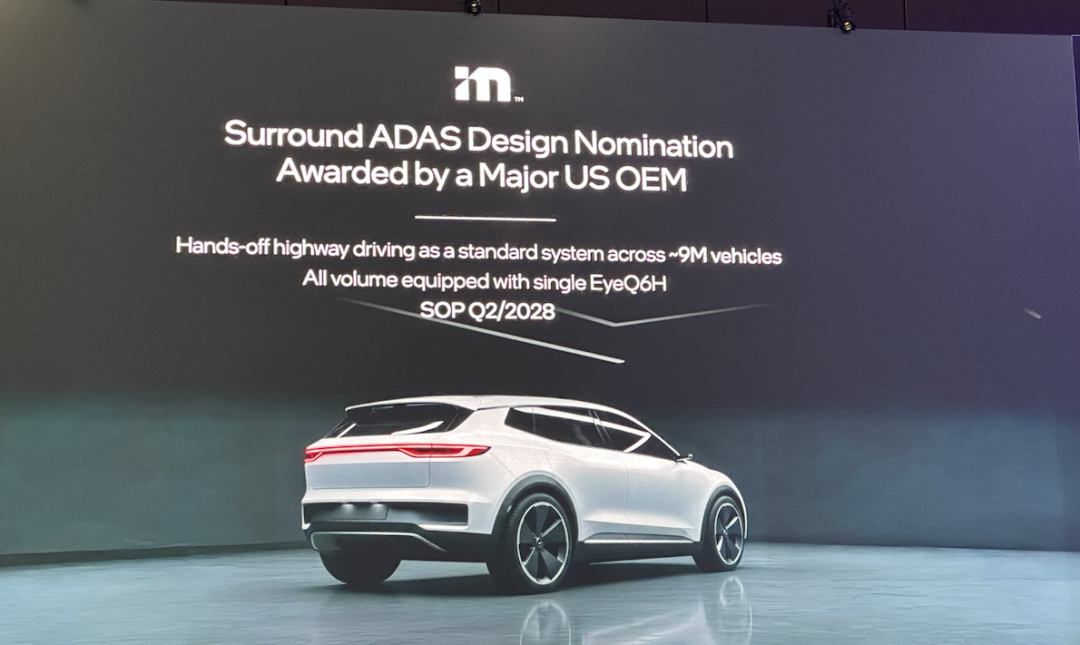
Over the past year, surround ADAS has emerged as a major solution introduced by Mobileye following SuperVision.
Last year, Mobileye secured a design win with Volkswagen, and this latest achievement comes from a U.S. automaker ranked among the top ten globally. Given the limited number of U.S. automakers in this elite group, it's not challenging to deduce which one it is. The scale of this design win is substantial, with an anticipated 9 million units over its lifecycle, and mass production slated to commence in the second quarter of 2028.
For traditional automakers, ADAS configurations in the past were confined to front-view cameras and front millimeter-wave radars. Surround ADAS repurposes parking cameras and eliminates the need for a separate parking ECU, offering a cost-effective solution for automakers—around several hundred dollars—while upgrading functions to highway pilot assist and meeting future regulatory requirements for active safety in one fell swoop.
More significantly, 'we believe surround ADAS is the next crucial high-value proposition for the evolution of assisted driving,' Professor Amnon Shashua remarked.
Mobileye's higher-level driving automation solutions encompass SV62, based on dual EyeQ6H, and CH63, based on three EyeQ6H, in collaboration with Porsche and Audi, respectively.
Porsche's next-generation SuperVision project is currently undergoing software stack development, featuring AI-based, point-to-point assisted driving that covers both highways and urban areas. Audi's Chauffeur project has commenced road testing of prototype vehicles, with Eyes-off (driver visual disengagement) functionality testing set to begin shortly.
II. Robotaxi 2026 Key KPI: 'Safety Operator-Free'
In the Robotaxi sector, the success of Waymo, the industry frontrunner, over the past year has illuminated the path to commercialization for the global autonomous driving industry.
In San Francisco, Waymo's fleet of approximately 1,000 vehicles has surpassed Lyft in monthly ride-hailing orders, trailing only Uber. This explains Uber's current focus on Robotaxi.
Among all Robotaxi companies, Mobileye stands out as virtually the only one simultaneously developing L2+, L3, and L4 systems. These systems repurpose hardware wherever feasible, keeping L4 system costs in check.
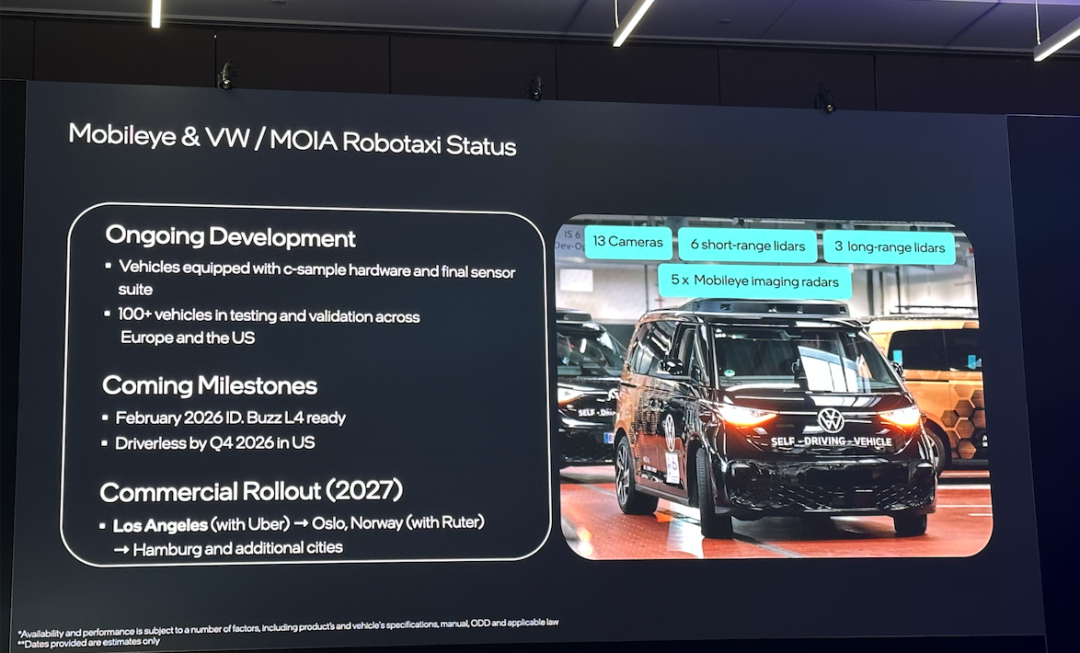
Professor Shashua mentioned in the interview that Mobileye's Robotaxi requires only cameras, imaging radar, and onboard computing, rendering it cost-effective.
Mobileye plans to initiate 'safety operator-free' testing in the U.S. in the third quarter of 2026.
Commercial deployment will commence in 2027, initially covering multiple regions, including Los Angeles/Austin in the U.S., Munich/Hamburg in Germany, and Oslo in Norway. Volkswagen's mobility company, MOIA, and Uber will be their primary partners.
Roughly estimated, if 1,000 vehicles can cater to the mobility demands of a city, and a country boasts 1,000 cities, there is a potential demand exceeding a million units.
Christian Senger, CEO of Autonomous Mobility at Volkswagen Group, estimated during his conversation with Amnon Shashua that Volkswagen will deploy over 100,000 Robotaxis in the next eight years.
Beyond cost, another hurdle for large-scale Robotaxi expansion is minimizing the number of remote operators; if the number of remote operators escalates in tandem with the fleet size, operational costs cannot be curtailed.
In response, Mobileye proposes the technical path of VLSA (Vision-Language-Semantic-Action), essentially a VLM system capable of outputting semantic information.
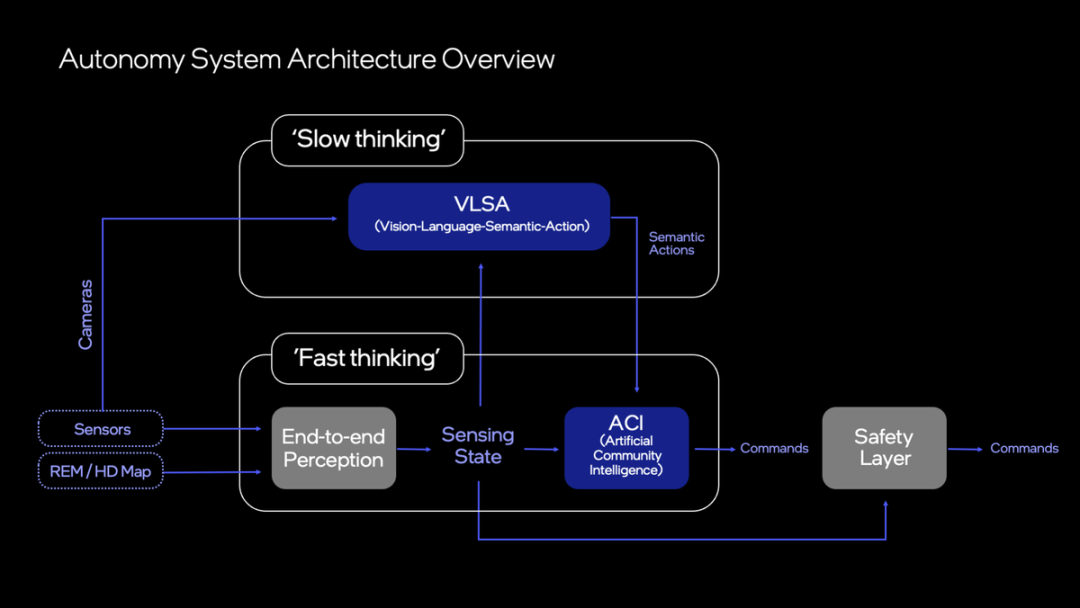
You can envision this VLM as a model trained on the entire internet, endowing it with exceptional reasoning capabilities. Professor Shashua provided an illustration: imagine it as a seasoned driving instructor with more experience than you, reminding you to be vigilant about certain aspects and exercise caution, but not taking control of the accelerator, brake, or steering wheel himself. This technology is deployed on both the vehicle and the cloud, aiming to gradually supplant remote operators.
VLSA will initially be deployed on Robotaxis and may subsequently be extended to Mobileye's mass-produced assisted driving systems.
III. Mobileye Redefines Its Position: From Driving Automation to Physical AI
VLSA has emerged as Mobileye's new technological pathway to L4 in 2026, while the acquisition of humanoid robot company Mentee Robotics signifies a substantial wager on embodied intelligence—a new frontier.
In Professor Shashua's perspective, whether it's Robotaxis navigating through traffic or robots in households, the essence remains the same: AI must possess the capability to perceive, plan, and act in complex physical environments.
However, he also pointed out that autonomous vehicles operate in relatively structured environments, whereas robots confront unstructured ones.
For robots, tasks are open-ended. Envision a robot in a household setting; the tasks it encounters are not a finite set. It needs to learn and accomplish multiple tasks, as humans can perform a vast array of combined tasks. This openness presents additional challenges for humanoid robot technology.
After acquiring Mentee Robotics, Mobileye anticipates commencing the deployment of robots in structured environments by 2028, with unstructured environments to follow.
From its modest beginnings over two decades ago to having EyeQ chips in over 200 million vehicles worldwide, Mobileye's growth trajectory mirrors the emergence and explosion of the driving automation industry.
Today, this giant's aspirations are no longer confined to automobiles. New technologies like VLSA are empowering robots to comprehend the world and serve industries and households.
Under its new business strategy, Mobileye has opted for a pragmatic approach: leveraging economies of scale to reduce costs, utilizing VLSA to enhance operational efficiency, and expanding growth boundaries with robots.
-
![]()
Enflame Tech's IPO Journey: Navigating Over 5.9 Billion Yuan in Losses and Soaring Debt in Q1 This Year
-
![]()
Trillion-Yuan Giant Li Shufu 'Streamlines': Could Levc Be the Casualty?
-
![]()
AI Competes for Electricity and Generates Power in the Gobi Desert
-
![]()
The First Batch of Victims of the AI Bubble: Programmers
-
![]()
ByteDance, DJI, and Xiaohongshu Secure Top Three Positions Among China’s Fastest-Growing Unicorns
-
Tesla's in-car voice system in China is finally learning to 'understand human language'
-
![]()
Foreigners Are Amazed: Chinese Electric Vehicle Drive Systems Unveil Innovative 'Poses'
-
![]()
700,000 Brothers and the Future of Robots: Behind JD.com's 'Nirvana Plan'