"External Lens" Emerges as a New Trend: Is the iPhone Emulating Domestic Mobile Phone Imaging Solutions?
 02/03 2026
 623
623
The "External Lens Era" in mobile phone imaging has dawned.
The exact starting point is unclear, but the evolution of mobile imaging has shifted from internal enhancements to external accessories. In essence, mobile phone manufacturers are no longer content with merely upgrading sensors; they are now exploring what else can be attached to the exterior of the phone.
Recently, the well-known photography accessory maker PGYTech unveiled the RetroVa photography kit, tailored specifically for the iPhone 16 Pro and iPhone 17 Pro. Official images reveal that the kit includes a dedicated phone case, a photography grip, and a teleconverter, significantly boosting the iPhone's telephoto capabilities and enhancing the grip feel.
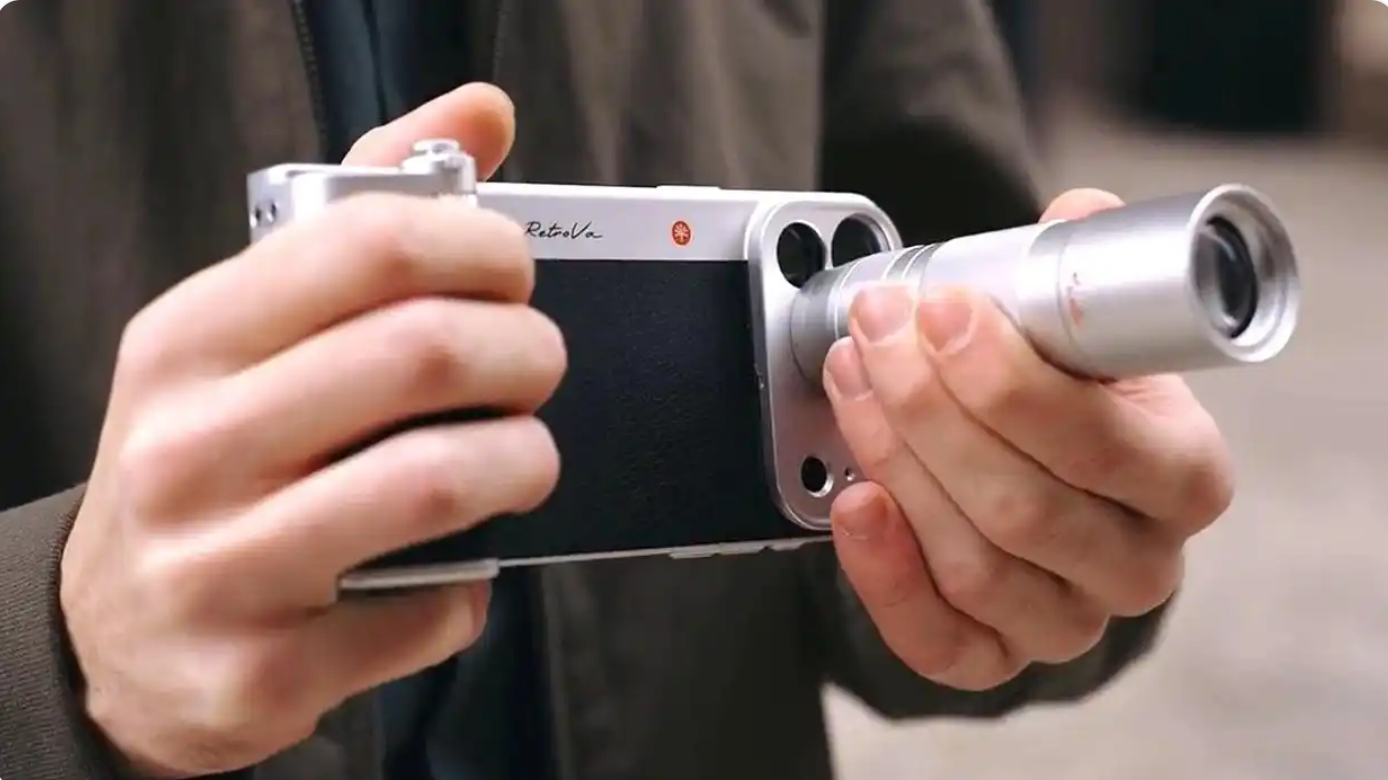
(Image source: PGYTech official)
You may have noticed that this is the same approach adopted by domestic mobile phone manufacturers. How did it suddenly gain traction overseas?
Photography Kits: The "New Battleground" - Practical or Just a Gimmick?
If my memory serves me right, Xiaomi introduced a professional photography kit for the Xiaomi 13 Ultra as early as 2023. However, the initial photography kits were not fully mature, and Lei Technology's assessment at the time was that they offered more emotional than practical value. Xiaomi continued to release three generations of photography kits, but they were mostly incremental upgrades in functionality and appearance, without significant breakthroughs.
It wasn't until last year that the vivo X200 Ultra took the lead by launching a photographer's kit, featuring a 2.35x teleconverter that extended the already impressive telephoto capabilities of the vivo X200 Ultra to an astonishing 5406mm. Lei Technology's real-world tests demonstrated that at the 1600mm focal length, aside from some algorithmic processing, the details of the subject were well-preserved, making it ideal for capturing concerts.
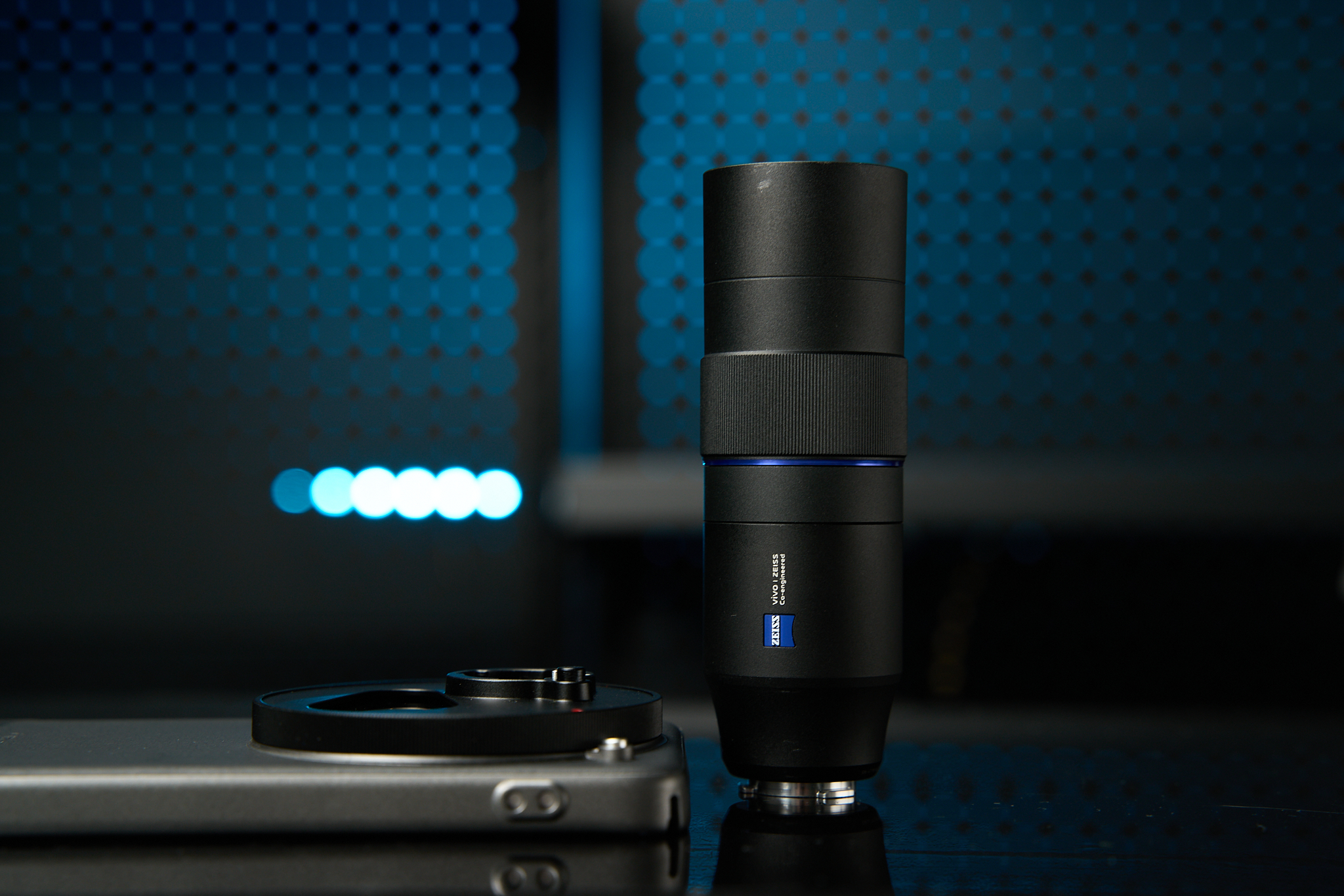
(Image source: Lei Technology)
Perhaps buoyed by its reputation as a concert must-have, or perhaps due to "shared inspiration," OPPO, Nubia, and Honor subsequently launched photography kits with teleconverters, all following similar principles and delivering comparable results, with pricing remaining relatively stable.
In other words, these manufacturers are not just creating "eye-catching" accessories; they are treating photography kits as an integral part of mobile phone photography, even as an attempt to shape the future of mobile imaging.
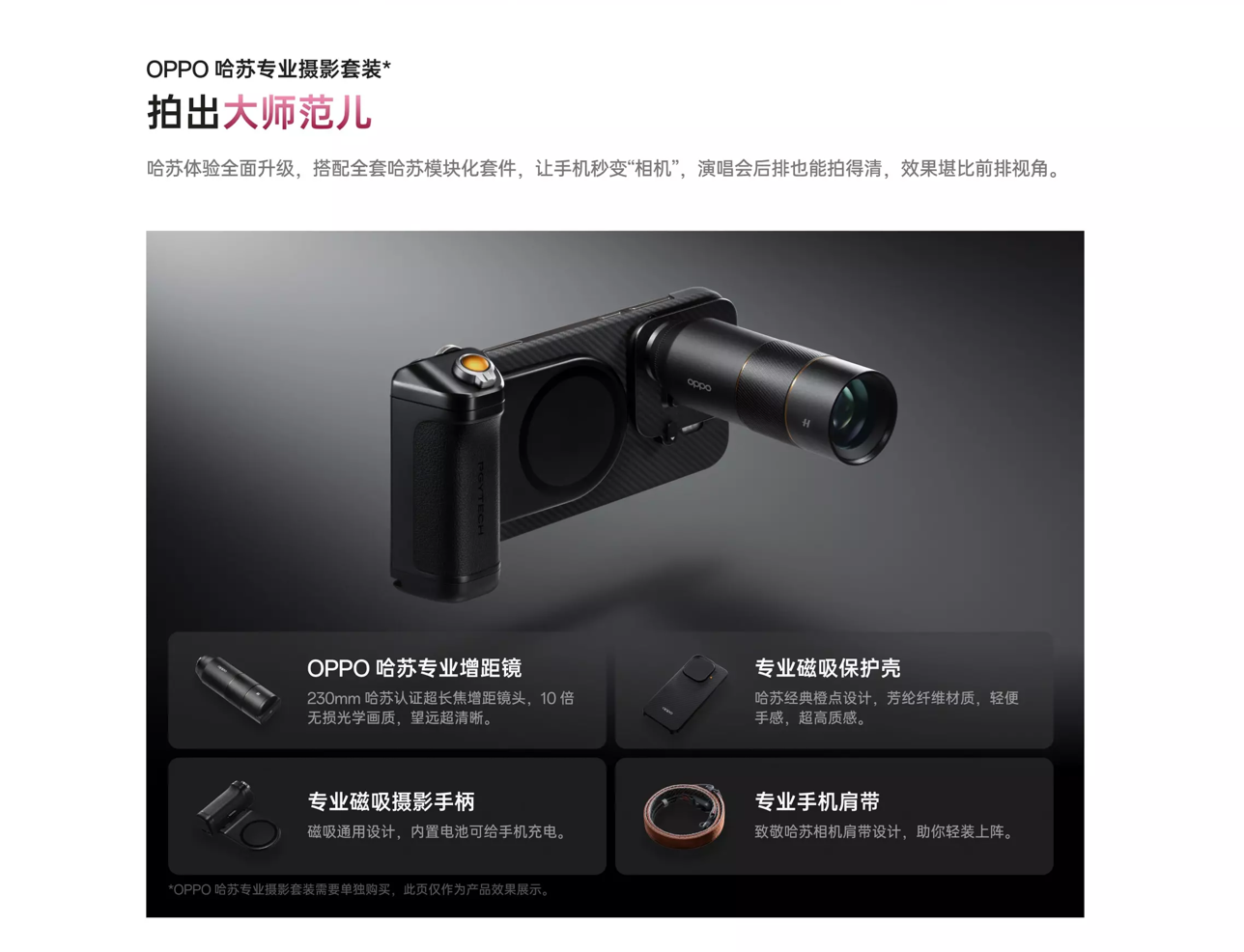
(Image source: OPPO official)
As a user who has tried almost all photography kits on the market, my feelings are mixed. On one hand, the emergence of photography kits has indeed expanded the shooting scenarios for mobile phones, and the addition of a photography grip brings the feel closer to that of a traditional camera. On the other hand, the built-in battery further extends the phone's battery life, and the new interfaces allow for the attachment of various camera equipment, maximizing both practicality and emotional appeal.
However, I must concede that photography kits can easily become accessories that collect dust. Not because they are useless, but because they compromise the inherent advantage of mobile phone imaging: "lightweight and zero-barrier." Before using a photography kit, we need to attach the case, secure the grip, align the structure, and activate a specific mode to start shooting, turning "spontaneous recording" into "requiring preparation."
Most users, the ordinary majority, do not have consistent heavy-duty shooting scenarios. They buy these kits more for the sense of ritual and novelty, and once that wears off, the kits tend to gather dust.
Additionally, none of the current photography kits on the market have fully addressed the image stabilization issue with teleconverters, significantly reducing the success rate of handheld shooting. Without a tripod, shooting becomes nearly impossible, making these kits, to some extent, large toys that offer a novel experience.
So, are photography kits more beneficial than detrimental to mobile imaging, or are they just a gimmick? I believe it depends on the user group: for serious enthusiasts or imaging creators, even if the teleconverter plays a minor role in creation, the photography grip with its built-in battery and numerous external interfaces can enhance the phone's "productivity." For ordinary users, these kits are products they only pull out in specific situations, which explains why they frequently appear on second-hand trading platforms and rental services.
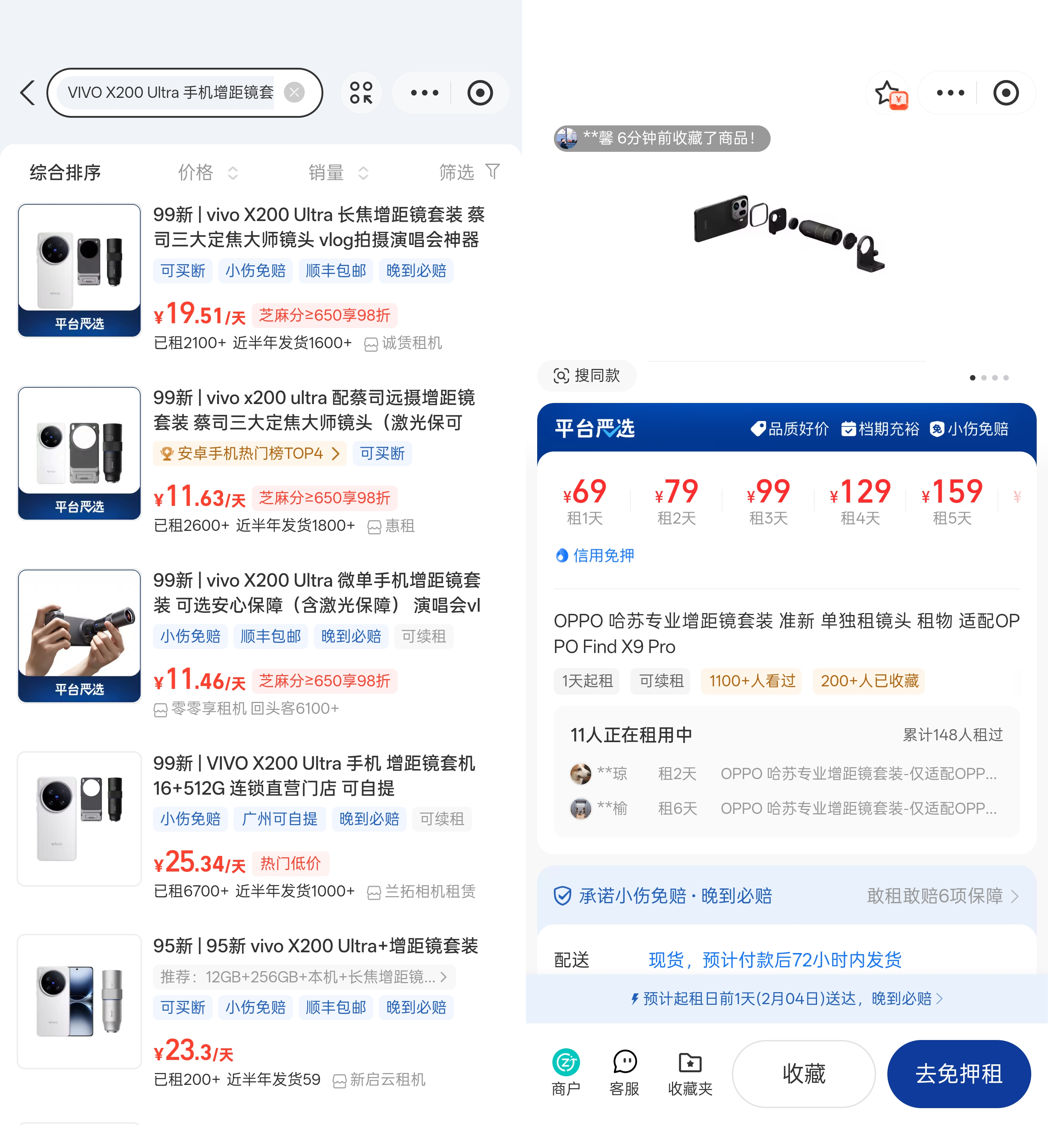
(Image source: Alipay)
The true purpose of domestic manufacturers in creating these kits is not to have all users buy them but to offer an additional choice for users who purchase imaging flagships. I can provide you with a complete set of equipment that allows for "better, steadier, and more capable" shooting. Its significance lies in shifting the competition in mobile phone imaging from "parameter obsession" to "user experience," which is its most crucial contribution to the industry.
In other words, some mobile phone manufacturers believe that the future of mobile phone imaging extends beyond the device itself, and this path could potentially form a new ecosystem.
Is the External Lens a Transition or an Exploration?
Returning to the original question, why have external lenses become so popular that manufacturers are even customizing them for the iPhone? To a large extent, it's due to the benefits of external lenses. The reason is straightforward: the primary and mid-range lenses on mobile phones have reached a level of refinement that makes further improvements challenging, with enhancements primarily manifested in tonal adjustments and detail enhancements. However, there is still a significant gap between the telephoto capabilities of mobile phones and those of professional cameras.
Simply put, users want to shoot farther, clearer, and more stably while preserving details in complex lighting conditions, which is nearly impossible on mobile phones. The emergence of external lenses, as their name suggests, provides a "cheat code" for mobile phones.
When you truly need long-range shooting at concerts, stadiums, zoos, or mountain viewpoints, you can rely on photography kits and external lenses to bridge this focal length gap. They address not whether "mobile phones can shoot" but whether "mobile phones can capture the moment when it counts," validating the reasonableness of external lenses: they don't aim to cover everyone but precisely serve "scenarios requiring long-range shooting."
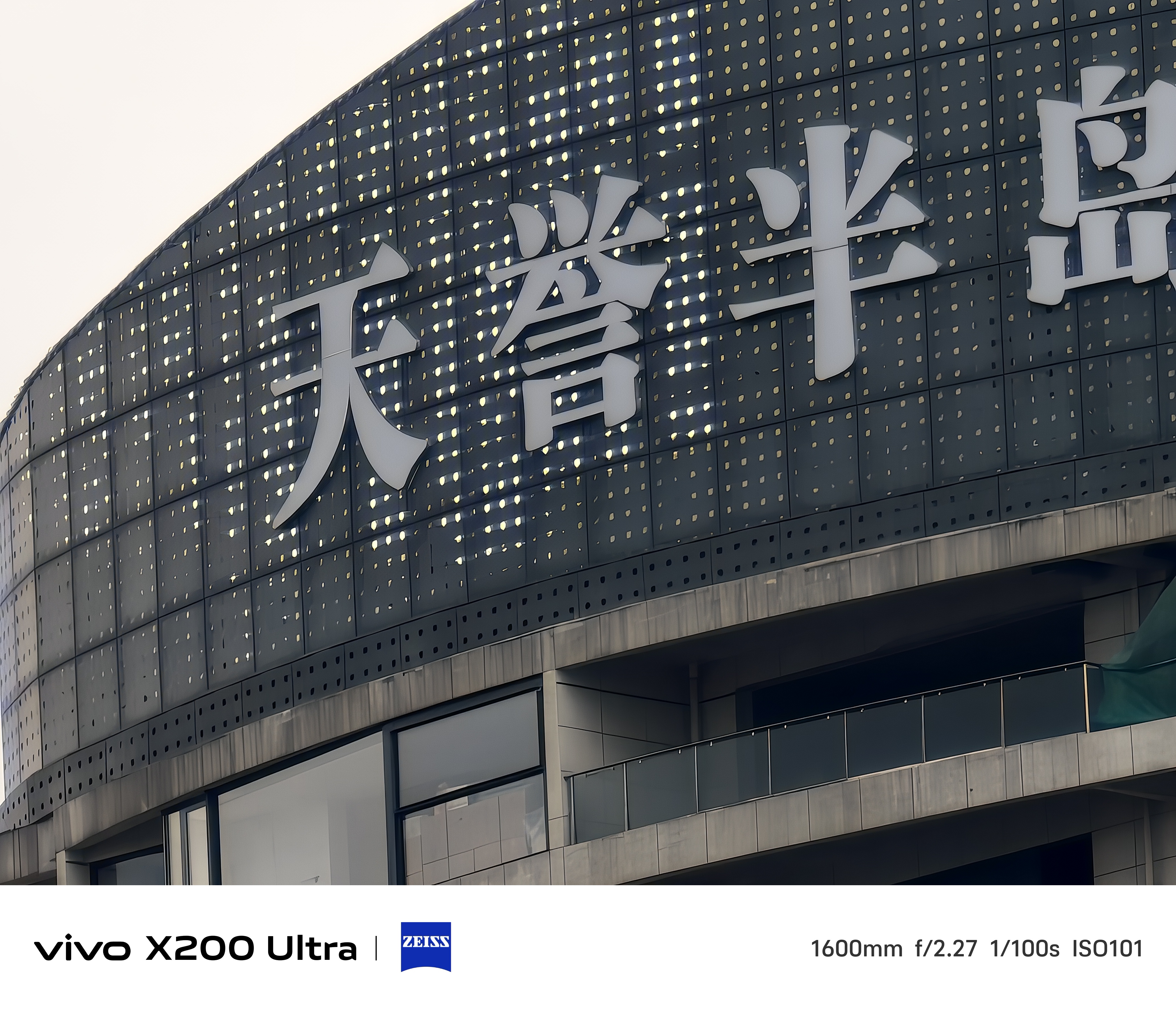
(Image source: Lei Technology)
But will external lenses be just a transition? Form-wise, they do seem like the optimal solution for the transition period. For a considerable time, mobile phones cannot thicken indefinitely to pursue longer focal lengths; users would not accept a "brick" that can make calls. External lenses act more like an independent switch provided by manufacturers: turn it on when needed, off when not. They allow mobile phones to retain their "portability" while approaching camera-like performance in certain scenarios.
From an ecological perspective, however, their prospects are vast. Who says photography kits can only attach teleconverters? Why not introduce wide-angle lenses, macro lenses, and various polarizing filters like DJI and Insta360? The future of photography kits extends beyond a single external lens; it envisions an "expandable imaging ecosystem."
When external lenses, grips, filters, lighting, audio, and apps form a closed loop, photography kits will no longer be ordinary accessories but a way of working: automatically recognize and calibrate upon attachment, switch stabilization strategies, and revert to a lightweight mobile phone experience upon removal. As long as this experience is seamless, the external lens solution will become a new development path. It may not become standard for everyone but will be a "configurable option" that imaging flagships must offer.
Conclusion: External Imaging Is Becoming Mainstream but Cannot Replace the Core
After all this, a clear trend emerges: the competition in mobile phone imaging is expanding from "cramming all capabilities into the device" to "extending capabilities through an ecosystem." This is not a regression but an alternative chosen by the industry after reaching the physical limits of mobile phone imaging.
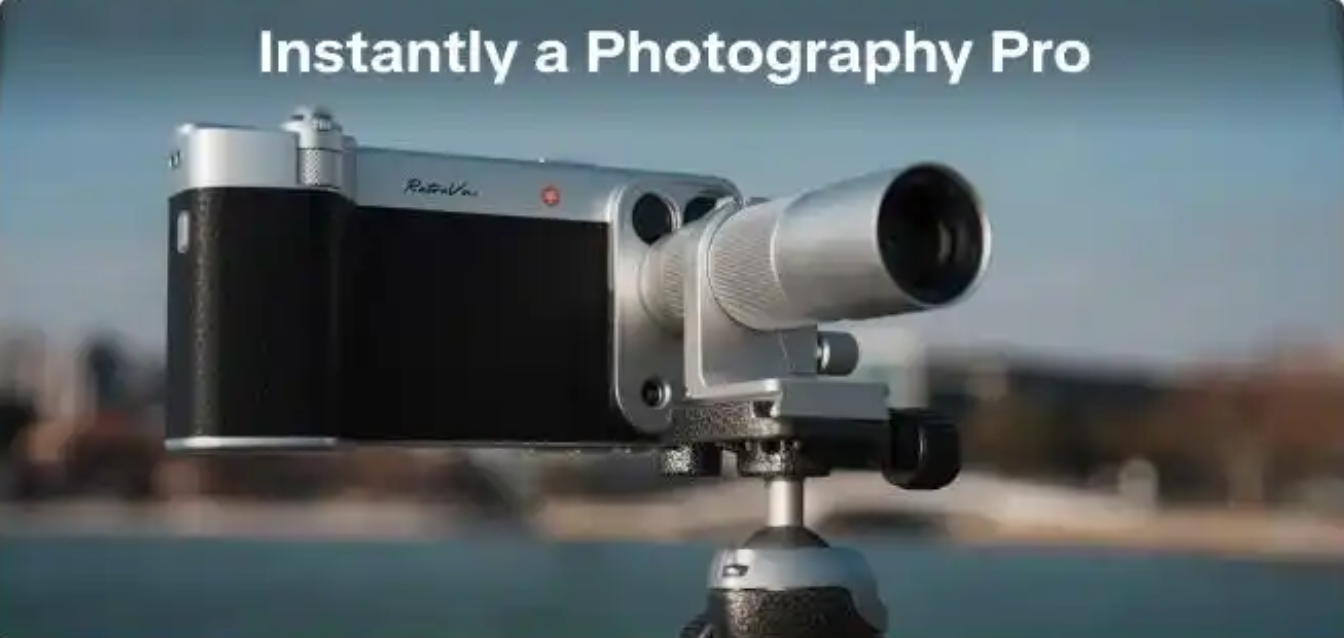
(Image source: PGYTech official)
The primary battleground for mobile phone imaging will always remain within the device and its algorithms. External lenses primarily enhance "shooting success rates in certain scenarios," but the overall performance still depends on hardware configurations like the phone's sensor, lens, ISP, video pipeline, focusing, and color accuracy. They serve a group willing to pay for stability: those needing steadier video, faster controls, longer telephoto, or more professional workflows.
So, will "external lenses become mainstream in mobile phone imaging?" My answer is: external lenses are becoming the "second layer of capability" for imaging flagships. Normally, you still have a mobile phone, but when necessary, it can perform more like a camera. Once this capability gains market recognition, it will no longer be a gimmick from a single manufacturer but a consensus for the next stage of the entire industry.
Source: Lei Technology
Images in this article are from: 123RF Licensed Image Library. Source: Lei Technology
-
On the Eve of Its IPO, Avatr Finds Itself Embroiled in a 'Farce of Controversy and Belittlement'
-
![]()
Yutong Optics' Japanese Subsidiary Unveiled in Tokyo, Shifting Strategic Focus to Technology-Driven Growth
-
![]()
Half-Year Revenue Outstrips Last Year’s Total! Zhongrun Optics Forecasts 80.2% H1 Revenue Growth
-
![]()
Why Does AI Competition Start with Computing Power?
-
![]()
Apple AI Finally Makes Its Debut in China, Yet iPhone's 'AI Autonomy' Faces Uncertainty
-
![]()
Apple AI and QianWen Make Up Lessons: Alibaba Has Its Own 'Doubao Phone'
-
![]()
QianWen Joins Apple, Signal for Large Models to ‘Fade into the Background’
-
![]()
The ‘Anchor’ Strategy of Google Hidden Behind the Bleeding Financial Report