Joint Ventures Kick Off the Year of the Horse with Swift Facelifts, Outpacing New Market Entrants
 02/28 2026
 638
638
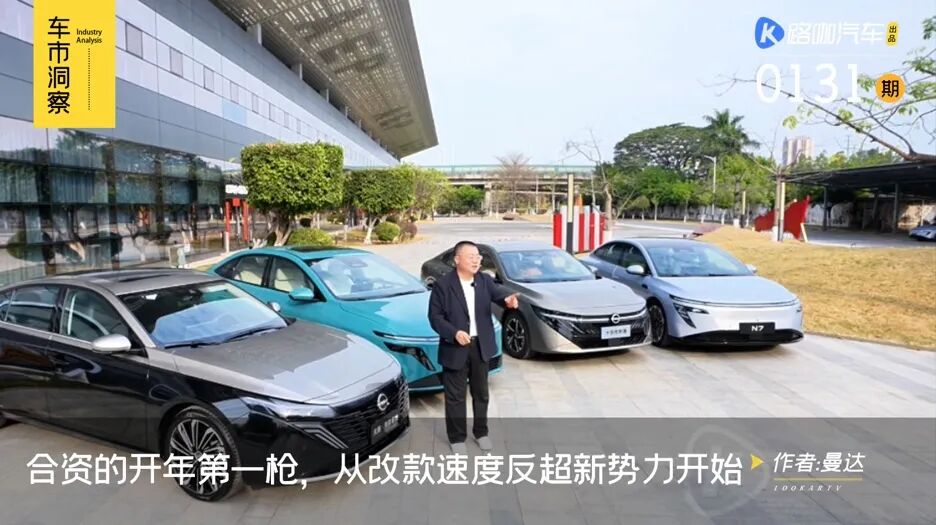
The trend of rolling out new versions has transitioned from emerging automotive forces to established joint venture automakers.
At the dawn of the Year of the Horse, Dongfeng Nissan made a splash by simultaneously unveiling four new flagship models in the family sedan segment. These include the gasoline-powered Teana and Sylphy, as well as the new energy N6 and N7. The pricing strategies for these models, though varied, are uniformly aggressive: offering enhanced features at more affordable prices.
Almost concurrently, GAC Toyota introduced the Air version of its all-new Weylanda, slashing the entry price from its previous positioning above 150,000 yuan to the 130,000 yuan range.
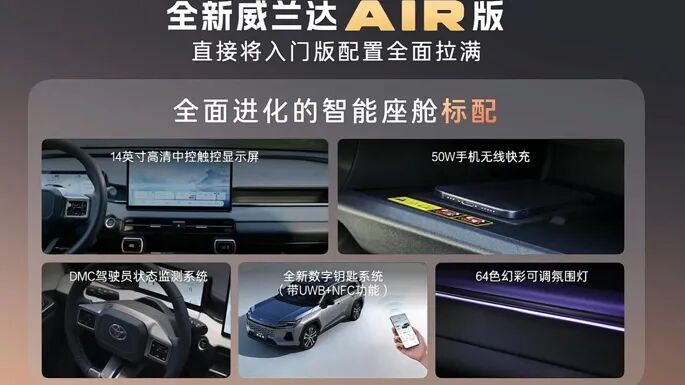
The nomenclature of these new versions varies among automakers, with some opting for "Air" versions and others for "Youth" versions. At first glance, they may seem reminiscent of Apple's Air products. However, a closer look reveals a stark difference. While Apple maintains its brand premium, joint venture automakers appear to be engaging in a no-holds-barred competition by openly displaying what were once concealed "price cuts" at dealerships.
Launching Air Versions: A Stealthy Price Reduction Strategy by Joint Ventures
In 2025, seven out of the top ten best-selling sedans were priced below 100,000 yuan, with six being new energy models. These include popular choices like the Geely Starry Wish, Wuling Hongguang MINI EV, and BYD Seagull, priced between 30,000 and 80,000 yuan.
The landscape shifts in the 100,000-200,000 yuan segment, where new energy family sedans no longer hold sway, and gasoline-powered family sedans maintain a strong foothold.
This price range represents the most fiercely contested core area in the Chinese automotive market and serves as the "main battlefield" for the entire passenger vehicle sector, accounting for a 42.3% market share in the first half of 2025.
In the market above 100,000 yuan, joint venture gasoline-powered cars like the Volkswagen Sagitar and Passat continue to enjoy popularity. Domestic brands, despite their dominance in the sub-100,000 yuan market, occupy only five spots in the top ten. While joint venture brands still exhibit some resilience in this segment, their market share is undeniably shrinking. The Nissan Sylphy, the best-selling joint venture gasoline-powered sedan in 2025 with 320,000 units sold, experienced a year-on-year decline.
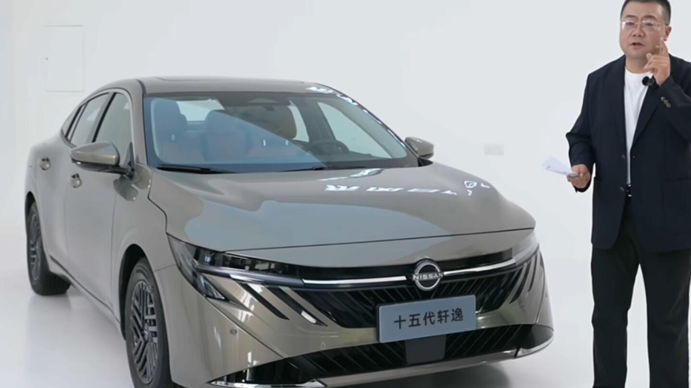
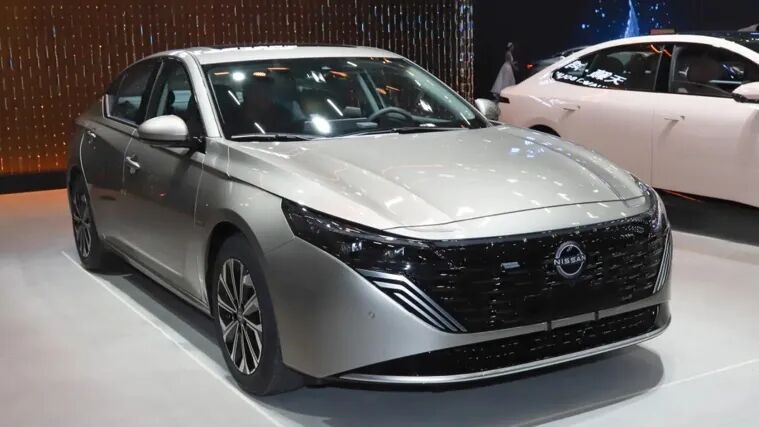
At the start of the Year of the Horse, the all-new Sylphy officially entered the market. The limited-time starting price for the base model dipped below 70,000 yuan. The manufacturer's suggested retail price (MSRP) for the base model dropped from 118,600 yuan in the previous generation to 79,900 yuan. The configuration of the new model priced at 94,900 yuan is on par with, or even surpasses, that of the previous generation's model priced above 110,000 yuan.
The newly launched Teana HarmonyOS Cockpit version starts at just 139,900 yuan, nearly 50,000 yuan less than the current Teana model. Similarly, the configuration of the new HarmonyOS Cockpit version priced at 149,900 yuan outshines that of the entry-level model of the previous generation priced at 188,800 yuan.
Regardless of whether it's the Teana or Sylphy, the prices of the new models align more closely with the actual transaction prices of the previous and current generations at dealerships. In simpler terms, Dongfeng Nissan has transformed hidden dealership price cuts into overt reductions in the manufacturer's suggested retail prices.
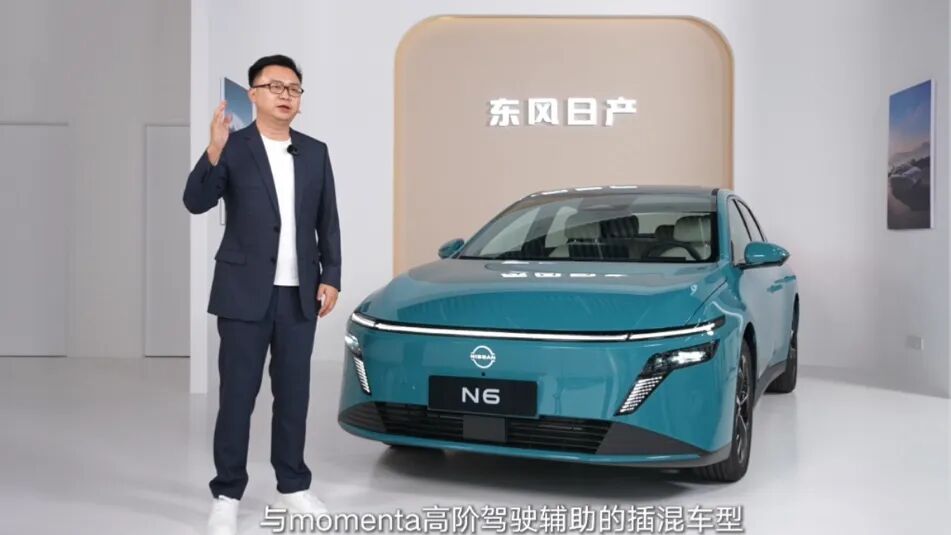
For new energy models where direct price cuts are not feasible, Dongfeng Nissan has opted to launch new versions. For instance, the N6 introduced the 180 Pro+ version with a limited-time starting price of 111,900 yuan, while the entire N7 lineup was refreshed with a Youth version, priced between 109,900 and 139,900 yuan, further lowering the entry barrier. This strategy bears a resemblance to Apple's Air products. Last May, XPENG employed a similar tactic with the Mona M03, launching four new versions with significant feature upgrades without substantial price increases, less than a year after the model's initial release.
Now, the trend of Air versions has also permeated the joint venture gasoline-powered car market. On the eighth day of the first lunar month, GAC Toyota officially launched the all-new Weylanda AIR version, with a starting price of 137,800 yuan after incentives. It now includes features previously reserved for mid-to-high-end trims as standard, such as a leather steering wheel, leather seats, heated and foldable exterior mirrors, and 50W wireless fast charging. Additionally, GAC Toyota introduced direct-sales maintenance services by the manufacturer, with unified national pricing and availability at all 4S stores nationwide.
It's evident that the logic behind "Youth" and "Air" versions from joint venture automakers diverges from that of the iPhone. The former offers comprehensive features at lower prices, while the latter utilizes lower-spec "budget" versions to lower the entry barrier.
Will Price Cuts and Feature Upgrades Become a Trend for Joint Ventures?
This trend of launching new versions actually originated with luxury brands like Mercedes-Benz and BMW before the Spring Festival. Prior to the Year of the Horse, BMW announced the release of 2026 models for several of its mainstay vehicles, featuring enhanced configurations, and introduced a Horse Year edition in China, boasting upgrades across multiple mainstay models.
When Mercedes-Benz adjusted its prices in February this year, it explicitly stated that there were no changes to the configurations, meaning no "feature reductions with price cuts" were made.
It's reported that after BMW announced official price cuts, foot traffic at 4S stores surged significantly, with many consumers ultimately purchasing models that were not subject to price cuts. It's foreseeable that the model of "high manufacturer's suggested retail prices + substantial dealership discounts" will gradually crumble in 2026.
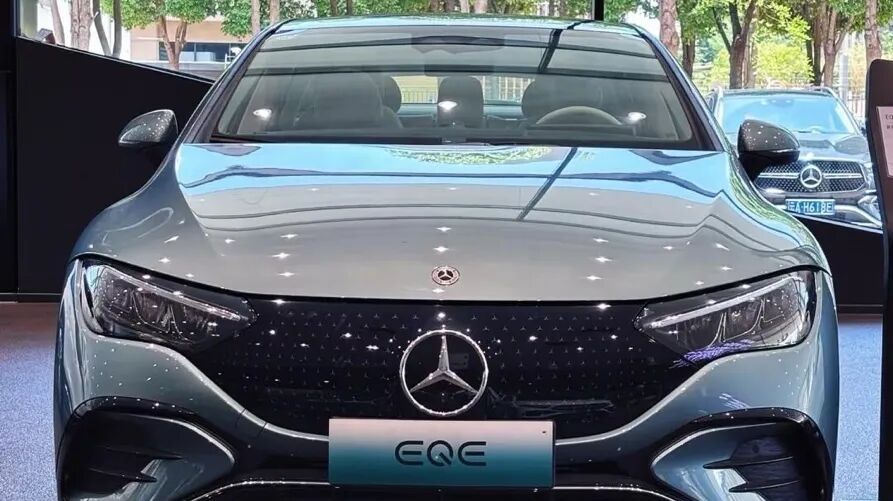
This principle also applies to the new energy vehicle market. The all-electric sedan Mercedes-Benz EQE, launched late last year, is priced between 478,000 and 627,000 yuan, consistent with the current model, but features numerous upgrades in configurations, essentially offering "more for the same price."
The new versions of the Nissan N6 and N7 also reflect this trend, with the N7 Youth version equipped with a Qualcomm 8295 chip and Momenta intelligent driving system.
Entering the Year of the Horse, the purchase tax on new energy vehicles has shifted from "full exemption" to "half reduction," and adjustments to trade-in policies, along with other environmental changes, have brought more uncertain challenges to the new energy market. Consequently, we've witnessed that at the beginning of 2026, from luxury to joint venture and then to domestic brands, official price adjustments, fixed prices, and insurance subsidies have been rolled out one after another, yet failed to bring about a "strong start" for the automotive market.
Just after the Year of the Horse commenced, Ledao and Zhiji officially announced their entry into the 7-year low-interest financing camp, while the newly released Weylanda AIR version even supports 8-year low-interest financing. This indirectly indicates that competition in both the new energy and gasoline-powered car markets will be no less fierce in the Year of the Horse than in the previous year.
Over the past year, the overall market share of gasoline-powered cars has been squeezed, but they still dominate sales in multiple price ranges. The family sedan market has shown the most significant recovery, especially in the 100,000-200,000 yuan price range, a stronghold for joint venture automakers, where the "gasoline-powered foundation" remains robust. Represented by the FAW-Volkswagen Sagitar, which sold 256,000 units in 2025, a slight increase of about 6% from 241,100 units in 2024.
From the initial moves of Dongfeng Nissan and GAC Toyota at the beginning of the Year of the Horse, it's clear that in 2026, joint venture automakers will employ a combination of efficient model refreshes and in-depth feature upgrades to defend their main territories.
-
![]()
Can Chinese Automakers Pose Such Fierce Competition? Mercedes-Benz Cancels Year-End Bonuses for 90,000 Staff, Volkswagen to Lay Off 100,000 Employees...
-
![]()
Anhui and Zhejiang Vie for the Crown in New Energy Vehicle Dominance: Who Will Prevail?
-
![]()
Tmall 618 Rankings Unveil Trends Transforming the Home Appliance Industry
-
![]()
This Week in Home Appliances: Overseas Boom! Midea, TCL, Dreame Break Through; Casarte, Fotile, Gree, Hisense, Ronshen Lay Foundations
-
![]()
Aiming to Be the Alphard of the Electric Era! After D99's Launch, Leapmotor Will Release All-New Technologies to Pave the Way for a High-End Brand | Mirrormedia Pro
-
![]()
Over 5,200 Orders Placed on First Day: Can the Qijing GT7, Priced from 209,900 Yuan, Compete with the Z7 and SU7? | Mingjing Pro
-
![]()
AI Predicting the World Cup? It’s Time to Stop Insulting AI
-
![]()
iPhone 18 Pro Memory Costs Soar Threefold! Apple Seeks Trump Administration Approval for CXMT Memory Chips