After a Staggering Loss of 180 Billion Yuan, the World's Fourth-Largest Automaker Attempts a Comeback with China's Emerging EV Players
 02/28 2026
 652
652
Could French Range Extenders Be on the Verge of Breakthrough?
Author|Wang Lei
Editor|Qin Zhangyong
Not long ago, Stellantis Group unveiled its full-year financial results for 2025, confirming what many had anticipated—a financial performance that can only be characterized as a catastrophic setback.
Last year, the group reported a staggering net loss of 22.3 billion euros, equivalent to roughly 180 billion yuan.
A rough calculation reveals that this equates to a daily net loss of nearly 500 million yuan. Among traditional automotive giants that have disclosed their full-year results, Stellantis tops the list in terms of loss magnitude, having posted a profit of 5.52 billion euros just the previous year.
Although driven by extraordinary circumstances, persistent profit declines and operational losses have plunged this once highly profitable automaker into a severe survival crisis.
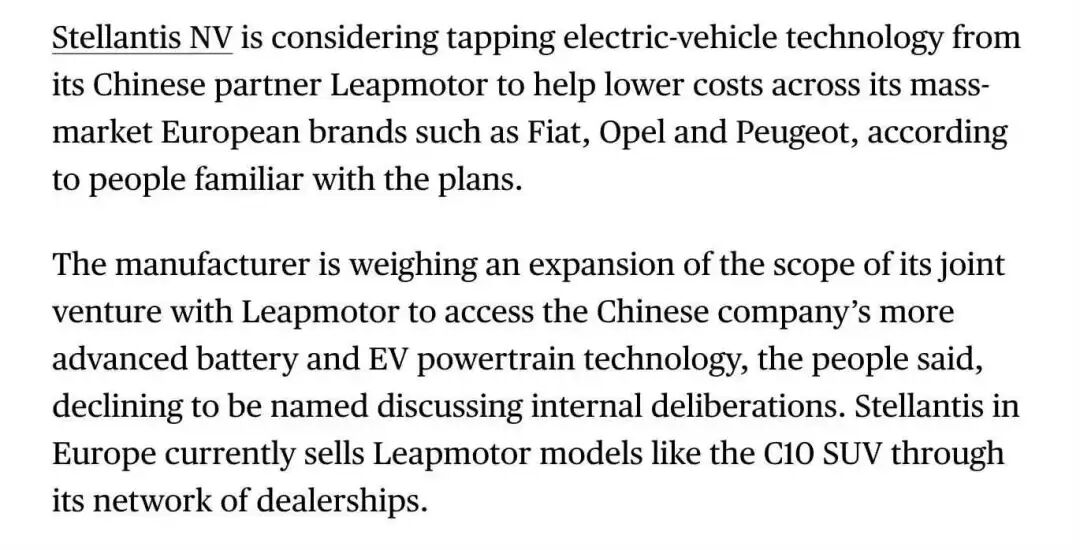
On the same day that Stellantis released its financial report, Bloomberg disclosed that the company is considering expanding its joint venture with Leapmotor, leveraging the Chinese partner's battery and electric drive technologies to cut development costs for European mainstream brands like Fiat, Opel, and Peugeot.
From "sales cooperation" to "technology sharing," Stellantis Group is now turning to the formidable capabilities of the East.
01
Strategic Overhaul
A full-year net loss of 22.3 billion euros, approximately 180 billion yuan, marked Stellantis Group's first annual loss since its merger. Consequently, former CEO Carlos Tavares stepped down, accepting responsibility for the debacle.
The colossal loss stems from the same fundamental issue that plagued Ford's annual loss: a one-time massive asset impairment charge due to adjustments in electrification strategy.
Ford recorded an 8.2 billion USD loss for the year after factoring in approximately 19.5 billion USD in special project expenses. Similarly, Stellantis faced a total of 25.4 billion euros in one-time special expenditures due to a comprehensive strategic reset.
Furthermore, 20 days prior to releasing these financial results, Stellantis announced a staggering 26 billion USD (approximately 22.2 billion euros) in transformation expenditures.
Of this, 14.7 billion euros were earmarked for adjusting plans for pure electric vehicle models and complying with new U.S. emissions regulations, including halting production of the RAM 1500 electric pickup in the U.S. and postponing several electric vehicle projects for Alfa Romeo.
2.1 billion euros were allocated to adjusting the scale of the electric vehicle supply chain. Previously, Stellantis announced the divestiture of its 49% stake in NextStar Energy, a Canadian battery manufacturing joint venture with LG Energy Solution, which will now be fully managed by LG Energy Solution. Another 5.4 billion euros were utilized to address quality gaps and restructuring costs, including 4.1 billion euros for changes in contract warranty estimates due to rising inflation and deteriorating quality, and 1.3 billion euros for regional restructuring expenses in Europe.
Such outcomes were not entirely unexpected.
Newly appointed Stellantis Group CEO Antonio Filosa stated that the full-year 2025 performance reflected costs incurred from overestimating the pace of energy transition and the necessity to adjust the business to empower customers to freely choose from a full range of electric, hybrid, and internal combustion engine technologies.
This also suggests that, excluding restructuring impacts, Stellantis's true operational performance, while superior to the reported figures, remains far from optimistic. Let's delve into some key metrics: In 2025, Stellantis Group sold 5.417 million vehicles, up 1% year-on-year, maintaining its position as the world's fourth-largest automaker. Full-year net revenue reached 153.5 billion euros, down 2% from 156.8 billion euros in 2024.
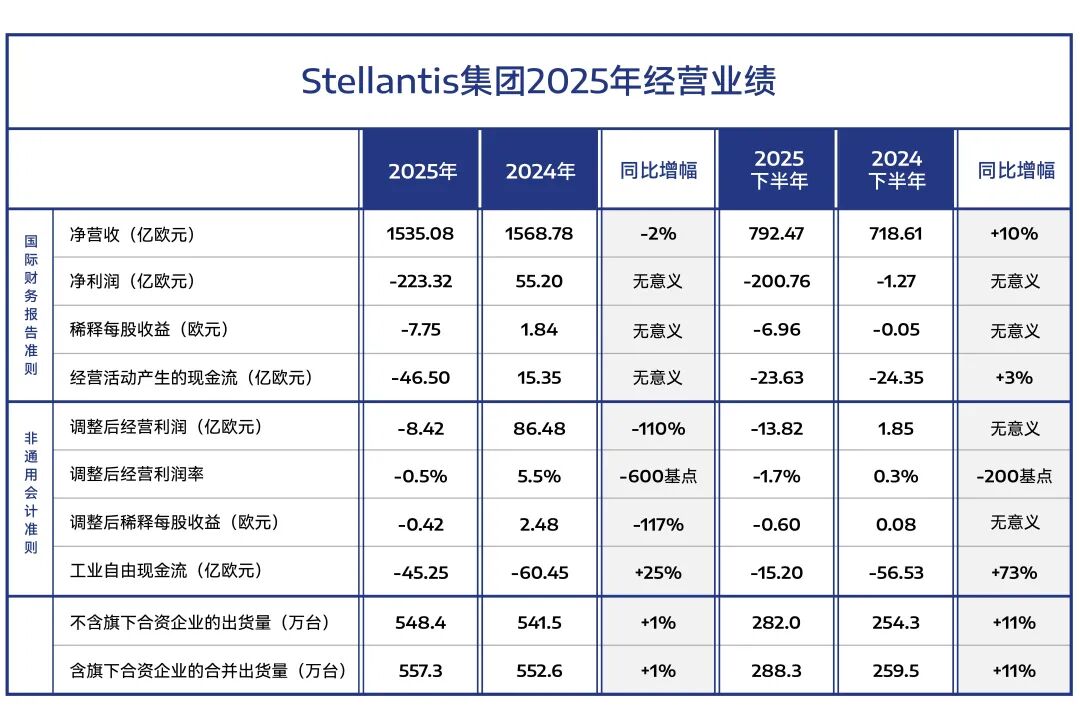
Stellantis explained that foreign exchange factors depressed revenue in the first half of the year, while lower new car prices dragged down overall revenue.
Moreover, even after adjustments, operating profit remained in the red, with a loss of 842 million euros, a staggering 110% year-on-year decline. The corresponding profit margin plummeted from 5.5% to -0.5%.
Clearly, profitability took a significant hit in 2025 compared to the previous year. Operating cash flow turned negative at 4.65 billion euros, compared to a positive 1.53 billion euros the previous year.
Nevertheless, Stellantis remains cautiously optimistic. "In the second half of the year, we witnessed initial positive signs, including early results from quality improvement efforts, successful launches of new product lines, and a recovery in sales growth," the company stated.
Data indicates that Stellantis's operations rebounded significantly in the second half of 2025. Net revenue reached 79.247 billion euros, up 10% year-on-year, while global consolidated shipments totaled 2.82 million vehicles, up 11% year-on-year. The North American market contributed the largest increase, with an additional 231,000 vehicles sold, a 39% year-on-year rise.
Stellantis reiterated its full-year forecast for 2026, anticipating gradual improvement across all financial metrics. Sales are projected to grow by a mid-single-digit percentage, with the company aiming for a low-single-digit adjusted operating profit margin in terms of return on sales.
02
Relying on China's Emerging EV Players
Judging by the figures, Stellantis undoubtedly endured its "most challenging year." For a behemoth with annual revenue exceeding 150 billion euros, the true litmus test lies not in one year's profit or loss but in the success of its transformation.
This time, Stellantis is once again casting its gaze eastward.
According to Bloomberg, Stellantis is evaluating an expansion of its joint venture with Leapmotor to gain access to more advanced battery and electric powertrain technologies, aiming to reduce costs for its mass-market European brands, such as Fiat, Opel, and Peugeot. Negotiations are still in their infancy, but both sides aim to reach an agreement within the year.
Two years ago, Stellantis acquired a 20% stake in Leapmotor for 1.5 billion euros and established Leapmotor International B.V. to facilitate Leapmotor's expansion into Europe.
Initially, Leapmotor and Stellantis formed a joint venture overseas, with Stellantis holding a controlling stake. Leapmotor utilized Stellantis's dealer network and factories for production and sales, while Stellantis leveraged Leapmotor's products to capture market share.
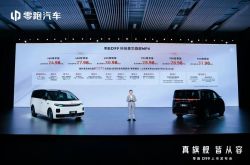
Today, Leapmotor has commenced selling models like the C10 through Stellantis's European distribution network. Official data reveals that Leapmotor exported over 67,000 vehicles in 2025, emerging as the overseas sales leader among new EV players, with European sales reaching 30,000 units.
Now, rumors of deeper cooperation have surfaced. If an agreement is reached, Leapmotor's technology could directly integrate into Stellantis's proprietary brand product lines. This would mark the first instance of a Western mainstream automaker relying on a Chinese company's vehicle technology to enhance its product competitiveness in European local models.
This may also suggest that Leapmotor's models are no longer mere "supplementary products" for Stellantis but could evolve into core offerings in Europe to compete against Volkswagen's ID series and Renault's electric vehicles. There might even be the advent of "French-style" range-extended models.
After all, Leapmotor International CEO Tianshu Xin previously stated that both sides are "exploring various opportunities to leverage each other's technologies," specifically highlighting Leapmotor's range-extender (REx) technology, which effectively alleviates range anxiety for European users while meeting low-carbon requirements.
Not just Leapmotor: A few months ago, reports emerged that Stellantis Group was engaged in talks with Dongfeng Motor Group for deep cooperation, aiming to apply technology from Dongfeng's Mhero brand to Jeep models. This prompted Stellantis executives to collectively visit Dongfeng Motor Group for discussions late last year.
Beyond harnessing the formidable capabilities of the East, Stellantis has already commenced adjusting its electrification strategy. The massive 2.23 billion euro loss appears to be a deliberate strategic reset.
At the product level, Stellantis is reintroducing the Hemi V8 engine for its Ram pickup brand, planning to increase Hemi engine production by 100,000 units by 2026 for high-performance models like the Ram 1500 SRT TRX, shifting focus toward fuel/hybrid powertrains and even reinstating diesel engines. The company plans to reintroduce diesel engines for the Opel Astra and Peugeot 308 in Europe and launch a hybrid version of the Fiat 500.
In 2026, models like the Jeep Cherokee and Dodge Charger SIXPACK will be launched in North America, re-entering the mid-size SUV and internal combustion engine powertrain segments.
Antonio Filosa emphasized that Stellantis will remain at the forefront of electric vehicle research and development but that the pace of electrification will be "dictated by market demand rather than subjective planning," abandoning aggressive transformation targets.
Can Stellantis, now resolved to learn from its missteps, keep pace with the market?
-
![]()
Can Chinese Automakers Pose Such Fierce Competition? Mercedes-Benz Cancels Year-End Bonuses for 90,000 Staff, Volkswagen to Lay Off 100,000 Employees...
-
![]()
Anhui and Zhejiang Vie for the Crown in New Energy Vehicle Dominance: Who Will Prevail?
-
![]()
Tmall 618 Rankings Unveil Trends Transforming the Home Appliance Industry
-
![]()
This Week in Home Appliances: Overseas Boom! Midea, TCL, Dreame Break Through; Casarte, Fotile, Gree, Hisense, Ronshen Lay Foundations
-
![]()
Aiming to Be the Alphard of the Electric Era! After D99's Launch, Leapmotor Will Release All-New Technologies to Pave the Way for a High-End Brand | Mirrormedia Pro
-
![]()
Over 5,200 Orders Placed on First Day: Can the Qijing GT7, Priced from 209,900 Yuan, Compete with the Z7 and SU7? | Mingjing Pro
-
![]()
AI Predicting the World Cup? It’s Time to Stop Insulting AI
-
![]()
iPhone 18 Pro Memory Costs Soar Threefold! Apple Seeks Trump Administration Approval for CXMT Memory Chips