The 'Vertical and Horizontal Alliance' of Logistics Autonomous Vehicles: Tencent Invests in Neolix, Alibaba Cainiao Joins Forces with Zhiwu Intelligence—Is There Room for Small and Medium-Sized Player
 03/30 2026
 499
499
Introduction
When Tencent’s capital propels Neolix’s wheels and Cainiao’s logistics network integrates with Zhiwu Intelligence’s 'brain,' early 2026 witnessed a spectacular 'giant alignment' in the logistics autonomous vehicle sector.
This is no longer a technological marathon for startups but a comprehensive showdown among ecosystem giants.
Neolix and Zhiwu Intelligence, two leading players with cumulative deliveries exceeding 36,000 autonomous vehicles, have been 'absorbed' by Tencent and Alibaba, respectively, marking the industry’s official transition from technological validation to ecosystem competition.
In this wave of integration, capital is no longer merely a financial investment but a comprehensive binding of technology, scenarios, and data.
The war for logistics autonomous vehicles has shifted from 'who can drive faster' to 'who has a more complete ecosystem.'
The next two years will be a critical window to verify whether this 'vertical and horizontal alliance' can truly drive large-scale commercialization.
Autonomous Vehicle Insights (WeChat Official Account: Autonomous vehicles have arrived ) is here to discuss this with everyone!
(For further reading, click: 'Neolix’s 16,000 Autonomous Vehicles in 300 Cities and 100 Million Kilometers: Partnering with GAC Lingcheng to Create the 'Ultimate Duo' for the Billion-Dollar Unmanned Delivery Sector')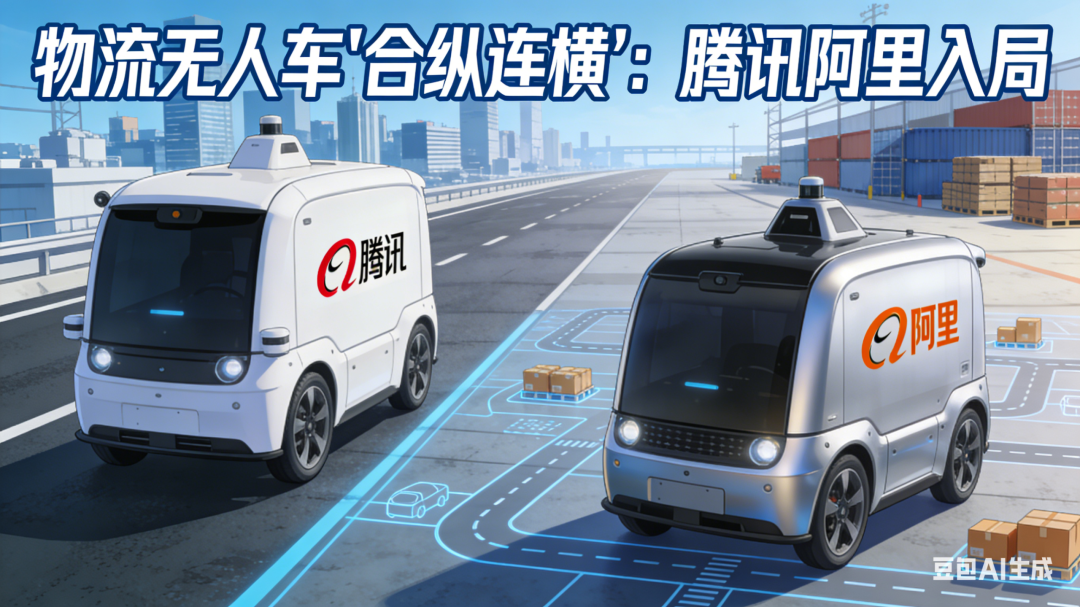
I. Giant Entry: An Industry Transformation from 'Technological Validation' to 'Ecosystem Binding'
In February 2026, two industrial and commercial changes sent shockwaves through the logistics technology sector:
Guangxi Tencent Venture Capital Co., Ltd., a subsidiary of Tencent, officially acquired a stake in Neolix Huitong;
(For further reading, click: 'Tencent Invests in Neolix Autonomous Vehicles: The Unmanned Delivery Sector Welcomes a 'Super Node,' and L4 Autonomous Driving Commercialization Enters the Era of Ecosystem Gameplay')
Almost simultaneously, Alibaba Cainiao reached a deep strategic integration with Zhiwu Intelligence through a combination of 'business injection + cash investment.'
(For further reading, click: 'Zhiwu + Cainiao = The 'Super Aircraft Carrier' of Unmanned Delivery! 50,000 Units to Break Even, Has the Industry Entered the 'Late Warring States Period?')
Gao Chengyuan, Dean of the Tiaoyuan Influence Research Institute, pointedly stated, 'This is not a simple financial investment but a key move to incorporate autonomous vehicles into their respective industrial internet blueprints.'
Behind this integration lies the inevitable logic of industry development.
Experts analyze that the 2026 industry consolidation is 'an inevitable choice for leading enterprises amid maturing technology and intensifying commercialization competition.'
As technological gaps narrow, the focus of competition in unmanned logistics vehicles naturally shifts to large-scale deployment capabilities, cost control, and ecosystem synergy.
Tencent needs to enhance the scenario-based implementation of AI and autonomous driving, while Alibaba must defend Cainiao’s discourse power (influence) in the smart logistics sector—autonomous vehicles have become pivotal pieces on both sides’ strategic chessboards.
From a capital perspective, both alliances adopt a 'equity investment + ecosystem resource infusion' model.
Tencent’s strengths in AI large models, computing power, data, and ecological resources complement Neolix’s extensive experience in autonomous driving scenario implementation, fleet operations, and technological R&D;
Cainiao’s global logistics network provides Zhiwu with ready-made logistics scenarios, reducing the cost and difficulty of independent scenario development.
This dual binding of 'capital + ecosystem' is far more potent than mere financial investment.
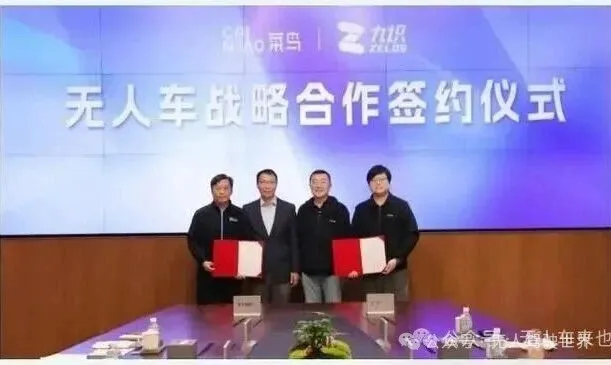
Kong Qi, CEO of Zhiwu Intelligence, described this integration as 'a key milestone in the autonomous driving industry’s shift from point breakthroughs to system integration.'
This statement reveals the deeper logic of industry development: Individual technological breakthroughs are no longer sufficient to sustain large-scale competition; systemic solutions integrating upstream and downstream resources are now essential.
Wan Lin, CEO of Cainiao Group, similarly stated, 'Both sides will maintain a close ecological partnership to jointly explore new paths for smart logistics capacity.'
The term 'ecological partnership' implies that integration is not a simple merger but a deep collaboration based on respective strengths.
II. Dual-Powerhouse Rivalry: The Differentiated Survival Strategies of Neolix and Zhiwu Intelligence
Against the backdrop of giant entry, Neolix and Zhiwu Intelligence have charted distinct developmental paths, forming a 'dual-powerhouse pattern (landscape)' in the logistics autonomous vehicle sector.
1. Neolix pursues an aggressive route of 'mapless driving + global expansion.'
Since its establishment in 2018, the company has focused on the R&D and application of L4 autonomous driving technology in logistics scenarios such as urban delivery.
Its core weapon is the Neolix-VA visual-action large model, which employs minimal sensor fusion perception, eliminates reliance on high-definition maps, and enables rapid deployment in unfamiliar cities.
This technological route has been validated in large-scale implementation: To date, Neolix has deployed over 16,000 autonomous vehicles, covering 17 countries, more than 300 cities, and accumulating over 100 million kilometers of autonomous driving.
Qingdao alone has over 1,200 units, forming the world’s largest single-city autonomous vehicle operation fleet.
2. Zhiwu Intelligence, on the other hand, has opted for a robust (steady) strategy of 'data-driven + scenario deep cultivation.'
With nearly 100 million kilometers of real-world public road data, Zhiwu Intelligence has developed a highly mature algorithm model;
Meanwhile, Cainiao’s autonomous vehicle team has long occupied the global technological high ground in visual-language models and world models.
The combination of Zhiwu’s deployment capabilities and Cainiao’s cutting-edge 'brain' forms a dual advantage of 'hardware + software.'
Post-integration, the two sides have formed the world’s largest autonomous vehicle fleet of over 20,000 units and will leverage Cainiao’s ecological resources to provide intelligent, holistic solutions for the global logistics industry.
(For further reading, click: 'Weifang, Shandong Province: 200 Cainiao Autonomous Vehicles Team Up with Didi for Spring Festival Delivery Innovations! Cainiao Autonomous Vehicles Merge with Zhiwu to Form the World’s Largest Fleet of Over 20,000 Units')
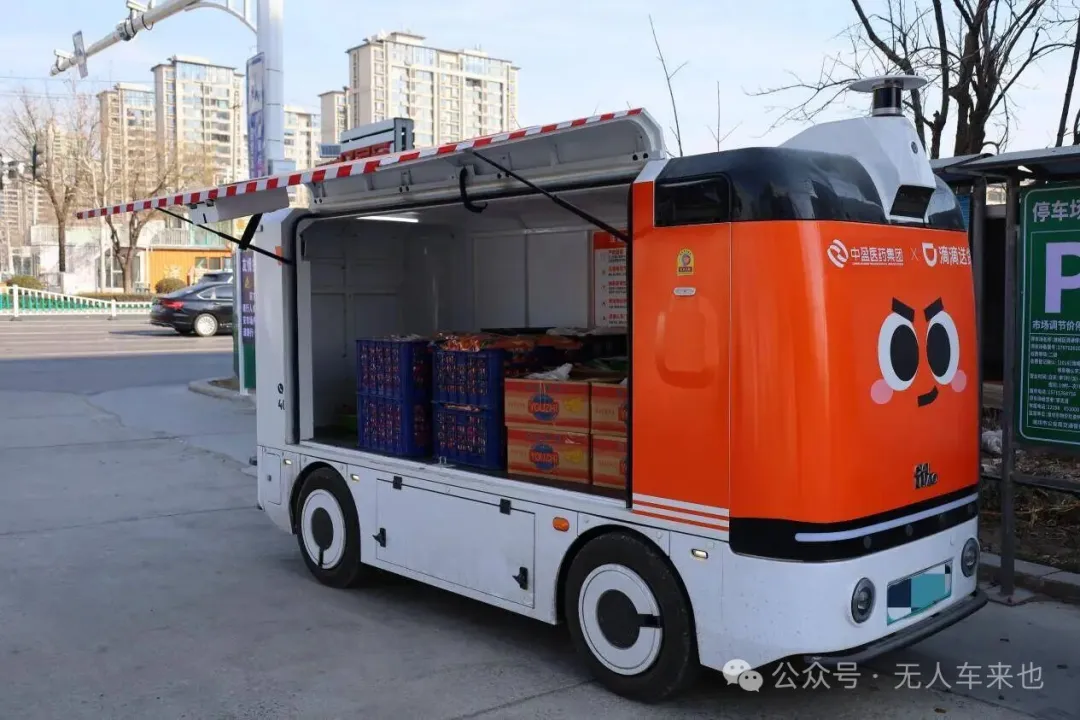
3. Both companies have ambitious mass production targets.
Neolix plans to deliver over 50,000 autonomous vehicles in 2026 and achieve more than 50,000 overseas deliveries by 2027;
While Zhiwu Intelligence has not disclosed specific figures, its expansion pace, bolstered by Cainiao’s logistics network, is not to be underestimated.
Of course, regardless of technological sophistication, the ultimate test lies in commercial viability: Can customer payment willingness be satisfied while controlling costs?
III. Technological Routes: The 'Two-Legged Approach' of Mapless Driving and Data-Driven Development
The technological route debate in logistics autonomous vehicles essentially pits 'light-asset rapid expansion' against 'data-intensive deep optimization.'
1. Neolix’s 'mapless driving' route represents ultimate expansion efficiency.
Traditional autonomous driving relies on high-definition maps, requiring costly map collection and production for each new city, with deployment cycles spanning months.
Neolix’s visual large model solution, in theory, enables 'hourly deployment in unfamiliar cities.'
This is a significant advantage for enterprises pursuing rapid global expansion.
In the UAE, Neolix secured the region’s first RoboVan unmanned delivery vehicle license and partnered with K2 Group to create the first national-scale operational model overseas, validating this technological route.
(For further reading, click: 'Despite Suspending Operations Due to Middle East Tensions, Neolix Autonomous Vehicles Deploy Massively in the UAE! Plans to Launch 10,000 L4 Unmanned Delivery Vehicles in the Middle East by 2026')
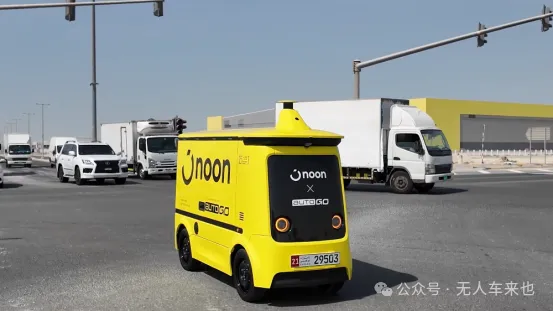
However, mapless driving is not a panacea; the industry still faces challenges in adapting to extreme weather and complex road conditions.
2. Zhiwu Intelligence’s 'data-driven' route emphasizes system robustness and scenario adaptability.
With nearly 100 million kilometers of real-world road data, Zhiwu’s algorithm models have been honed across vast scenarios.
Cainiao’s technological accumulations in visual-language models and world models further enhance its understanding and decision-making capabilities in complex scenarios.
This dual advantage of 'data + algorithms' is particularly crucial in logistics delivery scenarios demanding high reliability.
3. The two technological routes are not mutually exclusive but have distinct focuses.
Neolix’s mapless solution is better suited for rapidly entering new markets, especially in areas with relatively developed infrastructure and orderly roads;
Zhiwu’s data-driven approach may perform more robust (steadily) in complex urban environments.
In the future, the two are likely to converge—mapless systems need more data to enhance robustness, while data-driven systems must reduce reliance on high-definition maps to accelerate expansion.
IV. Future Battleground: 'Winner-Takes-All' Dynamics and the 'Niche Survival' of Small and Medium-Sized Players
With Tencent and Alibaba completing their ecological layouts, the Matthew effect in the logistics autonomous vehicle industry will intensify.
The technological, cost, and scenario advantages constructed by leading enterprises through ecological integration will make it difficult for small and medium-sized players to compete in mass production and deployment.
Three potential breakthrough paths for small and medium-sized players:
1. Deep cultivation of niche scenarios to provide customized services;
2. Specialization in a specific segment of the industrial chain to become a supply chain partner for leading enterprises;
3. Technological innovation to establish unique advantages in a specific technological niche.
This means small and medium-sized players must either:
- 'Go small and refined,' building moats in niche markets overlooked by giants;
- 'Latch onto big legs,' becoming part of a giant’s ecological chain; or
- 'Break through technologically,' achieving breakthroughs in key technological areas.
From an industry perspective, a '2+N' competitive landscape is likely to emerge—
Neolix (Tencent ecosystem) and Zhiwu Intelligence (Alibaba ecosystem) will dominate as the two leading players, while several small and medium-sized players survive in niche or regional markets.
This pattern (landscape) resembles the ride-hailing and bike-sharing markets of the past, but logistics autonomous vehicles face higher technological barriers and capital intensity, leaving narrower windows of opportunity for latecomers.
Technological evolution directions are also noteworthy.
Neolix’s vision of 'coordinated scheduling for 100,000 L4 autonomous vehicles' suggests that future autonomous vehicles will no longer operate in isolation but form networked, intelligent collaborative systems.
Zhiwu Intelligence and Cainiao’s 'technology sharing, operational synergy, and resource interoperability' point toward deep integration of logistics autonomous vehicles with smart logistics systems.
Future competition will focus not only on single-vehicle intelligence but also on system intelligence and ecological synergy.
In conclusion, Autonomous Vehicle Insights (WeChat Official Account: Autonomous vehicles have arrived ) believes:
The rivalry between Neolix and Zhiwu Intelligence is not just a competition between two companies but a clash of two technological routes and two business models.
Regardless of the eventual winner, this competition will propel the entire industry forward significantly.
For small and medium-sized players, finding survival space under the giants’ shadow will be a life-or-death question in the next two years.
What do you think, dear readers?
#AutonomousVehicleInsights #AutonomousDriving #SelfDriving #AutonomousVehicles
-
![]()
The Unstoppable Rise of 'Optical Progress and Copper Decline': Sunny Optical’s Strategic Vision for the Next Decade
-
![]()
AI + Going Global in the Second Half: No Intermission for Robot Vacuum Cleaners
-
![]()
The Suffering Endured in E-commerce, Walmart Doesn't Want to Repeat in AI
-
![]()
What Does the Doubling of New Energy Vehicle Exports Mean?
-
![]()
Ghosn: 'Only I Can Save Nissan'
-
![]()
Volkswagen Lays Off 100,000 Employees, The Elephant Sits Down
-
![]()
Expanding Production Capacity! Yutong Optics Acquires Approximately 1.5 Hectares of Industrial Land in Chang'an, Dongguan
-
![]()
Why Is Nokia Making a Comeback in the AI Era?