Five Major Trends: Smart Cars Usher in the 'China Era' at the 2026 Auto Show
 04/28 2026
 627
627
Edited by Wang Yisu
The 2026 Beijing Auto Show is so vast that only Superman could tour it in a single day.
Thanks to the opening of a new exhibition hall, the total exhibition area has more than doubled. Walking from the southernmost E1 hall to the northernmost A1 hall takes nearly 20 minutes.
Guangzhui Intelligence spent a day at the show and witnessed many interesting scenes.
The Xiaomi booth still draws attention with giveaways. Last year, visitors received hats and custom-branded water bottles; this year, they're giving away car models. Consumers lining up exclaimed, "Mr. Lei is incredibly generous!"
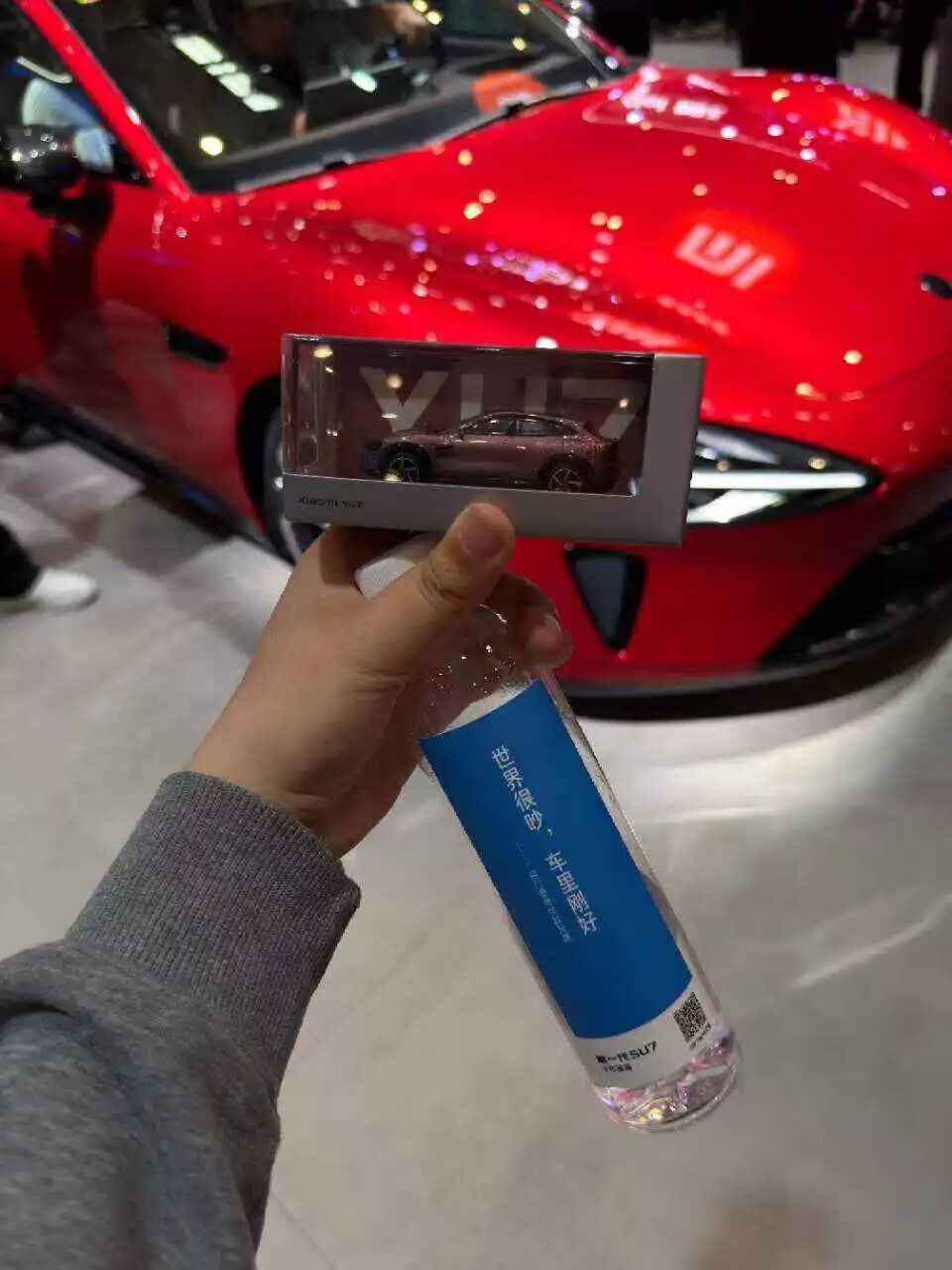
Car models are hard to come by; image sourced from the internet.
The AITO booth remains a "sales extravaganza." Just like at last year's Shanghai Auto Show, more live-streaming salespeople are pitching products under the AITO stand. Even outside the venue, promoters stopped Guangzhui Intelligence, asking, "Want to learn about Huawei cars?"
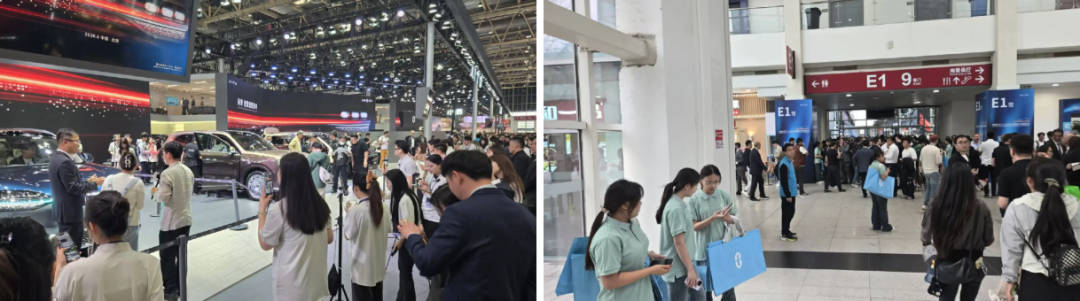
From the venue layout, Guangzhui Intelligence senses an epic strengthening of smart car suppliers' status.
Recall the 2024 Beijing Auto Show, where many smart car suppliers' booths were temporary setups outside the main halls, hardly qualifying as proper venues. This year, all "prominent" suppliers have secured indoor spaces.
A staff member from Yuanrong Qixing told Guangzhui Intelligence that the reason for many smart suppliers showcasing independently is that "consumers are now paying attention to the suppliers behind smart driving technologies, so we must break out of our niche."
Under the strength of China's smart car industry, foreign visitors are once again "completely blown away."
At the BYD booth, a foreign visitor stood in front of a vehicle painted with "Black Myth" themes, gesturing wildly and holding his arms outstretched for a full five minutes.
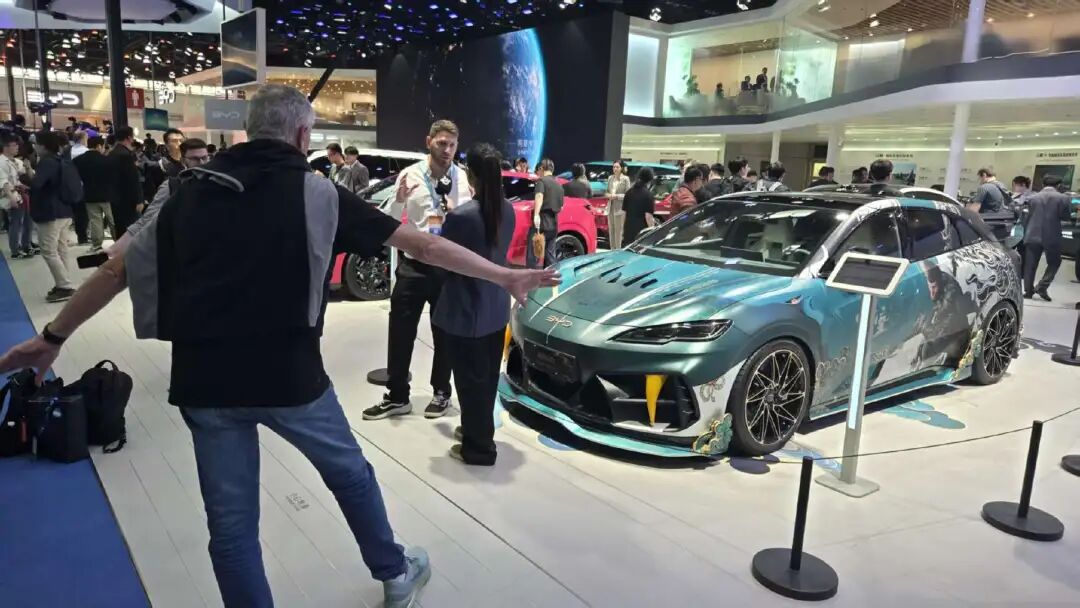
At the XPENG booth, Guangzhui Intelligence overheard two women with London accents conversing. One opened the rear door of the XPENG GX and said, "It even has a screen in the armrest console," to which the other replied, "This is what Chinese cars are like. When will we have this..." At a supercar booth, a foreign visitor exclaimed "such like Xiaomi" while taking photos, showing how deeply Chinese car performance has impressed.
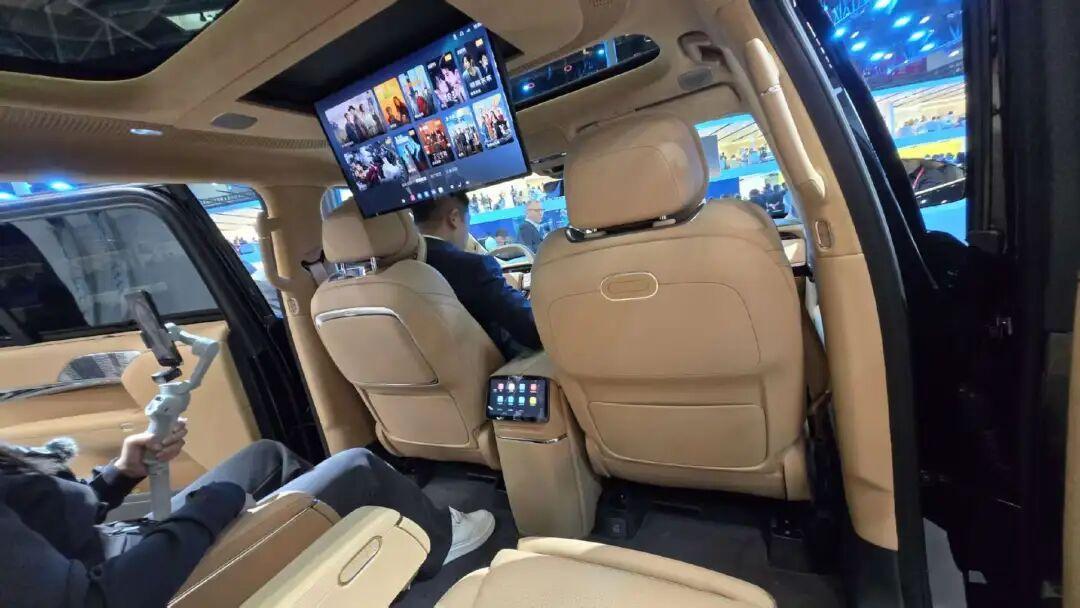
Cabin screens that leave foreigners envious.
If 2025 was marked by price wars and the democratization of smart driving in the auto industry, then at this auto show, it's clear that this year, China's automotive industry chain is starting to lead globally.
"8-Series" and "9-Series" vie for premium status, with "color-clash" cars everywhere.
2026 is a big year for Chinese automakers to push into the premium segment.
This year's new smart cars resemble the 2023 trend of automakers launching "fully-loaded" models, with impressive specs. However, 2026's offerings are far more luxurious.
Guangzhui Intelligence noticed that nearly every domestic brand's booth features a new "8-Series" or "9-Series" model as their flagship.
Early on the first day of the auto show, Li Auto unveiled the L9 Livis, priced at 559,800 yuan. Its standout feature is the self-developed Mach 100 chip, delivering a total computing power of 2560 TOPS, supporting future L3 autonomous driving. The XPENG GX has a pre-sale price of 399,800 yuan, with its main selling point being a full-domain steer-by-wire system, hardware-ready for L4 autonomy. NIO unveiled the ES9 SUV flagship, with a pre-sale price starting at 528,000 yuan, featuring a 900V high-voltage platform and described as "extra-long and extra-wide."
The collective showcase of top-tier models indicates that China's smart cars are entering a new phase of premiumization.
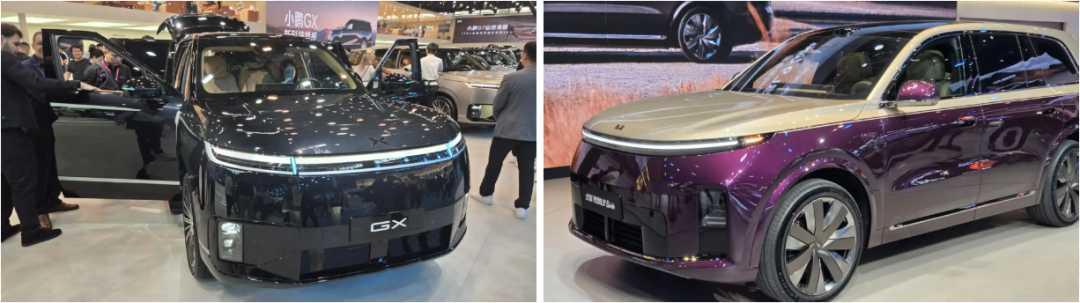
Interestingly, these premium products seem to have as if by prior agreement (coincidentally) chosen "color-clash" exteriors, as if each car is paying homage to Maybach.
At any booth featuring premium vehicles, the color schemes are either "red + silver," "purple + silver," or "black and white." The "color-clash" universe adds a fresh touch to this year's auto show.
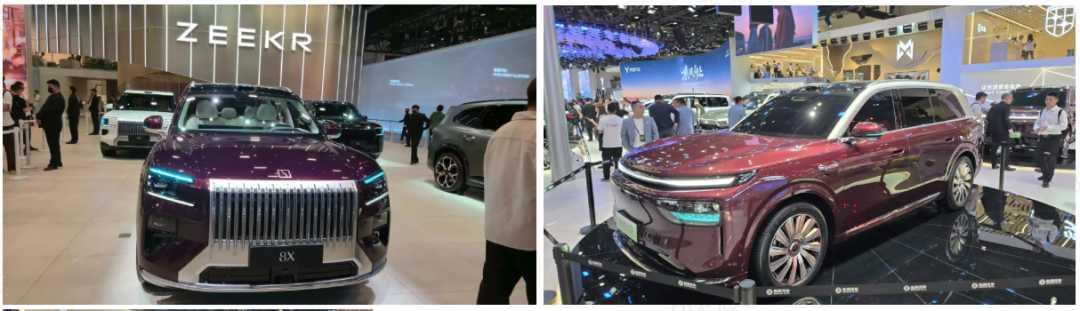
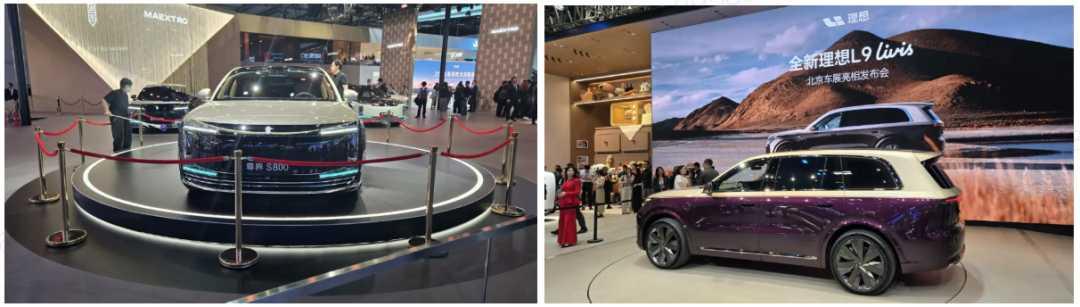
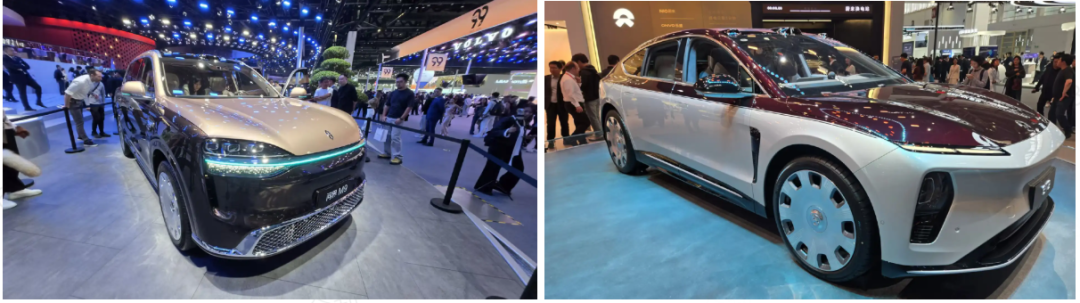
Hardware and software "push for perfection," with few 0-to-1 innovations.
At this auto show, Guangzhui Intelligence's strongest impression is that smart cars are no longer blindly "stacking new features" but instead "perfecting existing ones."
Compared to 2023, when smart cockpits and highway NOA were just entering real-world use, and 2024, when L2 smart driving gradually matured, smart cars in 2026 feel less groundbreaking but far more polished.
First, in smart driving, following the launch of L3 testing in late 2025, large-scale L3 implementation in 2026 seems almost certain.
At this auto show, Huawei unveiled Qiankun ADS 5.0, announcing the upcoming commercialization of L3. This means on highways and urban expressways (60-120 km/h), users won't need to operate the vehicle and can shift their attention to non-driving activities.
Currently, Huawei's L3 has completed road testing certifications in 23 key Chinese cities, including Beijing, Shanghai, and Guangzhou, and will achieve large-scale implementation in 2026. Regarding the perennial question of liability in autonomous driving, Huawei and its automaker partners have made a clear division: if an accident occurs when the system is active and no takeover is requested, liability will be shared between Huawei and the partner automaker.
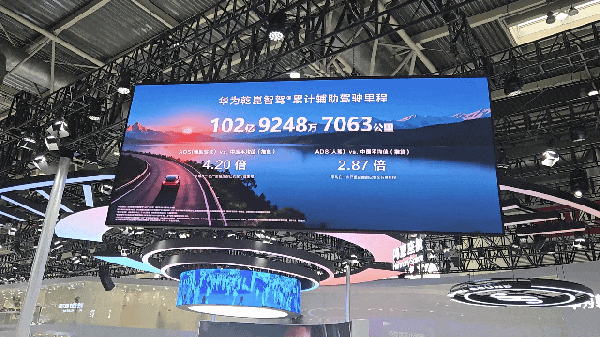
At the Huawei Qiankun booth, Huawei prominently displayed a large screen showing real-time smart driving mileage to showcase its "capabilities."
Is ADS 5.0 a technological leap? Strictly speaking, probably not. In terms of technical framework, the new WEWA 2.0 architecture still follows Huawei's world model approach. The biggest difference is the introduction of an intelligent agent game theory mechanism, enhancing autonomous driving training effectiveness. This technical framework is similar to what many L4 or VLA smart driving firms employ.
Another supporting piece of information is that many automakers at this show explicitly stated their products have the hardware and software for L3 capability. Much of this confidence comes from "hardware inflation." Take "Huawei-aligned" brands as an example: the new AITO M9 features a comprehensive sensor upgrade, now equipped with six LiDAR systems. On the other side, XPENG uses three Turing chips, while Li Auto's new L9 Livis emphasizes "massive effective computing power."
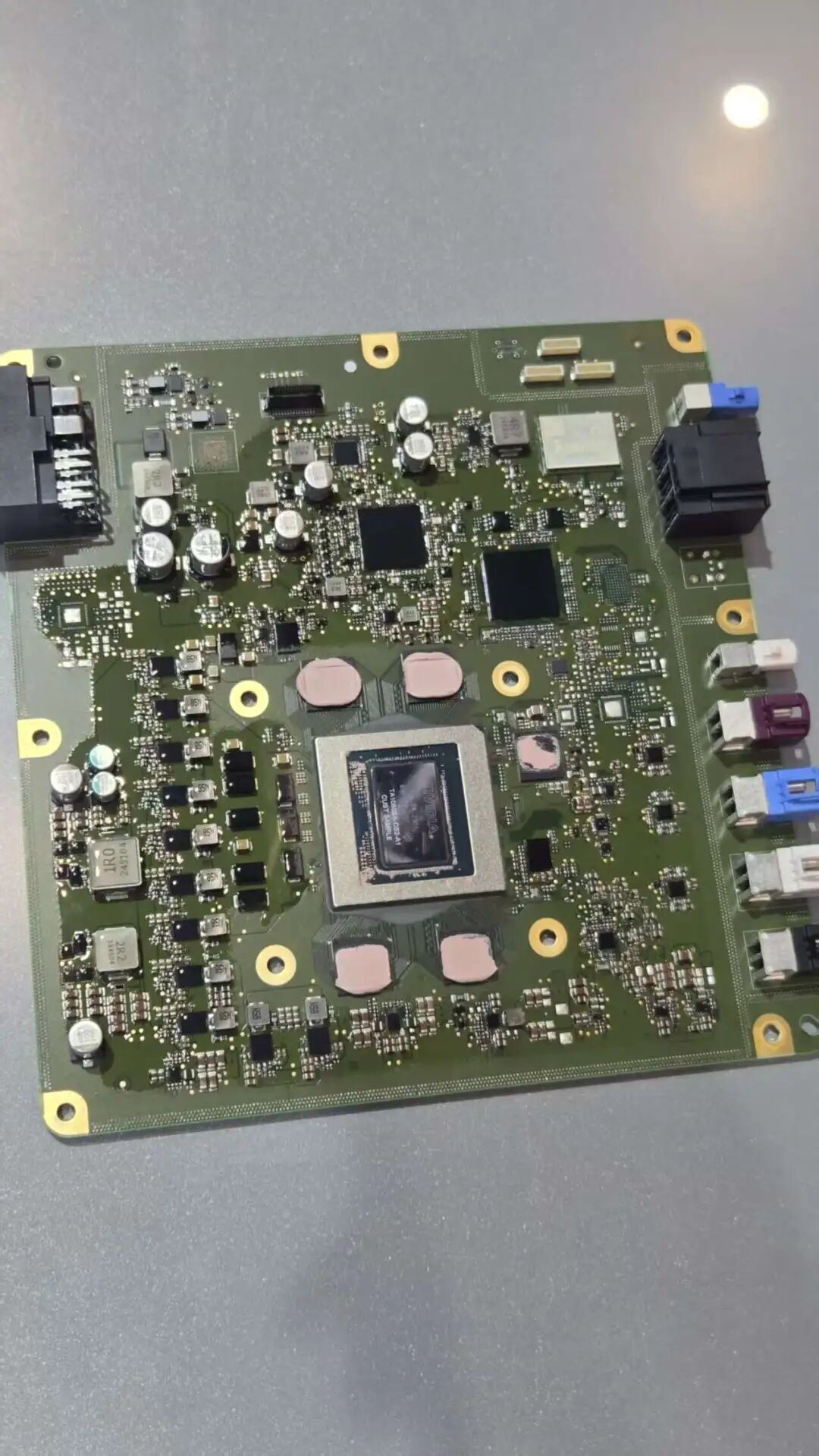
Guangzhui Intelligence also noticed an interesting exhibit on-site. Last year's auto show treated NVIDIA's Thor chip—which many automakers believed could provide L3 autonomous driving computing power—as a precious commodity. This year, it has "fallen from grace." The displayed domain controller board, equipped with a single computing power chip, was simply removed from some finished product and left "lonely" on display. Upon closer inspection, the thermal paste on the chip wasn't even cleaned off.
On the hardware front, this year's "energy replenishment race" among smart cars kicked off in the first quarter.
First, the 800V high-voltage architecture, still "novel" in 2024, has become standard for cars priced in the 200,000-300,000 yuan range this year. Major automakers like BYD, XPENG, Leapmotor, Zeekr, "Huawei-aligned" brands, and Li Auto have all implemented 800V architectures. Zeekr is even pushing further, planning to introduce a 900V architecture.
Charging stations are no longer dominated solely by Huawei's liquid-cooled ultra-fast charging. After announcing flash charging technology this year, BYD is accelerating efforts to shed its reputation of "announcing without building" and showcased a series of charging station design concepts. Based on BYD's expectations in March this year, its goal of constructing 20,000 flash charging stations nationwide by year-end seems promising.
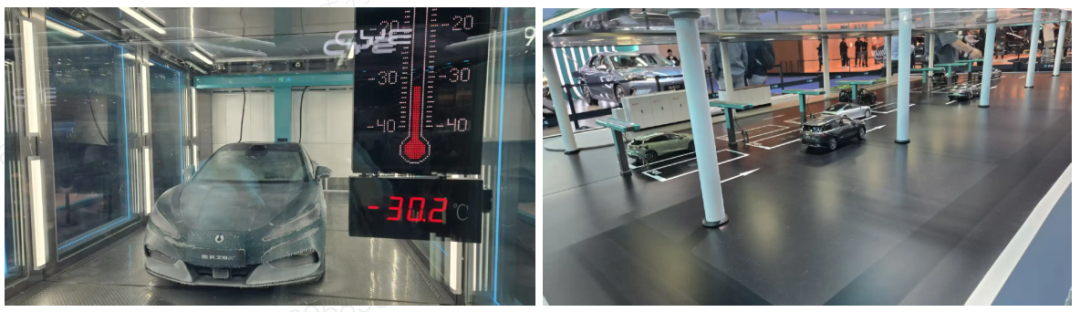
Images show BYD's flash charging remains effective in cold conditions and a model of BYD's charging station.
In summary, the hardware and software advancements in smart cars at this auto show are not 0-to-1 breakthroughs but rather accelerated evolution along previous technical paths, from 1 to 10. Iterations in smart driving and energy replenishment represent engineering implementations built upon existing industry explorations and theories.
These signs indicate that China's smart car technology is far from reaching its limit.
2026: The Era of Integrated Cabin and Driving
If a major innovation in smart cars is on the horizon, it's likely in integrated cabin and driving systems.
In recent years, automotive smart cockpits have been somewhat awkward products, as their competitive focus has been simple and easily replicated by rivals. Consumers only care about "whether the screen is large, whether the infotainment system lags, and whether voice commands understand vague instructions."
Under this intense competition, many industry players have begun promoting the new concept of integrated cabin and driving systems. Previously, discussions centered on cost savings—after all, the underlying logic was combining what used to be two separate boards (domain controllers) for smart driving and smart cockpits into one (or even sharing a single chip), significantly reducing component and wiring costs.
This limitation may stem from smart cockpit firms' insufficient understanding of both automotive and AI technologies.
At this auto show, Guangzhui Intelligence saw how AI large models are redefining all human-vehicle interactions—everywhere, there were cockpits labeled with Agent capabilities or featuring "lobster-on-board" setups.
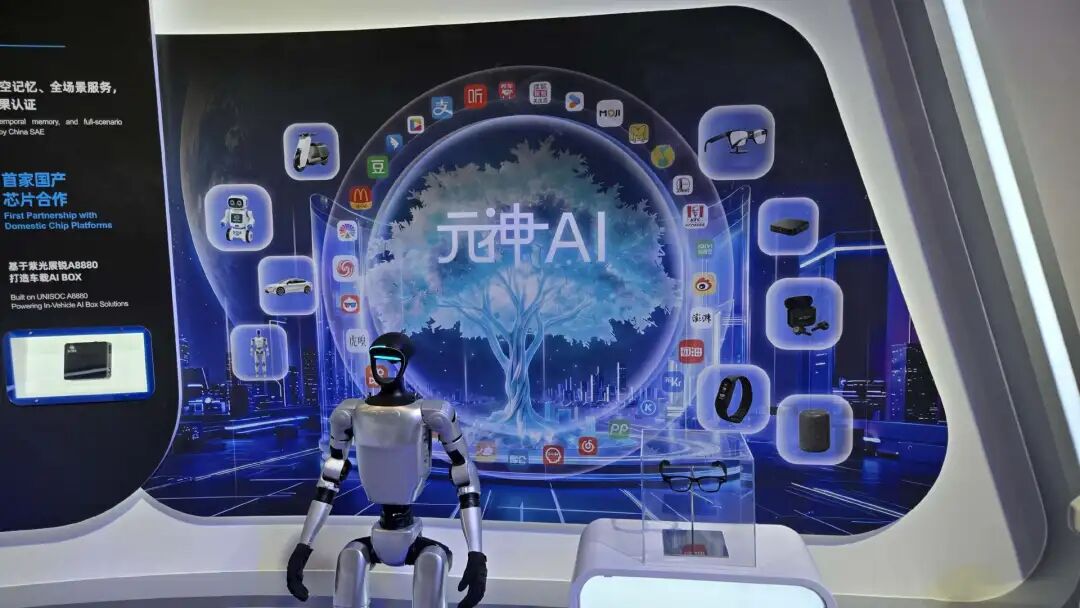
Banma Zhixing upgraded its automotive cockpit-focused Yuanshen AI to the Yuanshen AI Automotive Robot Brain, featuring the AutoOmni full-modal end-model product matrix and a matching (supporting) "Lobster Onboard" solution. With a single passenger command, the car can automatically filter nearby highly-rated restaurants and initiate navigation.
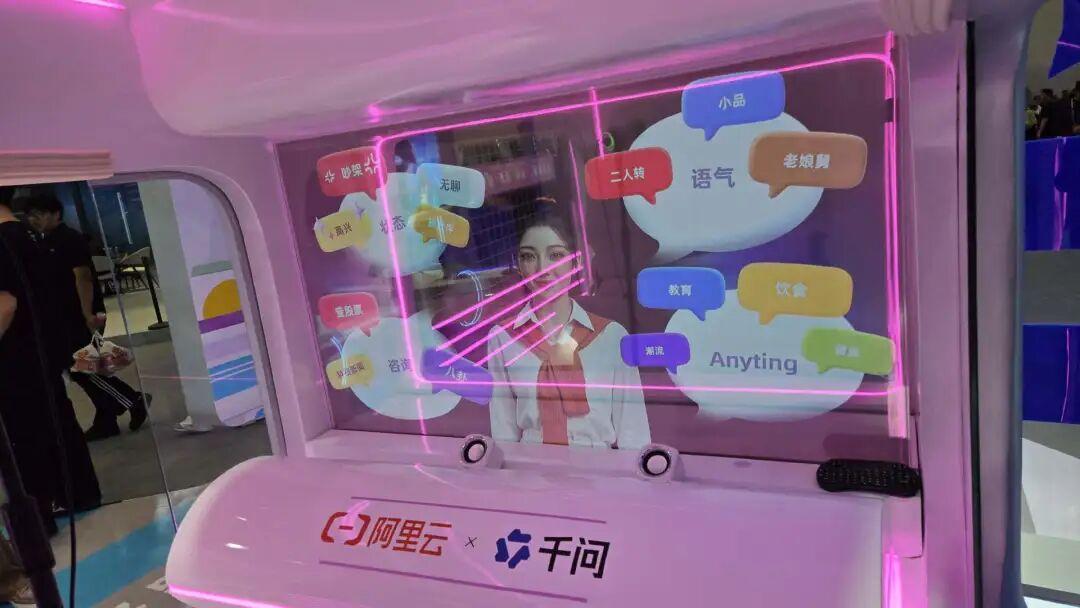
Alibaba Cloud and QianWen's collaboration brought Agent capabilities into the cockpit. After experiencing it on-site, Guangzhui Intelligence found that Agent capabilities represent an evolution beyond entertainment, extending to payment scenarios. With AI-powered payments in the cockpit, whether ordering takeout via voice while in the car or making instant purchases during travel, users won't need to use their phones, thanks to Agent-based payments.
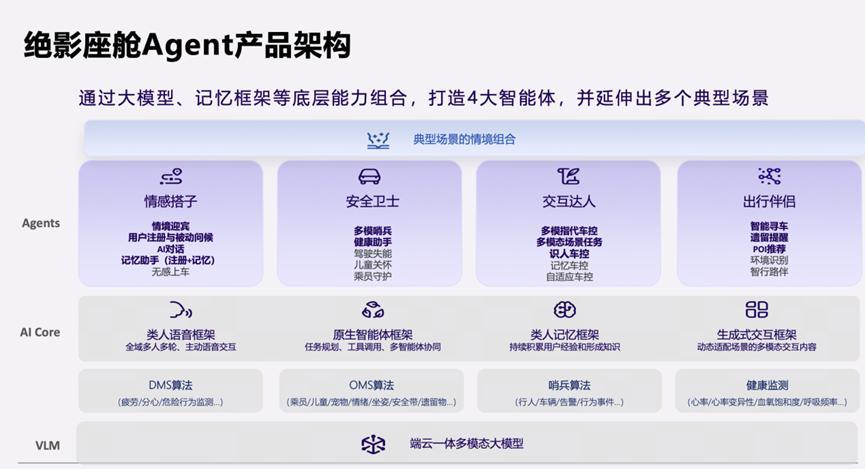
Where do the capabilities of cockpit Agents end? SenseTime Jueying believes the new smart cockpit should evolve from "chatty" to "capable," offering a three-tier architecture for an in-vehicle autonomous intelligence brain: the Sage Box (Qianzhi Smart Box), Sage edge-side model, Qianji System (Sage OS), and New Member native intelligent agent. In essence, SenseTime Jueying wants to provide users with an "all-in-one" machine dedicated to cockpit AI.
The most revolutionary idea may lie in the synergy between the cockpit and smart driving.
Just two days before the auto show, Horizon Robotics unveiled KaKaClaw, a vehicle-mounted "lobster" designed to solve the challenge of cross-domain collaboration for smart cockpit intelligence. The underlying logic is slightly complex but can be summarized as treating automotive intelligence functions like "skill" ports, allowing the cockpit "lobster" to reorganize and invoke them, achieving true integrated cabin and driving systems.
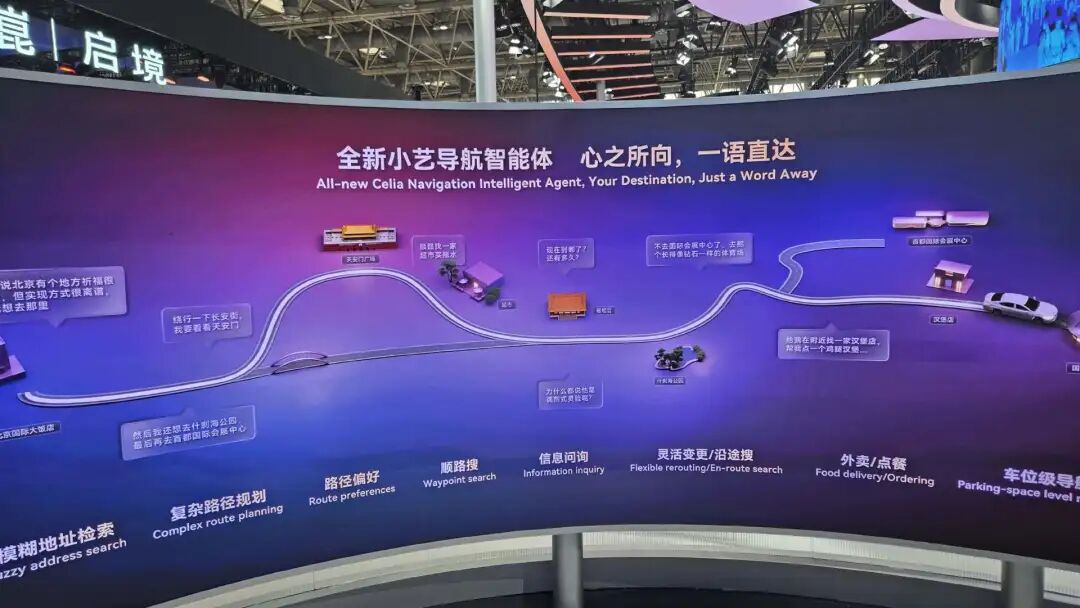
Perhaps great minds think alike—Huawei Qiankun also showcased an automotive intelligence agent that bridges smart driving and smart cockpits. For example, previously, clear boundaries existed between the cockpit and smart driving systems. Users could use vague commands to initiate map navigation but had to manually activate smart driving upon arrival. With AI granted higher invocation privileges, users can "command smart driving in natural language in real-time," just like conversing with a human driver.
"When developing chips and operating systems for cars, we can't fragment these functions. We can't have two, three, or four brains in one vehicle. The future must be a unified vehicle computing platform, with unified computing chips and a unified computing operating system across the entire vehicle," emphasized Yu Kai, founder and CEO of Horizon Robotics. This year, Horizon formed a complete ecosystem for automotive intelligence hardware and software: "Xingkong chips (integrated cabin and driving) + KaKaClaw OS + HSD smart driving." Currently, Horizon has announced that over 10 automotive brands have begun initial mass production.
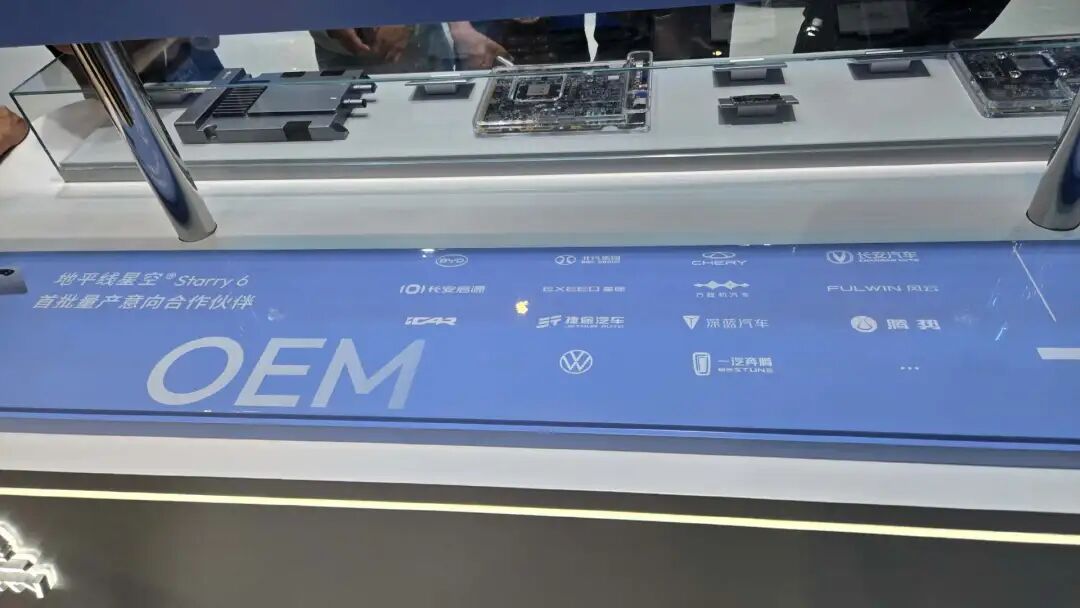
Perhaps, the integration of cockpit and driving systems represents the ultimate destination of intelligent automotive cockpits. After all, the original purpose of the automotive EE architecture since its inception has been to decouple various functions of the vehicle, and an intelligent cockpit should inherently offer a highly integrated experience.
The 'Huawei Universe' of Intelligent Vehicles
If asked which intelligent supplier appears most frequently, the answer must be Huawei.
At this auto show, the 'Huawei Universe' is already taking shape. There are 10 exhibition halls related to Huawei, including Harmony Intelligent Mobility, Aito, Xiangjie, Zunjie, Zhijie, Shangjie, Huawei ADS, Huawei Digital Energy, Yijing, and Qijing. The total exhibition area of Harmony Intelligent Mobility alone exceeds 4,400 square meters, occupying nearly half of the entire B4 exhibition hall. If brands with deep Huawei involvement, such as Avatr, Dongfeng Mengshi, and BYD Fangchengbao, are included, the numbers become even more staggering.
Harmony Intelligent Mobility + the 'Five Jie Brands' represent vehicles deeply defined and participated in by Huawei, resembling a large-scale 'theme park'.
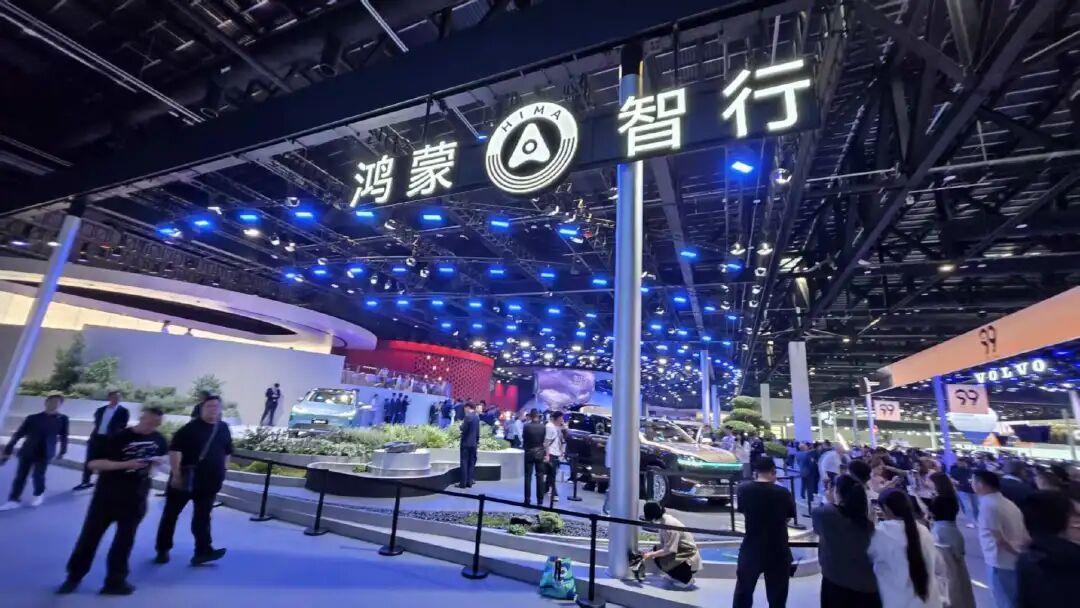
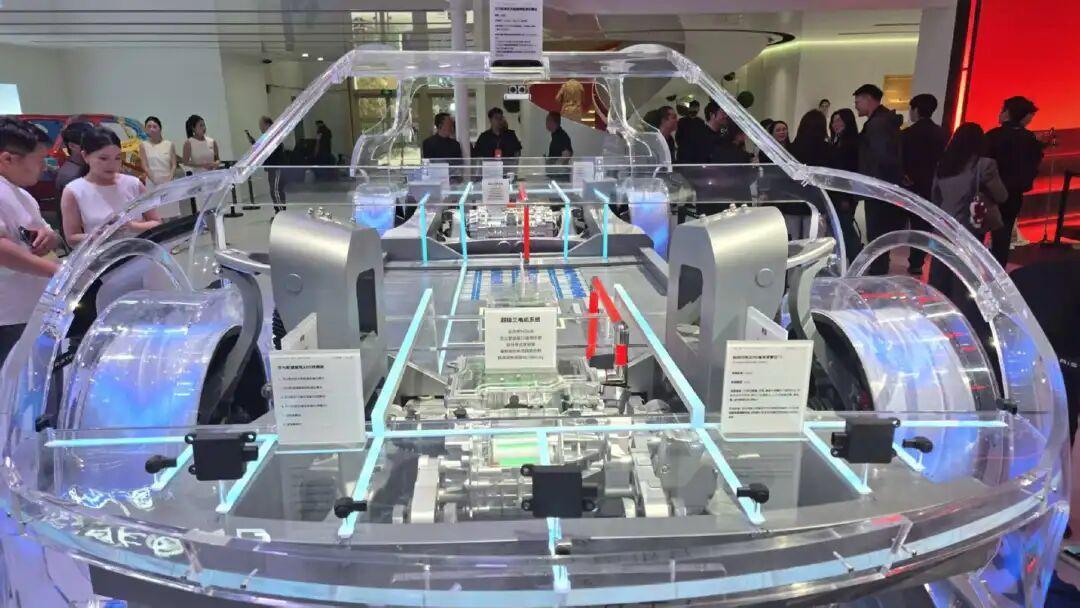
The Huawei Digital Energy and Huawei ADS exhibition halls primarily showcase components for automotive intelligence. For example, Digital Energy displays electric motors, chassis hardware, and liquid-cooled ultra-fast charging, while Huawei ADS focuses on intelligent driving and cockpit-related products. Regarding which brand Huawei's intelligent automotive chassis belongs to, Huawei ADS staff told Guangzhui Intelligence, 'It's a cooperative relationship. Hardware-related aspects fall under Digital Energy, while upper-layer technologies are under ADS.'
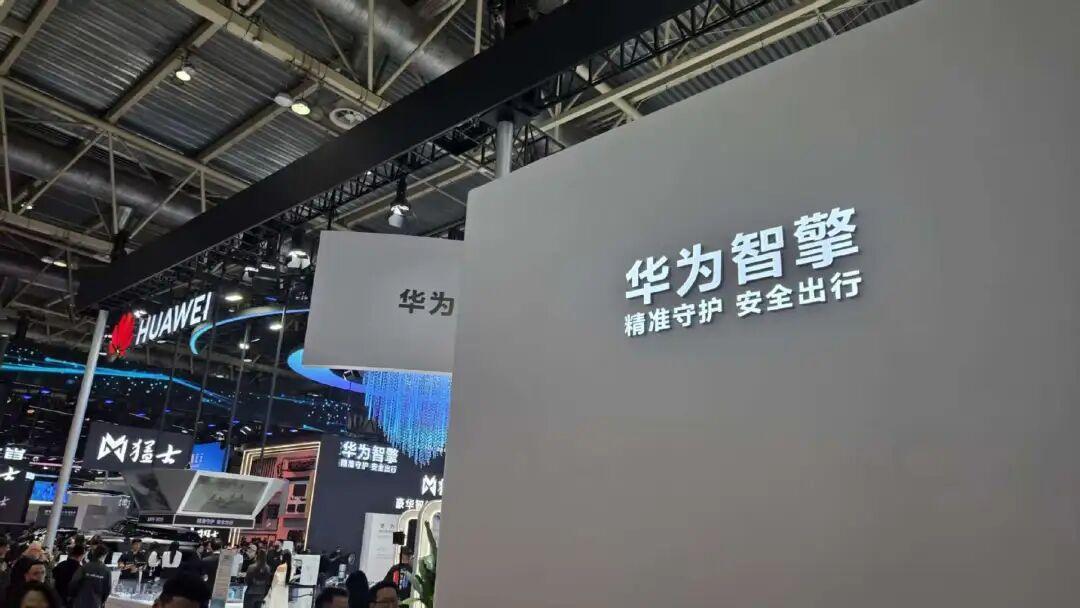
Next to Huawei ADS are Yijing and Qijing, which can be understood as benchmark case studies created after Huawei's automotive BU transformed into Huawei ADS.
Among them, Yijing collaborates with Dongfeng, and Qijing partners with GAC. The cooperation model is HI Plus, differing from Huawei's previous HI model. The HI Plus model involves Huawei working with automakers during the engineering phase to jointly define products, coordinate technologies, and integrate ecosystems for collaborative development. Simply put, it can be seen as a 'Harmony Intelligent Mobility' with stronger automaker autonomy, even regarded as the 'Jie Series' and 'Jing Series.'
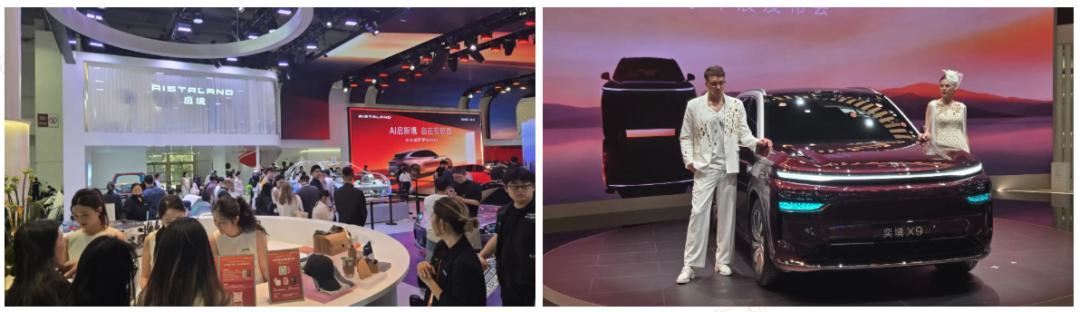
'It seems like the Beijing Auto Show, but it's actually the Huawei Auto Show,' many visitors joked to Guangzhui Intelligence. Huawei doesn't build cars, but it is increasingly moving from behind the scenes to the forefront.
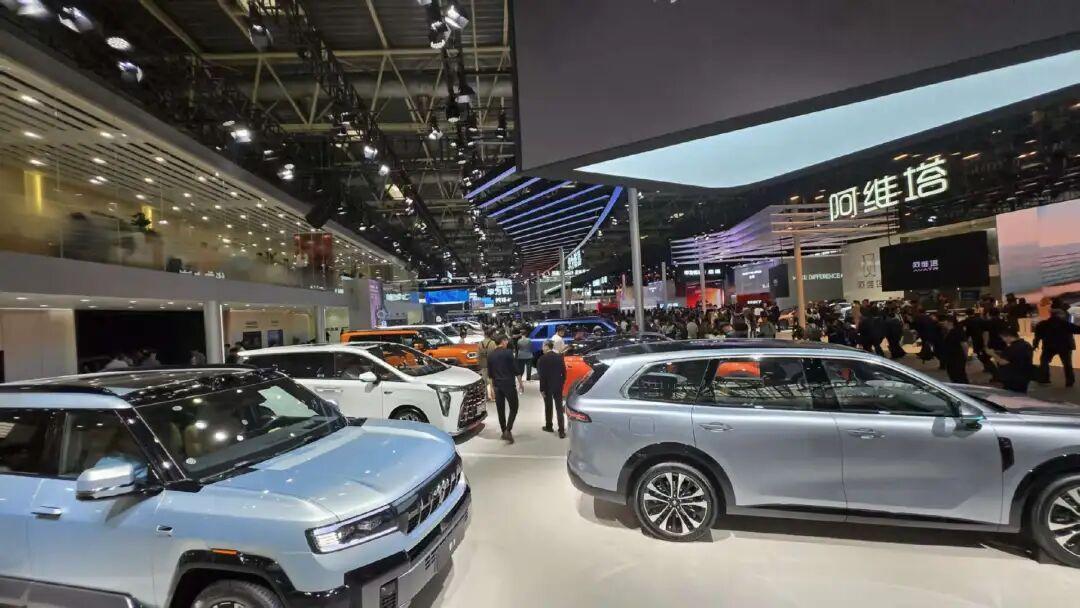
Standing at the Huawei ADS booth, it does seem capable of hosting its own show.
At the Huawei Digital Energy exhibition area, Guangzhui Intelligence inquired why electric motors, rarely promoted before, were now being extensively showcased. Staff replied, 'We were relatively low-key before. A few days ago, we officially launched the DroveONE brand, named Huawei Zhiqing in Chinese, intentionally increasing exposure.' Moreover, Huawei Energy's actual presence in the automotive industry is much higher than it appears. 'I remember many automakers, such as Li Auto and XPeng, collaborate with Huawei on electric drive systems,' the staff member said.
Indeed, at the Huawei ADS booth, Guangzhui Intelligence saw a car model labeled with Huawei's solutions, densely packed with Huawei's technological introductions. 'It's as if only the iron and tire rubber aren't made by Huawei,' an industry insider remarked.
Joint Venture Vehicles Embrace Chinese Suppliers
As Chinese intelligent vehicles surge, joint venture brands in 2026 have found their 'safe haven.' At this auto show, China's intelligent vehicle supply chain is comprehensively guiding product design for joint venture brands.
In terms of intelligent driving, joint venture brands have finally abandoned their 'obsession' with competing directly against Chinese intelligent driving systems. Over the past year, global first-tier brands like BBA, Volkswagen, Toyota, Honda, Nissan, General Motors, and Ford have fully embraced Chinese intelligent driving suppliers such as Momenta, Huawei ADS, and Horizon Robotics.
Key new products at the auto show, such as SAIC Audi's E7X, BMW iX3 long-wheelbase version, and Mercedes-Benz all-electric GLC, feature intelligent driving systems co-developed with Momenta. FAW Audi's gasoline-powered A6L uses Huawei ADS for intelligent driving.
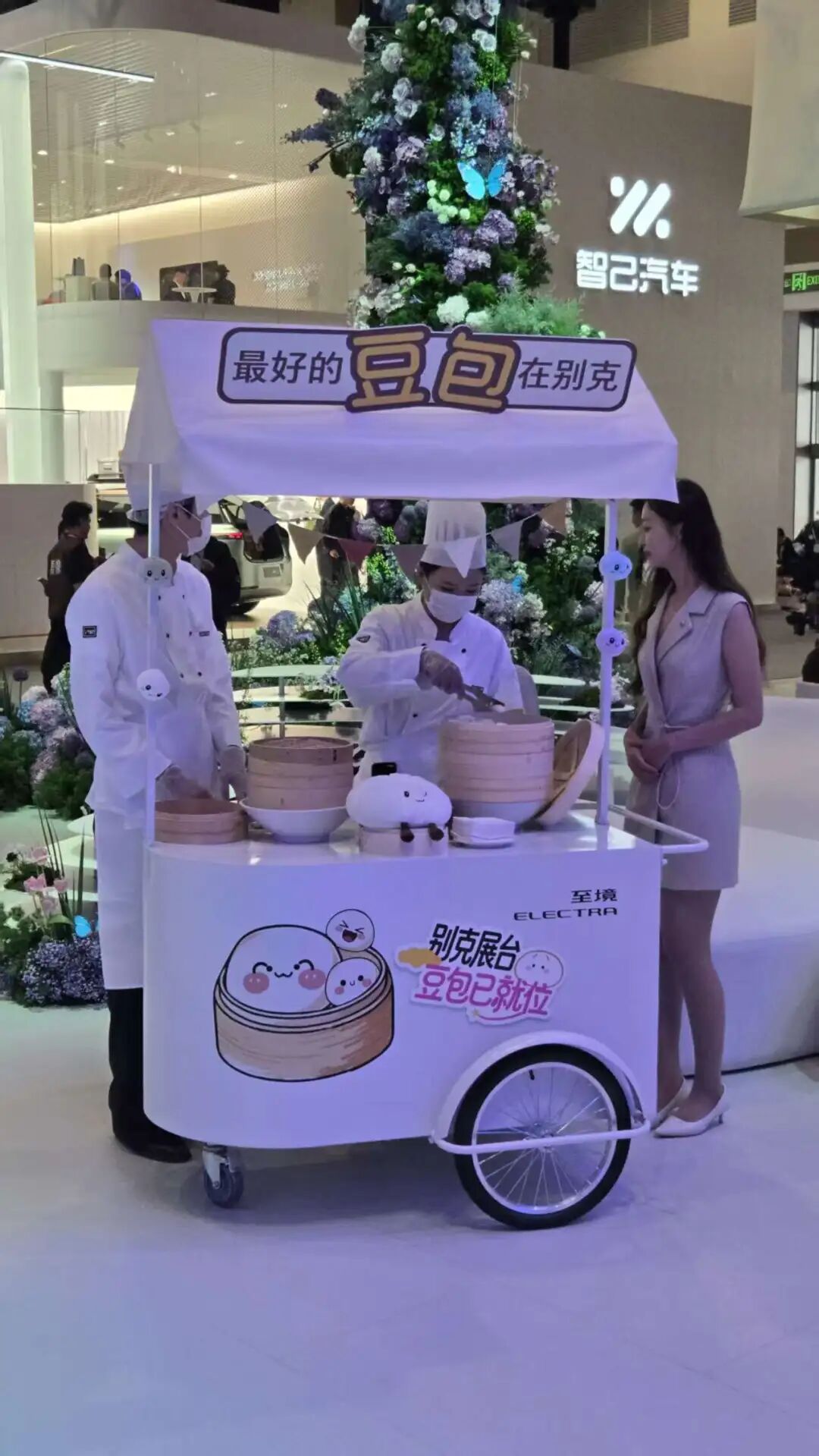
In the cockpit domain, joint venture automakers have adopted a 'take-what-you-need' approach. At this year's auto show, joint venture brand cockpits have upgraded from 'voice assistants' to 'AI Agents,' with Doubao and Tongyi as the two main players. Next-generation AI large models enable full-cabin memory, multimodal recognition, proactive services, and an intelligent closed loop of transactions and travel. At the booth, Buick, 'afraid' consumers might not notice, directly treated visitors to Doubao pastries.
The above evidence indicates that Chinese manufacturers are increasingly occupying the foundational parts of the automotive industry.
For example, in MCUs and SoCs, Bi Lei, a member of the NavInfo Strategic Committee, Senior Vice President, and General Manager of Jetour Technologies, proudly stated, 'This market was previously entirely dominated by international manufacturers, but now we are starting to break through—starting from domestic verification platforms, gradually entering specific projects, with some products already integrated into their global platform systems.'
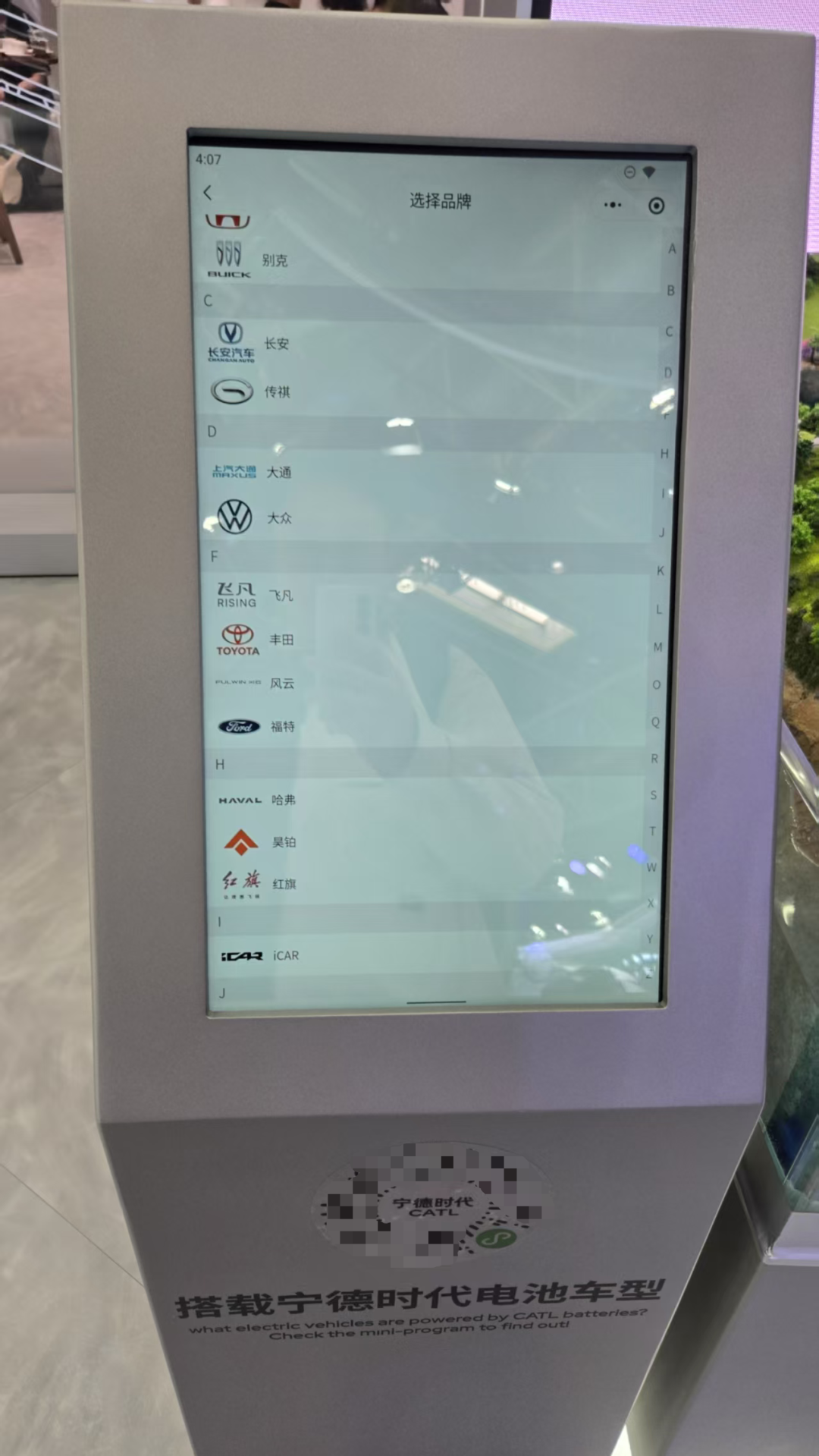
In automotive basic manufacturing, CATL placed a partner directory at the entrance of its exhibition hall, clearly listing all automakers using its batteries. Swiping through the screen, one can see the names of nearly all global automakers, creating a spectacular scene.
During a group interview at the exhibition, Momenta CEO Cao Xudong mentioned the concept of 'reverse joint ventures.' This refers to joint ventures leveraging experiences from the Chinese market to bring intelligence back to their local markets. 'After a reverse joint venture, local markets can enjoy the user experience of Chinese high-tech products and technologies. On the other hand, Chinese technologies empower local enterprises, bringing more development, better job opportunities, increased employment, and improved taxation—a win-win model,' Cao explained.
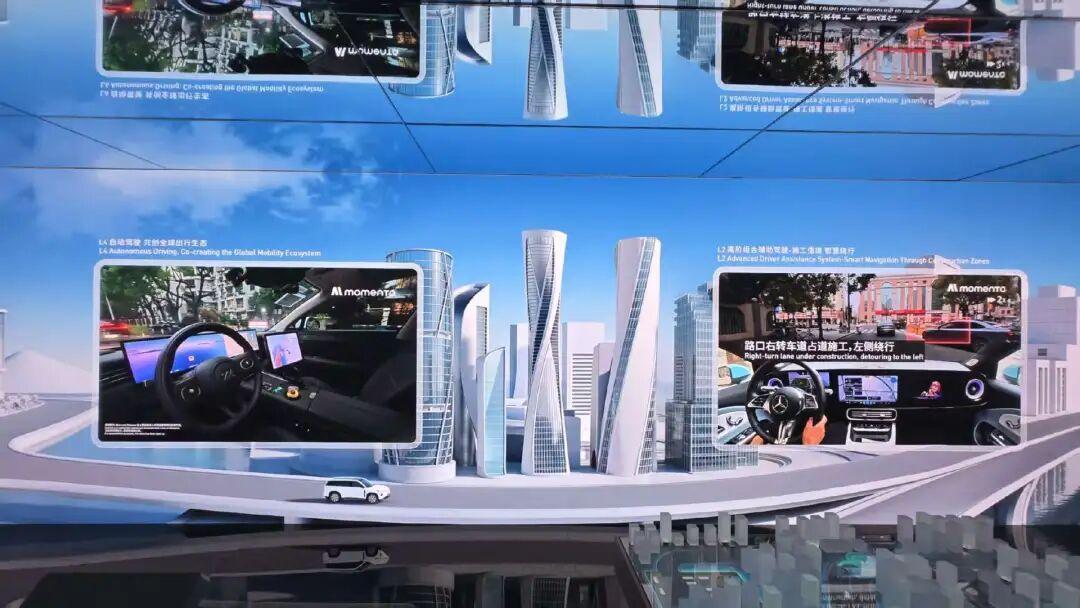
'Reverse joint ventures' represent Chinese intelligent automotive manufacturers expanding globally. Forty years ago, international brands taught China how to build cars. Forty years later, the tables have turned.
Another interesting anecdote: During a lunch break, Guangzhui Intelligence randomly interviewed two foreign visitors. Neither were agents nor buyers but worked in financial services (banking). They had created a platform similar to Autohome, offering one-stop services from car selection to financing. This implies that global consumer demand can now sustain the automotive export supply chain.
Conclusion
The power of the times is overwhelming and unstoppable.
Auto shows in the era of intelligent vehicles are no longer about flashy concept cars and glamorous models. Visitors' attention has shifted back to automotive products themselves. Even automotive intelligence is becoming an element of aesthetic design. For example, the little blue light indicating the activation of intelligent driving has become part of the product's exterior design philosophy.
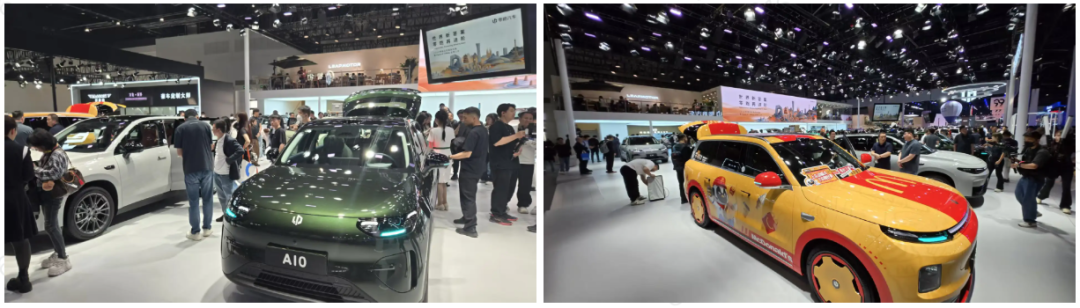
Certainly, auto shows also serve to predict future trends. Flashy concept cars will always exist, showcasing ultimate aerodynamics and luxurious riding experiences. But honestly, are cars without sensor configurations or intelligent cockpits what consumers truly want?
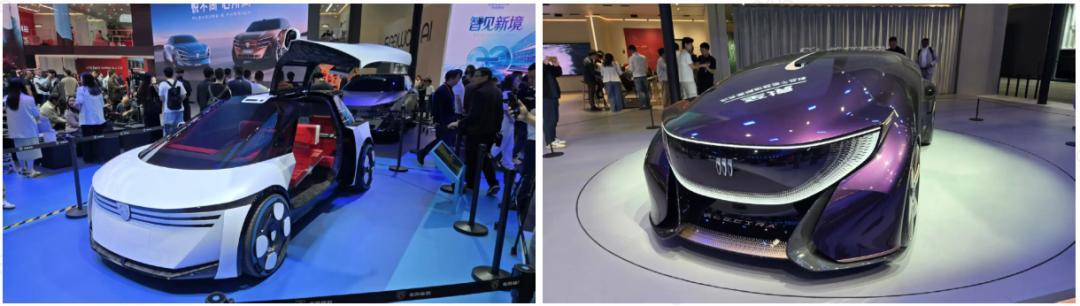
This year, Chinese intelligent automotive manufacturers' 'color-clashing universe' and high-end models consistently named '8 Series' and '9 Series' are forms of imitation aimed at breaking the 'aesthetic symbol barrier' long established by overseas luxury automotive brands.
Perhaps, obsessing over imitation isn't worthwhile. After all, the automotive industry's supply chain is extremely long, and growth for all participants is a lengthy process. Like in a long-distance race, using a follow-the-leader strategy isn't shameful—losing is.
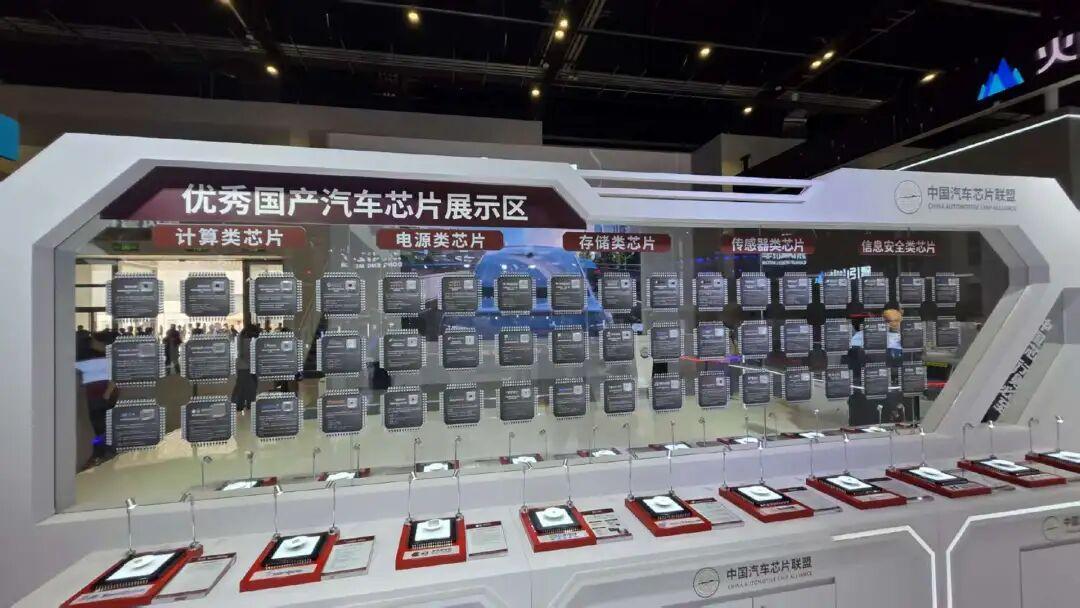
The Chinese Automotive Supply Chain Shines Brightly
But ultimately, the aesthetics of the old era carry its own legacy, just as the era of intelligence should have its own. Some people love the look of cars from 100 years ago, considering it avant-garde. Others cling to their old products as a matter of 'pride,' performing a 'seniority over juniority' act next to suppliers in the era of intelligence.
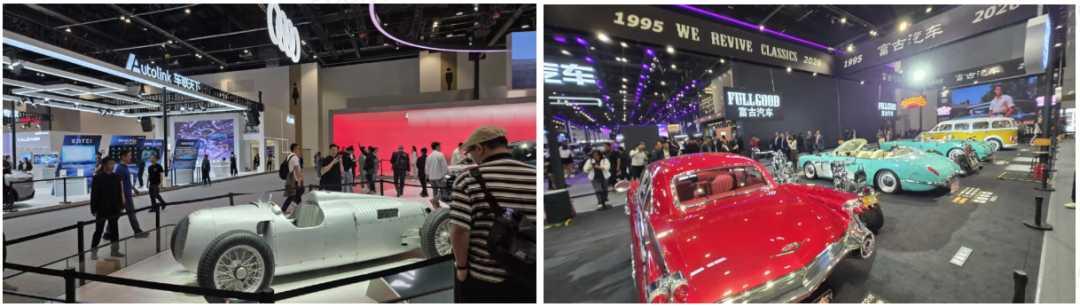
In this scene, one can't help but sigh with emotion , 'The autumn wind blows again, and the world has changed.'
-
Hao Jida, Apple Supply Chain Coil Supplier, Switches Brokerage and Revives IPO Amidst Customer Dependency and Compliance Challenges
-
![]()
Annual Advertising Expenditure of VOYAH with Yudeshui: A Deep Dive
-
![]()
Can Computers, Despite Daily Price Hikes, Still Be a Viable Purchase?
-
![]()
January-June Auto Stocks' 'Resilience Ranking': Geely Alone Posts Gains, Six Plummet Over 40%, One Tumbles 54.5% | Mirror Pro
-
![]()
China’s Public Charging Market: Didi Charging, Teld, and Yunkuai Take the Lead
-
![]()
The First Year of AI-Native Mid-Year Shopping Festival: Technology Reconstructs Human-Product Matching for 618
-
![]()
Micron has released its financial report, showing revenues of $41.5 billion, a 74% increase quarter-over-quarter, with a gross margin of 84.6%. The company provided both short-term and long-term guida
-
![]()
Expert Interpretation of New Policy Combination: Activating the Trillion-Dollar Automotive Aftermarket