From Chips to Safety Guarantee, BYD Completes the 'Last Mile' of Assisted Driving
 06/02 2026
 543
543
Biaonews
After the wave of electrification, the automotive industry has officially entered the intelligent phase of its development.
At a recent strategic launch event titled 'Dare to Lead,' BYD Chairman Wang Chuanfu stated, 'In the first half of electrification, the focus was on batteries; in the second half of intelligence, the focus is on chips.'
This assessment directly points to the core changes in industry competition. Over the past decade, batteries have determined the success of electrification; now, chips and computing power are becoming the key variables that determine the level of automotive intelligence.
At this launch event, BYD unveiled a major move, using chips to fill a critical gap in the intelligent phase.
Xuanji A3: Self-Developed Computing Power Lays the Foundation for the Intelligent Phase
The confidence in intelligent driving ultimately comes down to computing power; and the key to computing power lies in chips.
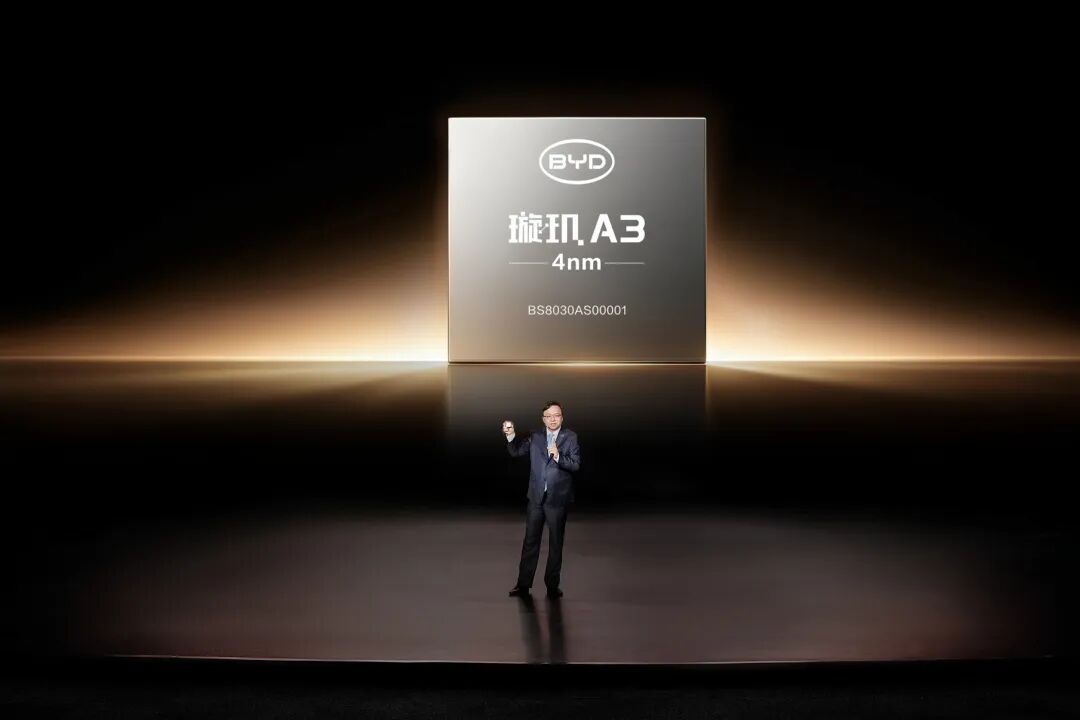
At the event, BYD officially launched China's first 4nm intelligent driving chip, the Xuanji A3, which was independently developed by BYD and has entered mass production.
Wang Chuanfu said, 'The breakthrough in Xuanji A3 technology means we can provide all the chips needed for intelligent vehicles.'
This hardcore breakthrough did not happen overnight.
As early as 2002, BYD established a chip team and began its semiconductor research and development journey. Over the past 24 years, BYD has taken the lead in achieving independent research, development, mass production, and vehicle installation of automotive-grade IGBTs and SiC power chips, winning the National Science and Technology Progress Award twice. Today, BYD's chip R&D team exceeds 7,000 people, with cumulative R&D investment surpassing 100 billion yuan.
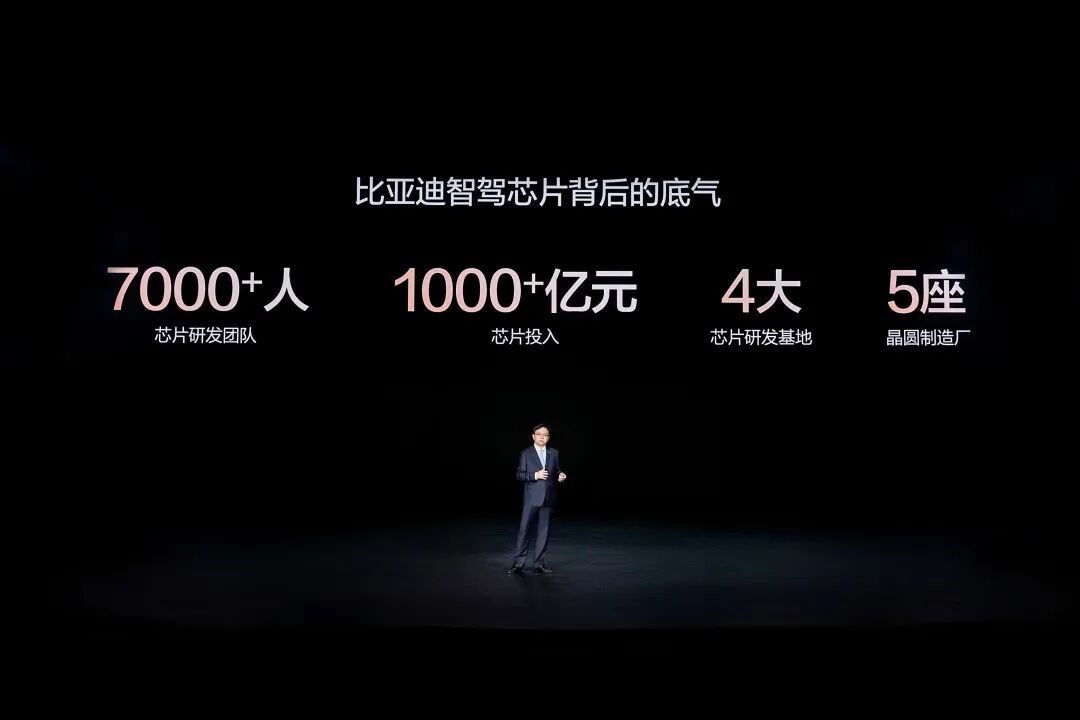
Critically, BYD is the only company globally with a closed-loop capability for the entire automotive-grade chip supply chain.
BYD has four chip R&D bases and five wafer manufacturing plants, covering all seven major steps of the chip manufacturing process: product definition, architecture design, circuit design, layout design, wafer fabrication, packaging, and testing.
Today, BYD has launched over 2,000 chip models, widely used in automotive, consumer electronics, home appliances, industrial control, energy storage, and other scenarios, including everyday devices like smartphones, smartwatches, robotic vacuums, air conditioners, and refrigerators.
Additionally, BYD's chips are not only used in its own vehicles but are also widely supplied externally, currently applied in 46 automotive brands domestically and internationally.
It can be said that many people may not realize they are already 'invisible users' of BYD chips.
And Xuanji A3 is just a natural step forward in this journey.
As a 4nm automotive-grade intelligent driving chip, the Xuanji A3 delivers a total computing power of over 2100 TOPS through the collaboration of three chips, with 20% lower power consumption than its peers, the highest ASIL-D safety rating, deep integration of chips and algorithms, and 100% computing power utilization.
In simple terms, Xuanji A3 brings a 'fundamental upgrade' to the intelligent driving system: strong computing power, low power consumption, and stable safety.
The combined computing power of over 2100 TOPS from the three chips, along with high-speed memory bandwidth, enables the system to simultaneously process massive amounts of sensor data, accurately predicting the movements of pedestrians, non-motorized vehicles, and cut-in vehicles in complex urban driving conditions without any 'delayed reactions.' The 20% reduction in power consumption means less impact on driving range and heat dissipation for the intelligent driving system. The ASIL-D safety redundancy, combined with deep integration of chips and algorithms and 100% computing power utilization, enables the system to make decisive and stable decisions in emergency situations, avoiding sudden or erroneous braking.
Xuanji A3 solves the problem of 'whether it can run,' and the next step is to ensure 'everyone can use it with confidence.'
Intelligent Driving for All: Ensuring User Safety
While solidifying its computing power foundation and tackling fundamental technological challenges, BYD has always believed that 'good technology should not be hidden' and is committed to promoting the widespread adoption of intelligent driving for all.
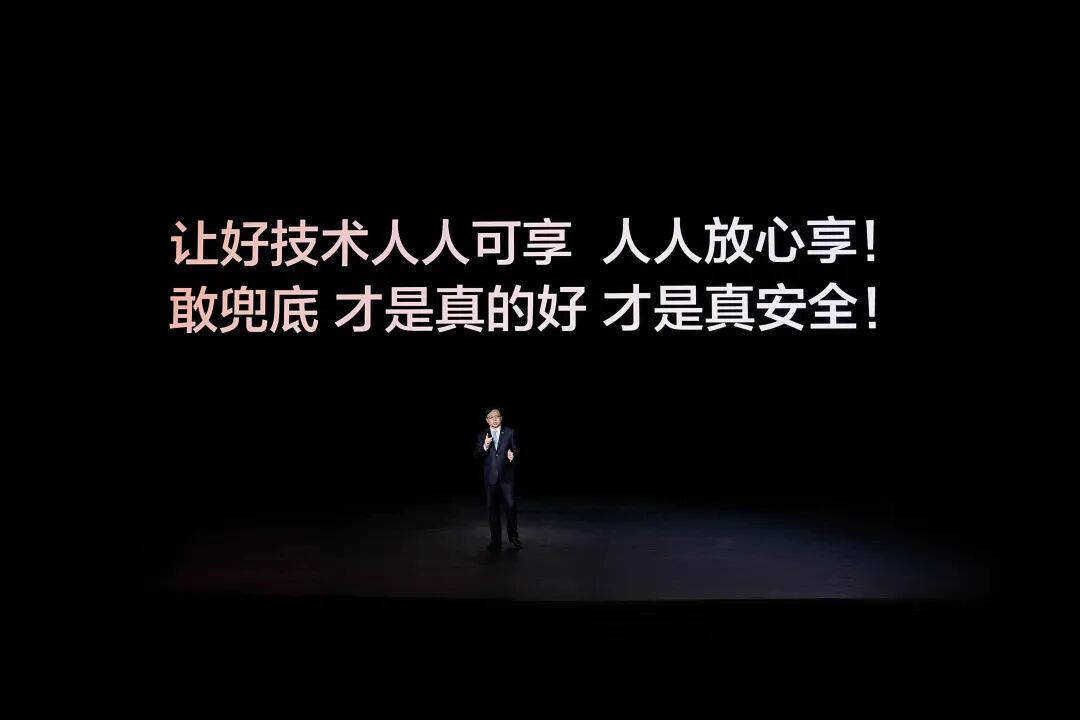
However, for ordinary users, no matter how impressive the specifications are, nothing beats the assurance that 'someone has your back in case of trouble.'
BYD announced that it would take the lead in committing to a safety guarantee for urban navigation. New users of the Divine Eye A and B systems, starting from the vehicle pickup date, and existing owners who upgrade to Divine Eye 5.0 via OTA, will enjoy a one-year urban navigation safety guarantee.
The courage to popularize technology stems from the willingness to take responsibility. The safety guarantee is not a marketing gimmick but a reflection of BYD's full control over the entire assisted driving supply chain.
This also addresses a common pain point in the industry. For a long time, the widespread adoption of intelligent driving technology has been hindered by 'trust issues.' Users are less concerned about the system's capabilities and more worried about who will take responsibility if something goes wrong.
BYD's safety guarantee policy opens up a new approach for the industry. The democratization of technology should not stop at making configurations more accessible; it should also transfer safety responsibilities to users. This is the key step to truly bringing intelligent driving to the masses.
The BYD Model: Pointing the Way Forward for the Intelligent Phase
Looking ahead to the intelligent phase of automotive development, BYD is breaking free from industry competition and has clearly set three core goals: achieving 'zero traffic accidents,' making assisted driving a 'super driver,' and turning AI into a 'super secretary.' BYD will continue to invest over 100 billion yuan in R&D to drive the realization of these goals. 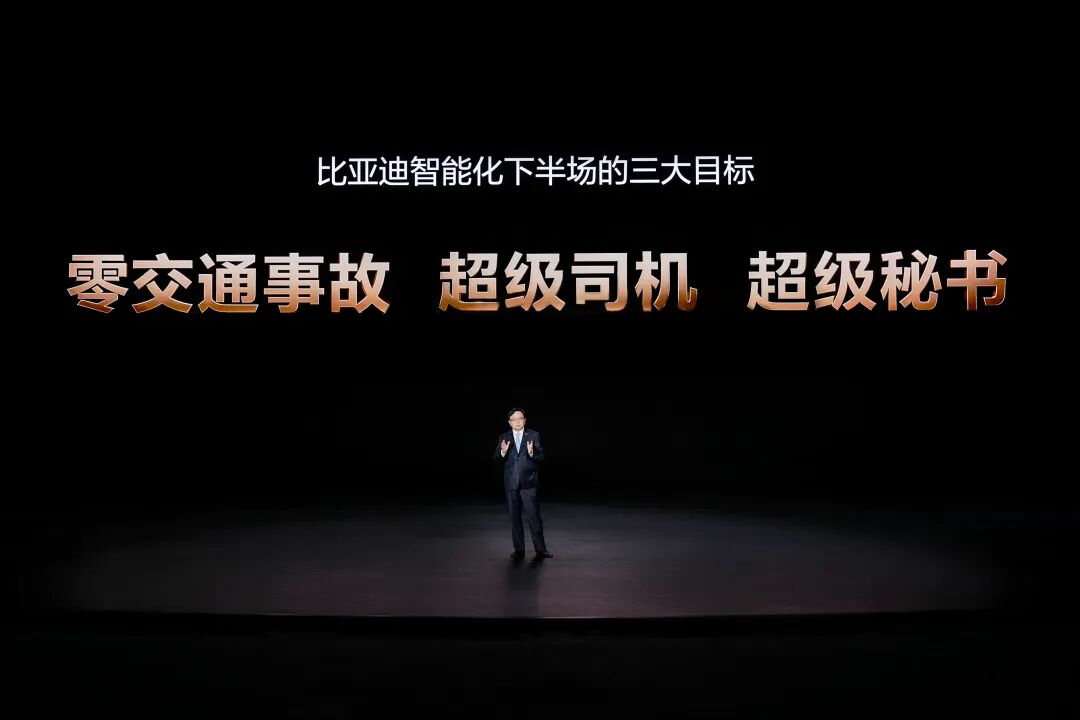
For users, a 'super driver' reduces their burden, a 'super secretary' enhances their experience, but 'zero traffic accidents' is the ultimate goal of BYD's technological layout .
From the Blade Battery to the CTB body structure, many of BYD's past core technologies were essentially designed to prevent risks before accidents occur. Now, BYD positions intelligent driving as the ultimate solution for achieving 'zero accidents,' using proactive intelligence to prevent accidents at their source and compensating for human shortcomings with systems, pointing the way forward for the intelligent phase.
Summary
BYD's model of 'bottom-up self-research + technological democratization + safety guarantee' sets an example for the industry. It powerfully demonstrates that technological self-reliance, mass accessibility, and safety responsibility can perfectly coexist and develop together.
Industry competition is shifting from comparing who stacks more hardware to evaluating who has deeper technology, who provides genuine safety, and who takes real responsibility.
From the Xuanji A3 achieving a breakthrough in bottom-layer computing power to the safety guarantee shouldering industry responsibility, BYD has established a complete closed loop for chips, assisted driving, and future advanced intelligent driving in the L3/L4 era through full-chain self-research capabilities, paving a more pragmatic path for the entire intelligent phase.
-
![]()
Users’ Willingness to Pay for Office Intelligent Agents Is Taking Shape, with Business Model Validation and Experience Optimization as Key Challenges for the Next Phase
-
![]()
AI-Driven Shopping Frenzy Unfolds at This Year's 618 Festival
-
![]()
AI-Powered Photo Editing is All the Rage! Is GPT Image 2 Being Overused, Leading to a Surge in ‘Photo Deception’?
-
![]()
Guide to Avoiding Pitfalls When Buying a TV
-
![]()
AI Cloud Midfield Battle: Alibaba Bets on Scale, Volcano Showcases Traffic, Baidu Deepens Moat
-
![]()
From Chips to Safety Guarantee, BYD Completes the 'Last Mile' of Assisted Driving
-
![]()
The Underestimated 'Cash Cow' and Its Transformation Potential: Unveiling the Long-Term Value of Autohome
-
![]()
A Staggering 2.3 Billion Yuan Loss: What's Ailing Li Auto?