If You Can’t Drive a Ferrari Yourself, What’s the Point of Owning One?
 06/08 2026
 401
401
Some critics argue that Ferrari has completely lost its marbles.
Amid the fierce competition in autonomous driving technology, one company has made its stance abundantly clear: it refuses to participate.
"Why buy a Ferrari if the owner can’t take the wheel?" Ferrari CEO Benedetto Vigna has explicitly ruled out the possibility of introducing a fully autonomous Ferrari.
The message is unmistakable: Ferrari rejects full autonomous driving, even stating that "L3 autonomous driving has no place in Ferrari’s product roadmap."
Industry insiders see this stance as inherently contradictory for Ferrari.
Ferrari’s Contradiction
The contradiction lies in Ferrari's attempt to "have it both ways."
Not long ago, Ferrari officially unveiled its first all-electric convertible, the Ferrari Luce—Italian for "light."
This electric vehicle, a first in Ferrari’s century-long history, was co-designed by former Apple design guru Jonathan Ive. It’s a four-door, five-seat all-electric supercar equipped with a four-motor all-wheel-drive system, capable of accelerating from 0 to 100 km/h in just 2.5 seconds.
Ferrari doesn’t simply market the Luce as "an electric car with rapid acceleration." Fulgenzio, Ferrari’s Chief Product Development Director, emphasized that the Luce is "the most comfortable Ferrari ever built."
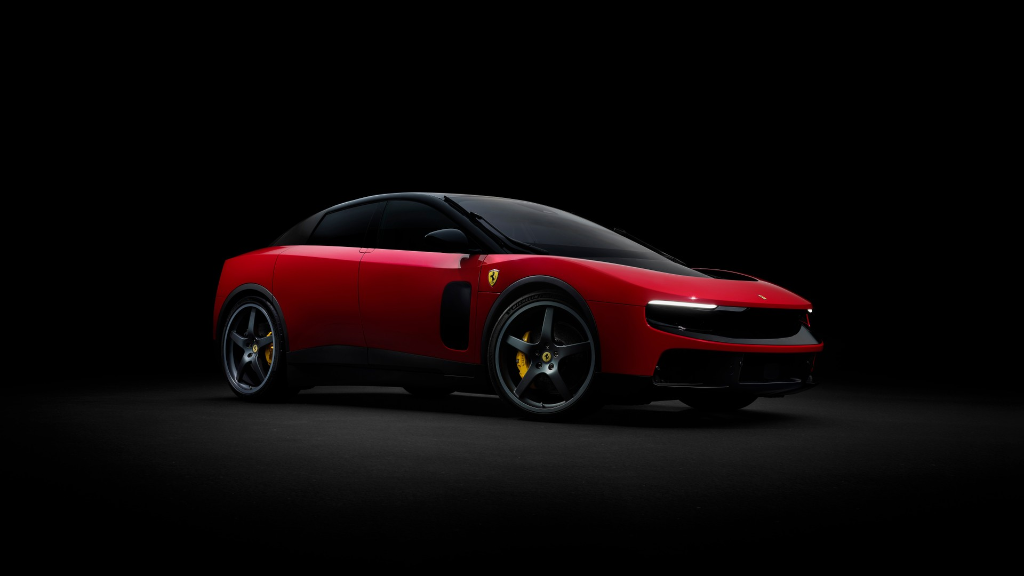
At its launch event, Ferrari confirmed that the Luce would start at €550,000 in Italy, roughly equivalent to 4.35 million RMB. Pope Francis was invited to view the new car, and upon seeing its sleek, minimalist design, he posed a thought-provoking question to Ferrari: "Is this the first four-door Ferrari?"
Visually, this new model innovatively breaks away from Ferrari’s traditional design language, becoming only the second four-door model in its lineup after the Purosangue. Reactions within the industry have been mixed. Some dismiss it as a "rebadged Prius," while others claim its appearance falls "somewhere between the electric version of the Honda Accord and the Tesla Model 3," adding that "Ferrari’s new strategy is difficult to comprehend."
Pranksters went as far as replacing Ferrari’s iconic Prancing Horse logo with Honda’s H emblem—a fitting jest, some might say. Former Chairman Montezemolo was more direct in his criticism: "I hope the Prancing Horse logo is removed from the Luce. We risk destroying a legend."
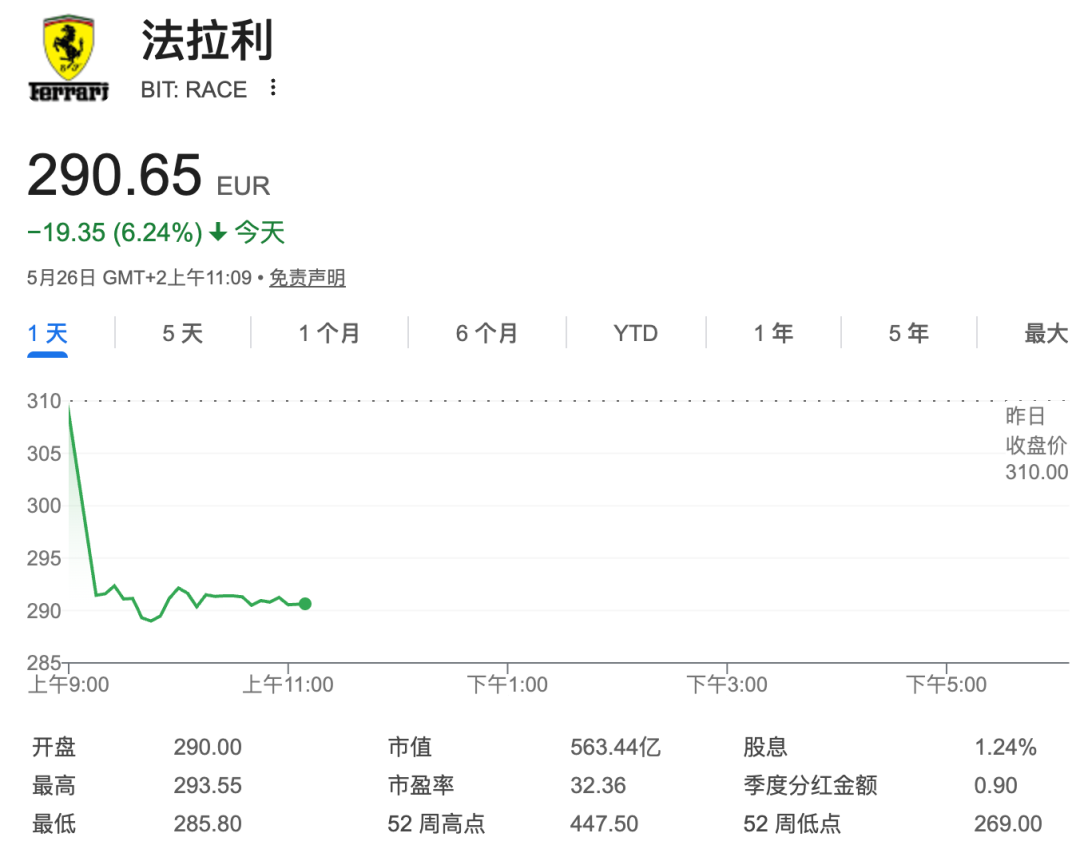
Upon its release, Ferrari’s stock price dropped by 8% on the same day, with its market value shrinking by over $5 billion—equivalent to the market value of approximately 9,091 Luce models. Some say Ferrari has completely lost its marbles.
From a product perspective, the controversy surrounding the Luce isn’t merely a fluctuation in public opinion over a new model. Rather, it reflects—and poses a challenge to—the "brand perception dislocation period" that traditional ultra-luxury brands face during their electrification transition.
Regardless of industry sentiment, however, the Luce remains a pivotal model in Ferrari’s electrification journey. Industry insiders interpret it this way: "The Ferrari Luce serves as both a beacon for Ferrari’s electrification efforts and a farewell to the traditional internal combustion engine era."
Ferrari disagrees with this assessment.
Ferrari insists that the Luce isn’t merely a powertrain swap but the result of its strategy to develop three powertrain architectures in parallel: all-electric, hybrid, and internal combustion engine. Electrification, in Ferrari’s view, is a new avenue to push performance boundaries—not a replacement for internal combustion engines.
Expanding into new frontiers is understandable. After all, in the electric era, "Ferrari must also embrace the electric future." "Electrification is the inevitable trend, and Ferrari needs to act. It must define what luxury electrification looks like before anyone else does," said Munoz, a former automotive industry analyst at Jato, when discussing Ferrari’s first all-electric model.
Ferrari aims to shape the definition of ultra-luxury electric vehicles. However, its foray into electrification has its limits.
It’s widely acknowledged that electrification and intelligence are inseparable—one represents the first half of the competition, and the other, the second half. Intelligent driving and integrated cockpits are areas where every participant is striving for excellence.
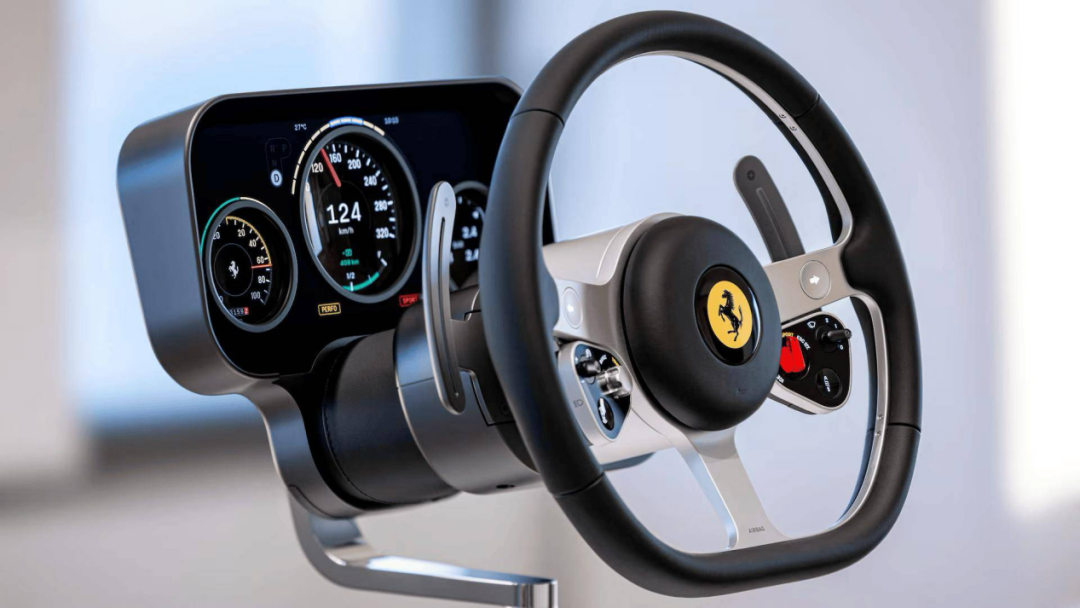
Yet Ferrari has chosen to keep these two domains distinct. In an interview with Australian media Drive, Vigna promised that every Ferrari model would retain a steering wheel, allowing owners to savor the act of driving rather than entrusting everything to a computer.
Ferrari has stated that L3 and higher levels of autonomous driving have no place in its product roadmap. Nevertheless, the company will continue to develop technologies such as adaptive cruise control and lane departure warning—which, by technical definition, also fall under the umbrella of autonomous driving.
"We will not build fully autonomous vehicles—that is crystal clear. We want humans, not computer chips, to experience the thrill. We want a steering wheel in the car, with a man or a woman behind it. Otherwise, why buy a Ferrari?"
This question isn’t entirely unreasonable.
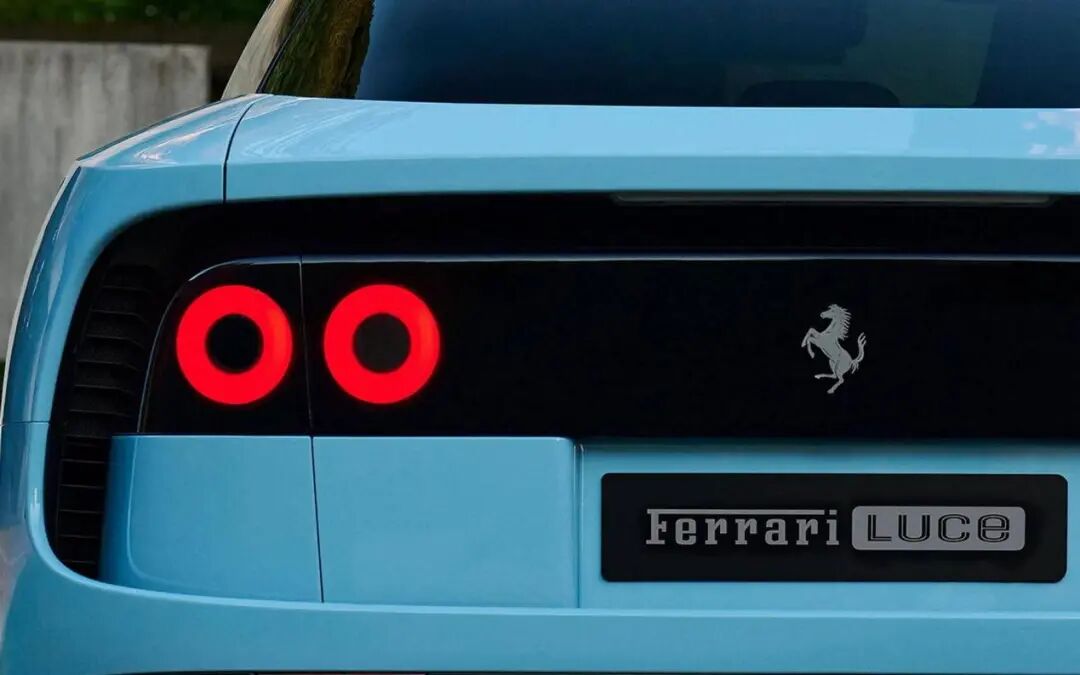
However, this stance contradicts the purpose of launching the Luce, its first all-electric convertible, which is "to shape the definition of ultra-luxury electric vehicles." After all, the industry consensus is that in the era of integrated cockpits, electric vehicles cannot succeed without intelligent driving capabilities.
In the electric era, sub-2-second 0-100 km/h acceleration is no longer exclusive to supercars—or Ferrari.
A "Counter-Trend Move"
Of course, this contradiction of "wanting it both ways" isn’t arbitrary. Behind this decision lies a keen insight into the supercar market.
According to data, the global average age of Ferrari owners is just 47, with 30% under the age of 35. Their primary motivation for purchasing a Ferrari is to experience the ultimate driving pleasure. Sales data supports this: In 2025, Ferrari delivered 13,663 vehicles, with 80% being hybrid models and all-electric vehicles accounting for less than 5%.
Thus, Benedetto Vigna’s question—"Why buy a Ferrari if the owner can’t drive it themselves?"—aligns perfectly with Ferrari’s current owner demographic. Even as an all-electric model, the Luce will preserve the "iconic Ferrari driving experience," ensuring that electrification doesn’t come at the expense of handling pleasure.
However, the Luce’s exterior design and all-electric layout fundamentally diverge from Ferrari’s 70-year brand heritage. "How Ferrari maintains its identity" has become a pressing dilemma.
Ferrari attempts to attract new consumer groups with the Luce, aiming to restructure not just its powertrain but its user base as well. However, this strategy amplifies the sense of disconnection with traditional users during execution.
Italian Deputy Prime Minister and Minister of Transport Matteo Salvini commented on social media, "This doesn’t look like a Ferrari at all. Is this supposed to be 'innovation'? I wonder what Enzo Ferrari would say."
These criticisms and questions point to an essential issue: When powertrain forms, product morphologies, and design languages change, how will Ferrari redefine "Ferrari"? Times are changing, leaving Ferrari at a crossroads—should it uphold the belief system established during Montezemolo’s era, or redefine the boundaries of the "Prancing Horse"?
Undoubtedly, with the launch of the Luce, Ferrari has chosen the latter path.
"The Luce is the model that deviates the most from the brand’s core philosophy to date," warned Antonio Dick, an analyst at Europe’s Oddeo Bank. If the Luce underperforms in the market, Ferrari risks damaging its brand value. Reuters has stated that Ferrari’s challenge is to maintain its distinctiveness while leveraging new technologies.
Founder Enzo Ferrari’s famous quote, "I don’t sell cars; I sell dreams," encapsulates Ferrari’s brand philosophy. Now, with its electric vehicles lacking V12 engines, is Ferrari still Ferrari? Can it still create dreams?
After all, technology can be updated, but brand emotional value cannot be migrated simultaneously. Additionally, the trend brought by electric platforms is component standardization and technological uniformity. As Lamborghini CEO Winkelmann put it, "Sports car enthusiasts miss the roar of internal combustion engines and have not formed an emotional connection with electric vehicles. Market acceptance of all-electric supercars is approaching zero."
How much of Ferrari’s scarcity value remains after electrification? Unknown.
At a time when all ultra-luxury brands are retreating from the all-electric race, Ferrari has chosen to charge ahead. For global ultra-luxury brands, this is a "counter-trend move."
Currently, the electrification transition of ultra-luxury brands can be described as a collective "brake-slamming." Lamborghini has made it clear that its target customer base’s acceptance of all-electric supercars is significantly lower than expected. Porsche has re-emphasized the importance of fuel and hybrid models, while Aston Martin has stated that ultra-luxury users remain hesitant about all-electric transitions.
Many ultra-luxury automakers have temporarily halted or shelved all-electric mass-production projects, with early aggressive electrification plans largely stalled. In fact, Ferrari’s previous plans were also quite ambitious.
On June 16, 2022, Ferrari announced an ambitious plan to launch 15 new models within five years, aiming for electric and hybrid models to account for 80% of total sales by 2030, with all-electric models making up 40%.
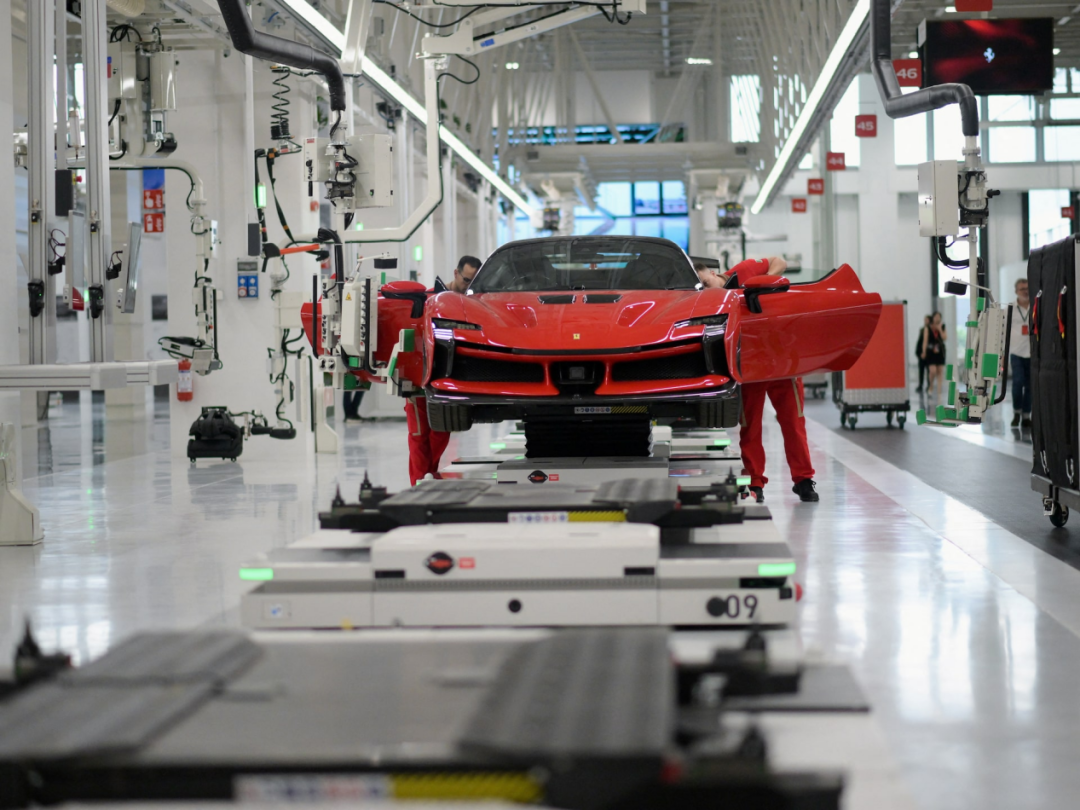
In 2024, Ferrari invested approximately $230 million to build a new factory at its Maranello headquarters in Italy, enabling simultaneous production of all-electric, hybrid, and traditional fuel vehicles at the same site.
To date, the first all-electric model has just been launched. The birth process of the Luce itself reflects the anxiety and contradictions of ultra-luxury brands in the electric era, seeking a balance between brand value inheritance and technological disruption.
The Luce’s arrival is not at an opportune time. Competitors are collectively retreating, demand in the ultra-luxury core market is weak, and Ferrari’s financial data is also declining.
Amid a "multi-pressure" time window, the controversy surrounding the Luce has been amplified. Additionally, the industry is concerned about Ferrari’s "counter-trend charge," as electrification is a costly transition that could ultimately undermine the high-profit "Ferrari model."
Now, Ferrari, which explicitly excludes L3 autonomous driving, is also making a "counter-trend charge." Whether it can "figure out electric vehicles" has become the first challenge. As for the industry-wide questions behind the Luce controversy, no single model can provide all the answers.
Note: Some images are sourced from the internet. If there is any infringement, please contact us for removal.
-END-

-
![]()
When European Factories Face Idle Capacity, Chinese Brands Offer a ‘Traditional Chinese Remedy’
-
![]()
SEER Robotics Passes IPO Hearing: How Valuable Is the 'First Robot Brain Stock?'
-
![]()
5 Years, 170 Billion Yuan Wealth Vanishes: Where Did Wei Jianjun Go Wrong?
-
![]()
What Exactly Has Changed with the AI That Automatically Opens a Browser to Search Xiaohongshu?
-
![]()
Over 3,000 Heat-Related Deaths Daily, Yet India Imposes Ban on Chinese Air Conditioner Imports: Unraveling the Underlying Motives
-
![]()
Second-Hand Car Prices Plummet: Are Gasoline Vehicles on the Verge of Collapse?
-
![]()
800V vs. 48V: Which Reigns Supreme? Online Clash Between Executives Intensifies Debate Over Li Auto and NIO's Suspension Systems | MIRROR Pro
-
![]()
Anthropic Files, MiniMax Rushes for A-Share Listing, but What I Really Want to Discuss is the M3 Model