Xiaopeng Has No Need to Rush Against the Clock!
 07/03 2026
 430
430
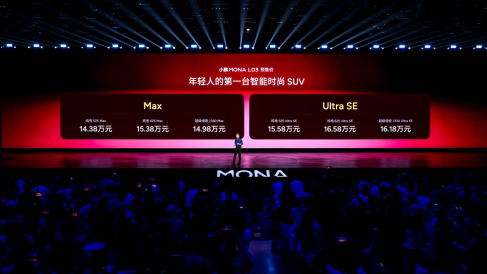
On July 2, Xiaopeng officially commenced pre-sales for the MONA L03. According to official information, display vehicles for the L03 had already been distributed to 333 stores across 49 cities nationwide in anticipation of the pre-sale launch. The vehicle had only been registered with the Ministry of Industry and Information Technology (MIIT) three months prior to the pre-sale announcement.
Such a swift rollout immediately gives the impression that Xiaopeng is in a hurry!
Of course, this sense of urgency is understandable!
As a flagship high-volume model for the brand, the MONA M03 accounted for over 40% of Xiaopeng's total annual sales in 2025, serving as the backbone of its deliveries. However, due to intense market competition, sales experienced volatility in the first half of the year, prompting Xiaopeng to seek a second growth curve beyond sedans. Additionally, in the highly competitive and rapidly expanding 100,000-150,000 RMB SUV segment, Xiaopeng has long been absent. Facing this sizable and fast-growing market, Xiaopeng urgently needs to leverage a mature product to swiftly capture consumer attention, build brand reputation, and lay a solid foundation for subsequent technological and product advancements.
In fact, as a dark horse in this year's new energy vehicle (NEV) market, Xiaopeng has demonstrated increasing strategic acumen in the capital markets. Particularly with sustained business performance improvements and simultaneous growth in both volume and profitability in the first half of the year, Xiaopeng has secured a favorable competitive window for its second-half development.
However, compared to the current rapid market rollout, an excessive focus on speed risks cannibalizing sales from existing flagship models and creating delivery bottlenecks. Any resulting negative public sentiment could tarnish Xiaopeng's hard-earned reputation. If Xiaopeng can concentrate on strengthening its internal systems and implementing a swift yet high-quality rollout before the product launch, the L03's value will fully shine in its respective market segment.
Editor | Li Jiaqi
Image Source | Internet
1 MONA L03 Launch: Xiaopeng Doesn't Need to Rush!
Since its first appearance in the MIIT's filing catalog on April 9 of this year, the MONA L03 has gradually unveiled basic information such as dimensions and powertrain details, with the official pre-sale process following closely. At that time, it was already reported that the new vehicle would be delivered in July (this month). A mere three-month preparation period means the product moved directly from approval to sales without any buffer, allowing the L03 to set a record for Xiaopeng's fastest model rollout to date.
Typically, the timeline from MIIT filing to delivery for a new vehicle ranges from six months to over a year. During this period, manufacturers usually conduct "last-mile" testing and validation, adjust final component specifications based on road tests, and proceed with small-batch trial production before deploying to dealerships and preparing for sales. The L03's accelerated timeline suggests that durability and "three highs" (high altitude, high temperature, high cold) testing were completed before filing, while small-batch trial production overlapped with mass production preparation—scaling up and optimizing simultaneously. This approach reflects strong internal confidence in the vehicle's data.
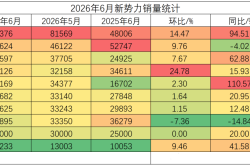
In the first half of the year, Xiaopeng delivered a cumulative total of 165,977 units, a significant increase of 40,126 units year-on-year, representing a growth rate of 15.9%. Combined with the official financial report for the first quarter of this year, Xiaopeng held cash and short-term investments totaling 42.09 billion RMB as of the end of March, with a quarterly automotive gross margin maintained at 12.1% and an overall group gross margin rising to 20.6%. Clearly, from both product scale and financial health perspectives, Xiaopeng is not yet at a stage where it must rush to launch.
Furthermore, from a market fundamental perspective, the 150,000 RMB-class new energy home SUV segment offers ample capacity and a long growth cycle, without the risk of "missing the window and losing the market entirely."
According to CPCA data for the first quarter of 2026, new energy SUVs priced between 100,000-150,000 RMB accounted for 35% of the total domestic new energy SUV market. Over the past three years, this segment has maintained a compound annual growth rate of 76%. In the first quarter of this year alone, cumulative sales in this sub-segment exceeded 380,000 units, with models like the Leapmotor C10, Aion i60 extended-range version, and Yuan PLUS consistently achieving monthly sales of over 10,000 units. These figures demonstrate sustained demand for upgrades and replacements in this market.
From a product competitiveness standpoint, the Xiaopeng L03's technical configuration combination faces almost no direct competitors in this sub-market, leaving ample room for refinement and optimization.
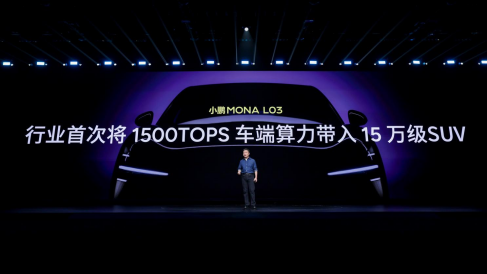
The L03 is positioned as a coupe SUV with a 2,850mm wheelbase, balancing family use and sportiness. It is currently the only product in its price range offering both pure electric and long-range extended-range powertrains. Notably, it comes standard with Xiaopeng's self-developed VLA 2.0 pure vision navigation system, while higher trims feature dual Turing AI chips with up to 1,500 TOPS of computing power and support for 800V high-voltage fast charging. Xiaopeng has established a clear technological lead in fast-charging speed and intelligent driving accessibility within its class.
2 Racing Against Time Isn't Always Beneficial!
From a strategic corporate perspective and market differentiation competition trends, Xiaopeng currently has significant opportunities to achieve immediate volume upon launch in the compact SUV sub-market. However, rushing at this specific juncture presents both advantages and risks.
According to incomplete statistics, over 18 mainstream products compete in the 150,000 RMB compact SUV segment, with 11 models consistently achieving monthly sales of over 10,000 units. Major automakers including BYD, Geely, Leapmotor, and Deepal have all entered this space. The highly crowded market has elevated users' prioritization of vehicles as utilitarian tools at this price point. To excel in youthful, intelligent, and differentiated offerings, market reputation and cultivation are essential.
While both the M03 and L03 serve as trendy, personalized mobility options, they target very different commuting demographics. The M03 focuses on single or double occupancy among young commuters, with users more willing to pay for intelligence and distinctive styling. In contrast, as an SUV, the L03 naturally attracts practical-minded families of three. Relying solely on intelligent differentiation will struggle to quickly establish recognition. Furthermore, the M03 initially filled a market void for "affordable intelligent home-use pure electric sedans," offering unique differentiation within its class. The L03, however, faces a far more crowded segment, meaning its market entry must emphasize not just intelligent individuality but also stability.
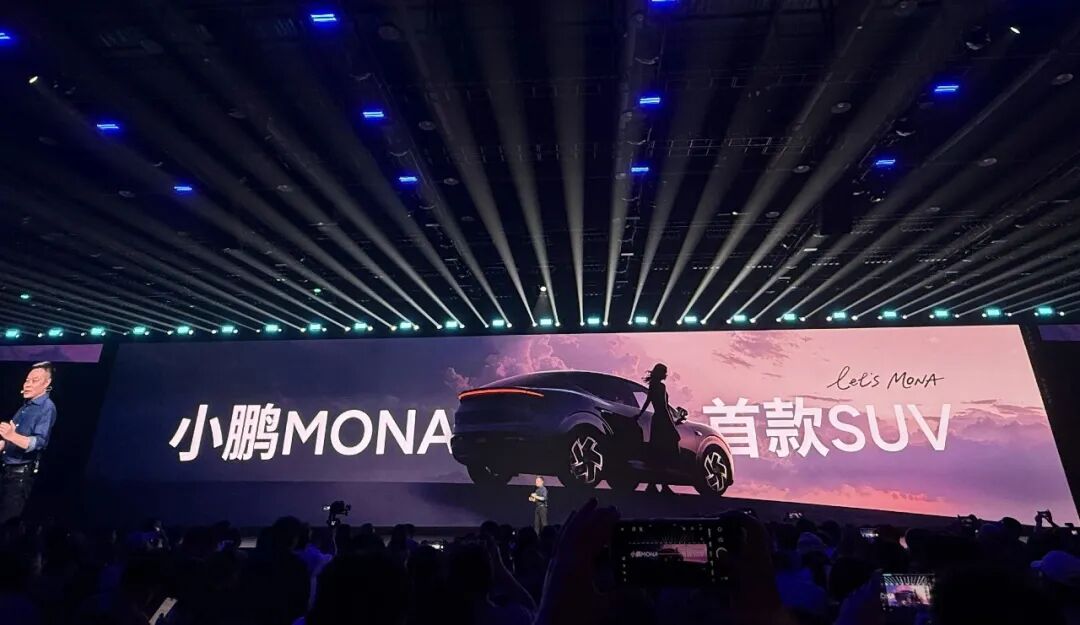
Notably, the L03 marks Xiaopeng's first application of extended-range technology in its high-volume mainstream market. Manufacturing under dual powertrain strategies requires entirely new coordination for the extended-range system, thermal management, and supporting components, significantly increasing supply chain pressure. Home-use segment consumers are extremely pragmatic—any minor NVH noise, fuel consumption deviations when battery depleted, or assembly issues will quickly spread, carrying far greater risks than iterations for premium models.
Following the GX's launch, sales exploded beyond supply capacity, with factory output and supply chain scheduling already operating at full load. Terminal dealerships and after-sales systems are still adapting to pure electric models, while after-sales infrastructure, technician training, and processes for extended-range vehicles require time for refinement.
Consider the Leapmotor C10's rushed launch, which compressed durability testing cycles and later faced over a thousand quality control complaints. The initial sales momentum was ultimately undermined by reputational damage.
3 Xiaopeng's Approach to Car Manufacturing: Prioritize Substance Over Appearance!
Expanding the product matrix and entering the extended-range SUV segment represent strategic imperatives for Xiaopeng at this stage, but expansion does not equate to rushing. Before chasing short-term launch deadlines, Xiaopeng must prioritize three core tasks:
First, Xiaopeng must reshape market perceptions by clarifying the positioning differences between the L03 and M03. As models built on the same platform, outsiders may easily view the L03 as an SUV version or even a replacement for the M03. However, anyone familiar with both products recognizes significant differences in powertrain architecture, usage scenarios, and target demographics.
Especially regarding the powertrain, unlike the M03, the L03 was developed from the outset to accommodate both pure electric and extended-range systems. The pure electric version targets urban commuting within a 50km single-trip range, while the extended-range version comes standard with a 1.5L high-efficiency range extender, offering a CLTC combined range exceeding 1,300km—specifically designed for long-distance, multi-load scenarios such as cross-province travel, family trips, and mountainous routes.
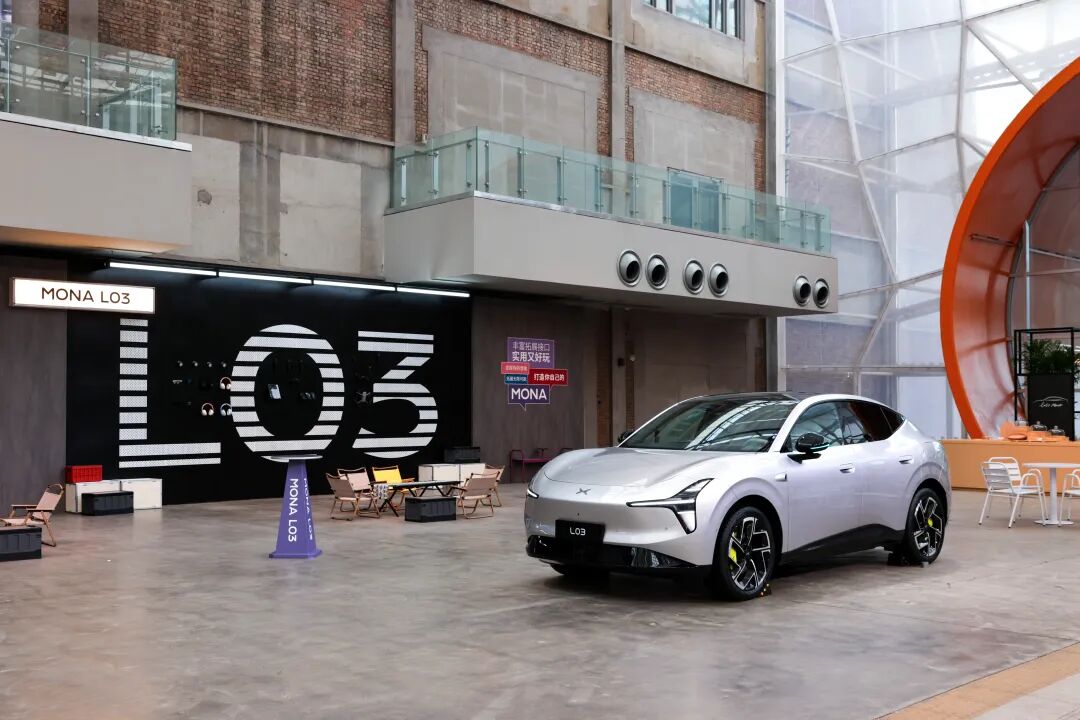
Building on product excellence and system maturity, Xiaopeng should be bolder in its product communications. On one hand, it should emphasize the L03's potential to disrupt the compact SUV market through the tagline "Young People's First SUV." On the other hand, it must clearly articulate the differences between the two models: if the M03 represents a high-value-for-money pure electric coupe for young people—a "smart toy" for urban mobility—then the L03 combines personalized expression with multi-scenario adaptability, serving as both a "toy and a tool."
Second, Xiaopeng must solidify its entry-level extended-range technology adaptation capabilities and convey mature, reliable three-electric system (battery, motor, controller) expertise to the SUV market. As the first SUV in the MONA series, the L03 represents not just a high-volume model but also a critical carrier for establishing Xiaopeng's complete extended-range verification system.
Internally, this requires extending whole-vehicle durability testing across diverse conditions, including northern cold climates, southwestern mountainous regions, and southern high-temperature areas. Key pain points for home-use consumers—such as range extender start-stop noise, fuel consumption when battery depleted, and highway vibration—must be optimized through multiple iterations before final mass production calibration. Externally, Xiaopeng should transparently release extended-range system testing data, durability mileage, and extreme environment performance results to proactively address consumer concerns about the reliability of Xiaopeng's entry-level extended-range technology.
Third, Xiaopeng must swiftly organize its backend service rhythm and channel capabilities. Since July 1, MONA L03 display vehicles have begun arriving at 333 dealerships across 49 cities nationwide, demonstrating rapid deployment. However, the true test of channel strength lies in whether terminals can handle the service complexity brought by this new category once extended-range models enter the delivery phase.
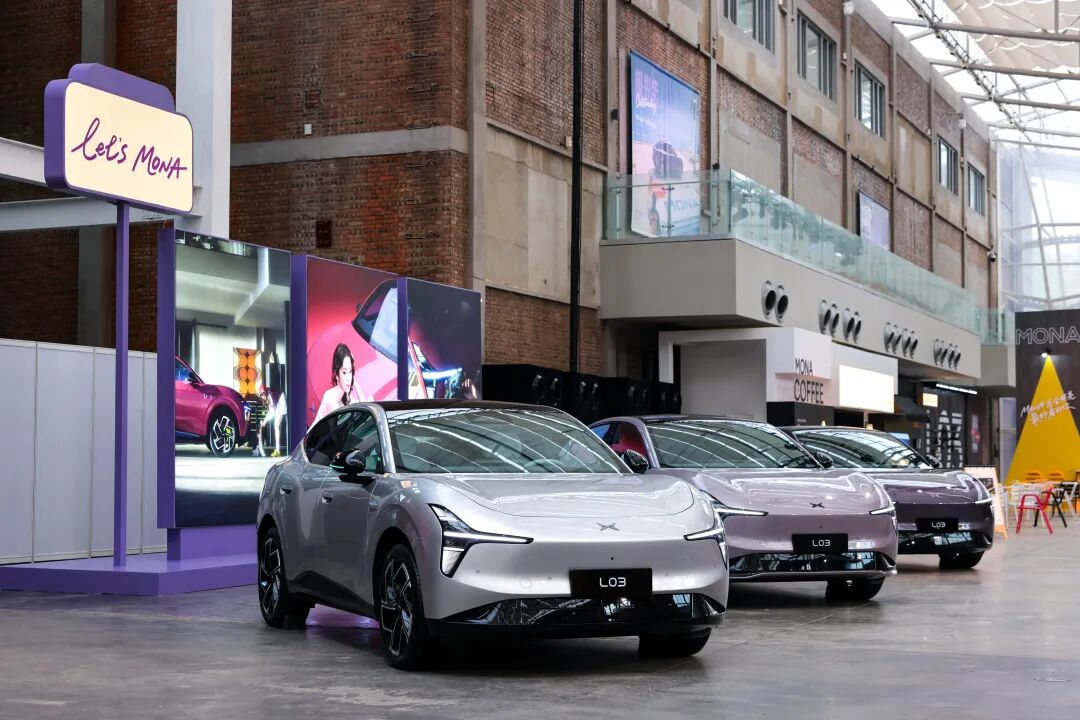
To address this, Xiaopeng should implement specialized training for dealership sales teams, establishing standardized explanation systems around extended-range system principles, long-distance battery life (range) scenarios, and multi-occupant home-use needs—avoiding sales teams using M03 pure electric sedan scripts for L03 introductions. Simultaneously, Xiaopeng should expand after-sales service capacity in second- and third-tier cities, add extended-range-specific maintenance equipment, and establish long-distance roadside assistance networks.
For NEV manufacturers, complete product strength, mature supporting systems, and stable user reputation will always matter more than being first to market. The NEV industry has long moved beyond its wild growth phase where speed determined survival. Market competition has entered an era of mature competition focused on quality, service, and long-term reliability. With ample cash reserves, stable technological returns, and vast market opportunities, Xiaopeng has sufficient resources to focus on product refinement without needing to rush against time.
End
-
![]()
Rokid's Ambition and Embarrassment: 300,000 Sales Can't Support Its Ecosystem Dream
-
Are Gaming Ventures No Longer in Vogue Among Tech Titans?
-
![]()
Kuaishou’s Keling AI, Valued at $18 Billion with a Five-Year IPO Pledge, Faces a Make-or-Break Challenge
-
![]()
Valued at $18 Billion with a Five-Year IPO Plan: Kuaishou’s Kling AI Takes a Bold Leap
-
![]()
NVIDIA Launches 'Computing Power Financing'
-
![]()
Following Up on the 'Safety Net' for Intelligent Driving: Is Huawei's Strategy Astute or Perilous?
-
![]()
ICML 2026 | One Model to Unify Humans, Objects, Sounds, and Actions: OmniShow Revolutionizes Multimodal Controllable Video Generation as a Systematic Engineering Feat!
-
![]()
Mid-Year Sales Analysis: Leapmotor Faces Challenges Alone, NIO Breaks Free from the 'NIO 30K' Stigma