After Hitting Rock Bottom in May, Japanese Automakers Face a Gloomy June with Guangqi Honda's Sales Plummeting
 07/03 2026
 380
380
In May of this year, the domestic market performance of Japan's top three automotive brands—Toyota, Honda, and Nissan—could aptly be described as a "rock-bottom" moment, with no exaggeration. Let's first delve into the sales figures.
Toyota's domestic sales in May stood at 102,300 units, marking a year-on-year decline of 31.7%. Nissan followed with 37,800 units sold domestically in the same month, experiencing a year-on-year decrease of 34.86%. Honda, on the other hand, saw its domestic sales plummet to 28,300 units in May, with a staggering year-on-year drop of 48.68%. From January to May this year, the domestic sales of these three Japanese automakers have all shown a downward trend compared to the same period last year. Honda suffered the highest decline, reaching 32.47%, with cumulative sales of 173,300 units.
Although Toyota significantly outperformed Honda and Nissan in terms of sales, with cumulative domestic sales of 579,400 units in the first five months of this year, the decline was still substantial, with a year-on-year drop of 14.8%. In contrast, Nissan experienced the smallest year-on-year decrease domestically at 11.39%, with cumulative domestic sales of 200,000 units in the same period.
From the aforementioned data, it is evident that since the beginning of 2026, the domestic sales of Japanese automakers have been predominantly characterized by a "decline." Toyota's sales volume far surpasses that of Honda and Nissan. Whether in terms of sales figures or decline rates, Honda finds itself at the bottom among these three mainstream Japanese automakers, with a May decline nearing 50%, which is somewhat astonishing.
Therefore, it is no exaggeration to state that Japanese cars have been experiencing a challenging period domestically in the first five months of this year.
In the blink of an eye, June has come and gone, and we have entered July. How did Japanese car brands fare domestically in the recently concluded June? Although some automakers have yet to release their June sales data, in the opinion of Che Kuai Ping, the outlook for Japanese cars remains bleak.
The latest sales data reveals that GAC Toyota's sales in June reached 64,000 units, a year-on-year decrease of 9.39%. Information regarding FAW Toyota is somewhat inaccurate, with reports suggesting it sold 33,000 vehicles in June, experiencing a year-on-year decline exceeding 45%. It is reiterated that the aforementioned June sales data for FAW Toyota has not been officially released and should only be used as a reference. The situation for Guangqi Honda is even more dire, with sales dropping to 14,000 units in June, a year-on-year decrease of 53%. For the entire first half of the year, Guangqi Honda's cumulative domestic sales decline has reached a staggering 55.82%.
Compared to Guangqi Honda, Dongfeng Honda's situation is slightly more favorable, with sales of 19,000 units in June, marking three consecutive months of month-on-month increases.
Additionally, Nissan's domestic sales of passenger and commercial vehicles in June were nearly 35,000 units, a year-on-year decrease of 32.1%. Among them, Zhengzhou Nissan has officially released specific data, with sales of 6,770 units, a year-on-year increase of 40.7%.
From the above data, it is clear that even though some Japanese automakers have not officially released their specific June sales data, it is highly probable that their market performance will not be significantly better than in May.
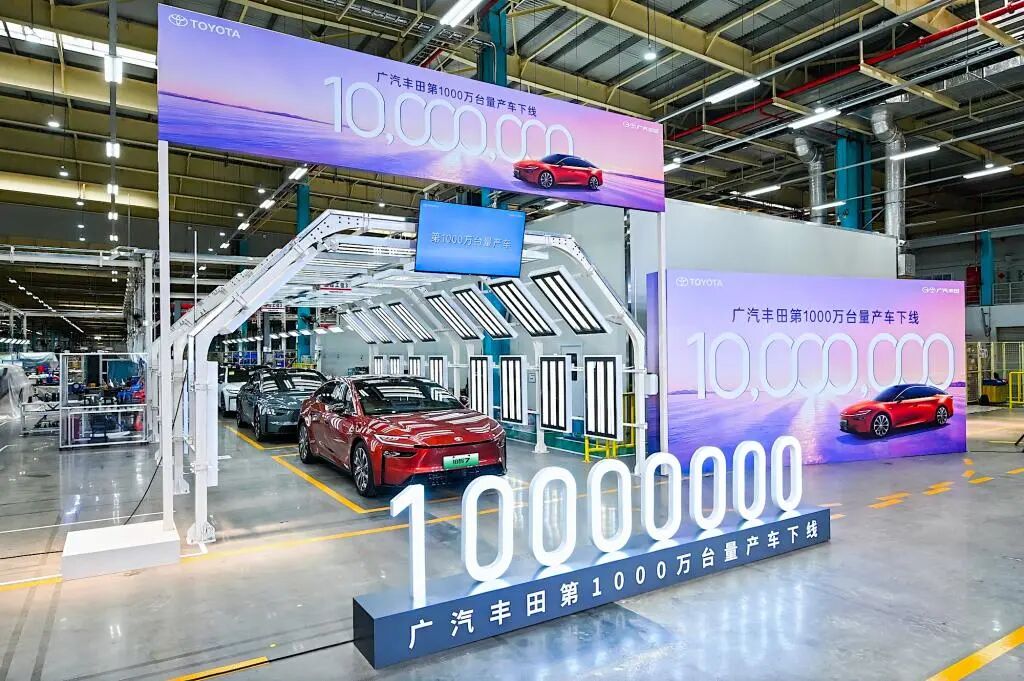
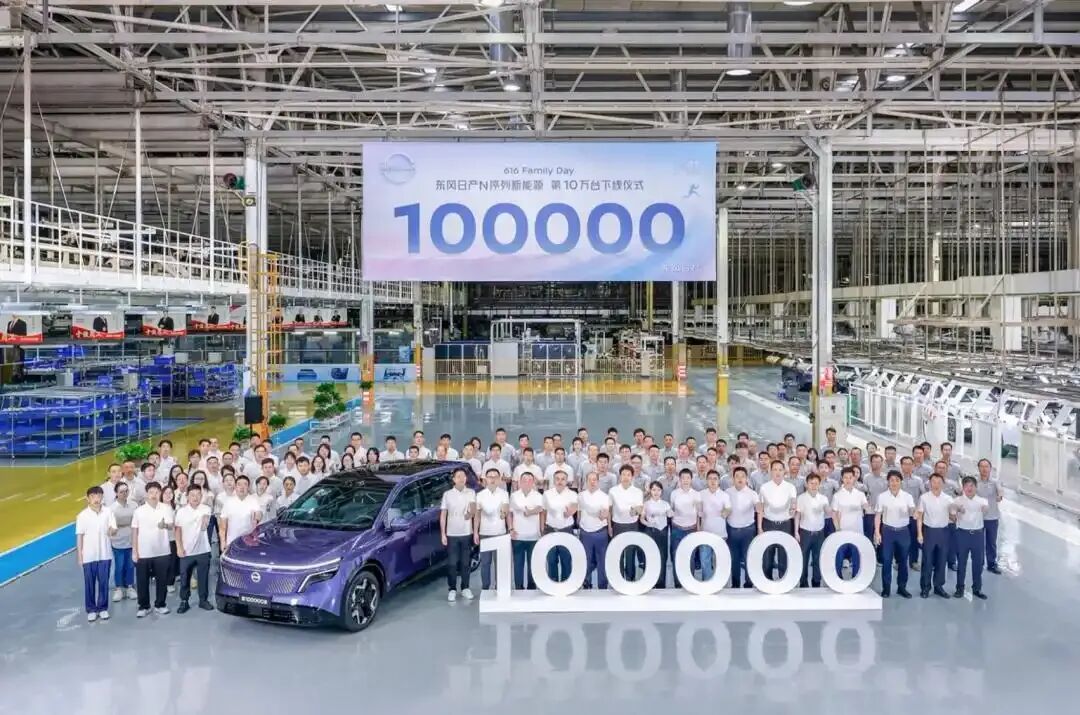
Despite the unfavorable sales situation, both GAC Toyota and Dongfeng Nissan have recently received some positive news. GAC Toyota recently achieved the milestone of 10 million vehicles rolling off the assembly line, while Dongfeng Nissan completed the roll-off of the 100,000th new energy N-series model in mid-June. This can be seen as a sign of regaining some market presence amidst sales setbacks.
Copyright Notice: This article is original to Che Kuai Ping. Reproduction requires permission. Unauthorized reproduction and any form of plagiarism or misappropriation of text or images are strictly prohibited and will result in legal action. Some images in the article are sourced from the internet, with copyright belonging to the original authors. If your work is used, please contact us for royalties or deletion.
-
![]()
Rokid's Ambition and Embarrassment: 300,000 Sales Can't Support Its Ecosystem Dream
-
Are Gaming Ventures No Longer in Vogue Among Tech Titans?
-
![]()
Kuaishou’s Keling AI, Valued at $18 Billion with a Five-Year IPO Pledge, Faces a Make-or-Break Challenge
-
![]()
Valued at $18 Billion with a Five-Year IPO Plan: Kuaishou’s Kling AI Takes a Bold Leap
-
![]()
NVIDIA Launches 'Computing Power Financing'
-
![]()
Following Up on the 'Safety Net' for Intelligent Driving: Is Huawei's Strategy Astute or Perilous?
-
![]()
ICML 2026 | One Model to Unify Humans, Objects, Sounds, and Actions: OmniShow Revolutionizes Multimodal Controllable Video Generation as a Systematic Engineering Feat!
-
![]()
Mid-Year Sales Analysis: Leapmotor Faces Challenges Alone, NIO Breaks Free from the 'NIO 30K' Stigma