Business Contraction and Workforce Optimization: Dreame’s Strategic Retrenchment
 07/03 2026
 355
355
Recently, Dreame has once again become the focal point of industry debate. Multiple media sources report that the company is implementing organizational and personnel changes of an unprecedented scale since its establishment. This round of workforce optimization affects roughly 12% of its total staff, impacting approximately 2,400 employees. Given that the company’s workforce peaked at nearly 28,000, the magnitude of this adjustment is substantial. Internal sources reveal that compensation packages will range from 0.5 to N+1 months’ salary, tailored to business lines and individual circumstances. However, current and former employees confirm that Dreame began its first round of workforce reductions as early as April this year, completing three to four rounds of optimization by the end of June, with the pace steadily intensifying.
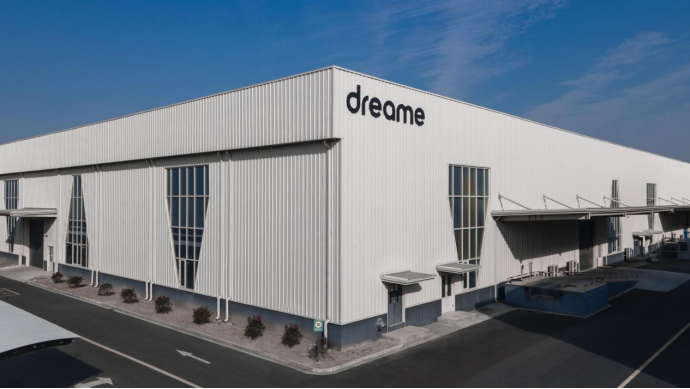
Behind this large-scale workforce reduction lies an equally unprecedented top-down business contraction at Dreame. According to multiple sources, the company has significantly streamlined its original portfolio of over 200 business units, retaining only four core sectors: smart home, outdoor living, intelligent mobility, and embodied AI. All other business lines have been either shut down or consolidated. Meanwhile, its highly anticipated car manufacturing venture has been fully shelved. Chen Longdong, head of the Star Imperial Future Automotive BU, departed in May this year. The previously independently operated vehicle production entity was downgraded and merged into the Industrial Research Institute, halting further vehicle development and retaining only foundational technology R&D functions. The mobile phone business has also contracted, ceasing independent terminal production and commercialization efforts entirely. Incubator business units (BUs) such as trendy toys, smart swimming goggles, and smart beds—which have long struggled to achieve self-sufficiency and demonstrated low synergy with core operations—have been directly shut down.

In response to external skepticism, Dreame has framed this large-scale workforce reduction as a routine “strategic adjustment,” claiming that the optimization ratio only slightly exceeds the annual 10% standard for regular staff turnover. However, the aggressive move from over 200 business lines to just four sectors clearly indicates that this is no ordinary personnel reshuffle but a comprehensive strategic contraction. In fact, this bold adjustment was foreshadowed by earlier signals. Reviewing Dreame’s development trajectory in recent years, today’s situation was largely predictable.
In March 2025, Dreame unveiled its “Boundless Growth” expansion strategy, significantly broadening its business scope to cover home appliances, smartphones, self-developed chips, new energy vehicles, and even venturing into unrelated sectors such as finance, apparel, cosmetics, and beverage tea. Founder Yu Hao revealed at the time that the company had established over 200 business divisions, with each line aiming to become an independent publicly listed entity. During this frenzied expansion, the new energy vehicle (NEV) manufacturing business sparked controversy from the outset. In August 2025, Dreame officially announced its car manufacturing project, “Project Starry Sky,” claiming its first model would rival the Bugatti Veyron as a high-end performance electric vehicle. By the first half of 2026, multiple automotive divisions had showcased several concept models with great fanfare. However, a stark disconnect remained between the glamorous promotional plans and the actual progress of project implementation, exposing underlying weaknesses.

Capital strain emerged as the primary catalyst forcing Dreame to slam on the brakes. Starting in March 2026, the group gradually cut off funding to unprofitable BUs, tightening internal interest-free support loans monthly. Loan quotas were halved in April, reduced to 25% of the original scale in May, and completely suspended in June. Business units unable to achieve self-sufficiency or repay group debts entered liquidation procedures. External financing channels suffered simultaneous setbacks, as Dreame’s reliance on a “20% corporate investment, 80% local state-owned capital matching” leverage model collapsed. Following policy tightening, multiple local governments reviewed industrial cooperation projects with Dreame, significantly narrowing new state-owned fundraising channels. With local capital infusions drying up, the sprawling diversified business matrix lost its financial lifeline, making contraction the only viable option.
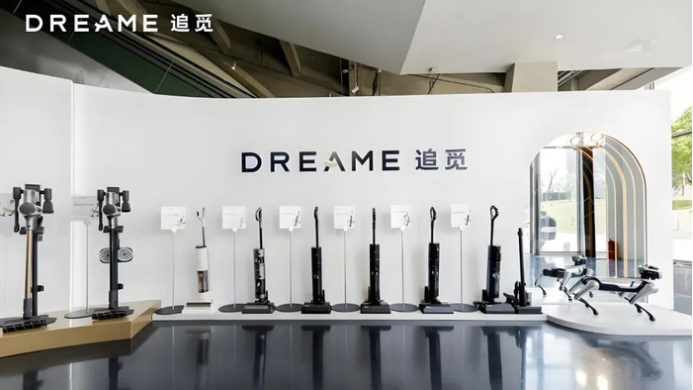
From proclaiming “Boundless Growth” and venturing into every conceivable sector to now slashing 90% of its businesses and optimizing thousands of employees, Dreame’s abrupt pivot serves as a stark warning to companies pursuing blind diversification. Straying from technological foundations and relying on capital leverage to indiscriminately expand into new sectors invites disaster. When external financing dries up and internal self-sufficiency fails, the costs and risks of rapid expansion concentrate and explode. Dreame’s current retreat to its four core businesses and divestment of all inefficient cross-sector ventures represents a self-rescue effort to refocus on technological strengths and competitive advantages. However, the aftershocks of this aggressive expansion—including thousands of job losses and shelved capital-intensive projects—will continue to impact the company’s future development. (Image source: Internet. Subject to removal if infringing.)
-
![]()
Rokid's Ambition and Embarrassment: 300,000 Sales Can't Support Its Ecosystem Dream
-
Are Gaming Ventures No Longer in Vogue Among Tech Titans?
-
![]()
Kuaishou’s Keling AI, Valued at $18 Billion with a Five-Year IPO Pledge, Faces a Make-or-Break Challenge
-
![]()
Valued at $18 Billion with a Five-Year IPO Plan: Kuaishou’s Kling AI Takes a Bold Leap
-
![]()
NVIDIA Launches 'Computing Power Financing'
-
![]()
Following Up on the 'Safety Net' for Intelligent Driving: Is Huawei's Strategy Astute or Perilous?
-
![]()
ICML 2026 | One Model to Unify Humans, Objects, Sounds, and Actions: OmniShow Revolutionizes Multimodal Controllable Video Generation as a Systematic Engineering Feat!
-
![]()
Mid-Year Sales Analysis: Leapmotor Faces Challenges Alone, NIO Breaks Free from the 'NIO 30K' Stigma