Volkswagen's Crisis Began with a Decision in China 20 Years Ago
 07/17 2026
 389
389
"Producing Chinese Models in Germany: Three Options Under Evaluation"
Compiled by Yang Yuke
Edited by Li Guozheng
Produced by Bangning Studio (gbngzs)
Oliver Blume has ultimately made some concessions.
"We have wiser solutions than closing factories," the Volkswagen Group CEO said in a softer tone during an interview with Bild on July 12, 2026. In other words, he has ruled out the possibility of factory closures.
Blume's response is intriguing after several weeks of turmoil at Volkswagen Group.
In early July, rumors swirled about Blume's plans for layoffs and factory closures. Bloomberg reported that Blume had doubled the planned layoffs to 100,000 and might close four factories in Germany, located in Emden, Hanover, Zwickau, and Neckarsulm.
In an interview in June, Blume stated that Volkswagen Group's high costs and underutilized factories had become pain points, and the business model of developing and exporting cars from Germany was no longer feasible.
However, after a supervisory board meeting on July 9, Volkswagen Group's management only presented some vague goals, such as reducing the complexity of its vast product lineup and focusing on the most attractive market segments.
It is evident that Blume's restructuring plan faced opposition from labor and failed to win initial support from the supervisory board.
Philippe Houchois, an analyst at Jefferies, said in a note to clients: "There is no indication that an agreement has been reached on factory closures, a five-year investment plan, or further layoffs."
According to local media reports, on July 9, at the supervisory board meeting in Wolfsburg, 12 of the 19 supervisory board members rejected Blume's plan. These plans included further layoffs, closing factories in Germany, and even potentially spinning off the Volkswagen brand from the rest of the automaker's operations.
Due to strong opposition from labor organizations, the supervisory board only agreed to reduce the number of models produced to about half of the current level. Moreover, as employee resistance and anxiety over structural adjustments increased, Blume had to personally step forward and ambiguously state to the media that factories would not be closed.
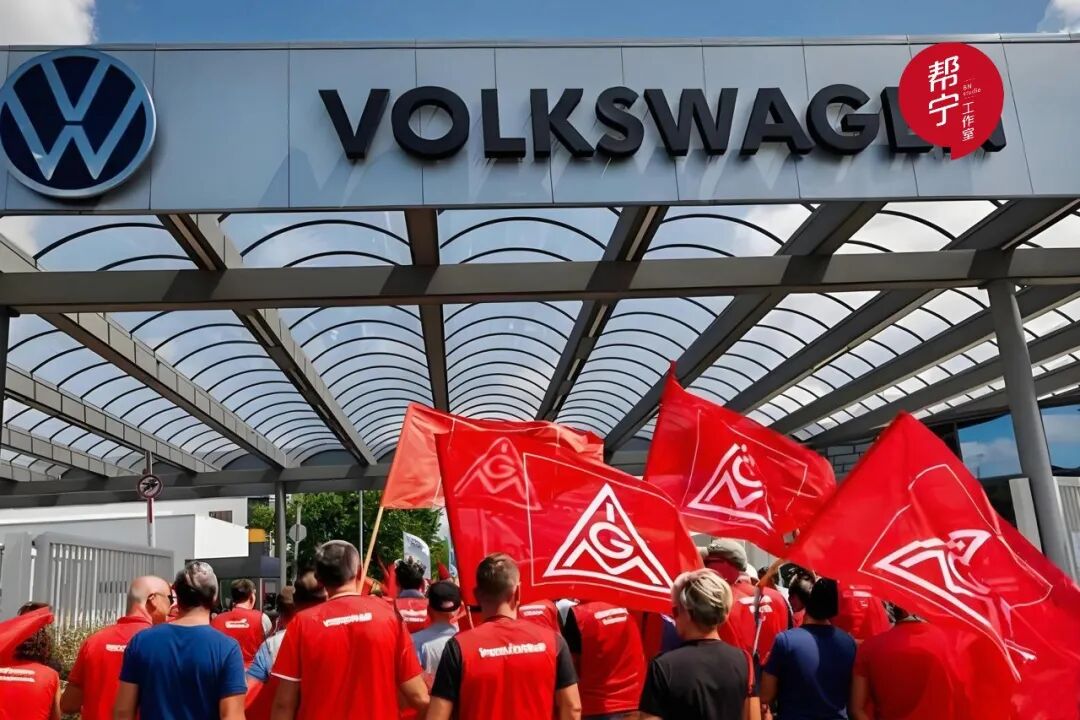
However, Volkswagen's labor committee seems unimpressed. On July 11, they issued a statement: "The supervisory board has not officially discussed the restructuring plan, and management's leak to the outside has caused a severe loss of trust." They urged Blume to personally answer questions at a general employee meeting after the summer break.
Volkswagen Group employs over 657,000 people worldwide. The company is currently grappling with a series of challenges, most notably declining sales in China and U.S. tariffs that have hurt profits for Audi and Porsche.

▍Producing Chinese Models in Germany: Volkswagen is Evaluating Three Options
One of the strategies Volkswagen is considering is producing models designed specifically for China in its underutilized German factories to preserve jobs.
With factories in Emden and Zwickau, Germany, facing overcapacity, models developed in China have become an option to fill German production lines.
Currently, three options are under discussion.
The first option is for Volkswagen to manufacture cars for XPENG in Germany. Volkswagen acquired a 5% stake in XPENG in 2023, and the two companies jointly developed models for the Chinese market.
XPENG has already exported the G6, G9, and P7+ to Europe, shipping them as CKD kits from China to Magna Steyr in Austria for final assembly.
This option could improve Volkswagen's capacity utilization, but Volkswagen executives largely disagree with it. They believe it would be tantamount to Volkswagen becoming a contract manufacturer for XPENG, offering no strategic value.
The second option is to produce Volkswagen models initially developed for China. This approach is more feasible.
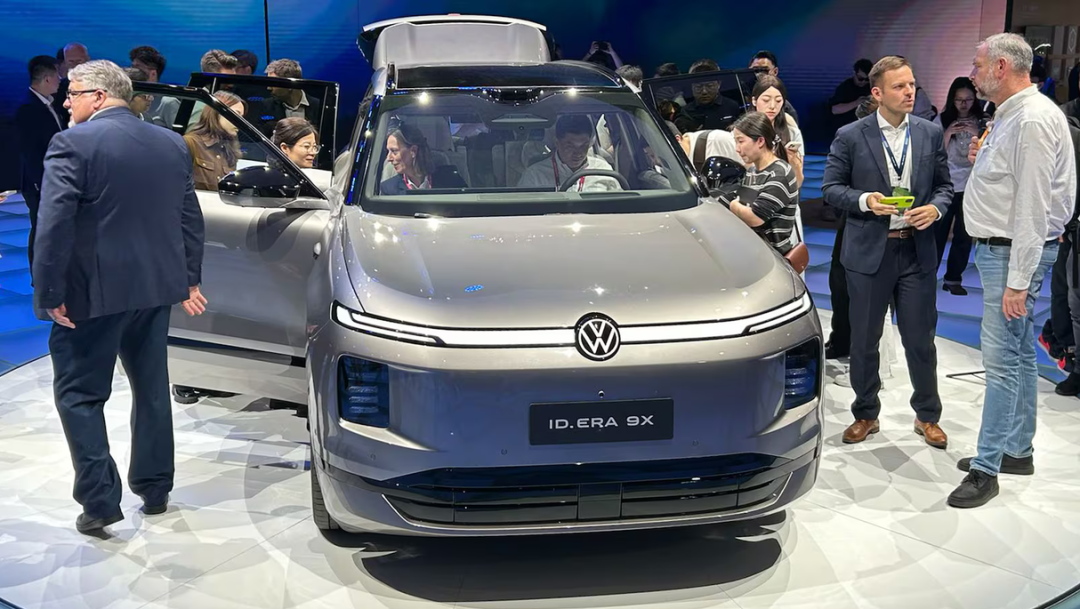
The ID.ERA 9X, jointly developed by Volkswagen and SAIC Motor, is one of Volkswagen's better-performing electric models in China. This model could supplement Volkswagen's European product lineup and fill the gap left by the Touareg, which will be discontinued this year.
However, this model would require significant engineering modifications to comply with European regulations. Additionally, SAIC would need approval from local regulators, and retrofitting a German factory to produce the ID.ERA 9X would require substantial investment.
The third option, which is Volkswagen's internal preference, is to extend the China Scalable Platform (CSP) to Europe. The CSP platform is planned to support Chinese models starting in 2028.
This option represents a strategic reversal. Previously, Volkswagen planned to rely on software developed with Rivian for future models in Europe and North America, with products tailored for China remaining exclusive to that market.
As can be imagined, these proposals have exposed tensions between Volkswagen's management and its powerful labor representatives. The union believes that the process of extending Chinese cars to Europe should be led by Volkswagen's Wolfsburg engineering team, while some executives prefer to use Volkswagen Technology (China) Co., Ltd. (VCTC).
As of now, Volkswagen has not made any decisions. They will continue to evaluate all options.
▍Crisis Began 20 Years Ago with a Decision in China
Volkswagen Group has ultimately decided to cut nearly half of its model lineup, with production targets dropping from 12 million units per year (pre-pandemic goal) to 10 million (recent goal) and now to 9 million.
The fact is that Volkswagen Group has problems worldwide, but the roots of many of these issues can be traced back to China.
This German automotive giant, second only to Toyota Motor, has led the world's largest auto market for 40 years. For years, half or more of its global profits came from Chinese joint ventures and factories, which provided high salaries and generous benefits to its vast German workforce.
However, in 2025, Volkswagen Group's sales in China will have declined by one-third compared to 2019, and performance continues to deteriorate—from April to June this year, its sales in China fell by one-third year-on-year, a weak result even considering China's economic slowdown and shrinking auto market.
Outside of China, Volkswagen Group also faces fierce competition from Chinese rivals. Chinese cars are flooding into Latin America and Africa, regions where Volkswagen Group has long been the market leader.
In the Volkswagen Group's home base, the European Union, Chinese automakers' market share briefly surpassed Japan's in May 2026. Chinese entrants' rapid expansion in Europe has put immense pressure on Volkswagen Group and other European manufacturers, forcing them to cut prices and squeeze profit margins.
Unfortunately, this is not a temporary downturn that will disappear in a quarter. It is the result of a transformation that has been unfolding for years—as the saying goes, Rome wasn't built in a day.
Volkswagen Group's problems in China can be partially traced back to a decision made nearly two decades ago.
At that time, the Chinese government began steering the domestic auto industry toward electric vehicles, but Volkswagen Group's leadership in Europe was skeptical. Like many multinational companies, Volkswagen Group preferred to wait until Chinese consumers showed a clear preference for electric vehicles—rather than acting ahead of policy.
Chinese automakers did the opposite—they took policy directives seriously and, with the support of preferential state loans and local governments, early on launched products around this strategy.
However, Volkswagen Group's new models in China were slow to arrive. In 2024 and 2025, China offered subsidies to households replacing gasoline-powered cars with electric vehicles. As a result, many Chinese families wanting electric vehicles now own them.
Worse still, after electric vehicle subsidies became a budget burden, the Chinese government significantly reduced them early this year. In the first half of the year, industry-wide sales of pure electric and plug-in hybrid vehicles in China fell 14% year-on-year.
"Foreign automakers in China missed the electric vehicle opportunity," said Stephen Dyer, head of AlixPartners' Asian automotive and industrial practice.
Additionally, Volkswagen Group initially chose to adapt existing gasoline models into electric vehicles rather than designing electric vehicles from scratch. This choice allowed Tesla to rapidly expand production in China in 2020, triggering a broad shift toward electric vehicles and catching Volkswagen Group off guard.
It can be said that until the 2020s, Volkswagen Group's old business model remained a profit machine. For years, internal combustion engines, strong premium brands, and decades of dominance in the Chinese market brought it extremely high profit margins. Volkswagen Group's Chinese joint ventures accounted for half or more of its global profits.
In this context, leadership stuck to the existing course rather than risking billions in investment to fully shift to electric, software-driven vehicles. This was short-sighted but also rational. At the time, the data supported this choice.
The problem lies in the sum of the parts. The costs of a complete transformation are clear: new factories, new software architectures, and declining profit margins during the acceleration phase. The costs of delay began to manifest years later, but the market continued to move forward.
This created a trade-off. It seemed reasonable in any given year—cashing in profits from a proven model now—but over a decade, this trade-off widened the gap to a point where it could no longer be closed in one step.
▍Volkswagen's Dilemma: Stellantis and Ford Feel the Same
Besides this strategic delay, two other factors play a decisive role. These two factors reinforce each other rather than having a direct causal relationship.
First, Chinese manufacturers have built structural cost advantages through vertical integration. They primarily produce batteries, electric motors, and chips in-house, purchasing about 20% of the remaining components on the open market.
German manufacturers do the opposite—purchasing 70%-80% of components and producing only one-fifth to one-quarter in-house. This makes them heavily reliant on external suppliers, precisely those components that now play a crucial role. This methodological difference provides a cost advantage of about 25%-35%.
Chinese manufacturers invest less in the precision steering and driving feel that German engineers traditionally prioritize and more in software, touchscreens, and connectivity. This allows them to offer more electronic features at lower prices.
Of course, Volkswagen Group is catching up, as seen with the launch of the purely electric Volkswagen ID.UNYX 07 developed in China.
Second, Europe has its own overcapacity problem. European auto factories operate at an average capacity utilization rate of only 55%, partly due to weak European demand and partly because Chinese brands are also gaining a foothold in the European market.
Consulting firm AlixPartners says this could put up to eight European factories in the danger zone. Low utilization rates drive up the cost per vehicle at German factories. However, this is another issue that coexists with China's economic downturn rather than being directly caused by it.
At the heart of Volkswagen Group's crisis is not just declining internal combustion engine vehicle sales but its missed momentum in electric vehicles.
In China, Volkswagen Group's market share for gasoline cars has actually increased slightly. The real issue is that the gasoline car market is shrinking rapidly. Currently, more than three-fifths of new cars sold in China are purely electric or plug-in hybrids, and Volkswagen Group has not kept pace with these rapidly growing segments.
The situation is different in Europe. There, electric vehicle registrations are growing strongly, and Volkswagen Group's electric model orders are also increasing. Therefore, the core of the problem is not a general decline of the brand or internal combustion engines. The pain is concentrated in two areas: Volkswagen Group missed the electric vehicle momentum in China, and low utilization rates at European factories have driven up the cost per vehicle.
Of course, this pattern is not unique to Volkswagen Group.
Stellantis and Ford are suspending and scaling back production at several European factories. Chinese auto exports grew from 1 million units in 2020 to 8 million units in 2025 and are expected to reach 12 million units this year. In May, Chinese brands' market share in the EU surpassed Japanese brands for the first time—a industry-wide shift rather than a story about one manufacturer.
Volkswagen Group and other German automakers face a fundamental dilemma. As Michael Dunne, a longtime China automotive consultant, puts it, in a market rapidly shifting to electric vehicles, the internal combustion engine technology they master is becoming increasingly irrelevant.
(This article partially synthesizes reports from Automotive News, Bloomberg, Reuters, TransConnect, and the New York Times, with some images sourced from the internet.)
-
![]()
Casarte Holds the Fort, COLMO Catches Up, Samsung Exits: Who Will Have the Last Laugh?
-
![]()
Striving to Lead in New Energy: Anhui's Challenge to Overcome the 'Hefei vs. Wuhu' Rivalry
-
![]()
Four Anhui Pioneers: Two Decades Shaping China’s Auto Industry
-
![]()
Important to Observe: BYD Surges 20% Against Market Trend in July, Will It Reclaim the 1 Trillion Yuan Mark or Soar Even Higher?
-
![]()
Autonomous Driving Enters the Second Half: ByteDance Enters the Field, NVIDIA Restructures, and the First IPO Emerges
-
![]()
Service Takes Center Stage: A 2026 Mid-Year Analysis of BBA Reputation Index
-
![]()
The Paradox of Car Sales: Why Do Automakers Keep Launching New Models Amid Rising Losses?
-
![]()
"If We Can't Find a Breakthrough in Three Years, We're Finished": Japanese Cars Are Increasingly Emulating Chinese Models