CATL Takes a Step Back, Li Auto Dives Deeper
 08/12 2026
 551
551
Battery packs can be conceded, but cells must be retained.
Original from AutoPix (ID: autopix)
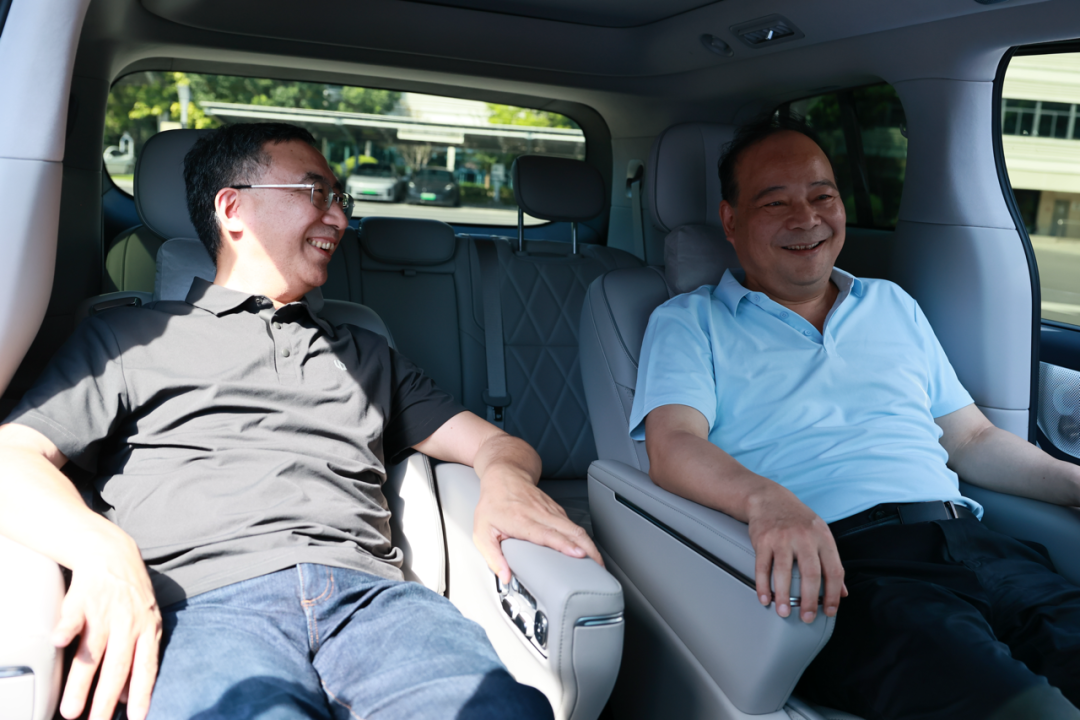
On August 7, Zhu Jiangming, founder of Leapmotor, handed over a D99 to Robin Zeng.
It was not the first time Zeng had stood on stage as a vehicle owner to support a customer. Over the past few years, he has become the owner of models including the Zeekr 001, Mengshi 917, Voyah Dreamer, and NIO ET9.
The D99 was special—it marked the first time he had endorsed an automotive customer that only purchased battery cells from CATL.
In its collaboration with Leapmotor, CATL supplies the innermost battery cells (Cell), while Leapmotor independently completes the battery pack (Pack) and battery management system (BMS), then integrates the battery with the vehicle structure using CTC technology. The same applies to the 115kWh super hybrid cell debuted with the D99.
CATL's current supply share for Leapmotor is not high. In the first four months of 2026, its cell installation accounted for about 7.4%, ranking fourth. However, cooperation is deepening—this year, CATL became the exclusive cell supplier for Leapmotor's high-end D series.
Several years ago, CATL aimed to move in the opposite direction.
From cells to modules, packs, and finally to the Panstone chassis, the higher the value of batteries in vehicles, the more CATL hoped to control.
Now, even a vehicle whose battery pack no longer belongs to CATL is worth Zeng personally becoming an owner.
Two months before the D99 delivery, another vehicle went even further.
The all-new Li Auto L8, launched in June, saw Li Xiang reclaim even the innermost battery cells. Li Auto announced that the battery pack was independently developed and manufactured, with the cells also developed in-house and produced by Sunwoda.
These two vehicles placed CATL on either side of a new boundary.
For more than a decade, CATL had been expanding its footprint within a vehicle. Now, it needs to reassess what can be handed over to customers and what must be kept in-house.
01 Retaining Customers by Selling Only Cells
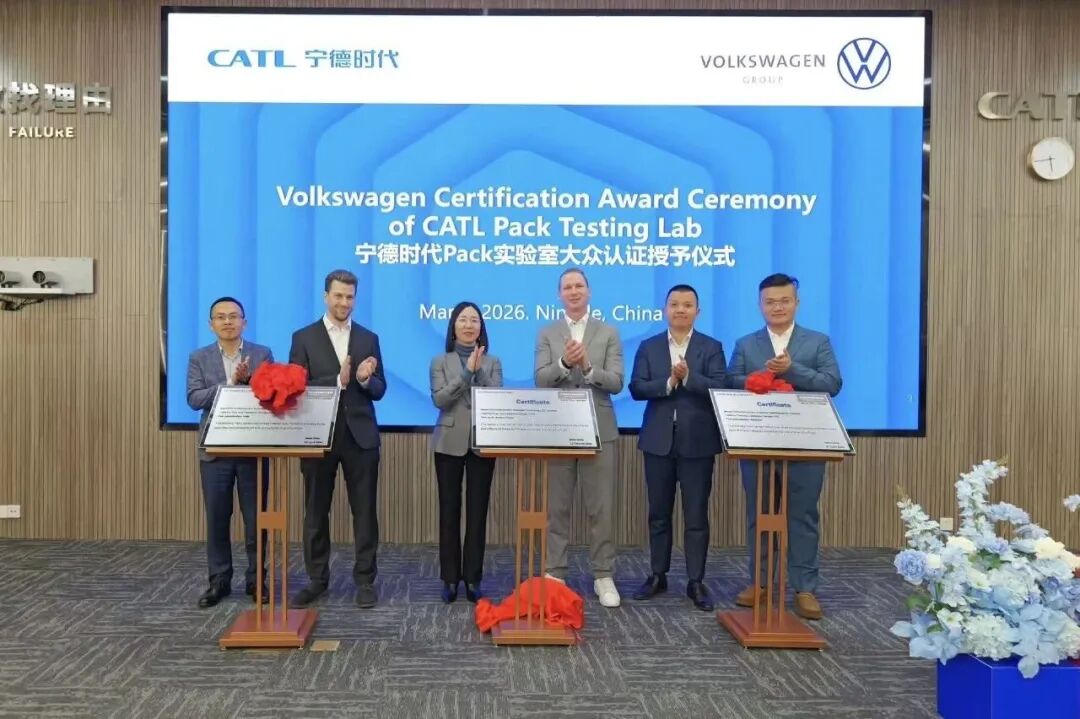
Less than a month before the D99 handover, CATL announced it had won the 2026 "Volkswagen Group Award."
It was the only power battery company to receive the honor that year. In its announcement, CATL reviewed its cooperation with Volkswagen, supplying ternary cells for the MEB platform since 2018, with cumulative supplies exceeding 200GWh, covering eight Volkswagen brands and 45 models.
This year, the partnership added a new dimension—CATL began participating in the mass production of Volkswagen's "Unified Cell."
According to Volkswagen's plan, the Unified Cell will eventually cover most of the group's BEV models, with production shared between in-house factories and external partners.
The change lies here—Volkswagen is exerting deeper control over batteries, yet CATL not only resisted but embraced the new division, becoming a key external partner in this system.
While the cooperation boundary narrowed, CATL's position in the supply chain did not weaken.
The D99 follows a similar dynamic.
CATL had sporadically entered Leapmotor's supply chain early on but was not a core supplier for long. Around 2024, the main cell suppliers for Leapmotor's C11, C01, and T03 models were Gotion High-Tech, CALB, SVOLT, and Zenergy.
The shift began in 2025—in June, the C10 entering the Hong Kong market switched to CATL cells, and in July, the B01's long-range version was also assigned to CATL.
By 2026, Leapmotor was no longer the struggling newcomer fighting for survival. In July, it surpassed 100,000 monthly sales for the first time, becoming the first Chinese new energy brand to achieve this scale and maintaining its lead in new energy sales.
That same year, CATL found an opening to increase its share—it secured the exclusive cell supply contract for Leapmotor's new high-end D series.
For CATL, this was still not a complete battery business. Leapmotor retained control over the battery pack, BMS, and CTC, while CATL only supplied the innermost cells. However, as Leapmotor's sales grew, this position became valuable enough for Zeng to personally defend.
Such customers are increasing.
Take BMW's upcoming Neue Klasse models, for example. The sixth-generation cells are defined by BMW, with CATL and Eve Energy as suppliers, while BMW builds its own high-voltage battery plants near vehicle factories to assemble cells into packs.
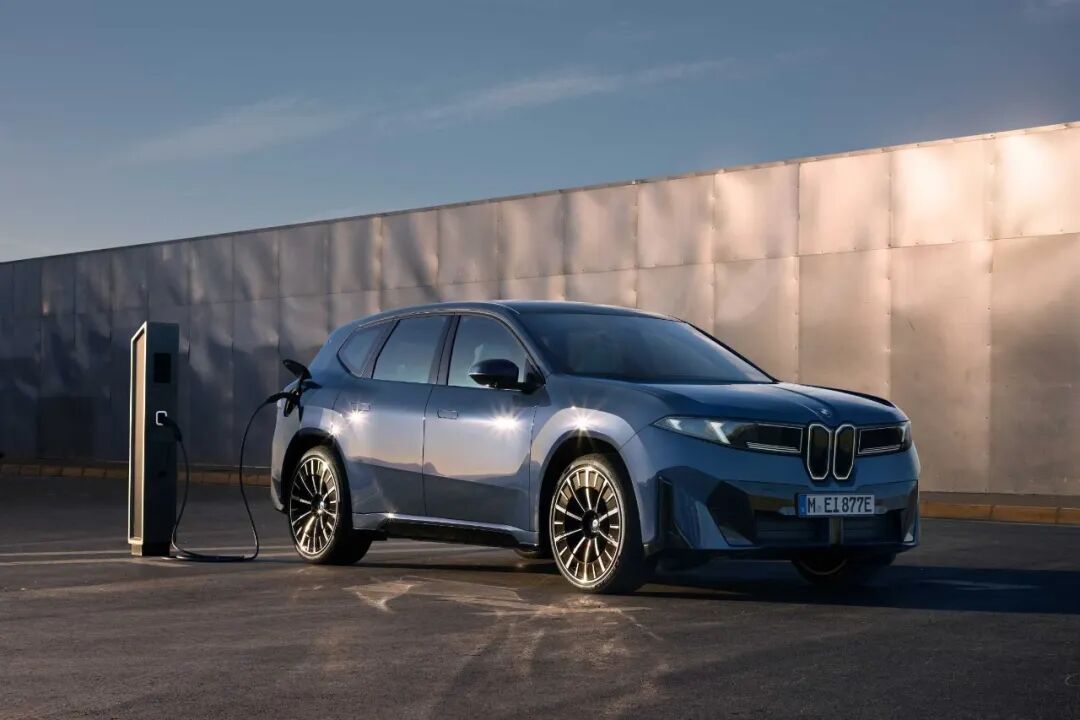 ▍BMW Neue Klasse iX3
Geely's Galaxy E5 uses CATL cells but pairs them with Geely's own Shendun battery architecture, BMS, and energy management system.
Xiaomi is moving quickly too. The SU7 already uses its own CTB integrated battery technology, with the standard version adopting CATL or BYD cells, then completing the packaging in-house. While CATL once supplied about 90% of Xiaomi's battery needs for the SU7, this dropped to about half for the YU7.
These automakers still need CATL but no longer require a complete solution from cells to packs.
This "less layered" cooperation has not caused CATL's power battery business to shrink. From January to May 2026, CATL's global power battery usage share exceeded 40%, up 2.2 percentage points year-on-year. First-half power battery system revenue reached RMB 192.1 billion, up 46% year-on-year. Its domestic market share continued to rise.
While automakers take over battery packs, BMS, and CTC, CATL's cells are not being taken away.
For over a decade, CATL expanded from cells to packs, CTP, CTC, and chassis. Now, as customers become capable of handling subsequent stages, CATL accepts that it doesn't need to control every layer of value.
02 The Chassis Didn't Become the Second Battery Pack
In May this year, Zeng appeared at another signing ceremony.
CATL's Times Intelligent and Turkish "new force" automaker Togg announced cooperation to develop a new B-segment vehicle platform using the Panstone chassis, covering three models, with the first planned for 2027 mass production.
The division of labor is clear—Togg handles user experience, product requirements, and digital architecture, while CATL provides the complete chassis integrating cells, electric drives, etc.
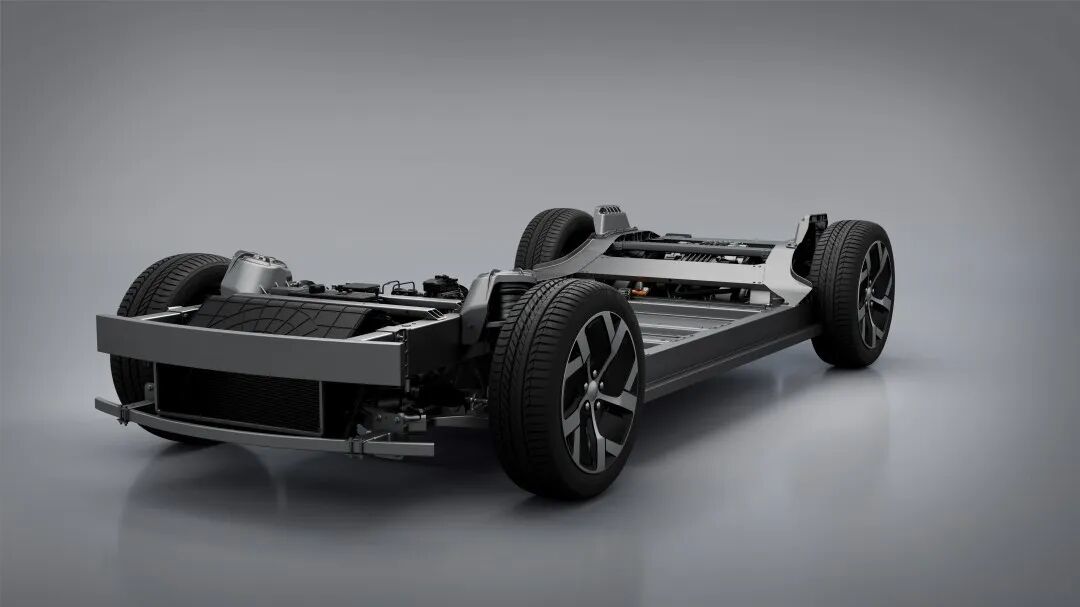 ▍CATL Panstone Chassis
CATL did not push its business boundary here on a whim.
As early as 2020, Zeng proposed the CTC concept. By October 2022, CATL and Vietnamese "new force" VinFast signed a cooperation agreement, officially launching the CIIC integrated intelligent chassis as a business.
Prior to this, CATL and leading Chinese automakers had already established a mature binding model.
In 2017, SAIC and CATL simultaneously founded two joint ventures—SAIC-CATL Times, with CATL holding 51% for cell production, and SAIC Times Battery, with SAIC holding 51% for battery systems. Subsequently, FAW, Geely, Changan, and other automakers also formed JV battery companies with CATL, mostly controlled by CATL.
At that stage, automakers needed stable battery supply, lower procurement costs, and a share of power battery profits; CATL needed long-term orders and capacity utilization. The JVs bound their interests together with clear boundaries—CATL dominated cells, while automakers participated in battery systems, capacity building, and profit sharing.
This model worked effectively when a single battery pack design sufficed. But around 2022, priorities shifted for both sides.
Automakers were also moving toward battery-body integration. Around the same time, BYD's Seal with CTB, Leapmotor's C01 with CTC, and Tesla's Structural battery pack entered mass production, merging the battery upper cover with the vehicle floor and transforming batteries from energy storage components into structural parts.
This began affecting vehicle height, seat H-point, body stiffness, crash paths, thermal management, and fast charging. Both sides saw the same trend—deeper battery-body integration reduced redundant structures, optimizing space utilization, weight, and body stiffness.
While automakers' CTB/CTC and CATL's CIIC followed different paths, their directions aligned. Consequently, the once-clear boundary between battery packs and vehicles began to dissolve, with battery systems increasingly directly shaping vehicle product definitions.
Commercial boundaries loosened as values traditionally belonging to battery companies clashed with automakers' authority.
This could no longer be resolved through the JV model. CATL saw the technological trend and chose to move deeper into vehicles; automakers, seeing the same, chose to move into batteries.
Leapmotor began CTC with the C01, later establishing Lingxiao Energy; Geely, XPeng, Xiaomi, and others are also delving deeper into battery packs, BMS, and battery systems. They continue procuring external cells but keep decisions on vehicle space, structure, and experience in-house.
CATL's chassis business failed to become mainstream. Since launching CIIC in 2022, publicly announced complete vehicle (vehicle) partnerships mainly include VinFast, Neta, Avatr, Changan Mazda, and Togg.
Customers needing ready-made chassis tend to be weak with small scales; large-scale customers with strong capabilities are unwilling to cede chassis control.
CATL has not abandoned the chassis business but has accepted that not all customers require such deep involvement. In its 2026 interim report, CATL listed power battery products ranging from modules, trays, and packs down to cells, explicitly stating it can customize or jointly develop products based on customer needs.
Leapmotor only buys cells, traditional customers procure complete packs, Huawei deeply participates in technical definitions, while Togg and VinFast purchase all the way down to the chassis.
When battery packs no longer reliably lock in customers, CATL must return to the cell layer and make it harder to replace.
03 Li Auto Begins Targeting the Innermost Layer
On September 18, 2025, Li Xiang and Zeng appeared together in Ningde.
Li Auto and CATL signed a five-year comprehensive strategic cooperation agreement, announcing continued cooperation in battery safety, ultra-fast charging, and other areas, with CATL supplying various power battery products to Li Auto.
By then, over 1 million Li Auto vehicles had been equipped with CATL batteries.
Around the same time, Li Auto began preparing another battery system.
In September 2025, Li Auto and Sunwoda established a JV with 50-50 ownership. The i6 already adopted dual sourcing from CATL and Sunwoda, with Li Auto providing an additional 2-year/40,000-km battery warranty for the Sunwoda version.
By June 2026, the all-new L8 went a step further, exclusively using Li Auto's self-developed cells manufactured by Sunwoda, with no CATL option available.
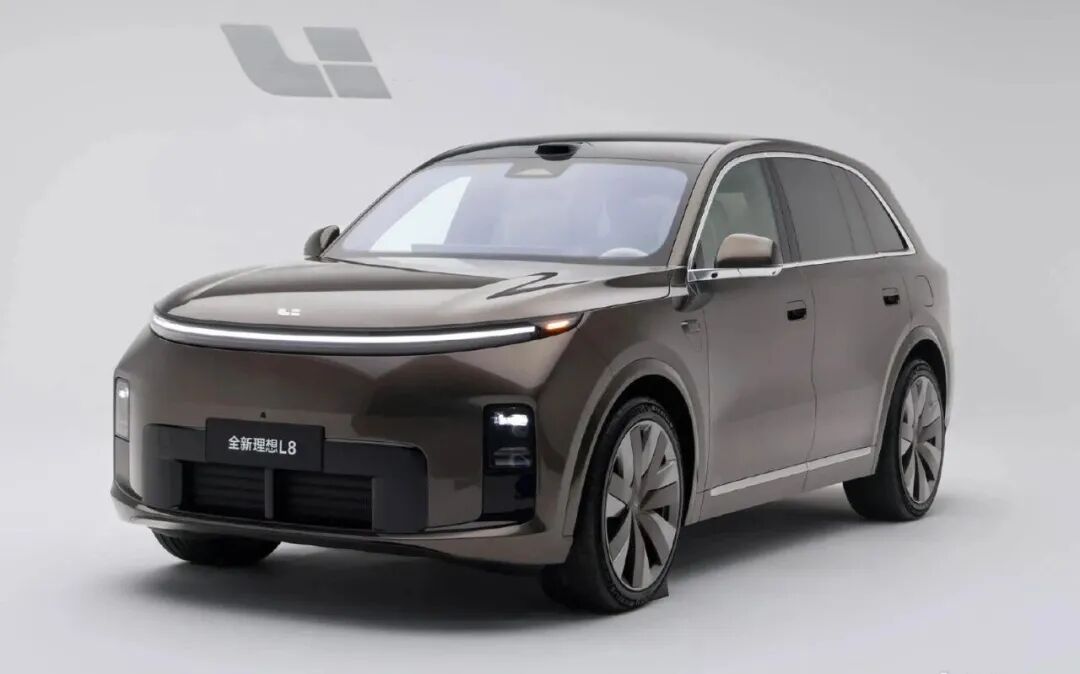
This differs from automakers reclaiming battery packs. Leapmotor and Xiaomi took system-level value beyond cells; Huawei, while deeply involved in defining Whale battery materials, performance, and safety, still had suppliers bring their own cells.
Li Auto is now targeting the cells themselves—where automakers previously competed for battery system definition rights, Li Auto now competes for cell product rights. It defines the product, outsources manufacturing to Sunwoda, and first placed these self-developed cells in a premium model priced over RMB 400,000.
This division of labor is not yet as mature as semiconductor foundry models. Cell design and manufacturing are highly coupled, with materials, processes, and yield rates difficult to fully separate. But if the Li Auto model succeeds, battery companies in such partnerships may be left with only manufacturing capabilities.
This touches on CATL's sensitive boundary.
In its 2026 interim report, CATL listed "intensified market competition" as a risk and included serving end consumers, accelerating brand promotion, and enhancing consumer recognition of its products and brand in its response measures.
Thus, ads like "Choose EVs with CATL" began appearing frequently in airports, high-speed rail stations, and other public venues.
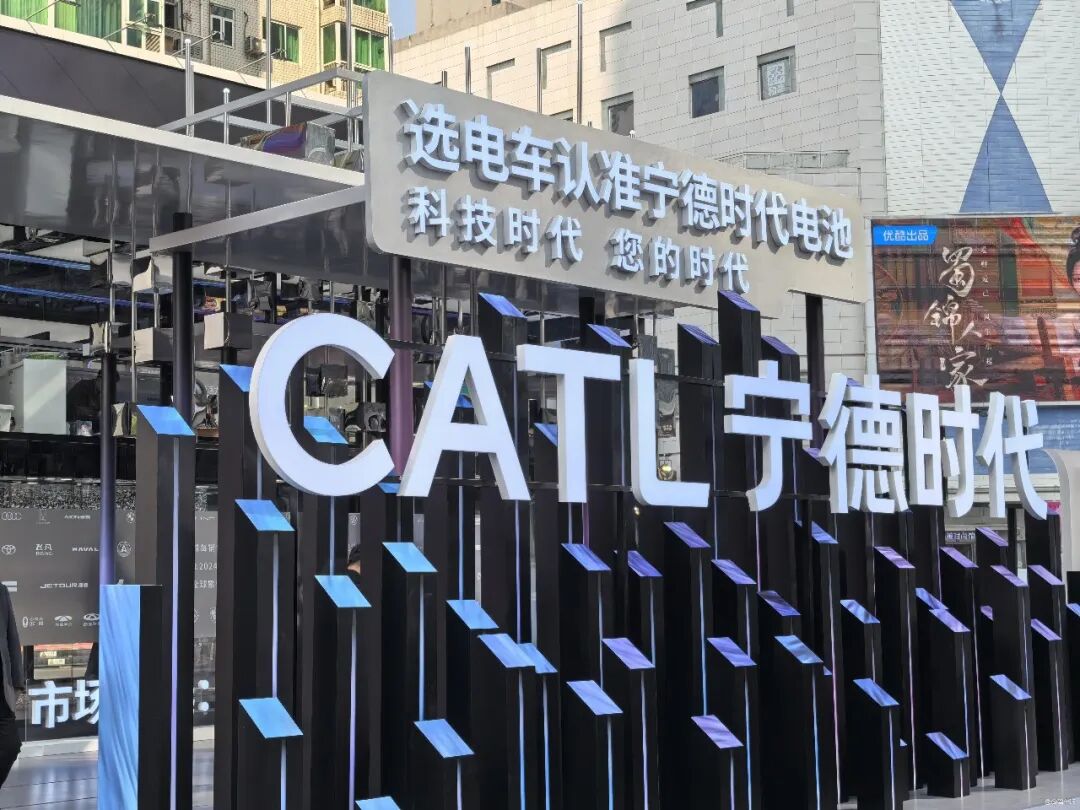
In the first half of 2026, CATL's selling expenses reached RMB 2.164 billion, up 33.44% year-on-year. "Promotion and office expenses" rose from RMB 217 million last year to RMB 441 million, nearly doubling. While this category includes both promotion and office spending and cannot be simply equated with C-end ad costs, the investment growth is clear.
A battery company long focused on B2B is now stepping into the consumer spotlight.
CATL disclosed over 6,800 quality control points, a defect database, and an intelligent detection system. It aims to explain to consumers that beyond range, safety is harder to demonstrate through specifications.
The true challenge in battery safety lies in controlling extremely low-probability defects at billion-unit production scales. What may be negligible odds for a single cell becomes real quality risk when amplified across hundreds of millions.
CATL hopes to turn this capability into consumer mindshare and a recognizable brand. Just as "Intel Inside" brought chip suppliers into PC buyers' decisions, today's consumers now directly ask whether a vehicle uses Huawei ADS.
If car buyers start asking "Is it CATL?", cells will no longer be an easily replaceable line item on automakers' procurement lists.
As engineering bindings formed by complete battery systems weaken, safety becomes CATL's best tool for building consumer mindshare. It's easy to understand and closest to CATL's true capability barriers.
Against this backdrop, on August 7, Zeng accepted the Leapmotor D99—a premium model where CATL's involvement is limited to cell supply.
If following CATL's approach of continuous downstream expansion from a few years ago, this wouldn't be the most value-complete order. However, compared to the model that NIO is currently experimenting with, what D99 represents may precisely be the type of customer relationship that CATL needs to adapt to next.
This doesn't necessarily mean a reduction in value. A powerful supplier doesn't necessarily need to dominate every layer of customer value. Intel doesn't need to build its own computers, and NVIDIA doesn't need to handle the entire server. The key is that the layer they retain is substantial enough and difficult to replace.
Power batteries meet this criterion. Chinese automakers are entering more overseas markets, and the global automotive industry is still transitioning toward new energy. Even if CATL ultimately only holds onto the battery cells, this remains a market that is still expanding in scale.
For CATL, the new boundary has shrunk to the battery cell itself.
D99 stops at this boundary.
NIO is still moving inward.

This article is original content from AutoPix (autopix) and may not be reproduced without authorization.
-
![]()
Behind Two Renewed Agreements: Joint Venture Automakers Choose Long-Term Presence in China's New Energy Sector
-
![]()
Will Zunjie’s Launch of Two L3-Ready MPVs Spell the End of the ‘Price Markup Era’ for Alphard and Its Peers?
-
![]()
17 Strategies, 1.8 Billion Parcels, 12.5 Billion Yuan: Huizhou, Guangdong, Paves the Way for Autonomous Vehicle and Drone Delivery
-
![]()
Manus to Regain Independence, Former Shareholders Including Tencent to Repurchase Shares from Meta for $2 Billion
-
![]()
Starting at 99,900 yuan, the Updated Seal 06 Hits the Market. How Should Family Buyers Decide?
-
![]()
In-Depth Analysis of Volkswagen CARIZON’s Proprietary Intelligent Driving Technology
-
![]()
Can a car priced at 80,000 yuan really have LiDAR? Features once exclusive to 300,000-yuan models now available at rock-bottom prices
-
![]()
He Shocked Silicon Valley, Yet Felt Every Day That the Company Was on the Brink