Cars Priced at 50,000 Yuan Struggle in Sales, While Those Over 400,000 Yuan See High Demand
 08/12 2026
 564
564
Current State of Automotive Consumption in China
Micro commuter vehicles, which once dominated county and township markets, are now experiencing a collective downturn.
According to data released by Cui Dongshu, Secretary-General of the China Passenger Car Association (CPCA), in the first half of 2026, cumulative sales of passenger vehicles priced below 50,000 yuan in the domestic market reached 130,000 units, marking a significant 55% year-on-year decline.
Conversely, the high-end new energy vehicle segment is bucking the trend with rapid growth: sales of new energy vehicles priced above 400,000 yuan surged by 46% year-on-year, with domestic brands capturing 59% of this market segment. The phrase "two extremes" aptly describes the current state of the domestic automotive market.
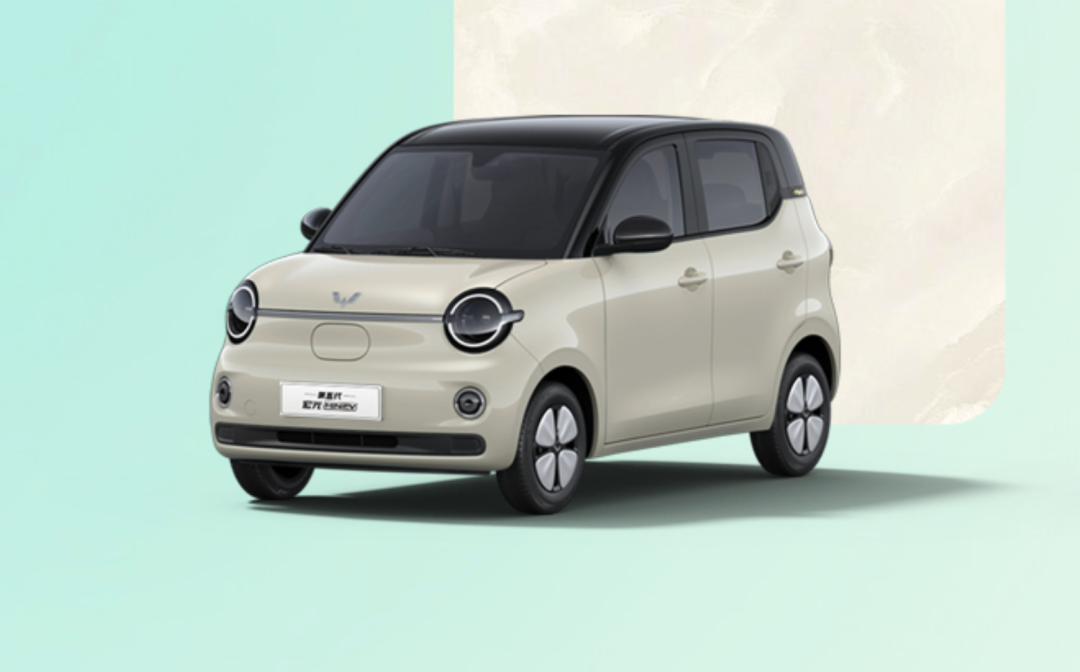
Image source: SAIC-GM-Wuling
In the A00-class micro electric vehicle market, the Wuling Hongguang MINIEV stands out as an iconic product. At its peak, monthly sales exceeded 50,000 units, quickly penetrating county, township, and urban short-distance commuter markets due to its extremely low purchase threshold. However, in the first half of this year, sales of the Wuling Hongguang MINIEV reached 72,800 units, a decrease of nearly 100,000 units compared to 171,100 units in the same period last year.
The decline in sales of the Wuling Hongguang MINIEV is not an isolated case. In the first half of 2026, Geely Panda sold 19,900 units, a year-on-year decrease of 78.2%; the Wuling Binguo sold 16,200 units, a year-on-year decrease of 79.3%.
Why Have the Once-Popular 'National Commuter Vehicles' Lost Their Luster in the Domestic Market?
Multiple Factors Are at Play
The declining popularity of micro electric vehicles priced below 50,000 yuan in the domestic market is attributed to a complex array of factors.
"The core reason for the sharp decline in the low-to-mid-end market is that, under the policy-driven high-quality development guidance, the technical criteria for new energy vehicle tax exemptions have been upgraded. Some entry-level models with short range and high energy consumption face pressure to redesign, compounded by consumer contraction, leading to a significant shrinkage in entry-level demand," Cui Dongshu stated bluntly.
From a policy perspective, in 2026, the purchase tax exemption for new energy vehicles was adjusted from full exemption to a 50% reduction. The additional tax burden of several thousand yuan has a significantly amplified impact on car buyers with budgets constrained to the 30,000-50,000 yuan range. At the same time, adjustments to China's 'trade-in' subsidy rules, shifting from fixed subsidies to those based on vehicle price proportions, have resulted in a substantial reduction in subsidy amounts for low-priced models. Under the combined impact of multiple policies, the final purchase price of some entry-level commuter vehicles has risen noticeably. Target users of these models, who are often more sensitive to cost changes, have consequently altered their purchasing decisions.
Meanwhile, with the continuous raising of new energy consumption standards, vehicle safety regulations, and whole-vehicle electronic control requirements, the past approach of controlling costs through simplified body structures, low-specification batteries, and basic configurations is no longer viable. A00-class micro vehicles inherently have extremely thin profit margins per unit. To comply with new regulations, automakers must upgrade batteries, strengthen body structures, and optimize electronic control systems, making it difficult to absorb all cost increases internally. However, raising prices would result in the loss of their sole price advantage, trapping them in a dilemma of non-compliance without redesign or compliance without sales volume.
Cyclical cost pressures are also prominent. In May 2026, the spot price of battery-grade lithium carbonate reached 190,000 yuan per ton, more than doubling from the lows in the first quarter of 2025. Batteries are the core cost component of electric vehicles. Although micro vehicles have smaller battery capacities, the cost pressure from raw material price fluctuations is fully transmitted. On one side, raw material prices are rising; on the other, regulations are mandating upgrades, compounded by intense market price competition, continuously squeezing the profit margins of low-priced micro vehicles. Many automakers have begun to proactively scale back their low-profit micro vehicle product lines, reducing R&D investment and cutting production capacity plans. As market supply continues to contract and consumers have fewer model options, the segment's popularity is further suppressed.
At the recently held China Automotive Industry High-Quality Development Summit Forum, Chen Shihua, Deputy Secretary-General of the China Association of Automobile Manufacturers, stated bluntly, "The profit level of the automotive manufacturing industry is at a historical low, with the profit margin for complete vehicle manufacturing at only 1.5%." For automakers, improving profitability has become an urgent issue.
From a demand structure perspective, the A00-class market has completed the new energy replacement cycle for fuel-powered micro vehicles. According to data from Gasgoo Automotive Research Institute, the new energy penetration rate in this segment reached 100% in 2025, meaning there is virtually no new space for fuel-powered commuter vehicles to switch to new energy. Meanwhile, the consumption mindset of existing users is changing: consumers who initially purchased micro commuter vehicles, after a 3-4 year usage cycle, generally seek larger space, longer range, and higher safety when repurchasing, rather than opting for another minimalist commuter vehicle. Simply meeting the basic need of 'being able to drive on the road' is no longer sufficient to sustain user repurchases.
Notably, 'dimensional compression' from the next higher market segment is also influencing consumer purchasing decisions. A0-class models such as the Geely Starry Wish and Wuling Binguo Pro have seen their prices continue to decline, with many products entering the 50,000-60,000 yuan price range. For consumers, spending just around 10,000 yuan more can secure a larger body, longer range, more comprehensive airbags, better highway stability, and richer intelligent configurations. For family users who commute daily and occasionally travel short distances across cities, the enhanced experience offered by this price difference is highly attractive.
Market Shift
Notably, while the low-priced micro vehicle market continues to contract, China's automotive consumption is accelerating its concentration in the high-end market. In the first half of this year, the market for vehicles priced above 400,000 yuan was the only segment to achieve positive growth.
CPCA data shows that in the first half of 2026, cumulative sales of passenger vehicles priced above 400,000 yuan reached 430,000 units, a slight year-on-year increase of 1%. Among them, sales of new energy models priced above 400,000 yuan surged by 46% year-on-year to 240,000 units, while sales of traditional fuel vehicles in the same price range declined by 27% year-on-year to 190,000 units. The internal structure of the high-end market is being reconfigured, with the new energy penetration rate rapidly increasing from 44% in 2025 to 56% in the first half of 2026, while the share of traditional fuel vehicles declined by 12 percentage points over the same period.
On one side, high-end new energy vehicles are expanding against the trend; on the other, the low-end market is rapidly contracting, with the mid-price segment becoming the core area absorbing demand overflow from the low end. Price-sensitive groups are no longer fixated on ultra-low-priced micro vehicles but are slightly increasing their budgets to opt for mid-range entry-level models with stronger product capabilities. High-net-worth users continue to flock to high-end new energy vehicles, belonging to entirely different demand circles. It can be said that China's electric vehicle industry has now moved beyond the initial stage of relying on low prices to drive scale, with industry competition formally shifting from mere price competition to a comprehensive competition based on product value, safety standards, and long-term ownership costs.
According to McKinsey's '2026 McKinsey China Automotive Consumer Insights,' among the key factors influencing electric vehicle purchases, driving range and charging time rank first. This explains why consumers are increasingly inclined to purchase 'larger vehicles.' Li Bin, Founder and Chairman of NIO, stated that larger vehicles offer higher gross profit margins, and currently, China's new energy tax policies do not restrict vehicles from becoming larger or heavier. From a market perspective, it is a reasonable business choice for automakers to focus on larger vehicles.
Some argue that with raw material price fluctuations in the second half of the year and the implementation of new local consumption promotion policies, sales of low-priced micro vehicles may recover. Meanwhile, the trend of vehicles becoming larger and heavier has also sparked considerable controversy. According to data from the Ministry of Industry and Information Technology, the average curb weight of new passenger vehicles in China has climbed from 1,312 kg in 2012 to 1,704 kg in 2024, an increase of 392 kg or nearly 30% over 12 years. In response to the consumer-side 'bigger is better' mentality, voices have emerged advocating for consumers to return to rational vehicle selection based on actual usage needs.
The A00-class micro electric vehicle market was once a key battleground for automakers to expand their market share, but now, the potential of overseas markets deserves greater attention from automakers. According to CPCA data, in June, exports of new energy passenger vehicles reached 499,000 units, a year-on-year increase of 152.7% and a month-on-month increase of 17.6%, accounting for 56.9% of passenger vehicle exports, up 15.9 percentage points year-on-year. Among them, battery electric vehicles (BEVs) accounted for 58.7% of new energy exports (63.1% in the same period last year), with A00+A0-class BEVs, the core focus, accounting for 53.8% of BEV exports (51.2% in the same period last year).
The contraction of the domestic A00-class segment does not signify the demise of the micro commuter vehicle category, but the main battleground for automakers has shifted. As consumer purchasing decisions return to rationality and price is no longer the sole criterion, whether moving upmarket domestically to enhance value or going global overseas, product capabilities remain the fundamental factor for automakers to navigate through cycles.
-
![]()
Behind Two Renewed Agreements: Joint Venture Automakers Choose Long-Term Presence in China's New Energy Sector
-
![]()
Will Zunjie’s Launch of Two L3-Ready MPVs Spell the End of the ‘Price Markup Era’ for Alphard and Its Peers?
-
![]()
17 Strategies, 1.8 Billion Parcels, 12.5 Billion Yuan: Huizhou, Guangdong, Paves the Way for Autonomous Vehicle and Drone Delivery
-
![]()
Manus to Regain Independence, Former Shareholders Including Tencent to Repurchase Shares from Meta for $2 Billion
-
![]()
Starting at 99,900 yuan, the Updated Seal 06 Hits the Market. How Should Family Buyers Decide?
-
![]()
In-Depth Analysis of Volkswagen CARIZON’s Proprietary Intelligent Driving Technology
-
![]()
Can a car priced at 80,000 yuan really have LiDAR? Features once exclusive to 300,000-yuan models now available at rock-bottom prices
-
![]()
He Shocked Silicon Valley, Yet Felt Every Day That the Company Was on the Brink