Lexus Wants to Repeat Tesla's Playbook
 08/12 2026
 376
376
Lexus Doesn’t Know Its Rivals Well.
Brutal.
This word can now be used for Lexus.
In the first half of this year, Lexus sold 71,900 vehicles in China, a 16% decrease year-on-year. Additionally, its once-proud residual value rate has plummeted from 86.7% in 2021 to around 55%.
The era of premium pricing for Lexus has come to a definitive end. The sudden market downturn has made Lexus deeply feel the 'brutality,' albeit later than other luxury brands.
But whether early or late, it arrives all the same.
ES Unstable, Lexus at Risk
Some say Lexus is now in its toughest phase.
This conclusion is fitting. In June, when Lexus's domestic retail sales hit only 10,351 units, a 40.4% year-on-year plunge and the largest monthly decline in the first half of the year, Lexus's 'hardship' could no longer be concealed.
What makes this former 'residual value myth,' where customers queued up with price premiums, even more uncomfortable is that the retail sales decline far exceeds wholesale data. What does this mean?
A dangerous signal.
Dealer inventories are rapidly piling up, and even with price cuts, sales remain unoptimistic. This indicates that Lexus isn't just slowing down in one model but is under pressure across the entire lineup.
In fact, the flagship model, the Lexus ES, is the first to feel this brutality. It can be said that this is the first domino to fall in Lexus's sales decline. Even with terminal discounts of 80,000 to 100,000 yuan, the ES cannot stop its month-by-month sales drop.
From 8,594 units in January to 4,872 units in June, the days of being hard to find and selling nearly 10,000 units a month are long gone. This pillar model, accounting for about 65% of the brand's total sales, has shown signs of decline early on.
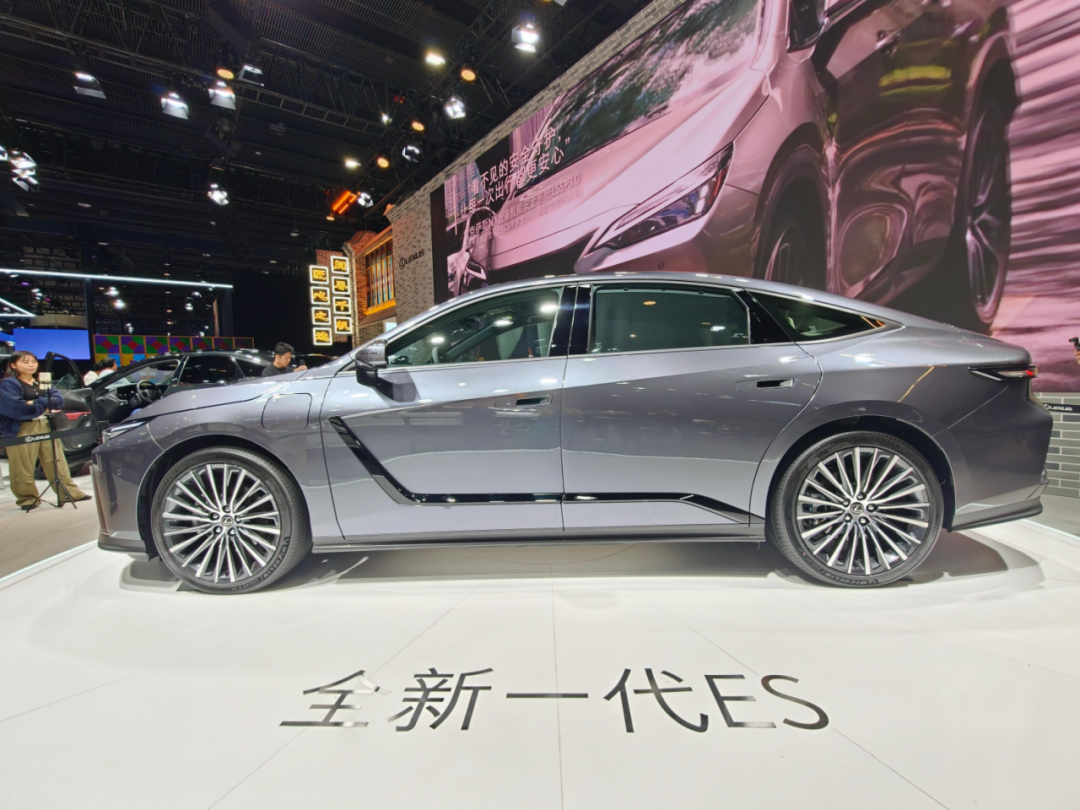
In April, the all-new Lexus ES was unveiled, sparking significant design controversy. The iconic spindle grille was replaced with a closed, borderless front fascia, paired with large black side trim. The previously aggressive yet refined front design has been dubbed the 'browless warrior,' with criticisms of 'losing luxury texture (texture)' rising one after another.
Lexus's goal was for this flagship model to break free from its old image and open a new chapter. The design of the all-new ES was led by Toyota's president, Akio Toyoda. He believed that if even he didn't break Lexus's design mold, engineers certainly wouldn't, and Lexus's spirit as a pioneer would cease to exist.
He once bet correctly on the ES. In 2015, when Lexus first introduced its bold spindle grille, despite skepticism, it helped Lexus break out from the surround (encirclement) of German luxury brands.
A huge success.
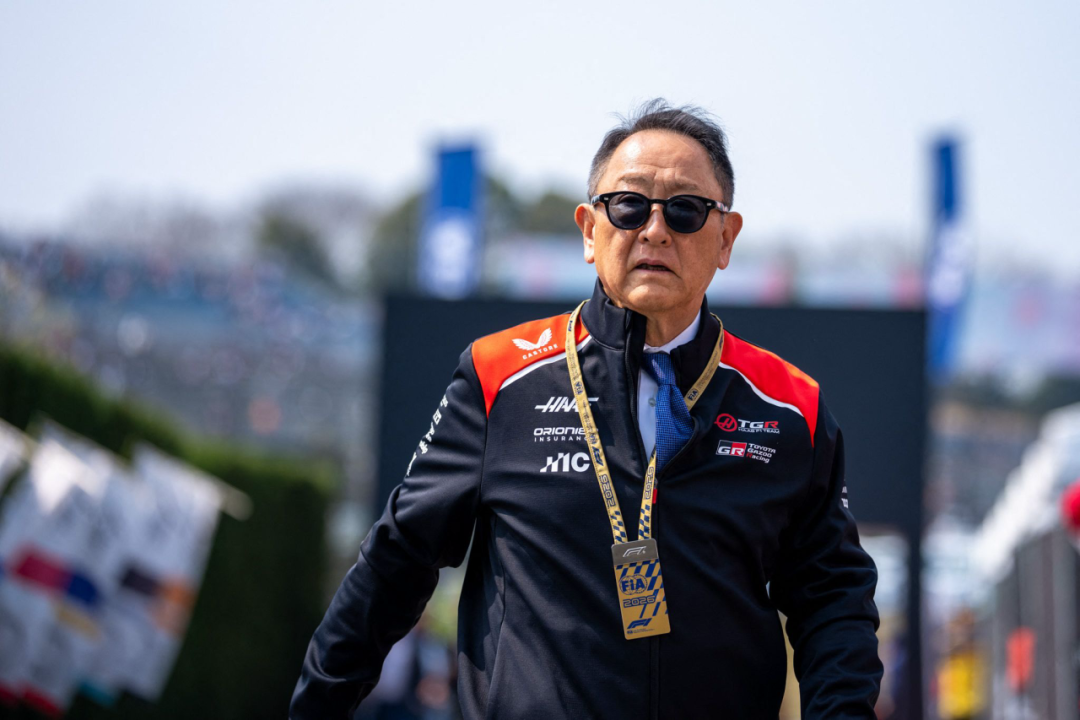
Akio Toyoda, who favors racing and innovation, wants to replicate this success again. However, he no longer understands today's consumers. After all, data shows that the average Lexus owner is 57.6 years old, with the brand gradually marginalized among younger consumer groups. Post-90s and post-2000s consumers, who prefer intelligent models, make up less than 10% of Lexus owners.
Thus, Chinese consumers' acceptance of the new ES design is far lower than the previous generation. In the Chinese market, the all-new ES faces a huge test right after launch: an 'aesthetic challenge,' which it has clearly not yet passed.
'Lexus's product rhythm is still stuck five years ago,' the market evaluates.
After its April launch, Lexus lacked confidence in the new model's design and continued selling both old and new generations. However, after adding the new model, Lexus ES sales in the Chinese market declined instead of rising.
If the ES is unstable, Lexus is at risk.
'Do or Die'
With the ES's sales plummeting, Lexus's fuel-powered vehicle (fuel vehicle) foundation has developed significant cracks.
What terrifies Lexus is that even its 'strongest residual value rate' can no longer be maintained. Dropping from 86.7% to 56.3%, this figure is even lower than some mainstream joint-venture brands.
You must know that previously, with five years of free maintenance, imported status, excellent design and quality, and a good residual value rate, Lexus stood firm in the luxury car market, even maintaining growth until 2024-2025. But everyone knows that was the afterglow of the fuel vehicle era.
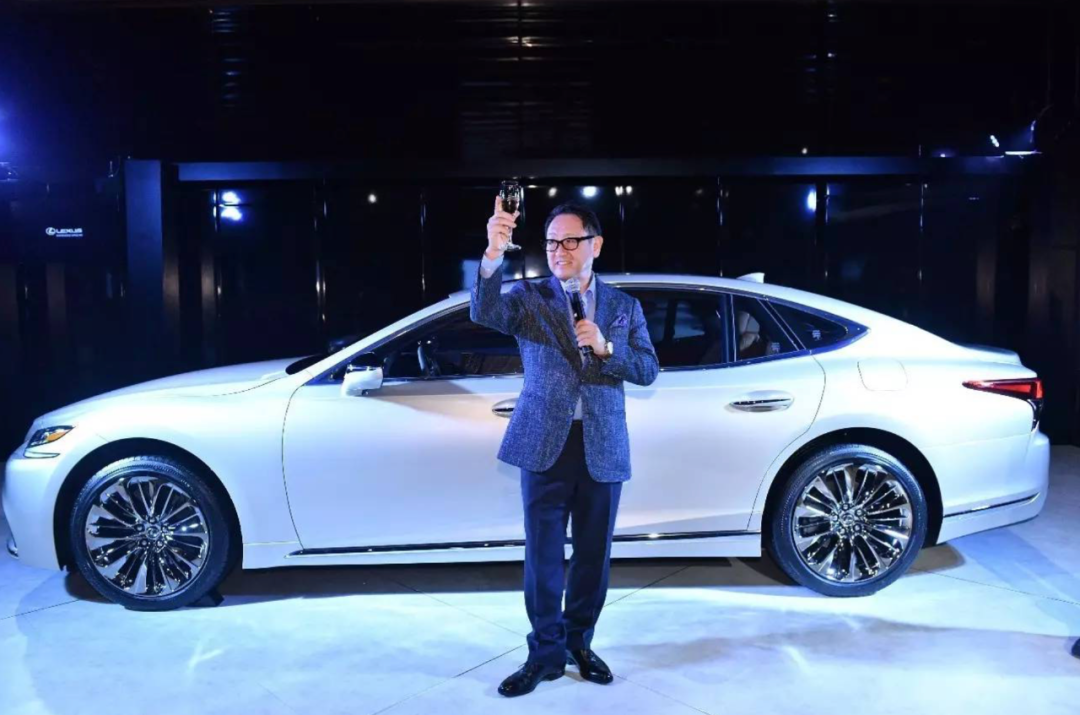
Now, price cuts can't stop the sales decline, and the collapse of the residual value rate has rendered Lexus's former survival advantages and fuel vehicle foundation no longer sharp in today's luxury car market.
A new path is needed. For example, initiating an electric transformation and achieving localization.
From a product planning perspective, Lexus has effectively abandoned the electric vehicle position (position). For a long time, Lexus has treated electric models as Subsidiary products (secondary products) to its fuel vehicle lineup, lacking dedicated platforms and disruptive experience planning.
In May, Toyota officially halted the mass production plan for the Lexus all-electric coupe LF-ZC. This model, first unveiled at the 2023 Tokyo Motor Show and originally slated for production by the end of 2026, was seen as a flagship benchmark for Lexus's electric transformation.
Canceled on the eve of mass production, Lexus cited 'considering changes in market demand' and the need to 'strengthen hybrid models.'
It can be said that electrification is not a 'priority' in Lexus's product planning and is even somewhat lagging. Among the more than ten models Lexus currently sells, pure electric models are few, and advanced intelligent driving has yet to be implemented.
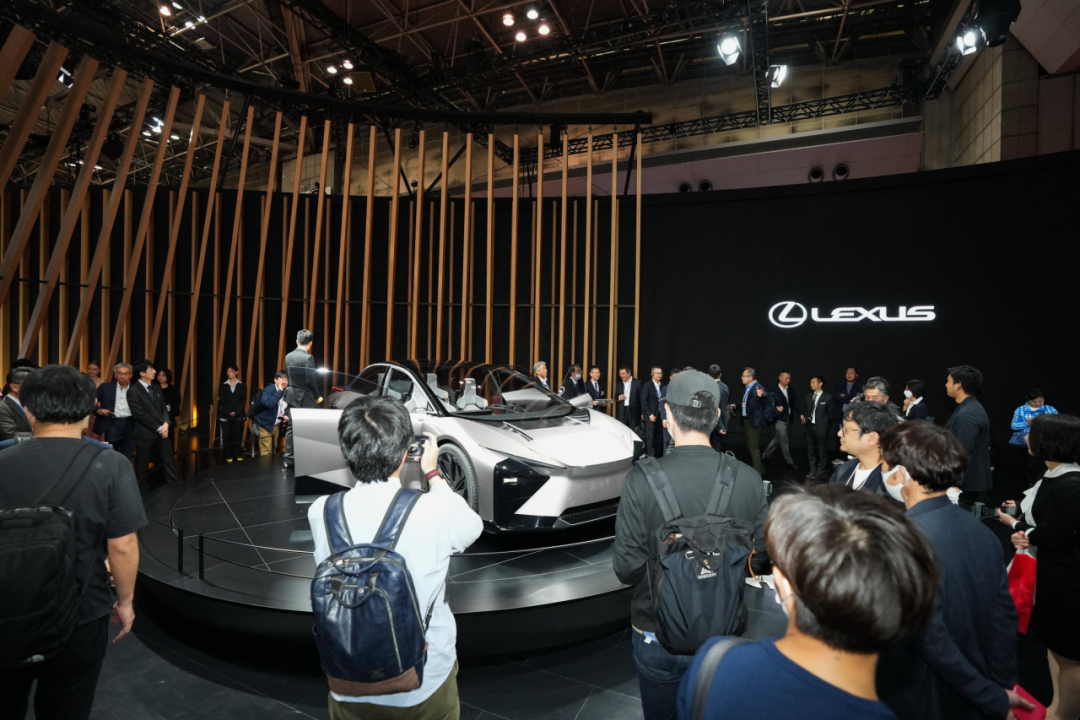
Through its development path over the years, from betting on hydrogen fuel cells to sticking with hybrids, to passively shifting to pure electrics, and then to 'strengthening hybrids,' every step has been hesitant.
This hesitation is closely tied to Akio Toyoda. As global electrification trends have become irreversible, Toyoda has remained skeptical throughout.
From 'electrification threatens the livelihoods of 5.5 million Japanese automotive workers, making it not just a technological shift but a battle to protect employment' to 'the pure electric market will account for at most 30%, with the rest belonging to hybrids, hydrogen, and fuel vehicles,' and finally to the conservative argument that 'electric vehicles are not environmentally friendly,' Toyoda has finally recognized the irreversibility of the electrification era.
He self-deprecatingly calls himself 'old-fashioned' and handed the helm of Lexus to Koji Sato without fanfare, completing this transfer of power in a brief online press conference.
Some say Sato is the 'new captain' Toyoda has bet on. While Lexus's global electrification transformation remains unaggressive, in China—the landing point of this gamble and the world's most brutal competitive battlefield—Lexus cannot afford to be slow.
Lexus's localization has finally materialized, arriving neither early nor on time—but late.
On February 5, 2025, a deal between Toyota and the Shanghai Municipal Government ended Lexus's 31-year 'import era' in China, announcing a wholly-owned research, development, and production base for pure electric vehicles, with plans to start production in 2027 and an annual capacity of 100,000 units.
Located in Jinshan, Shanghai, the factory is positioned as a 'research and production base.' This means Toyota may, for the first time, place core technology R&D, such as three-electric systems and intelligent cockpits, in China. The goal is clear: Tesla reshaped the global electric vehicle landscape with its Shanghai factory, and Toyota aims to replicate this path.
The Jinshan factory, with a total investment of 14.6 billion yuan and covering 1.13 million square meters, had all five core workshops capped by February this year and is expected to be completed in 2026 and start mass production in 2027. With an initial annual capacity of 100,000 units and a long-term potential of 200,000-500,000 units, over 95% of components will be localized. Industry rumors about the new factory's plans suggest Lexus intends to entrust all three-electric systems to Chinese companies.
This wholly-owned factory reflects Akio Toyoda's 'do or die' determination. Outsiders interpret Lexus's localization not as a trial run but as a bid to seize market share, seen as a 'second bet' in the Chinese market.
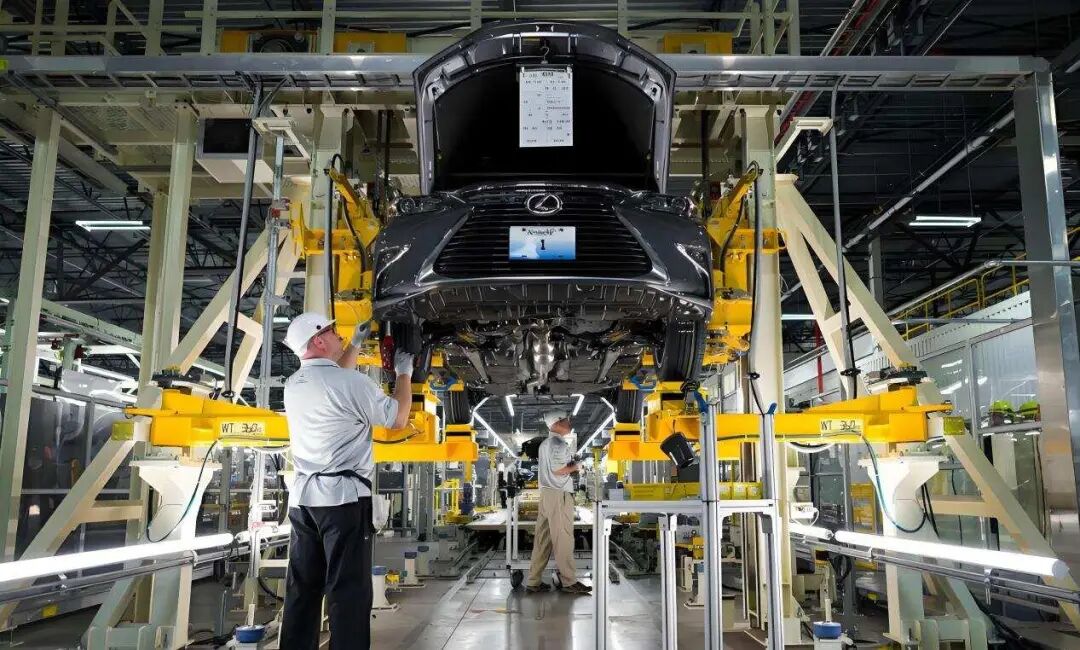
According to plans, the first locally produced models will mainly include two: the ES all-electric sedan will be the first locally produced model, while the TZ three-row large all-electric SUV will also enter mass production. All subsequent newly added locally produced electric coupes and SUVs will follow localization configuration standards.
It's clear that Lexus's locally produced models are all electric, aiming to reshape the luxury electric vehicle market. However, its competitors are no longer just Mercedes-Benz and BMW but brands like NIO, Li Auto, and Aito.
The number of rivals has increased, and Lexus, which has never participated in China's electric vehicle battles, neither knows nor is familiar with these opponents.
Moreover, localization only answers 'where to build,' not 'how to survive.' Localization adaptation is Lexus's true test. How will it find its positioning amid the intelligence wave? How will the old king navigate the inflection point (inflection point) of the new era?
The roar of pile drivers in the factory is questioning Lexus.
Note: Images sourced from the internet. If there is infringement, please contact for removal.
-END-

-
![]()
Behind Two Renewed Agreements: Joint Venture Automakers Choose Long-Term Presence in China's New Energy Sector
-
![]()
Will Zunjie’s Launch of Two L3-Ready MPVs Spell the End of the ‘Price Markup Era’ for Alphard and Its Peers?
-
![]()
17 Strategies, 1.8 Billion Parcels, 12.5 Billion Yuan: Huizhou, Guangdong, Paves the Way for Autonomous Vehicle and Drone Delivery
-
![]()
Manus to Regain Independence, Former Shareholders Including Tencent to Repurchase Shares from Meta for $2 Billion
-
![]()
Starting at 99,900 yuan, the Updated Seal 06 Hits the Market. How Should Family Buyers Decide?
-
![]()
In-Depth Analysis of Volkswagen CARIZON’s Proprietary Intelligent Driving Technology
-
![]()
Can a car priced at 80,000 yuan really have LiDAR? Features once exclusive to 300,000-yuan models now available at rock-bottom prices
-
![]()
He Shocked Silicon Valley, Yet Felt Every Day That the Company Was on the Brink