Over the Past Two Decades, China Has Secured Over 130 Auto Parts Firms in Europe
 08/17 2026
 540
540
Lead-in
Introduction
"It would come as no surprise if, in the near future, two or three of the world's top ten parts manufacturers were to become Chinese firms."
Recently, new sales data was released. Chinese automobile exports exceeded one million units for two consecutive months in June and July, with industry projections suggesting that the total annual exports could surpass ten million units.
The industry views this data as another indicator of the rising global competitiveness of Chinese automobiles. It also reflects that Europe, particularly Germany, had previously misjudged the globalization process of the Chinese automotive industry.
Foreign analysts point out that European policymakers have long focused on how to maintain the sales share of domestic automakers in the Chinese market, rather than guarding against the technological advancements and cost efficiencies pursued by Chinese brands.
For instance, companies like Volkswagen, Mercedes-Benz, and BMW are highly reliant on Chinese consumers. European governments tend to believe that this dependency is sustainable, yet they have failed to foresee that Chinese automakers might first replace European brands in the domestic market before expanding into Europe and other global regions.
Previously, the EU imposed anti-subsidy tariffs on Chinese-made pure electric vehicles and is considering extending similar measures to plug-in hybrid models to counter Chinese companies' strategies of adjusting their export approaches to bypass existing restrictions. However, some argue that tariffs cannot compensate for Europe's lack of a coherent industrial strategy.
The challenges faced by the European automotive industry were apparent even before external competition intensified. These include high energy costs, sluggish domestic demand growth, and lengthy product iteration cycles. Raising import prices of Chinese products can, at best, provide European manufacturers with some temporary relief but cannot address these structural issues.
There are notable differences in the approaches among EU member states. France tends to favor stronger trade protection, Germany wavers between safeguarding local production and ensuring market access for large automakers in China, while the Spanish government actively seeks Chinese investment, with Prime Minister Sánchez publicly calling to avoid escalating trade wars.
It is noteworthy that China has now established a production system that covers nearly all aspects of the automotive supply chain. This enables significantly faster research and development, as well as mass production of electric vehicles compared to their European counterparts, along with clear price advantages.
01 Chinese Capital Penetrates the European Automotive Supply Chain
Analysts point out that Chinese companies are systematically reshaping their roles in the European automotive industry. They are evolving from exporting single products to a comprehensive layout encompassing parts manufacturing, vehicle sales, technical cooperation, and investment in production facilities on a global scale.
According to the Financial Times, citing data from consultancy Rhodium Group, since the mid-2000s, Chinese companies have acquired or invested in over 130 European automotive parts companies, with a focus on Germany and France, traditional automotive manufacturing centers.
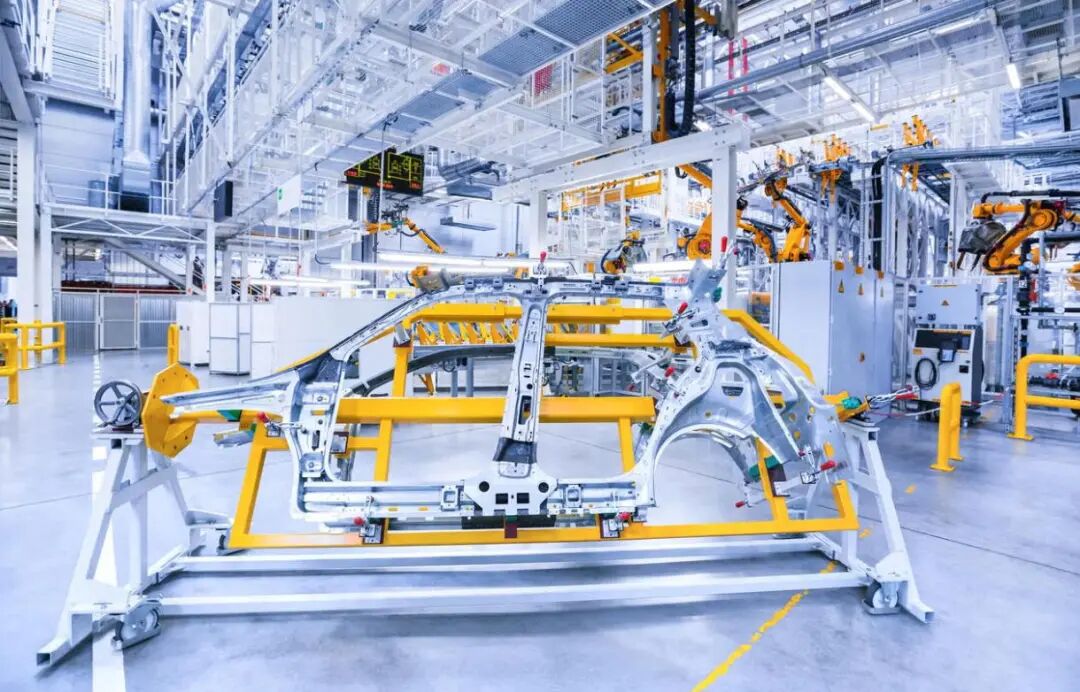
By 2025, Chinese investment in the European electric vehicle supply chain reached €7.1 billion, roughly a 2.45-fold increase from €2.9 billion in 2022. During the same period, mergers and acquisitions of European automakers by Chinese companies rose from 4 to 9 transactions, with the total deal value increasing from $393 million to $777 million.
In 2025 alone, among the 9 automotive acquisitions, 6 occurred in Germany, with a total value of $646 million, accounting for 83% of the total for that year.
These acquired or funded companies cover not only traditional parts but also key areas such as batteries, safety equipment, and seats. Chinese suppliers like BAIC, Shenzhen Kedali, Junsheng Electronics, and Yanfeng have established subsidiaries in industrial clusters such as Lower Saxony, Germany, directly supplying BMW and CATL's German battery factory.
At the vehicle manufacturing level, Chinese capital has also made early significant moves. Geely's acquisition of Volvo Cars in 2010 remains one of the most prominent examples, with Geely completing the purchase of the Swedish automaker from Ford for $1.8 billion.
Meanwhile, the market penetration rate of Chinese vehicle brands in Europe is rising significantly. According to the Guardian, citing data from Schmidt Automotive Research, in the first five months of 2026, Chinese brands accounted for 14.2% of pure electric vehicle sales in Western Europe, roughly one-seventh of total pure electric sales, up nearly five percentage points year-on-year.
Plug-in hybrid models have also become a key focus for Chinese automakers, as this category is not yet subject to the EU's additional tariffs on pure electric vehicles. Analysts expect Chinese companies to increase R&D and production investment in these models.
To support this sales growth, the dealer network is expanding rapidly. BYD announced in July 2026 that it had signed its 200th dealer agreement in Germany, up from just 26 dealers in early 2025.
This expansion is partly driven in reverse by trade policies. The EU had previously imposed anti-subsidy tariffs on Chinese-made pure electric vehicles, with rates varying based on company cooperation: 35.3% for SAIC Motor and other uncooperative companies, 17% for BYD, and 18.8% for Geely.
The European Commission determined that Chinese pure electric vehicle production benefits from subsidies, potentially causing economic harm to EU domestic producers. However, tariff barriers have not curbed the growth momentum of Chinese brands; instead, they have accelerated Chinese companies' strategies to bypass trade restrictions through localized production and equity cooperation.
Latest trade data shows that in the first quarter of 2026, the EU's goods trade deficit with China reached €98 billion, the highest quarterly deficit since the third quarter of 2022, with machinery and vehicle products being the main sources of the deficit.
This data reflects the actual strength of demand in the European market for Chinese automotive products and explains the increasing scrutiny pressure on EU trade policies. Its trade policies continue to focus on reducing the risk of dependence on foreign supply chains, but the Chinese market is now embedded in the structural links of the European automotive industry on both the supply and consumption sides.
02 M&A Strategies Stem from Local European Challenges
It is reported that the deep involvement of Chinese companies in the European automotive supply chain does not rely solely on straightforward financial acquisitions but rather reflects a strategic combination during specific windows of opportunity.
According to the Financial Times, before the mid-2010s, Chinese companies were accustomed to directly acquiring European parts companies. However, as European countries gradually tightened foreign investment reviews, Chinese companies shifted to two alternative approaches.
First, they acted as "white knights" to intervene in German small and medium-sized suppliers experiencing management disputes or funding shortages, acquiring controlling stakes on favorable terms. Second, they established joint ventures with local companies to bypass regulatory barriers while meeting the EU's increasingly stringent localization procurement and employment requirements.
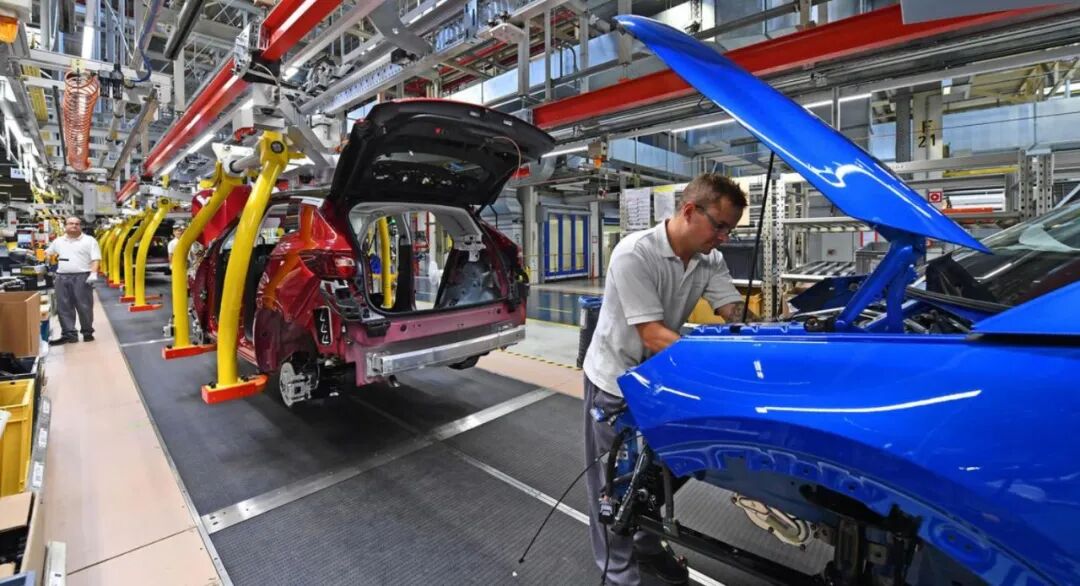
Typical cases include Ningbo Jifeng Auto Parts Co., Ltd.'s successful acquisition of German century-old automotive interior giant Grammer AG in 2019. At the time, Grammer's management was embroiled in a control dispute with the Bosnian Hastor family, and Ningbo Jifeng completed the takeover by acquiring management-friendly shares.
In 2025, Luxshare Precision acquired Leoni AG, a long-established German automotive wiring harness manufacturer. These acquisitions allowed Chinese companies to acquire mature technological patents, customer relationships, and production qualifications at lower costs while clearly complying with EU regulations on local production content.
In recent years, the joint venture model has further expanded to vehicle manufacturing. Ford Motor Company established a joint venture with Geely Automobile in 2026, planning to produce two electric SUV models at Ford's plant in Valencia, Spain, starting in 2028. The plant currently operates at only 26% capacity utilization.
Stellantis Group also plans to establish joint ventures with Leapmotor and Dongfeng Motor, utilizing its existing European factories to produce Chinese brand vehicles. According to an EU official cited by the Financial Times, China is simultaneously advancing the export of its own brand vehicles and acquiring stakes in local companies through joint ventures and cooperation, posing the greatest challenge Europe has faced in a decade.
Meanwhile, Dongfeng Motor is reportedly considering taking over Fiat's plant in Cassino, Italy, which has been idle since May 2026. The local mayor, Enzo Salera, publicly welcomed any company willing to relocate production facilities there.
On the other side of Chinese capital's accelerated entry, European domestic automakers and suppliers are mired in structural difficulties, providing Chinese investors with significant bargaining power.
Volkswagen CEO Oliver Blume admitted that European plug-in hybrid models struggle to compete on cost with Chinese counterparts, while Volkswagen itself is advancing a massive restructuring that reportedly may involve global layoffs of up to 100,000 employees and plant closures. However, the restructuring process has been severely hindered by German laws and the veto power of unions and the Lower Saxony state government.
Additionally, several factories in Germany, France, and Italy operate at capacity utilization rates as low as 17% to 28%, effectively half-idle. The situation is even more severe at the supplier level. According to Financial Times data, even in Germany, chip manufacturer Infineon enjoys a profit margin of 21.5%, while the powertrain division of automotive parts giant ZF Friedrichshafen operates at a -2.8% margin, a stark contrast.
Suppliers struggle to achieve economies of scale while facing continuous price pressure from automakers, leading to shrinking profit margins. Sebastien Frendo, CEO of Paris-based consultancy Do Well Do Good, told the Financial Times that it would come as no surprise if, in the near future, two or three of the world's top ten parts manufacturers were to be Chinese firms.
Editor-in-Chief: Li Sijia Editor: He Zengrong

THE END
-
![]()
From Over 4,000 Units Sold Monthly to Fewer Than 400: What Happened to the Zunjie S800?
-
![]()
After Chevrolet’s Departure, Which Japanese Car Brand May Be Next to Exit the Chinese Market?
-
![]()
Domestic 'Boxy SUV': Is It Up Against a Formidable Challenger?
-
![]()
Who Trapped the 'Boxy Cars' in the City?
-
![]()
Pure Electric Sedans in the 150,000-200,000 Yuan Bracket: Are They a Lost Cause?
-
![]()
Over the Past Two Decades, China Has Secured Over 130 Auto Parts Firms in Europe
-
![]()
Shenzhen's Autonomous Vehicle July Report: 200,000 km Traveled, 3.17 Million Orders Processed, 60% Increase in Nighttime Activity! Beyond 'Five-Party Collaboration,' Full Citywide Deployment
-
![]()
The "Happiness" of Xpeng