Domestic 'Boxy SUV': Is It Up Against a Formidable Challenger?
 08/17 2026
 414
414
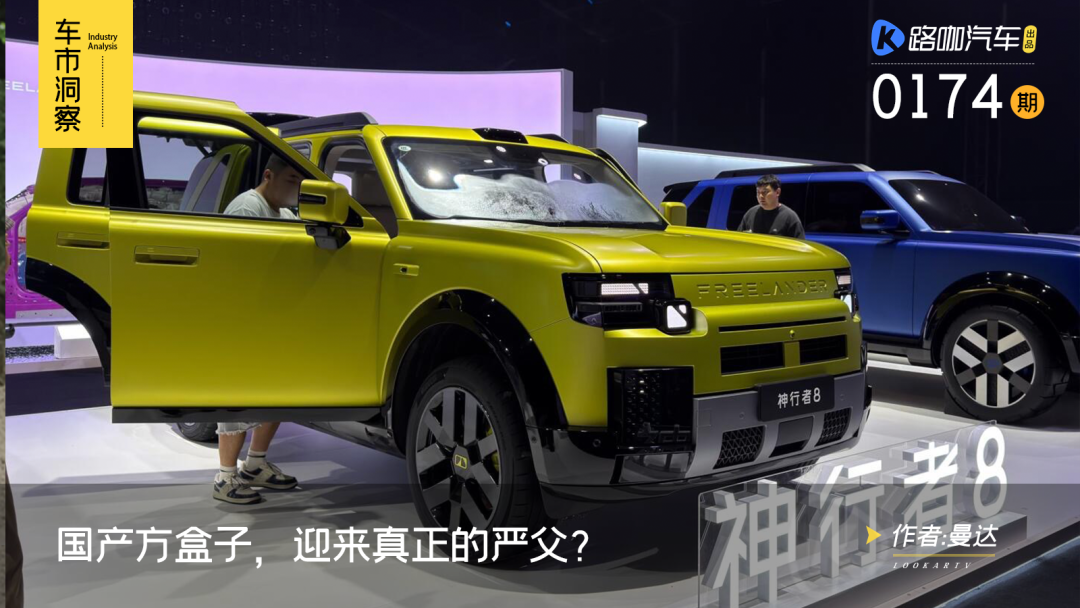
As new energy SUVs flood the market for large five/six-seater vehicles, the new energy boxy SUV has emerged as the hottest growth sector in the past two years. The new brand FREELANDER, a joint venture between Chery and Jaguar Land Rover, has made its foray into the boxy SUV arena with its inaugural model, the Freelander 8.
At the pre-sale launch event, the Freelander 8 was priced starting at 349,900 yuan, with a special Launch Edition (first edition) priced at 449,900 yuan. Boasting CATL batteries, Huawei ADS5 technology, and a third row that folds completely flat, this new vehicle embodies the logic of Chinese-style product definition throughout.
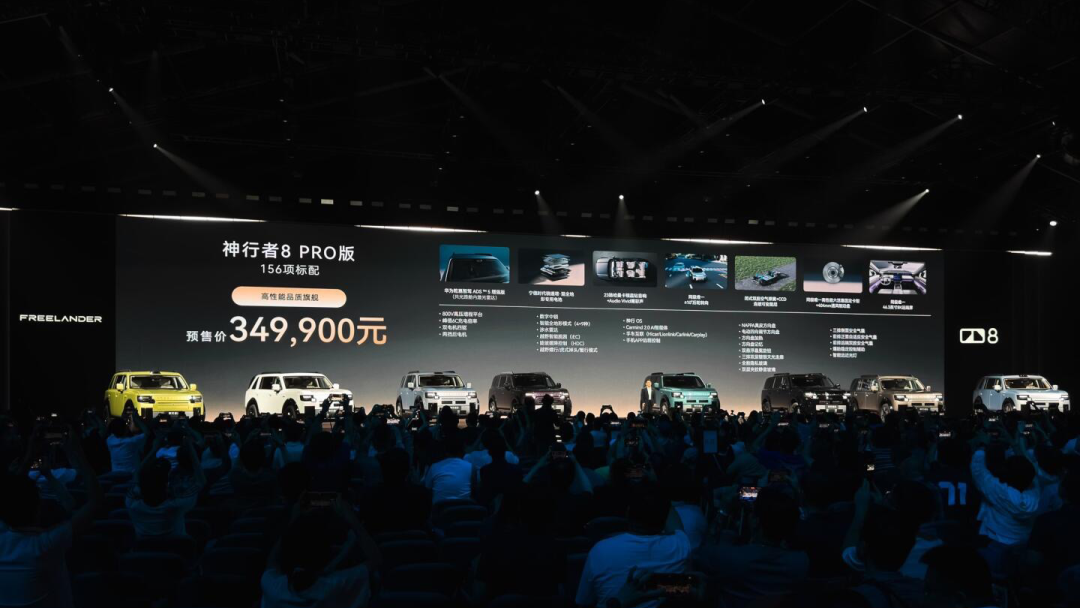
Not long ago, the Xingjie G9, the first boxy SUV under Hongmeng Zhixing, opened for pre-sale. With the introduction of the Freelander 8, the high-end new energy off-road market now boasts both 9-series and 8-series contenders.
The Freelander faces not only established domestic boxy SUVs but also continuously improving domestic 8-series flagships.
How Will the Boxy SUV Dynasty Revolutionize the New Energy Boxy SUV Market?
In 2020, annual sales of domestic boxy SUVs stood at just 131,000 units, representing a negligible share of the overall SUV market. By 2025, this figure had soared to 1.02 million units, accounting for 8.5% of the market—an almost eightfold increase in five years. Once the exclusive domain of hardcore off-road enthusiasts, the "boxy SUV" is now becoming a mainstream product in the mass consumer market. Moreover, its growth rate even outpaces that of another popular segment in the new energy era: GT wagons.
Behind this transformation lies the fact that Chinese automakers have redefined the "boxy SUV." Today's boxy SUVs prioritize urban commuting, intelligent cockpits, family travel, and light off-road capabilities. They are no longer just toys for a select few enthusiasts but represent a new SUV aesthetic.
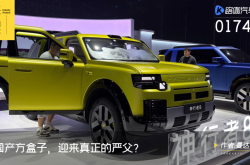
Consequently, more and more domestic brands are drawing inspiration from Land Rover. From styling language to body proportions, from floating roofs to broad shoulder lines, Land Rover—especially the Defender—has nearly become the "design blueprint" for new energy boxy SUVs.
FREELANDER, with its deep ties to Land Rover, fits seamlessly into this narrative. This new brand, a joint venture between Chery and Jaguar Land Rover, carries off-road DNA from the outset. As the brand's first mass-produced vehicle, the Freelander 8 clearly carries on Land Rover's classic proportions in its design: a castle-style body with a heavy base and light top, highly recognizable triangular windows, broad shoulders, and strong, straight lines.
The challenge is that in China's new energy market, which has entered the era of "boxy SUVs for everyone," design heritage alone is no longer sufficient. Because today's new energy boxy SUVs operate under a transformed competitive logic.
They are no longer traditional off-roaders adhering to the "ladder frame + mechanical four-wheel drive + large displacement" formula but are evolving into "all-terrain intelligent SUVs." The Freelander 8 is actively embracing this transformation.
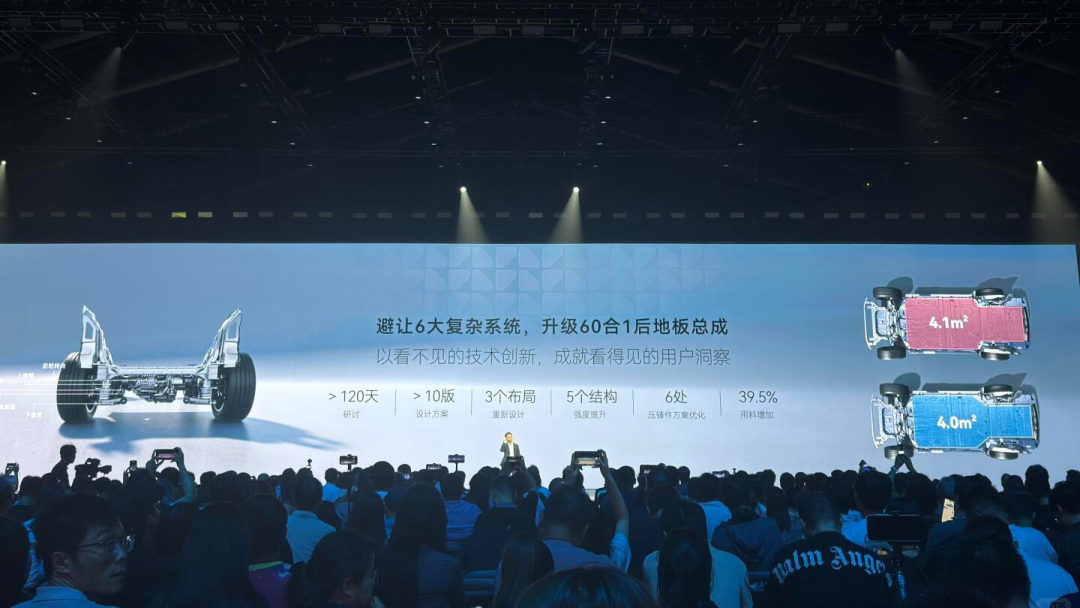
From a product structure perspective, it is not a true hardcore off-roader. First, it utilizes a unibody chassis rather than the traditional body-on-frame ladder frame commonly found in off-road vehicles. Second, it employs an extended-range powertrain, indicating that its positioning is not for extreme off-roading.
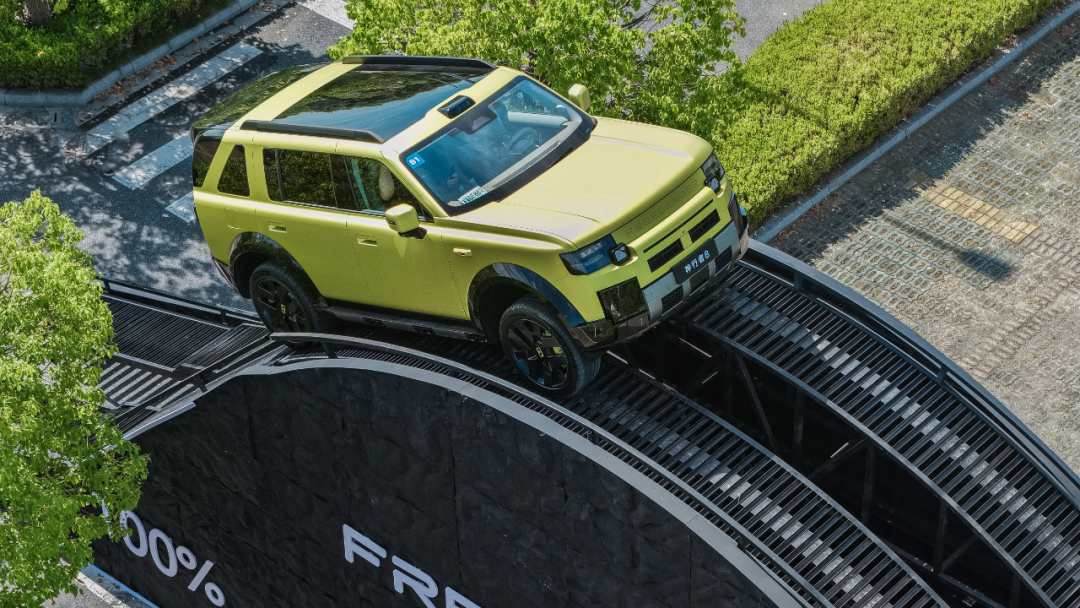
From a technical standpoint, extended-range systems are inherently unsuitable for prolonged high-intensity off-roading. Since the engine does not directly drive the wheels but generates electricity via a range extender, which is then output by the electric motor, continuous climbing or heavy-duty recovery scenarios pose challenges. While the electric motor delivers strong instant torque, its ability to sustain high power output is limited, and heat decay becomes a significant issue. Additionally, pure electric drive lacks the gear ratio amplification advantage of traditional low-speed gears in off-road vehicles, making it less effective than multi-speed mechanical setups in extreme climbing and heavy towing scenarios.
Thus, the Freelander 8 is actually targeting a market that balances urban and off-road needs, emphasizing all-scenario capabilities in the new energy era.
For example, in terms of power, the Freelander 8 comes standard with an 800V high-voltage extended-range platform, equipped with a CATL 60.3kWh Xiaoyao extended-range all-terrain-specific battery, achieving a CLTC pure electric range of 310 kilometers. Its dual-motor four-wheel-drive system delivers a total power of 610kW and a peak torque of 813N·m, with a zero-to-100km/h acceleration of 4.6 seconds. More importantly, it incorporates a 250kW two-speed motor at the rear axle.
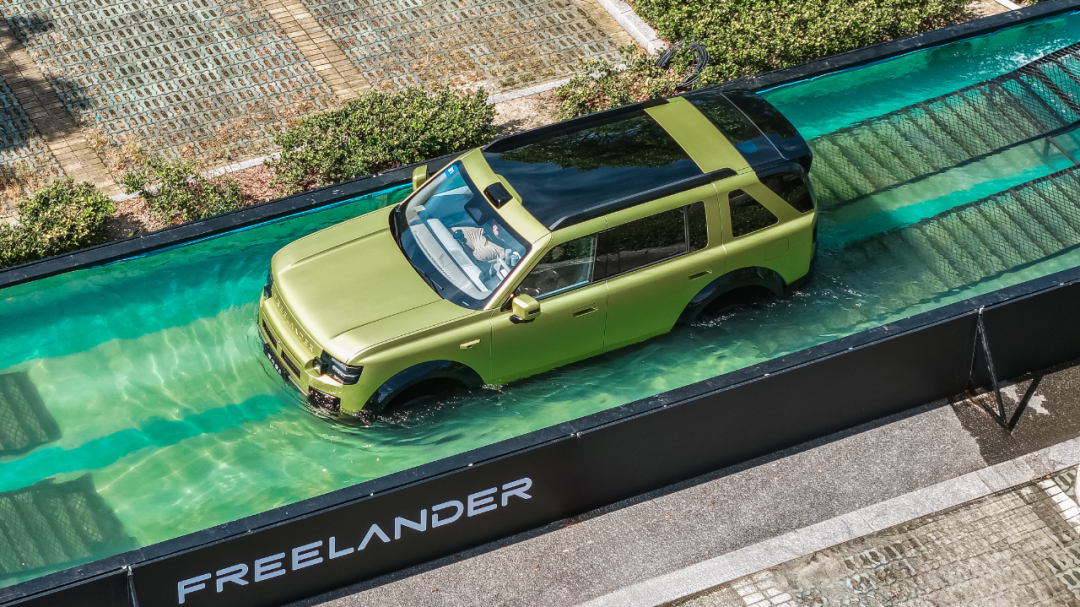
This setup essentially bridges the gap between low-speed climbing and high-speed efficiency in new energy SUVs. The high-speed gear optimizes urban and highway cruising efficiency, while the low-speed gear enhances climbing and recovery capabilities. Compared to traditional single-speed motors, it more closely aligns with the power logic of traditional off-road vehicles.
Where the Freelander 8 truly seeks to differentiate itself is in "intelligent all-terrain" capabilities. This is also the core direction of its deep collaboration with Huawei.
The Freelander 8 is equipped with the world's first i-ATS intelligent all-terrain system, transforming traditional off-roading "driving experience" into AI capability. Traditional off-road vehicles rely heavily on driver judgment: when to lock the differential, when to engage low-speed four-wheel drive, and when to adjust suspension height all require experience.
The Freelander 8 attempts to automate these operations. It integrates Huawei's 896-line LiDAR, binocular cameras, and ZF's AI road perception system, enabling it to identify terrain changes 10 to 15 meters ahead and automatically switch modes within 0.5 seconds. For example, when transitioning from paved roads to muddy terrain, the system proactively adjusts power output, suspension height, and torque distribution.
To some extent, it lowers the barrier to off-roading. This is also a common direction for today's new energy boxy SUVs: not to train users into off-road experts but to enable ordinary families to possess "visually strong" all-terrain capabilities.
The Freelander 8's True Competitors Are Domestic 8-Series Flagships
Today's Freelander 8 faces not only domestic boxy SUVs but also new energy "8-series flagships."
At the launch event, the pre-sale locked-in price for the Freelander 8's limited edition was set at 449,900 yuan. This price range places it directly in the territory of domestic flagship SUVs like the Li Auto L9, Aito M9, and Nio ES8. Its large six-seater version starts at 349,900 yuan in pre-sale. While the price may seem moderate, considering configurations such as Huawei's advanced intelligent driving, exterior colors, wheels, interiors, and air suspension, the actual transaction price will likely exceed 350,000 yuan.
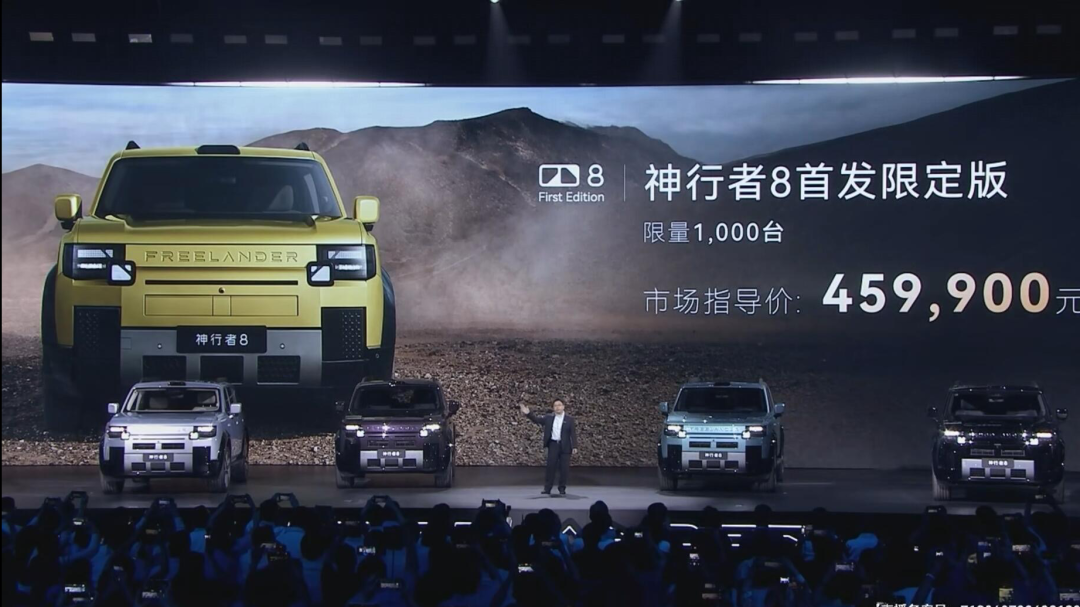
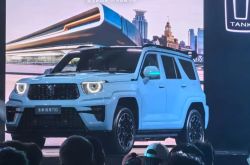
This is the core battleground for domestic "8-series flagships." Models like the Zeekr 8X, Denza N8L, Voyah Taishan X8, and even the Li Auto L8 and Nio ES8 have already formed a high-density competitive landscape in this segment.
While these models may not all adopt boxy designs, they share one commonality: they all emphasize "all-terrain capabilities." The Nio ES8 has added an intelligent wetland mode and all-terrain mode; the Zeekr 8X highlights multi-terrain adaptability; and the Li Auto L8 repeatedly reinforces light off-road scenarios. The term "all-terrain" is becoming a new label for domestic large SUVs.
This shift is quite intriguing. In the past, many domestic vehicles merely "copied Land Rover's styling," but now, domestic brands are delving into deeper capabilities like chassis, suspension, four-wheel drive, and off-road algorithms.
These were once the final technological moats of foreign luxury brands. Today's domestic new energy SUVs are no longer satisfied with merely "looking like a Land Rover" but are attempting to establish their own all-terrain technology systems. This is the greatest challenge facing the Freelander 8.
Because the competitive logic in the new energy market is no longer solely determined by brand history. Intelligent cockpits, advanced driver-assistance systems, charging efficiency, spatial experience, AI interaction, and even "fridge, TV, and sofa" features are now the dimensions most valued by large SUV users.
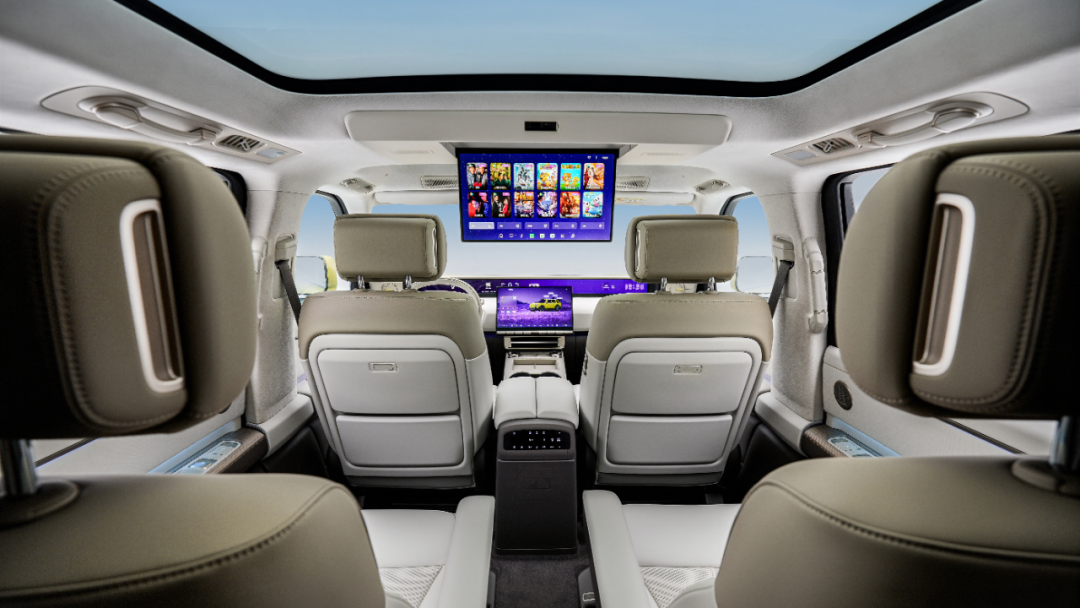
This is why the mid-to-large SUV market is now almost dominated by domestic brands. Consumer perceptions of new energy luxury have shifted from "brand worship" to "experience worship."
From this perspective, the Freelander 8 stands in a delicate position. On one hand, it does offer a relatively sincere pre-sale price; on the other hand, it faces the most brutal price segment in China's new energy SUV competition.
More critically, it must answer a question: When all domestic 8-series flagships are talking about all-terrain capabilities, light off-roading, and luxury intelligence, why do consumers need a new energy boxy SUV with ties to Land Rover? This is perhaps the true market test the Freelander 8 will face next.
-
![]()
From Over 4,000 Units Sold Monthly to Fewer Than 400: What Happened to the Zunjie S800?
-
![]()
After Chevrolet’s Departure, Which Japanese Car Brand May Be Next to Exit the Chinese Market?
-
![]()
Domestic 'Boxy SUV': Is It Up Against a Formidable Challenger?
-
![]()
Who Trapped the 'Boxy Cars' in the City?
-
![]()
Pure Electric Sedans in the 150,000-200,000 Yuan Bracket: Are They a Lost Cause?
-
![]()
Over the Past Two Decades, China Has Secured Over 130 Auto Parts Firms in Europe
-
![]()
Shenzhen's Autonomous Vehicle July Report: 200,000 km Traveled, 3.17 Million Orders Processed, 60% Increase in Nighttime Activity! Beyond 'Five-Party Collaboration,' Full Citywide Deployment
-
![]()
The "Happiness" of Xpeng