Who Trapped the 'Boxy Cars' in the City?
 08/17 2026
 426
426
Lead
Introduction
Is it the automakers' pursuit of profit, or the consumers themselves?
Before the 2026 Chengdu Auto Show even begins, the competition around boxy cars is already heating up. Fangchengbao Titan 9 has released its official photos, the Shenxing 8 has opened for pre-sale, the Xiangjie G9 is about to hit the market, the Trumpchi Yue 7 has made its global debut, and the iCAR V25 is ready to go...
From 100,000 to 500,000 yuan, from fuel-powered to pure electric to extended-range models, from domestic to joint ventures, nearly every automaker you can name has launched one or even several boxy car models.
Five years ago, boxy cars were a niche toy for off-road enthusiasts, with annual sales of just over 100,000 units across the entire market. Five years later, boxy cars have become a major track (Chinese term for 'sector' or 'market segment') with 1.5 million annual sales, featuring over 40 models crowded together. Every automaker is now talking about "toughness," "off-roading," and "poetry and distant places."
This seems like a complete victory for China's tough-style off-road vehicles, as more and more consumers are choosing boxy car models. However, upon closer inspection, the selling points, focuses, and product features of boxy cars in the current market have changed—
The Xiangjie G9, with a pre-sale price starting at 439,800 yuan, heavily promotes its HarmonyOS cockpit, Qiankun Intelligent Driving ADS 5, 896-line LiDAR, full-scenario intelligent interaction, air suspension, and rear-wheel steering during its launch event, while only briefly mentioning its off-road parameters.
The Fangchengbao Titan 9, BYD's flagship large six-seater boxy SUV, emphasizes spaciousness, comfort, home luxury, and fast-charging technology. In its official promotional materials, nine out of ten images showcase the interior and space, with only one depicting an off-road scenario.
In the past, off-road vehicles were more likely to highlight features like higher ground clearance, stronger four-wheel-drive systems, larger approach and departure angles. Now, the focus of boxy cars has shifted to refrigerators, TVs, large sofas, intelligence, air suspension, spaciousness, low energy consumption, and comfort...
From being an "off-road tool" to a "city lifestyle," more and more boxy car models are turning their off-road capabilities into a "capability reserve." The true value of boxy cars is shifting from "where they can go" to "what kind of life they can offer" and "what kind of life consumers want to live."
The boxy car remains the same, but "off-roading" is no longer its only answer. However, is the highly sought-after urban style necessarily the ultimate answer for boxy cars?
01 The Tank is Confused! Success and Failure Both Due to Off-Roading
BYD's Fangchengbao has taken the lead, Chery's iCAR and Jetour have quickly followed suit, and even Shenlan, Trumpchi, and Beijing Off-Road are jumping on the bandwagon. The consensus in the industry is that "no SUV is complete without a boxy design," as if any automaker without a boxy model is falling behind the times.
But this market-wide frenzy has really hurt Great Wall Motors' Tank brand.
When discussing tough-style off-roading in China, one cannot avoid mentioning the Great Wall Motors' Tank brand. Just the Tank 300 model alone has become a prominent sight on the Sichuan-Tibet Highway. However, Tank sales have not been as impressive in the first half of this year. From January to June, cumulative Tank sales were approximately 92,700 units, down 10.6% year-on-year. In June, sales were 15,700 units, down 27.2% year-on-year.
As the most representative brand in China's tough-style off-road market, the decline in Tank sales, while related to the overall automotive market, is most directly caused by the increasing number of similar products on the market and intensifying competition.
What's even more uncomfortable for Tank is that despite the growing number of boxy cars on the market, consumer demand for "pure off-roading" has not increased proportionally, significantly diminishing Tank's off-road advantages.
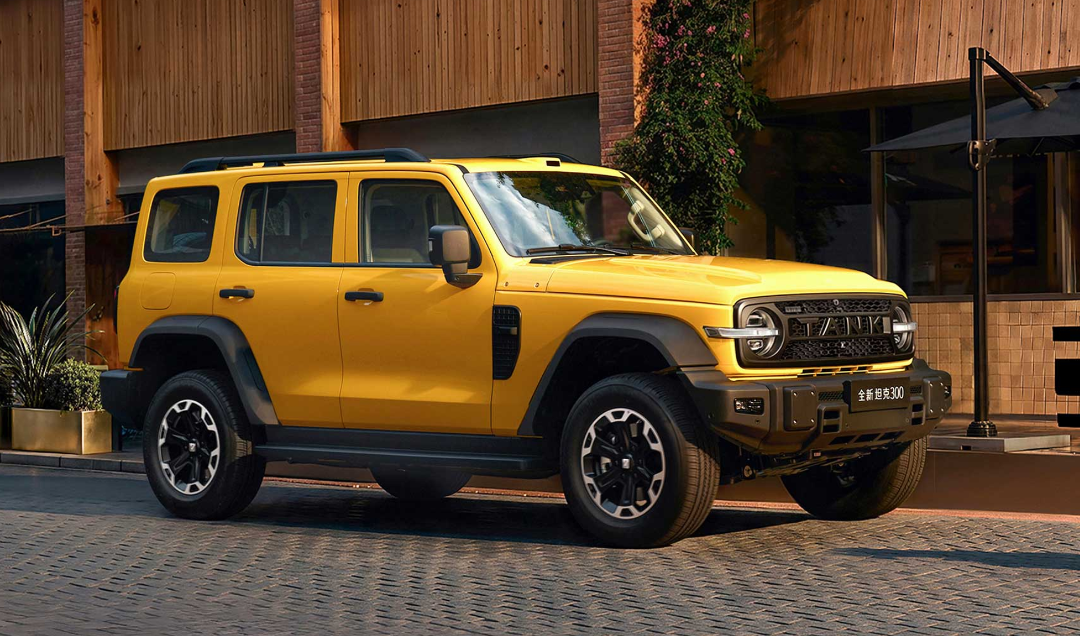
According to statistics, among the top ten best-selling boxy cars in the first half of the year, more than half feature unibody designs. Except for the Tank series, which is still holding on, sales of other genuine tough non-unibody off-road vehicles are lackluster. "Pseudo-tough" models like the iCAR V23, Baojun Yue Also, and Havral Menglong are selling much better than many "real off-road" vehicles.
Take the Fangchengbao Titan 7 as an example. In July just passed, the Titan 7 sold 20,320 units, ranking first by a wide margin. You wouldn't naturally assume the Titan 7's off-road capabilities are stronger than the Tank 300's, but the Titan 7 looks good, drives well, is fuel-efficient, suitable for home use, and can handle light off-road terrain. That's enough.
Consumers vote with their feet, and automakers respond with products that cater to them. You want a tough look? Here's a boxy design. You want good city drivability? Here's a unibody. You want fuel efficiency? Here's a plug-in hybrid or extended-range model. You want comfort? Here's air suspension and seat massage. You want intelligence? Here's LiDAR and advanced intelligent driving.
As the pioneer of tough-style off-roading, Tank is now in an awkward position. The reason is simple: Tank's brand image is too "tough," making it difficult to transition towards urban home use. But if it doesn't transition, market demand for urbanized models grows while Tank's share shrinks.
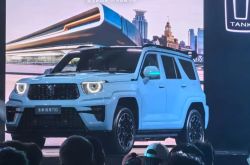
The new Tank 500 adds a refrigerator, TV, and LiDAR as part of its transformation attempt—but whether it will succeed remains to be seen. Moreover, the crucial point is that who can stop the evolution of the boxy car market in this era?
02 Entering the Third Stage of Boxy Car Evolution
Stop talking about big frames and three locks. Consumers are telling us with their wallets that what they want is not off-roading itself, but the feeling of off-roading. So you see, the evolution of boxy cars 3.0 has already begun quietly.
The first stage, from 2020 to 2023, was the "tough off-road era."
During this phase, the Tank 300 burst onto the scene, almost single-handedly pulling tough-style off-roading out of its niche enthusiast circle. It was the first time China's off-road brand stood prominently in the spotlight.
Boxy cars during this period were defined by their off-road capabilities, with a very clear user profile: off-road veterans and self-drive enthusiasts willing to sacrifice some comfort for better off-road performance and accepting higher fuel consumption and poorer city driving experiences.
The Tank 300 solved the problem of "I want to go off-roading, but there wasn't a personalized and affordable option before." Once this gap was opened, the market quickly entered the second stage: from 2024 to 2025, the "new energy boxy car era."
Seeing Tank's success, brands like Fangchengbao, Jetour, and iCAR entered the market in large numbers. Boxy cars truly moved from the "off-road circle" to the mainstream market for the first time, and the barrier to off-roading was significantly lowered by new energy technologies.
Instant torque from electric motors, electronically controlled four-wheel-drive systems, intelligent power distribution, combined with plug-in hybrid, extended-range, and pure electric technologies, allowed many capabilities previously exclusive to tough off-road vehicles to enter ordinary consumers' lives at lower costs.
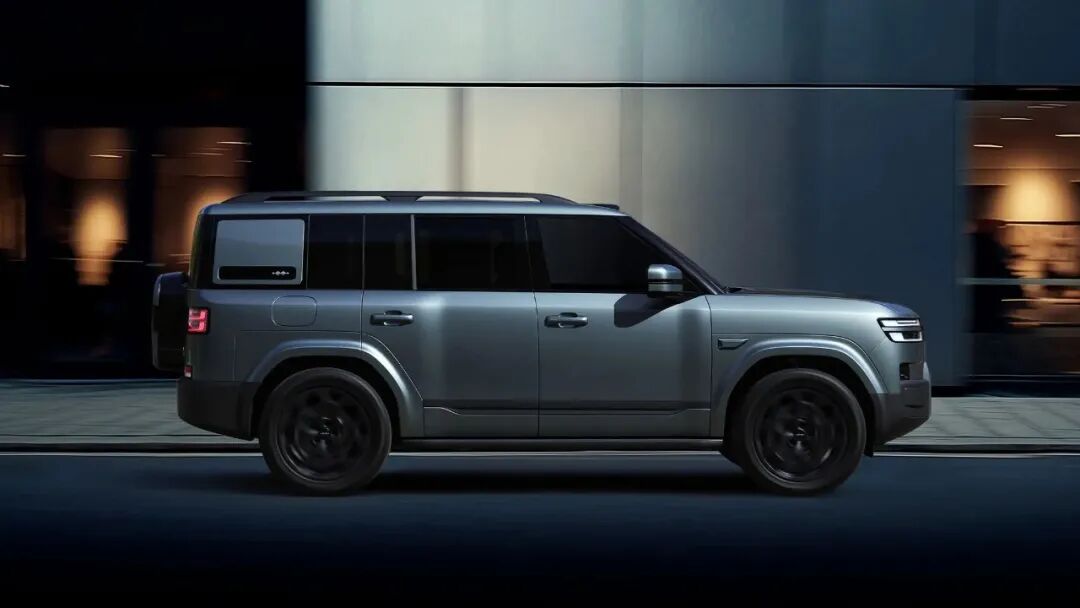
More importantly, automakers finally realized: consumers don't necessarily need a vehicle that can conquer the wilderness, but they love a vehicle that "looks like it can conquer the wilderness."
Thus, "urban + light off-roading" became the new mainstream solution. Boxy cars began to offer better urban comfort, lower energy consumption, richer intelligent configurations, and larger spaces.
By 2026, the story changed again. The third stage is the "era of boxy car lifestyles."
As more players like Huawei and Xiaomi enter the market, the logic of competition shifts once more. Competing on who has a stiffer frame, more locks, or who can climb steeper slopes struggles to justify why a boxy car should cost hundreds of thousands of yuan. What consumers truly value are the cockpit, intelligent driving, vehicle ecosystem, spaciousness, and above all, comfort.
So you'll notice that more and more boxy cars are actively embracing "urbanization," placing "family," "camping," "travel," and "intelligent living" at the center of their promotional materials. Automakers are shifting from selling products and features to selling concepts and desirable lifestyles.
This is not the decline of boxy cars or a betrayal of off-roading, but rather their further evolution.
From the Tank 300 era of "I'm going to conquer the wilderness" to the new energy boxy car era of "city commuting and weekend light off-roading," and now to "intelligence, comfort, family, and lifestyle," boxy cars have always been evolving.
03 Unabated Demand, Boxy Car Competition Imminent
More and more ordinary families, even young consumers and female users, are choosing boxy cars. They may not know what three locks are for but see that boxy cars "look cool." They may not challenge bomb craters or "stew pots" but enjoy weekend camping trips in their boxy cars. They may not need extreme off-road capability but care deeply about rear space, refrigerators, seats, and intelligent cockpits.
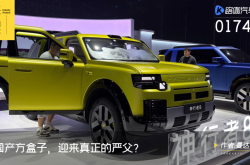
At the upcoming 2026 Chengdu Auto Show, you'll see a variety of boxy car models: Fangchengbao Titan 9, Jetour Traveler 7, iCAR V25, Trumpchi Yue 7, and others will make their debut, covering markets from mainstream home use to high-end new energy, from urban light off-roading to tough off-roading.
Clearly, those now at the boxy car table are no longer just foreign brands or traditional off-road players like Tank and Fangchengbao. More and more new energy brands and mainstream domestic brands are entering the market with boxy designs—boxy cars are no longer a niche product category but have become a "super design language."
In this market, three rough tiers can be identified.
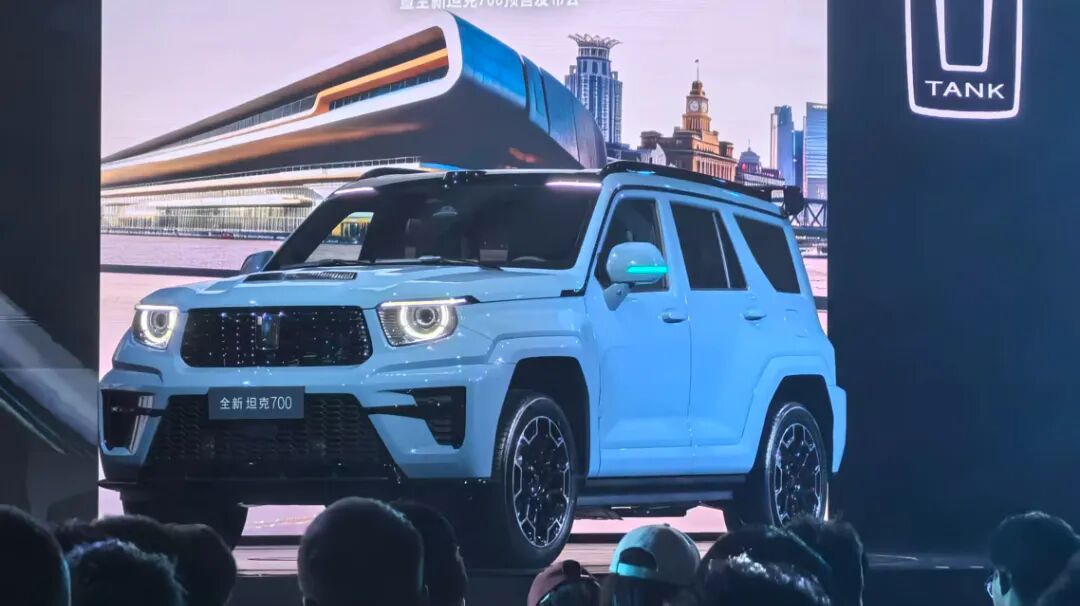
At the top is the professional off-road market. Small but stable, models like the Tank 700, Yangwang U8, and Mengshi will defend this territory. However, sales won't be huge—a few tens of thousands of units per year is the ceiling.
The middle tier is the boxy car lifestyle market. This is the biggest pie and the most fiercely contested area. At mainstream price points from 150,000 to 500,000 yuan, the vast majority of boxy car models will concentrate here.
The bottom tier is the appearance-focused market. These models have only the boxy look and nothing else, relying on low prices for volume. This market will shrink because consumers are becoming more discerning—looks without substance will eventually be eliminated.
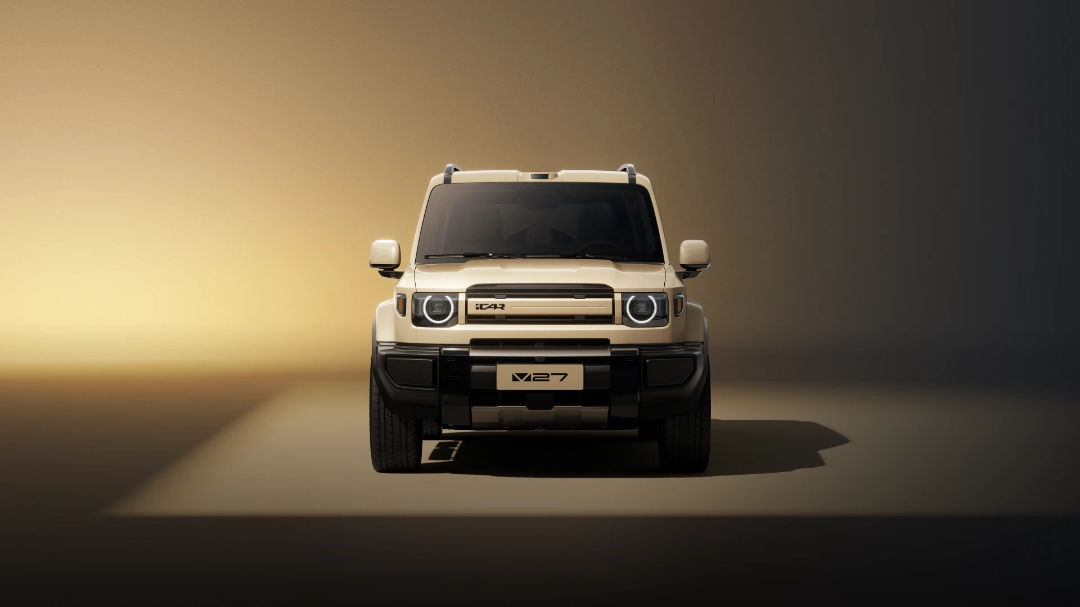
Currently, most automakers are chasing the middle tier, the 100,000 to 500,000 yuan price range.
Here, Fangchengbao temporarily (temporarily) leads because it understood the trend earliest and shifted boxy cars from "off-roading" to "home use" first. The Titan 3, Titan 7, and Titan 9 cover the full price spectrum from 130,000 to 500,000 yuan, each model precisely targeting most users' needs without blindly pursuing "toughness."""Chery's Jetour and iCAR follow a cost-effective route, quickly gaining volume in the 100,000-200,000 yuan entry-level market with lower prices. Their problem is insufficient brand strength, making upward mobility difficult—they're stuck competing at the low end. Similar issues apply to Beijing Off-Road, 212, and Havral.
The most anticipated players might still be Huawei and Xiaomi.
Although newcomers to the automotive industry, they understand how to play the lifestyle card. Huawei offers intelligent cockpits, intelligent driving, and brand premium; Xiaomi provides ecosystems, user bases, and traffic. They can easily elevate the competition to dimensions like "intelligent experience," "lifestyle ecosystem," and "fixed circles."
In reality, the boxy car war has never been about off-roading. From the Tank 300 to the Fangchengbao Titan 7, and now to the Xiangjie G9, the weight of off-roading decreases while the weight of lifestyle increases. The true evolution of boxy cars is transforming from vehicles built purely for off-roading to vehicles capable of carrying more aspects of life.
So in the end, rather than saying boxy cars are trapped in cities, it's more accurate to say they're actively moving towards a broader mainstream market. But while the mainstream market has low barriers, it's also finicky—the new era of the boxy car market has only just begun.",
-
![]()
From Over 4,000 Units Sold Monthly to Fewer Than 400: What Happened to the Zunjie S800?
-
![]()
After Chevrolet’s Departure, Which Japanese Car Brand May Be Next to Exit the Chinese Market?
-
![]()
Domestic 'Boxy SUV': Is It Up Against a Formidable Challenger?
-
![]()
Who Trapped the 'Boxy Cars' in the City?
-
![]()
Pure Electric Sedans in the 150,000-200,000 Yuan Bracket: Are They a Lost Cause?
-
![]()
Over the Past Two Decades, China Has Secured Over 130 Auto Parts Firms in Europe
-
![]()
Shenzhen's Autonomous Vehicle July Report: 200,000 km Traveled, 3.17 Million Orders Processed, 60% Increase in Nighttime Activity! Beyond 'Five-Party Collaboration,' Full Citywide Deployment
-
![]()
The "Happiness" of Xpeng