What Are the Odds of China's Battery-Swapping Heavy Trucks Making Inroads into Europe?
 08/27 2026
 510
510
Recently, CATL and Octopus Energy, the UK's largest energy company, announced the establishment of a joint venture—Swaptopus—in London. Both parties hold a 50% stake each, aiming to jointly build a battery-swapping network for heavy trucks in Europe. According to the plan, the first batch of demonstration battery-swapping stations will be launched in the UK in 2027, prioritizing coverage of major highway arteries and core logistics ports. The network is expected to expand to over 30 stations by 2035.
This is far more than just Chinese companies deploying energy replenishment networks in Europe. It's important to note that during the era of fuel-powered vehicles, Europe was the global “hub” of the heavy truck industry, with brands like Scania, Volvo, Mercedes-Benz, MAN, and DAF dominating the market, with annual sales consistently ranging from 250,000 to 300,000 units. Now, amid the wave of electrification and intelligence, CATL's early entry could lay the foundation and provide momentum for Chinese heavy trucks to find a breakthrough in the European market through the battery-swapping model, enabling greater development space.
Complementary Strengths
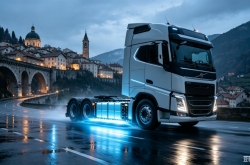
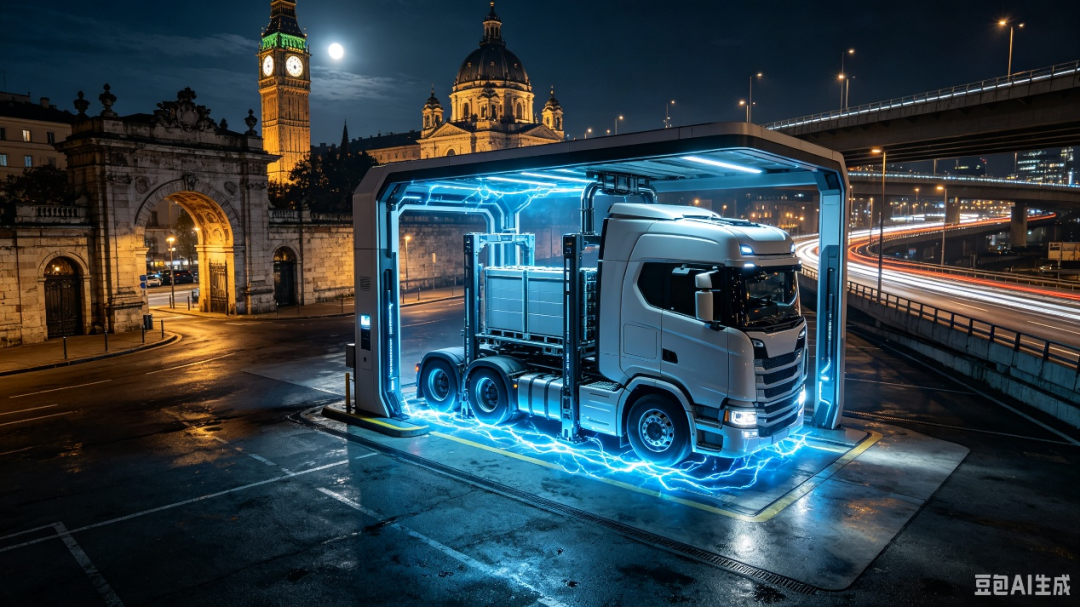
According to the cooperation agreement between CATL and Octopus Energy, the joint venture will build battery-swapping super hubs, with each station equipped with multiple battery-swapping bays and designed to serve thousands of heavy trucks daily. A single battery swap will take just 5 minutes. In addition to mainline logistics, both parties plan to embed battery-swapping stations in large distribution centers to expand into urban delivery scenarios.
According to the roadmap disclosed by both parties, the project will see the first batch of demonstration battery-swapping stations built in the UK by 2027. Initial site selections will focus on major highway arteries and core logistics port nodes to ensure pilot testing in high-frequency operational scenarios. The long-term strategic goal is to expand the network to over 30 stations by 2035, with service areas gradually radiating from England to Scotland and Wales, ultimately forming a battery-swapping infrastructure system spanning the entire UK and connecting major economic zones and core arteries. Once fully operational, the network will provide standardized and efficient energy replenishment services to various logistics and transportation companies, port authorities, large retail businesses, and private fleet operators across the UK.
It is understood that CATL provides the core technology of the Qiji battery-swapping solution, which relies on the synergy of battery packs, battery-swapping stations, and cloud platforms. It ensures that a single battery swap takes no more than 5 minutes. Each standard station is equipped with 24 battery packs and can serve 192 trucks daily. This model adheres to the principle of separating the vehicle from the battery, with battery assets held by a battery bank, while users only purchase the chassis without the powertrain. Based on an estimated annual mileage of 100,000 kilometers, the cost per kilometer is RMB 0.62 lower than that of diesel trucks, resulting in an additional annual profit of RMB 60,000. On the other hand, Octopus Energy, founded in 2015, has grown into the UK's largest household energy supplier over the past decade. However, the company's core asset is not electricity itself but its self-developed AI energy management platform, Kraken—a virtual power plant “superbrain” managing over 50 million accounts, processing more than 15 billion data points daily, with operations covering 18 countries and serving 7.2 million retail customers and over 40,000 industrial and commercial users. Clients include Tokyo Gas, EDF, and E.ON.
The capabilities of the two companies perfectly complement each other: one specializes in battery-swapping hardware and on-site operations, while the other handles power sourcing, intelligent dispatch, and market-based transactions, forming a significant core competitiveness.
It is worth noting that this is not the first time a Chinese automaker has deployed a battery-swapping model overseas. As early as 2022, NIO began building battery-swapping stations in Europe. Currently, NIO has deployed 93 battery-swapping stations overseas. Although the pace of NIO's station deployment in Europe has been slow due to factors such as inconsistent cross-regional standards, heavy asset investment return cycles, and European power market regulations, its demonstration effect has shown Europe and the world the promising development prospects of China's battery-swapping technology and business model. This has also, to a certain extent, accumulated valuable local operational experience and market awareness for CATL's current collaboration with Octopus Energy to explore the European battery-swapping market.
Filling the Battery-Swapping Void in Europe
Earlier this year, media reports indicated that Chinese electric heavy trucks are accelerating their entry into the European market. Several Chinese companies, including BYD, Geely, Sany Heavy Industry, Sinotruk, Winneway Technology, and Supercat Power, have introduced electric freight trucks to Europe, with some models planned to start deliveries this year.
However, the reality is that the electrification of European heavy trucks is progressing much slower than policy targets. According to EU requirements, heavy vehicles should achieve a 45% reduction in CO2 emissions by 2030 compared to 2019 levels. Truck manufacturers must reduce CO2 emissions from new vehicles by 15% by 2025, 45% by 2030, 65% by 2035, and 90% by 2040. In March 2026, the EU passed an amendment extending the 2025 target of a 15% reduction to the period from 2026 to 2029. Nevertheless, in 2025, approximately 263,000 heavy-duty trucks were sold in the EU, with zero-emission vehicles accounting for only about 5,000 units, or just 1.9%. In the first quarter of 2026, the proportion of purely electric heavy trucks among newly registered trucks in the UK was even lower at 0.9%.
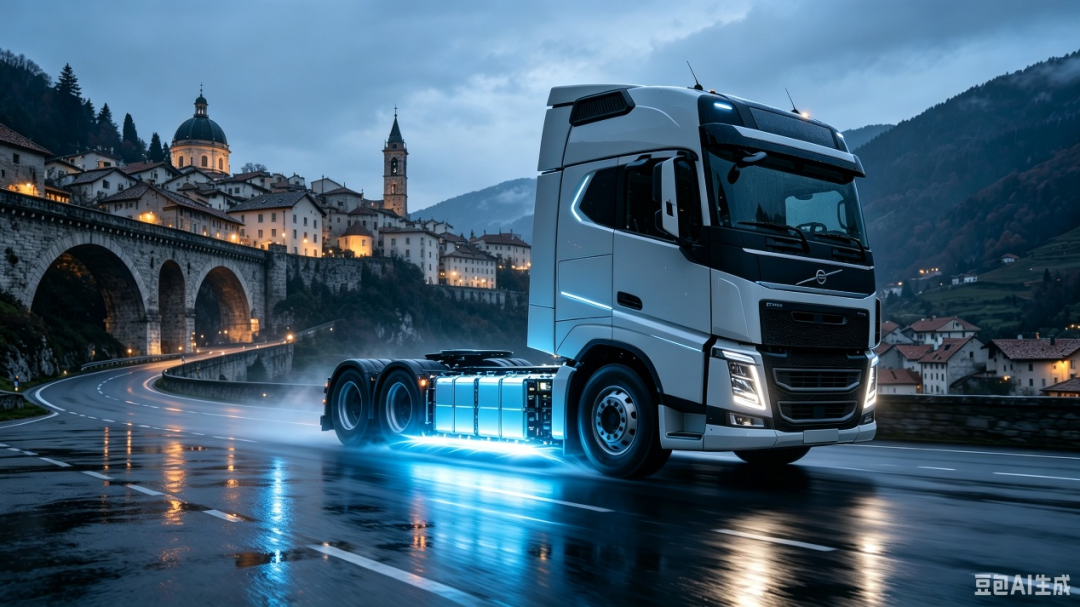
Industry insiders believe that the core reason for this dilemma is the insufficient energy replenishment infrastructure. According to public data, as of 2025, the 27 EU member states have only 1,519 public high-power charging stations above 350kW, with only about 35% dedicated to heavy vehicles. Data from the European Automobile Manufacturers' Association (ACEA) shows that there are currently only about 1,100 truck charging points in Europe, with 50,000 needed by 2030. EU AFIR regulations require that by 2030, heavy truck charging stations must be set up every 120 kilometers along major highway networks. However, charging station construction involves a series of issues such as grid infrastructure, land use, and maintenance, resulting in long timelines and high costs.
The battery-swapping model can precisely address these issues. Greg Jackson, founder of Octopus Energy, pointed out, “Battery-swapping stations will be equipped with a large number of batteries, which we can charge during periods of low grid load and cheap electricity prices. Providing 500 kWh of electricity for a truck, but drawing power during off-peak grid periods, helps utilize surplus capacity and reduce overall electricity costs.” Roland Berger partner Zhuang Jingqian told the media that the inevitable global trend toward zero-carbon logistics is one of the core driving forces behind this collaboration. The Qiji battery-swapping model has already established a mature commercial closed loop (closed loop) in China, and exporting this proven technology and standard to Europe is a natural step in globalization.
More importantly, part of the reason for CATL's collaboration may be to compete for global technical standard-setting in heavy truck energy replenishment. Currently, the energy replenishment route for European heavy truck electrification has not yet been finalized, with charging and battery swapping still in competition. If CATL can leverage Octopus Energy's local network to establish a profitable battery-swapping business model in the UK and even across Europe, the interface standards and operational norms of Qiji battery swapping could potentially evolve from “enterprise standards” to “industry benchmarks.”
Significant Resistance Cannot Be Ignored
In March of this year, the UK Department for Transport announced a GBP 1 billion special support program for zero-emission vans and trucks, providing subsidies for the purchase of zero-emission vehicles and the construction of charging infrastructure. The program will run until 2030, with subsidies for the heaviest zero-emission vehicles reaching up to GBP 81,000. Meanwhile, Germany, France, and the Netherlands are rapidly expanding urban zero-emission zones and green freight corridors, with demand for electric heavy trucks shifting from policy-driven to market-driven. According to forecasts published by market research institutions, the European electric truck market was worth approximately USD 4.4 billion in 2026 and is expected to grow to USD 14.7 billion by 2035, with a compound annual growth rate of 14.4%.
While the market prospects are broad, Chinese automakers also face significant real-world resistance.
One of the major challenges comes from European local truck manufacturers. For the battery-swapping model to achieve economies of scale, heavy trucks from different brands must standardize battery dimensions, hardware interfaces, and communication protocols. However, according to foreign media reports, European truck manufacturers are not very supportive of CATL-Octopus Energy's battery-swapping joint venture. David Cebon, Director of the Centre for Sustainable Road Transport at Cambridge University, warned that Volvo, Scania, Mercedes-Benz, MAN, and DAF would “fight tooth and nail” and were unwilling to relinquish battery intellectual property rights or submit to CATL's unified architecture. Sun Jie, an analyst at S&P Global Mobility, bluntly stated, “European OEMs may be reluctant to adopt standards dominated by CATL, as this would limit their control and differentiation.”
European truck manufacturers are also continuously releasing new information to demonstrate that their chosen electrification paths are no less advanced. Renault Trucks has increased the maximum range of its E-Tech T to 660 kilometers, stating that operational data from 70,000 connected European tractors shows that 80% of actual long-haul missions are already within range coverage. When utilizing the mandatory 45-minute driver rest period every 4.5 hours for fast charging, this proportion can rise to 90%. Mercedes-Benz Trucks has released data from over 3,000 analyzed trips on its eActros network, confirming the feasibility of daily long-haul operations. MAN Truck & Bus demonstrated a stable charging current of 3,000 amperes in the NEFTON research project, showing that 3 MW fast charging can restore 400 kilometers of range in 10 minutes, theoretically eliminating range anxiety entirely.
In response, Thomas Fabian, Head of Commercial Vehicles at the European Automobile Manufacturers' Association (ACEA), advocated that the priority should not be locking fleets into proprietary battery-swapping standards but accelerating open, interoperable solutions.
Another challenge that cannot be ignored is cost. Battery swapping is a capital-intensive, high-investment, and long-cycle industry, a fact publicly acknowledged by CATL Chairman Zeng Yuqun. The eight-year construction timeline from the first batch of demonstration stations in 2027 to over 30 stations by 2035 implies significant capital commitment and uncertain return cycles. Coupled with deeper geopolitical factors, these bring many uncertainties to the prospects of this collaboration.
From Product Exports to Comprehensive Solution Exports
Standing at the critical juncture of the start of the “15th Five-Year Plan” period, Li Shaohua, Deputy Secretary-General of the China Association of Automobile Manufacturers, believes that over the next five years, exports are expected to become the core growth driver for new energy heavy trucks. The export model will shift from low-price volume sales to mid-to-high-end complete vehicle exports and brand exports of comprehensive energy solutions. “The 'going global' of energy infrastructure centered on battery swapping and charging is entering a golden window period, becoming an important catalyst for China's auto industry to move from product exports to ecosystem exports,” said Zhang Yongwei, Chairman of the Che Baihui Research Institute. He also noted that currently, China's auto industry's “going global” mainly involves manufacturing, services, and infrastructure exports. With the acceleration of global energy transition and vehicle electrification, China's new charging and battery-swapping infrastructure is entering a golden period for overseas expansion.
Some analysts believe that CATL's “expedition” to Europe this time holds significance far beyond a mere overseas investment. It represents an important step for China's new energy industrial chain to move from product exports to business model and standard exports. China's heavy truck battery-swapping model is expected to enter the European market in a large-scale commercial manner. Data shows that China's core invention patent authorization rate in the battery-swapping field has reached 92.6%. In the three core subcategories of battery-swapping interfaces, mechanical structures, and thermal management coordination, Chinese patents account for as high as 82.3%. Earlier this year, in its latest energy transition plan, the European Commission included battery swapping as a core energy replenishment path for the first time and explicitly proposed referencing Chinese technology and standards to formulate unified European battery-swapping norms. Additionally, during pilot battery-swapping projects in France, the UK, Italy, and other countries, China's battery-swapping model has become an important reference.
It should be noted that China's battery-swapping “going global” cannot simply replicate domestic operational models but should adopt localized approaches more suitable (more suitable) for local development based on different market conditions. In particular, the “going global” of infrastructure represented by battery-swapping stations faces different challenges from the automotive manufacturing industry, including long overseas certification cycles, large-scale asset investments, long investment recovery periods, and involvement with multiple ecological entities such as local power grids, operators, and policy systems. Global expansion must proceed step by step. Zhang Yongwei suggested that qualified enterprises should transition from being mere equipment suppliers to integrated “investment, construction, and operation” comprehensive operators, shifting from one-time transactions to long-term operations and obtaining sustained revenue through continuous services.
In the era of fuel-powered vehicles, Chinese heavy trucks never truly broke into the European market. However, amid the wave of new energy and intelligence, the underlying logic of industrial competition is being rewritten. Heavy truck companies will shift from competing on engines and transmissions to competing on batteries, energy replenishment efficiency, and total lifecycle costs. In this new arena, China is no longer just a follower but a participant with certain first-mover advantages. As a trailblazer in this field, whether CATL's battery-swapping technology can adapt to Europe's complex grid environment, whether its business model can gain recognition from local fleet operators, and whether standardization efforts can break through resistance from European automakers will all be put to the test.
This will undoubtedly not be a smooth journey, and the answers may only emerge years later. However, one thing is certain: CATL's collaboration with Octopus Energy has already placed a significant piece on the chessboard for China's heavy truck industry in Europe. Regardless of the final outcome, this exploration itself—moving from product exports to standard exports—marks an important leap in China's new energy industry's global expansion. In this multi-faceted competition involving technology, capital, and standards, the curtain has only just risen.

Image: From the Internet
Article: Auto Review
Layout: Auto Review
-
![]()
Can the Affordable IONIQ V Win Back Consumer Hearts?
-
![]()
【Xauto Intelligent Driving Rankings】Li Auto L9 Livis OTA9.1.0 Urban Evaluation Report
-
![]()
SAIC Audi Executives Claim Four-Ring Logo No Longer Holds Much Sway—Is That Accurate?
-
![]()
What Are the Odds of China's Battery-Swapping Heavy Trucks Making Inroads into Europe?
-
![]()
Vision: Has Li Auto's Extended-Range Ace 'Misfired,' Turning Guidance into a 'Pipe Dream?'
-
![]()
Too Pessimistic! MiniMax Isn't Doing That Badly
-
![]()
The 150,000-Yuan SUV Market: A Tempting yet Elusive Prize
-
![]()
The Endgame for New Car-Making Forces Is Set: Only a Three-Year Window Remains, Who Will Be Completely Eliminated?