SAIC Audi Executives Claim Four-Ring Logo No Longer Holds Much Sway—Is That Accurate?
 08/27 2026
 367
367
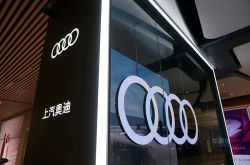
Since Audi entered the Chinese market, its four-ring logo has been an iconic symbol. It's no exaggeration to state that during the era of fuel-powered vehicles, Audi's four-ring emblem represented a certain level of prestige. Even if it couldn't be deemed superior, it at least commanded respect.
However, the landscape has shifted with the establishment of SAIC Audi. The new brand under SAIC Audi, AUDI—a new energy vehicle (NEV) brand—has abandoned the traditional four-ring logo, opting instead for a letter-based logo. In SAIC Audi's perspective, the letter-based logo might project a more technologically advanced image compared to Audi's classic four-ring emblem.
On August 26, Xie Shiqi, Deputy General Manager of SAIC Audi's Marketing Division, addressed this topic positively in an interview. He acknowledged that when AUDI, as a nascent brand, launched its first model, it faced skepticism from the public. However, the situation has since evolved. He believes that, judging by the actual results, SAIC Audi's decision to venture into the NEV market with the AUDI brand was a well-judged move.
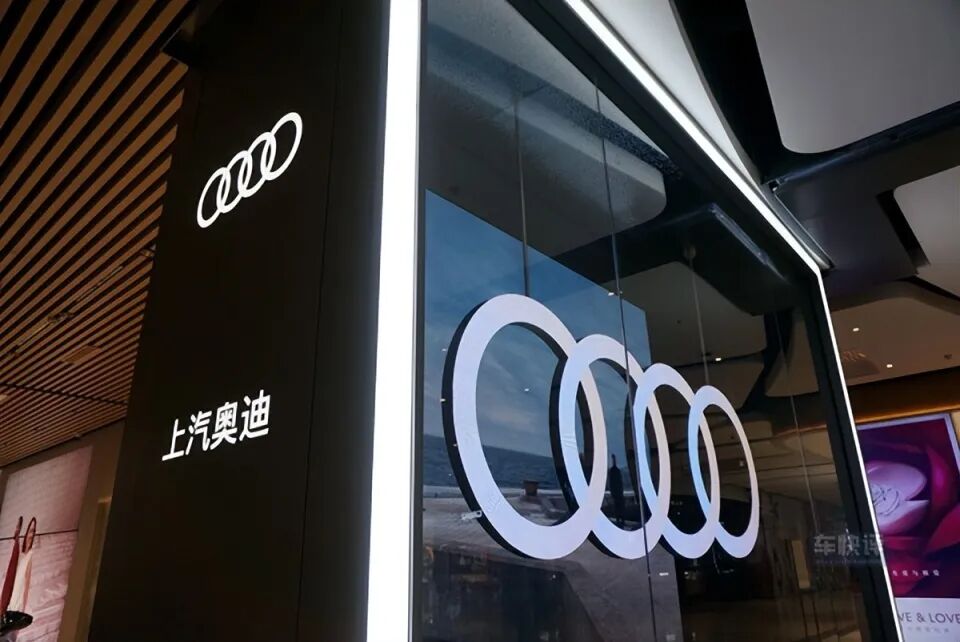
Xie also referenced feedback from SAIC Audi dealers, stating that the four-ring logo no longer garners as much attention as before. In fact, if a vehicle were equipped with the four-ring logo, there might be doubts regarding its intelligence and electric capabilities.
SAIC Audi dealers vividly remarked that each era has its own version of Audi, and AUDI represents the Audi of the new energy era. They added that in the past, the four-ring Audi emblem empowered the products, but now it's the products that define the brand.
At this juncture, it's evident that in Xie Shiqi's view, the traditional Audi relied heavily on brand strength. However, in the current era of NEVs, Audi's four-ring logo no longer holds the same allure, necessitating a boost in brand strength through product excellence.
Indeed, during the fuel-powered vehicle era, the mere presence of Audi's four-ring logo could significantly elevate a car's value. Take, for instance, the Volkswagen Golf and Audi A3. Built on the same platform with identical powertrains, the Audi A3 commanded a price tens of thousands of yuan higher than the Volkswagen Golf. The same disparity existed between the Volkswagen Magotan and Audi A4L.
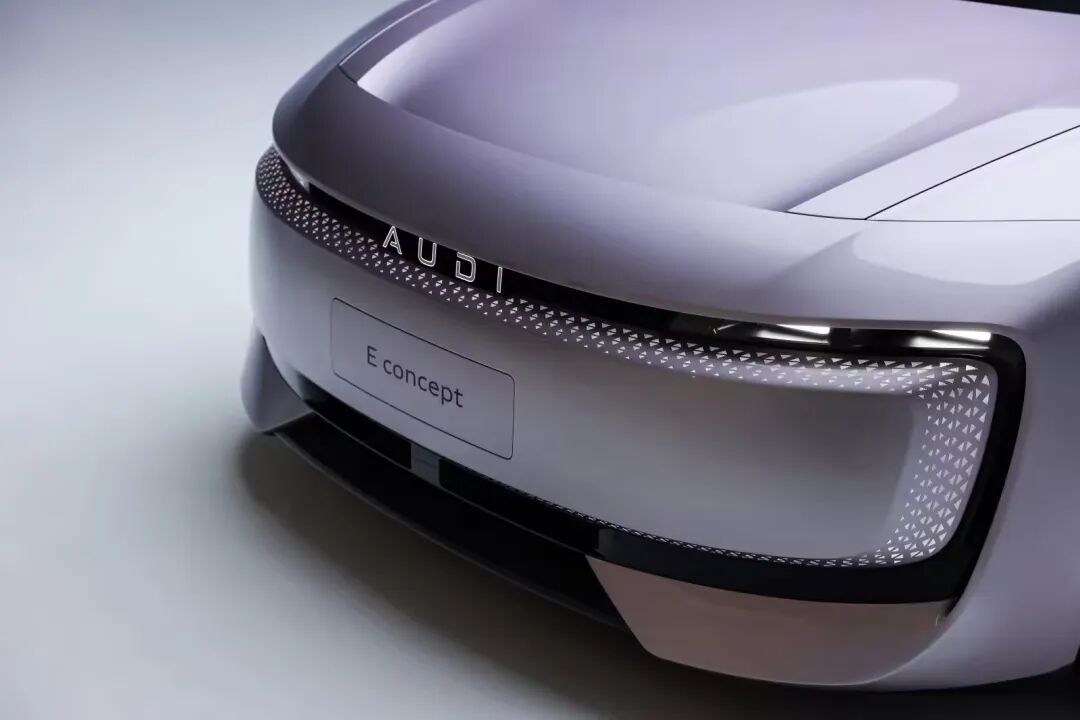
However, in recent years, with the meteoric rise of NEV manufacturers like Seres, Li Auto, NIO, and Zeekr, these companies have captured a substantial portion of the domestic premium vehicle market from BBA (BMW, Mercedes-Benz, Audi). Consequently, SAIC Audi, established in 2021, has consistently underperformed in sales since its inception.
A cursory glance at the data reveals that SAIC Audi's cumulative annual sales were 25,400 units in 2022, slightly increasing to 25,500 units in 2023. Sales growth became more pronounced in 2024 and 2025, with 43,200 and 47,300 units sold, respectively. Although the growth is significant, it's clear that there's a vast chasm compared to FAW-Audi. Taking 2025 as an example, FAW-Audi's cumulative annual sales reached 567,000 units, with SAIC Audi's sales constituting less than one-tenth of FAW-Audi's.
As a result, SAIC Audi has abandoned the four-ring logo and the fuel-powered vehicle market, establishing a brand-new brand, AUDI, with a new logo, and embarking on a comprehensive transition to the NEV sector leveraging Chinese technology.
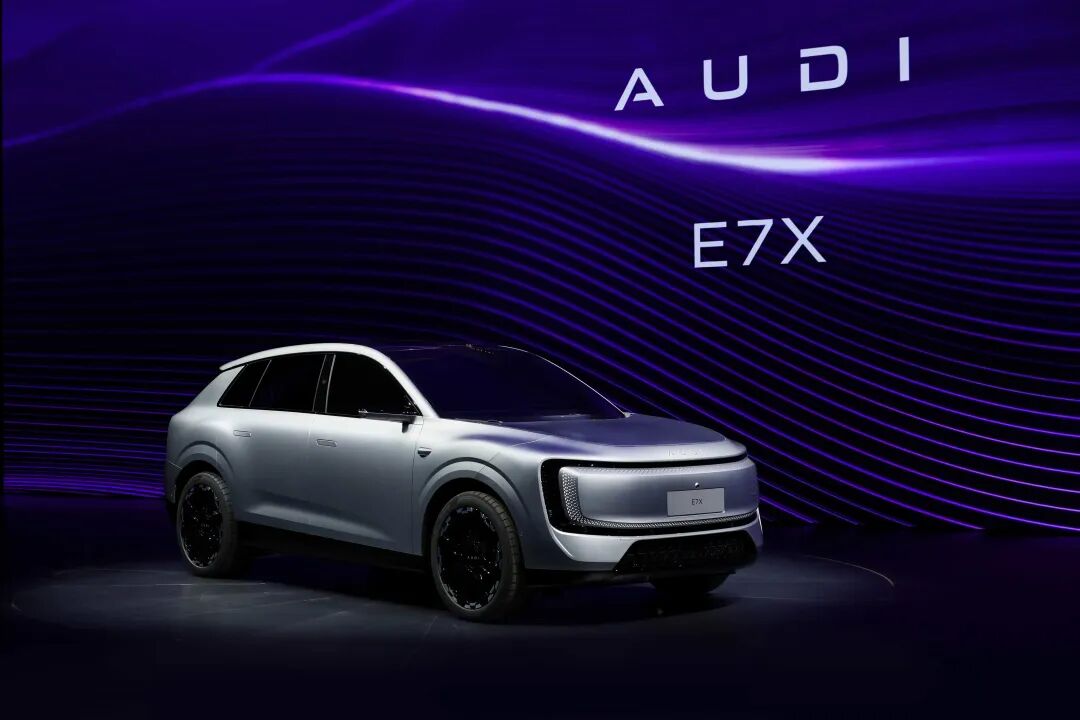
Currently, SAIC Audi's NEV model, the Audi E7X, is performing admirably in terms of sales. Although it can't match the sales figures of NEV models from the same segment produced by new energy manufacturers, it has consistently ranked among the top four in sales among joint-venture NEVs for two consecutive months. Relatively speaking, the sales performance of the E5 Sportback is slightly less impressive.
But that's inconsequential. Soon, these two models produced by SAIC Audi in China will be exported to Germany for sale. In terms of product strength, they represent a significant competitive edge in the German market.
So, finally, do you think consumers who buy Audis nowadays still place much importance on the four-ring logo? Feel free to leave a comment in the comment section to engage in the discussion.
Copyright Notice: This article is original to Che Kuaiping. Reproduction requires authorization. Unauthorized reproduction is strictly prohibited, and any form of plagiarism or unauthorized use of images and text will result in legal action. Some images in the article are sourced from the internet, and the copyright belongs to the original authors. If your work is used, please contact us for royalties or deletion.
-
![]()
Can the Affordable IONIQ V Win Back Consumer Hearts?
-
![]()
【Xauto Intelligent Driving Rankings】Li Auto L9 Livis OTA9.1.0 Urban Evaluation Report
-
![]()
SAIC Audi Executives Claim Four-Ring Logo No Longer Holds Much Sway—Is That Accurate?
-
![]()
What Are the Odds of China's Battery-Swapping Heavy Trucks Making Inroads into Europe?
-
![]()
Vision: Has Li Auto's Extended-Range Ace 'Misfired,' Turning Guidance into a 'Pipe Dream?'
-
![]()
Too Pessimistic! MiniMax Isn't Doing That Badly
-
![]()
The 150,000-Yuan SUV Market: A Tempting yet Elusive Prize
-
![]()
The Endgame for New Car-Making Forces Is Set: Only a Three-Year Window Remains, Who Will Be Completely Eliminated?