BYD: The Giant That Rose Again
 08/28 2026
 392
392
Introduction: BYD is like a giant who once bent down but then stood up even more steadily. Its competitors should realize that the true fearfulness of this giant lies not in its never falling, but in its speed of getting back up after each fall.
Author: Chen Kai / Produced by: Lishang Business Review
In January 2026, BYD's domestic insurance registration volume plummeted by 62% year-on-year, dropping to fourth place in the market rankings. For the first time, the company, which had been the global best-seller in new energy vehicles for the past four years, was dethroned by its competitors.
At that time, it seemed almost a consensus to be bearish on BYD. The reasons were compelling: the price war had reduced profit per vehicle from 8,800 yuan to 6,600 yuan, the intelligent driving solution was mocked as a 'half-baked product,' the high-end brand Han Tang L failed to gain traction, competitors fought back fiercely, and product homogenization was severe. Some analysts argued that BYD was experiencing the 'success trap'—its scale remained, but its engine had lost power.
Six months later, the picture was completely different.
In July 2026, BYD sold 419,000 vehicles. Keep in mind that this was traditionally a slow season; nationwide passenger vehicle retail sales fell by nearly 17% in July, and the entire industry was contracting. Yet BYD achieved 20% growth. Its overseas sales reached 179,800 vehicles for the month, up 124.3% year-on-year, accounting for over 40% of total sales for the first time. High-end brands Fangchengbao, Denza, and Yangwang collectively sold over 60,000 vehicles per month, up about 135% year-on-year. Fangchengbao alone sold 41,213 vehicles in a single month, up 190.6%, with an average transaction price exceeding 223,000 yuan. Pre-sales orders for the Datang model surpassed 150,000, and the second-generation Blade Battery made it possible to charge for 5 minutes and drive 400 kilometers.
This momentum continued into August. On the opening day of the Chengdu Auto Show, BYD once again took over Hall 9, as it had for the third consecutive year. The Han EV was available for pre-sale, the third-generation Tang, Haishi 08, and Titan 9 made their global debuts, the Fangcheng S series opened for bookings, and the Denza Z made its domestic debut—four brands, Wangchao, Ocean, Denza, and Fangchengbao, all unveiled major new products on the same day, while Yangwang showcased a new high-end custom model. That same month, BYD celebrated the rollout of its 17 millionth new energy vehicle worldwide.
From rock bottom to rebound, BYD took just six months. But what truly deserves attention is not the rebound itself, but how a company selling 4.6 million vehicles annually could quickly correct its mistakes—not relying on a single technological breakthrough, but on a systemic capability spanning batteries to chips, R&D to manufacturing, and products to distribution channels.
1. What Does 'Charging as Fast as Refueling' Mean?
On March 5, 2026, Wang Chuanfu declared at the Shenzhen Universiade Center Gymnasium, 'Charging will be as fast as refueling.'
He announced the second-generation Blade Battery. Its data is as follows: at room temperature, it charges from 10% to 70% in just 5 minutes and up to 97% in 9 minutes. In extreme cold at minus 30 degrees Celsius, it charges from 20% to 97% in just 12 minutes—only 3 minutes longer than at room temperature.
Why are these numbers important?
After more than a decade of electrification, 'slow charging' and 'difficult charging in low temperatures' remain two of the most stubborn pain points. There is a consensus in the industry that flash charging and high energy density are contradictory—the faster the charging, the lower the energy density, the shorter the lifespan, and the worse the safety. BYD's breakthrough lies in achieving 5-minute flash charging while increasing energy density (over 5% higher than the first generation), with almost no impact on battery lifespan, and offering a lifetime warranty on cells.
On July 20, at a press conference held by the State Council Information Office, Wang Weiming, the chief engineer of the Ministry of Industry and Information Technology, specifically mentioned BYD's second-generation Blade Battery and megawatt flash charging system as global firsts, breaking the technical bottleneck where 'fast charging, long range, long lifespan, and low-temperature performance cannot coexist.' This endorsement at the national level confirmed the historical significance of this technology.
On August 3, another milestone was added. The Denza Z9S opened for pre-sale, boasting a CLTC pure electric range of up to 1,100 kilometers—the longest among globally mass-produced models—while supporting 9-minute flash charging. People once assumed that 'long range' and 'fast charging' were two different paths, but now BYD has written both answers on the same exam paper.
But BYD did more than just build a battery. Around it, BYD constructed an entire charging ecosystem. The flash charging pile delivers 1,500 kW per gun, the highest power among globally mass-produced single-gun chargers. Paired with an energy storage system, it overcomes grid capacity limitations without harming the grid. BYD also launched the 'Flash Charge China' strategy: building 20,000 flash charging stations nationwide by the end of 2026, ensuring one within 3 kilometers in first- and second-tier cities and 5 kilometers in third- and fourth-tier cities. All owners of vehicles equipped with the second-generation Blade Battery enjoy one year of free flash charging at nationwide stations from the day of delivery.
More critically, this technology is being democratized. The second-generation Blade Battery is not reserved for high-end models only. The Haishi 05 EV starts at 119,900 yuan, making it the most affordable flash-charging model. The Song Ultra EV starts at 155,000 yuan, the Datang EV is priced between 239,900 and 309,900 yuan, and the Yangwang U8L is in the million-yuan range—the same flash charging technology covers models from the 100,000-yuan level to the million-yuan level.
This is not generosity but the realization of scale advantages. BYD sold 4.6 million vehicles in 2025. When a technology can cover such a massive scale, marginal costs are driven to extremely low levels. For competitors to achieve the same flash charging speed, they would first need a battery of equal capability, then matching charging infrastructure, and finally sufficient scale to bring costs down. Each of these steps takes at least several years.
2. Intelligent Driving: From Mockery to 'Guaranteed Safety'
If batteries are BYD's traditional strength, intelligent driving was its biggest weakness in 2025.
In February 2025, BYD launched the 'Divine Eye' high-level intelligent driving system and the 'Intelligent Driving for All' strategy, attempting to bring high-level intelligent driving to models priced as low as 69,800 yuan. The result was anticlimactic. The consumer experience of the 'Divine Eye C' fell short of expectations, the 'Divine Eye B' was delayed, and by the end of the year, a 'no-intelligent-driving' variant had to be released to wrap things up. The market's verdict was two words: 'vaporware.'
This was perhaps BYD's most profound lesson in 2025. It mistook corporate technological ambition for immediate, rigid demand in the mass mainstream market. When resources were overly allocated to stacking intelligent driving hardware, basic user experience was compromised, giving competitors an opening.
But BYD's speed of response surprised many.
On May 28, 2026, Wang Chuanfu announced the 'Dare to Act' intelligent strategy at BYD's Shenzhen headquarters and unveiled China's first 4nm automotive-grade intelligent driving chip, the 'Xuanji A3.' Developed by BYD Semiconductor, this chip has entered mass production. Three chips working in tandem deliver over 2,100 TOPS of computing power, supporting L3/L4 autonomous driving.
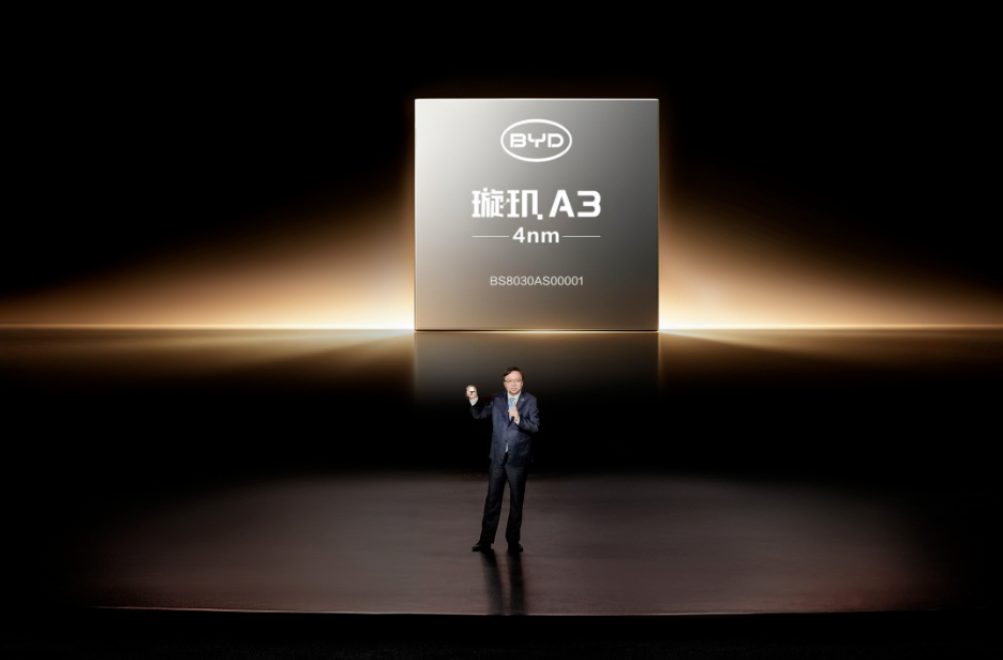
BYD established its chip R&D team in 2002 and has self-developed over 2,000 chip products, including 567 automotive-grade chips. This accumulation cannot be replicated overnight, but until then, few realized how long BYD had been investing in chips.
Even more notable was the 'safety guarantee' policy. BYD announced that if an accident occurs while the user is properly using the urban navigation-assisted driving function and the vehicle is found responsible, BYD would cover the direct financial losses. This, combined with the previously implemented intelligent parking guarantee, formed a 'dual-guarantee' system.
The effect was immediate. Three days after the announcement, daily active users of the urban navigation feature increased by 50%. After the intelligent parking guarantee was introduced, usage of that feature soared from 21% to 93%, with accident rates approaching zero.
The safety guarantee essentially trades financial responsibility for user trust. This requires tremendous confidence. As of May 2026, BYD had over 3.15 million vehicles equipped with assisted driving, with the Divine Eye system generating over 200 million kilometers of data daily and an assisted driving R&D team of over 5,000 engineers—all top in China among automakers. BYD also announced it would continue to invest over 100 billion yuan in intelligent R&D.
The 'Intelligent Driving for All' initiative, which had been a fiasco in 2025, finally delivered on its promise in 2026. In mid-August, the Xuanji A3 chip and Divine Eye system were deployed in entry-level models like the Yuan UP. This time, it was not just a slogan at a press conference but a fully stack-developed intelligent driving system in models under 100,000 yuan. From broken promises to fulfillment, a complete closed loop (closed loop).
From the 'Divine Eye' being mocked as a 'half-baked product' to the 'Dare to Act' strategy unveiling self-developed chips and safety guarantees, then to deploying chips in entry-level models, BYD took a year and a half. For a company of 4.6 million vehicles, this correction speed is exceptionally rare.
3. From 'Good Enough' to 'Stunning'
The most common critique of BYD in the past was, 'They have many models, but the paint is dull, the styling is outdated, and the design lacks avant-garde flair.'
At the 2026 Beijing Auto Show, this impression was completely overturned. BYD took over the entire E3 pavilion, showcasing all five brands. One media outlet wrote on-site, 'We used to say BYD's design lacked avant-garde flair, but this year, there's a clear improvement both inside and out.' The most immediate impression was that the paint was brighter, the styling more avant-garde, and the presence more commanding.
This change was not due to a single standout model but a systemic upgrade in design language. The Datang series adopted an evolved Dragon Face design, with a 5,263mm length and 3,130mm wheelbase, exuding the luxury expected of a flagship SUV. The Haibao 08, built on the 'Ocean Aesthetics 2.0' design language, features a 5,150mm length and sleek coupe lines, described as 'set to reshape the 200,000-yuan market.' The Denza Z made its debut as China's first mass-produced convertible supercar—featuring the Yi Sanfang platform, triple-motor drive, over 1,000 horsepower, and Yunchan M suspension. The Fangcheng S series follows a 'golden proportion body, cheetah posture' sports route, covering coupe and hunting wagon segments.
The improvement in design capability essentially reflects a shift in product thinking. In the past, BYD prioritized engineering efficiency, technical parameters, cost control, and 'good enough' appearance. The 2026 product matrix shows that BYD now understands that when technical gaps narrow, design and aesthetics become hard power.
At the product level, BYD completed a systemic iteration from flagship to entry-level models. The Datang EV, priced between 239,900 and 309,900 yuan with a CLTC pure electric range of 950 kilometers, surpassed 150,000 pre-sales orders, allowing BYD's main brand to finally establish itself in the 250,000-yuan-plus segment. The Haibao 08 officially launched on July 2 with a maximum pure electric range of 1,008 kilometers, forming a dual-flagship lineup with the Wangchao network's Han L. The Song Ultra EV starts at 119,900 yuan, making 'megawatt flash charging' a standard feature rather than a high-end option.
The climax of this product cycle came at the Chengdu Auto Show, which opened on August 21.
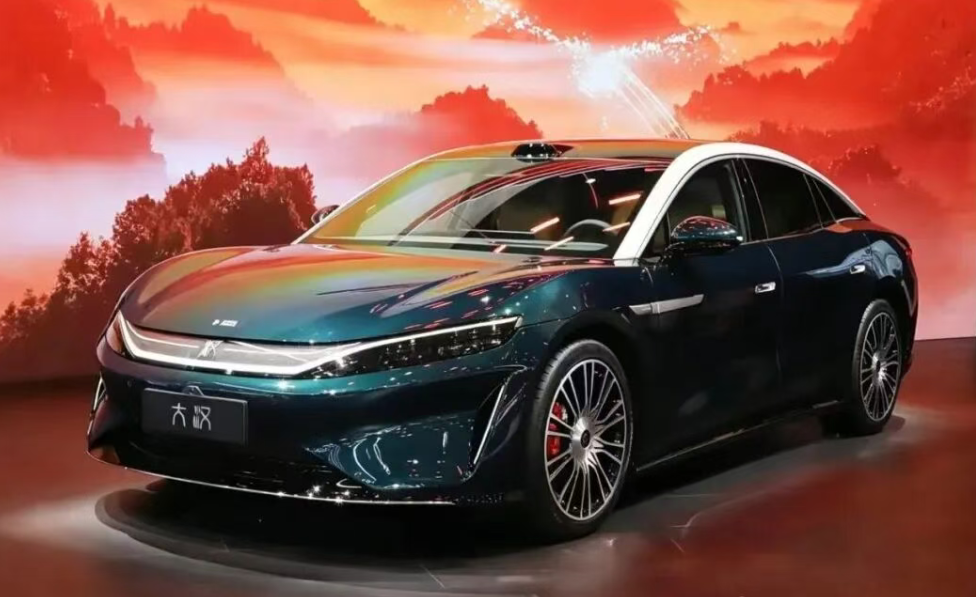
On the opening day, the Han EV announced pre-sale prices for three configurations: 249,900 to 299,900 yuan. With a length of 5,256mm and a wheelbase of 3,130mm, it surpasses traditional 56E administrative-class sedans in size, yet offers a CLTC pure electric range of 1,008 kilometers, dual-motor all-wheel drive with a 0-100km/h acceleration of 3.3 seconds, 9-minute charging from 10% to 97%, Yunchan-A dual-chamber air suspension, rear-wheel steering, and the Divine Eye B lidar solution as standard. Any luxury brand would price a similar size and feature set much higher. This is BYD's main brand's most direct assault on the administrative sedan market.
The third-generation Tang made its global debut the same day. This large five-seat flagship SUV offers over 1,000mm of rear legroom, a maximum seat back recline of 130 degrees, and a 'stellar dual-screen' cockpit featuring a 35.4-inch far-end star ring screen and a 30-inch panoramic giant screen. With a CLTC range of up to 850 kilometers, it will launch in the fourth quarter—forming a dual-flagship matrix with the seven-seat full-size Datang, covering two user needs under the 'Tang' name.
The Haishi 08 fills the flagship gap in the Ocean network: priced between 230,000 and 280,000 yuan, this mid-to-large SUV measures 5,115mm in length with a 3,030mm wheelbase, available in plug-in hybrid and pure electric versions. The pure electric version offers a CLTC range of up to 900 kilometers, six-seat layout, horizontally movable zero-gravity seats in the second row, a 21.4-inch roof-mounted screen, 25-speaker Devialet audio, and Yunchan-A dual-chamber air suspension with rear-wheel steering.
Six months ago, BYD was still questioned for 'only building homogeneous models.' At this auto show, it simultaneously launched a structured product lineup covering administrative sedans, family SUVs, flagship SUVs, and niche coupes. The issue now is not orders but whether production can keep up.
Even more noteworthy is the differentiation and explosion of high-end brands.",
Of course, not all brands are celebrating this good news. Yangwang sold only 485 units in July, and its ultra-luxury models, the U8 and U7, have remained confined to the niche market. At the Chengdu Auto Show, Yangwang chose to deepen customization, introducing the U9 "Lüeying" personalized customization package and the U8L Dingzang Edition "Muxue Qianshan" high-end customization theme, incorporating intangible cultural heritage crafts such as Su embroidery and marquetry into the luxury cabin. Whether this approach can break new ground remains to be seen over time, but at least it shows that BYD has not abandoned the pinnacle of the pyramid. The requirements for brand heritage in the million-yuan market are far more stringent than those for mid-to-low-end brands—a reminder that while BYD's transformation has been forceful, premiumization (high-endization) has never been a uniformly rising straight line.
An interesting phenomenon is that in the 2026 Chinese auto market, within the same segment, BYD's models are the hottest sellers, and the ones challenging BYD are often another sibling brand under its umbrella. The Tang Dynasty, Denza N9, and Titan 9 are facing off head-to-head in the large SUV market, while the Seal 08 and Fangcheng S compete fiercely in the coupe segment. Fangchengbao Baozhu 8, Denza N8, and others are locked in close combat in the 300,000-400,000 yuan price range.
This "internal competition" may appear to be self-cannibalization on the surface, but at its core, it reflects the market coverage enabled by the thickness of the product matrix. In each segment, BYD can deploy 2-3 products with different positioning, design languages, and technological focuses. Competitors are not facing a single model but an entire army. Internal competition also forces each brand to enhance its product competitiveness. If Denza N9 underperforms, consumers will simply switch to the Tang Dynasty or Titan 9 within the same group.
4. Wang Chuanfu 'Overhauls' the Engineering Academy
In June 2026, Wang Chuanfu made a decision that outsiders called a "high-stakes gamble."
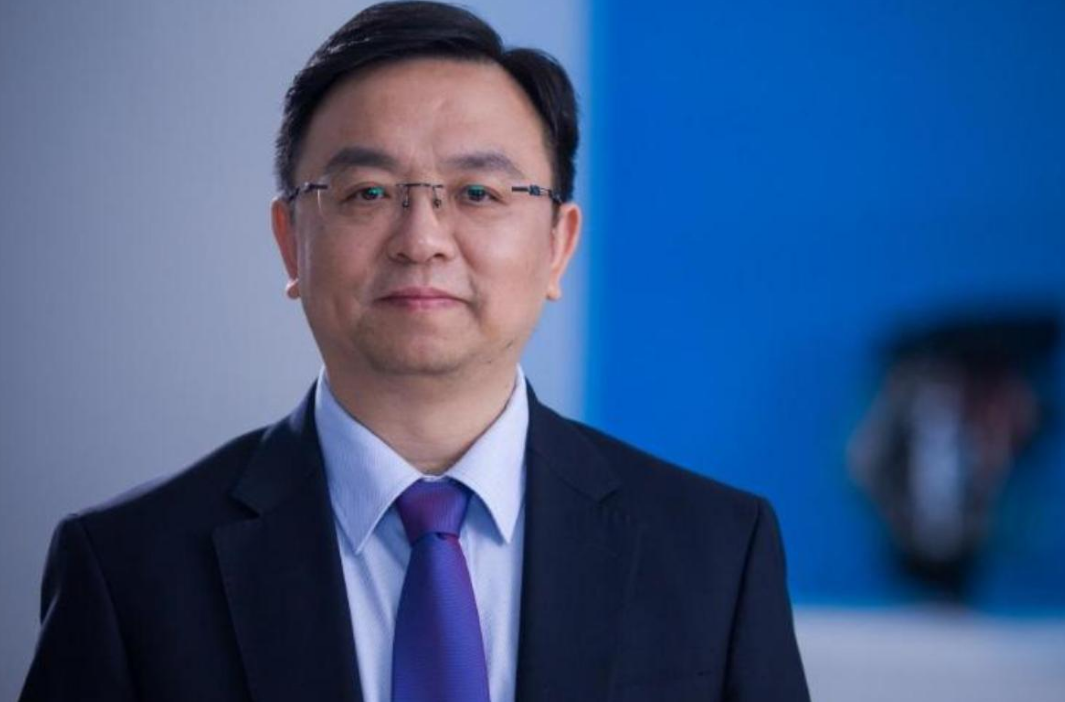
He split BYD's Engineering Academy into a "Technology Middle Platform + Five Brand Research Institutes." The Engineering Academy was transformed into a pure technological foundation, retaining only the development of core common technologies such as hybrid/electric platforms, chassis, and the three electric systems (battery, motor, electronics). Separate independent brand research institutes were established for the Wangchao, Ocean, Fangchengbao, Denza, and Yangwang brands, operating on par with the Engineering Academy and fully responsible for product definition and model planning, directly accountable for brand market performance.
More critically, the four major sub-brands (excluding Yangwang for now) will operate independently and be financially self-sufficient. Each brand can tap into the group's R&D, production, and procurement resources based on its needs and conduct independent cost settlements.
This is BYD's most thorough organizational reform in two decades, dubbed by outsiders as "Wang Chuanfu's internal revolution." To understand its necessity, one must revisit BYD's past R&D system.
BYD's past success largely stemmed from its centralized R&D model. The Engineering Academy handled R&D for the entire vehicle lineup, with costs for chassis, the three electric systems, and Vehicle research and development (complete vehicle R&D) uniformly shared internally. This model was highly efficient during the scale expansion phase—rapid technological accumulation, extreme cost control, and overwhelming scale advantages. However, once annual sales reached 4.6 million units, problems began to emerge across three dimensions.
First, product homogenization. Models in the Ocean and Wangchao networks at similar price points began cannibalizing each other's sales, with increasing user overlap between the Haishi 07 and Tang series. Internal friction was eroding scale efficiencies.
Second, misaligned rights and responsibilities. Brand sales leaders were only accountable for sales KPIs, lacking product definition authority or responsibility for profitability. R&D investments and production capacity allocations were uniformly shared by the group—sales volume and profitability were not directly tied to the brand teams' interests. When Fangchengbao initially targeted the hardcore off-road segment with a high-profile launch, the Baozhu 5's sales fell short of expectations, but the brand lacked the authority to quickly adjust the product. Only after passive price cuts did sales stabilize.
Third, excessively long decision-making chains. Brand research institutes were subordinate to the Engineering Academy, with true technological R&D initiative (dominance) residing in over a dozen technical centers under the Engineering Academy. Faced with rapid industry iteration and ever-changing consumer demands, this structure's decision-making efficiency could not keep pace.
The reform's logic is clear: transfer product definition authority from the Engineering Academy to the brands, letting those closest to users make decisions; simultaneously, use financial self-sufficiency to force brands to improve efficiency, breaking the "egalitarian" model to Inspire entrepreneurial spirit (stimulate entrepreneurial spirit).
At the 2025 Annual Shareholders' Meeting, Wang Chuanfu stated, "Once high-endization takes off, issues like gross margin and per-unit profit will naturally resolve themselves." Organizational reform is the institutional guarantee for making high-endization a reality.
However, this is not without risks. Internal friction may arise as brands compete for "Technology Middle Platform" resources. After the Engineering Academy's transformation, the model of driving technological breakthroughs through specific vehicle R&D will change, raising questions about how to ensure continued leadership in core technologies. Post-split, brands may intensify internal competition for survival and growth, leading to overlapping brand positioning. The answers to these questions will determine whether this reform "unleashes vitality" or "exacerbates internal friction."
Nevertheless, Wang Chuanfu's courage to break the existing successful model and reshape organizational DNA at the most challenging moment is, in itself, the rarest strategic capability a company can possess.
5. The Ability to Correct Errors Quickly
Looking back at 2025, BYD made three clear mistakes.
The Han Tang L's high-end push faltered. Against Huawei's technological halo and Xiaomi's ecological strategy successfully penetrating the high-end market, BYD attempted to replicate past Han Tang success through simple size and configuration stacking—a failure.
The intelligent driving strategy fizzled out. The "Divine Eye" was hyped as a groundbreaking solution, but the actual experience fell short of the Promotion (propaganda). Hardware pre-embedding for intelligent driving directly became a product liability when features failed to materialize. The year ended with the launch of a "no-intelligent-driving" add-on version, effectively admitting strategic setbacks.
Response to market demands was sluggish. As consumers shifted from "owning a new energy vehicle" to "owning a better new energy vehicle," demands for design aesthetics, intelligence, and driving texture (texture) all upgraded. However, BYD continued to prioritize engineering efficiency in product development, leading to systemic lags in design and user experience.
Any company selling 4.6 million units will make mistakes. What sets BYD apart is the speed and intensity of its corrections.
Intelligent driving evolved from being ridiculed for the "Divine Eye" to the release of the "Dare to Act" strategy with 4nm self-developed chips and safety fallbacks, then to chip deployment in 100,000-yuan models—all in about 18 months. Product design transformed from "outdated styling" to a full lineup refresh at the Beijing Auto Show in about 12 months. High-endization rebounded from the Han Tang L failure to 150,000 pre-orders for the Tang Dynasty and 41,000 monthly sales for Fangchengbao in about 6 months; then, within two months of the Chengdu Auto Show, four brands simultaneously launched flagship models. Charging solutions evolved from pain points to second-generation blade batteries + megawatt flash charging + 20,000 flash charging stations in about 6 months. Organizational rigidity gave way to the Engineering Academy's split and independent operation of five brands in about 3 months.
The foundation of this rapid correction ability lies in BYD's systemic strengths. Its vertically integrated supply chain allows quick product configuration adjustments. Its massive R&D team enables rapid technological iteration. Its scale advantages allow it to absorb short-term profit losses during corrections. Wang Chuanfu's personal strategic decisiveness ensures the entire organization can unify directions and concentrate resources in the shortest time.
At a 2025 internal communication, Wang Chuanfu admitted, "2025 was a wake-up call for us. If we can't fundamentally transform this industry, our existence holds little value." Such candor is rare among leaders of trillion-yuan companies. More critically, after admitting mistakes, he acted—resolutely overhauling the Engineering Academy, insisting on full-stack self-developed intelligent driving, and pushing for independent operation of the five brands.
6. Questions That Remain
BYD's rebound is real, but some structural issues have not disappeared.
Can organizational reform truly land? After the five brand research institutes operate independently, how can internal competition avoid becoming self-cannibalization? How can the Technology Middle Platform balance standardization and flexibility? These will take at least a year to verify.
Can intelligent driving evolve from "safety fallback" to "true leadership"? Safety fallbacks address user trust, but can the intelligent driving experience truly catch up to Huawei and XPeng? The 4nm chip is the hardware foundation, but algorithms and data loops are decisive. Chip deployment in 100,000-yuan models only proves cost control; leadership requires higher-order scenarios to demonstrate.
How sustainable is profit repair? Currently, the underlying logic of price wars in China's new energy vehicle industry has not disappeared. If high-end volume growth falls short of expectations, profit margin recovery may lag market expectations. Yangwang's continued slump also suggests the pinnacle of the high-end pyramid remains distant.
Can overseas markets sustain high growth? Global trade uncertainties—EU anti-subsidy tariffs, Brazil's localization production requirements, Southeast Asian policy changes—ensure overseas expansion will not be smooth sailing. The heavy-asset model of localized vehicle manufacturing tests long-term patience rather than short-term bursts.
These questions have no quick answers. But for BYD, the most critical task of 2026 has been accomplished: it has proven its ability to stand up quickly after stumbling. This relies not on a single technological breakthrough or a blockbuster model but on its full-chain integration capabilities—from batteries to chips, R&D to manufacturing, products to channels, domestic to overseas.
This systemic capability allows BYD to correct errors rapidly, reconstruct quickly after setbacks, and respond multi-dimensionally amid intensifying competition. It is not a single sword but a arsenal (arsenal)—capable of continuously, systematically, and organizationally producing competitiveness.
BYD is like a giant who bent once but then stood up more steadily. Its rivals should realize that this giant's Terrifying places (terror) lies not in never falling but in how quickly it rises after each fall.
-
![]()
Changzhou’s Wealthiest Woman Faces Unexpected Setback
-
![]()
FAW Seeks Efficiency Gains, Leapmotor Accelerates Expansion
-
![]()
Dual Leaders in Robot Vacuum Industry Look Overseas for Growth
-
![]()
BYD: The Giant That Rose Again
-
![]()
Claude Finally Integrates a Built-in Browser! Doubao Work Beat It to the Punch—Can Qianwen Catch Up?
-
![]()
Cars Are Expanding: Will Class A Vehicles Be Phased Out as Class B Models Approach the 100,000 Yuan Threshold?
-
![]()
Xiaopeng Faces Two 'Tough Battles'
-
![]()
NVIDIA: Projected to Surge by Another 70% Next Year, the Computing Power 'Central Bank' Ramps Up Production!