Has DJI, the Latecomer, Overtaken Insta360?
 06/18 2026
 416
416
'Everyone should focus on their own race and not trip others up. But if others come after us, we will fight back,' remarked DJI founder Frank Wang during an interview with LatePost when asked about his perspective on competition.
This time, he's not just running—he's also extending a foot to trip up the competition.
On June 10, Insta360 unveiled the Luna Ultra gimbal camera.
However, all eyes were on DJI: On the same day, DJI initiated a lawsuit against Insta360 in the United States, seeking a 'permanent injunction'.
Gimbal cameras were originally DJI's forte.
From introducing the Pocket series in 2018 to the market-dominating DJI Pocket 3 in 2023, cumulative sales of the series have now surpassed 11 million units.
On June 15, DJI released the Pocket 4P at a competitive price, further intensifying the rivalry.
The Insta360 Luna Ultra standard version is priced at 3,999 yuan, with the Creator Bundle at 4,849 yuan.
The DJI Pocket 4P standard version is priced at 3,799 yuan, with the Creator Bundle at 4,299 yuan.

Image Source: AI
The strikingly similar yet strategically calculated pricing sets the stage for a head-to-head battle.
Who would willingly relinquish their share of the market?
01 DJI Fights Back as the Latecomer
The gimbal camera market has piqued the interest of various manufacturers.
Rumors suggest that Honor, OPPO, and vivo are preparing related products, with Insta360 being the first to market.
On the morning of June 10, this author visited an offline store to pre-order the Insta360 Luna Ultra. The clerk mentioned that securing a first-batch unit was uncertain but cryptically added, 'Maybe keep an eye on the news tonight.'
At 8 PM, the launch event commenced. By 9 PM, this author had secured the Insta360 Luna Ultra.
The catch? It was only the black standard version, and I was compelled to purchase a 300+ yuan one-year Care Carefree replacement service.
Following the release of the Insta360 Luna Ultra, major social platforms were inundated with information about the Pocket 4P: keywords like 3,799 yuan/4,299 yuan and a June 15 launch date were revealed.
The continuous flow of information led to hesitation among potential buyers. This marketing strategy somewhat resembles riding on the Luna Ultra's wave of excitement.
Just days earlier, the two companies had engaged in a legal skirmish across the ocean in the United States.
On June 10, DJI sued Insta360 in the U.S. for patent infringement and sought a 'permanent injunction' against Insta360's gimbal camera business in the country.
On June 12, Insta360 countersued DJI in the U.S. for patent infringement and filed related domestic patent invalidation requests.
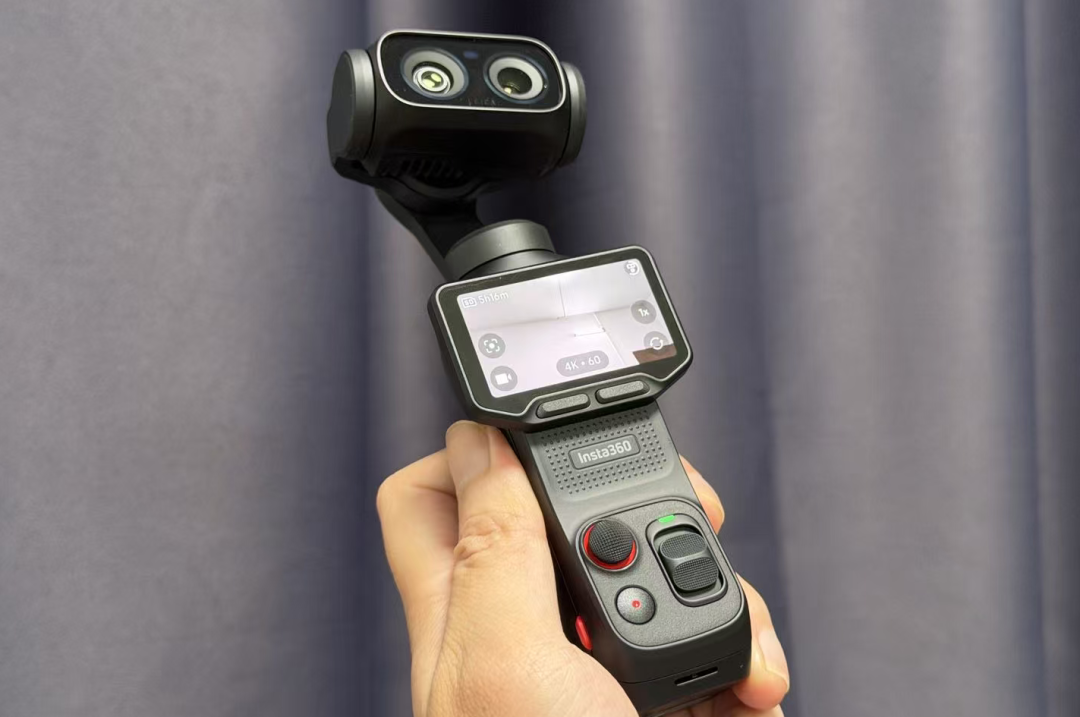
Image Source: Heiban Jun
DJI aims to hinder Luna Ultra's sales in the U.S. through this patent dispute, considering that nearly 70% of Insta360's revenue stems from overseas markets, with North America being its primary territory.
On June 15, DJI's announcement escalated the rivalry:
Enhanced video dynamic range, superior slow-motion capabilities, an independent monitoring screen, and meticulously calculated pricing.
Marketing battles and patent wars—in just a few days, both sides have exchanged numerous blows.
02 Both Sides Hesitate to Reveal Their Strategies
In reality, this head-to-head confrontation has been simmering for over half a year, with both sides cautiously concealing their strategies and avoiding revealing their bottom lines.
In October 2025, Insta360 founder Liu Jingkang was spotted with an unreleased gimbal camera.
At Insta360's internal annual meeting in February 2026, the Luna project was officially announced, with a clear H1 release timeline.
Subsequently, DJI Pocket 4 commenced its official preheat campaign, with content leaks from February to April.
On April 9, DJI officially teased the product, and on April 16, the Pocket 4 was officially launched, with the Pocket 4P teased simultaneously in a tightly scheduled rollout.
Then, at the U.S. NAB Show starting April 19, the actual Insta360 Luna made its debut, showcasing core selling points like Leica co-branding, 1-inch dual cameras, and a detachable screen. Many international influencers also had hands-on experience.
At the time, rumors suggested a mid-May launch for the Insta360 Luna.
However, Insta360 suddenly announced a delay, citing Liu Jingkang's 'eureka moment'—the need to incorporate a first-person head-tracking kit and further refine the product experience. Nevertheless, blind pre-orders were opened simultaneously.
At the Cannes Film Festival in May, the DJI Pocket 4P also made a low-key appearance as an official filming device.
Until June 10, Insta360 played its ace first.
Clearly, both sides prolonged their preheat periods. DJI initially tested the waters with the standard version before Insta360 officially entered the fray.
In June, Insta360 likely decided to launch and sell the product based on various considerations, particularly DJI Pocket 4's strong sales.
DJI Pocket 4P precisely targeted key specifications and pricing to counter.
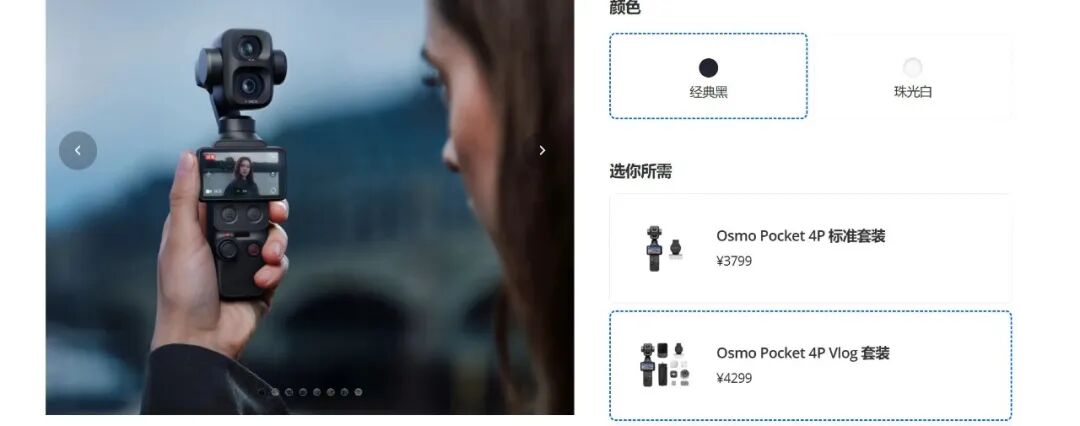
Image Source: DJI Official Website
Initially, DJI and Insta360 operated in largely distinct markets with minimal overlap.
DJI dominated the global drone market with its powerful products while extending its technological leadership into handheld gimbals and action cameras.
Meanwhile, Insta360 initially focused on the panoramic camera market, achieving an 80% global market share.
This equilibrium was disrupted at the end of 2023.
Insta360 took the offensive by launching the Ace series wide-angle action cameras, directly challenging DJI's Action series.
In July 2025, Insta360 released the world's first panoramic drone, the Yingling A1, encroaching on DJI's core territory.
DJI retaliated by launching its first panoramic camera, the Osmo 360, attacking Insta360's core market.
Priced at 2,999 yuan, the Osmo 360 undercut Insta360's flagship Insta360 X5 by nearly 800 yuan.
According to Jiuqian Consulting, within three months of its launch, DJI captured 43% of the global panoramic camera market.
However, IDC data shows that Insta360 still held 66% of the global panoramic camera market share in 2025.
Talent acquisition also became part of the battlefield.
Regarding DJI engineers being hired by Insta360, Wang Tao calmly remarked, 'I recall Insta360 thanking DJI at their annual meeting two years ago for training their talent.'
However, DJI also sued Insta360 in March 2026, alleging that former DJI employees had taken proprietary invention technologies with them.
During this period, Insta360 claimed that while developing its panoramic drone, suppliers faced pressure from DJI to choose sides, and even offline channels were suspected of being suppressed.
This time, the two companies are clashing over products once again.
03 Why DJI Is Fixated on Imaging
To understand why DJI takes Insta360's challenge so seriously, we must first clarify: What does DJI truly possess?
Not drone shipment volumes or new product category development, but something more fundamental: the role of rule-maker in mobile imaging.
The reins of imaging technology were once held by traditional manufacturers during the film and DSLR eras. However, with the proliferation of smartphones and handheld devices, along with the popularity of short videos and vlogs, the iPhone and telephoto smartphones ushered in the mobile imaging era. Yet, the most advanced and hidden leader is actually DJI.
Over the past decade, DJI has defined what constitutes good stabilization, what makes a great gimbal, and what delivers an exceptional aerial photography experience.
From sky to sea, ground stabilization shooting—the DJI Pocket 3 once epitomized its imaging prowess.
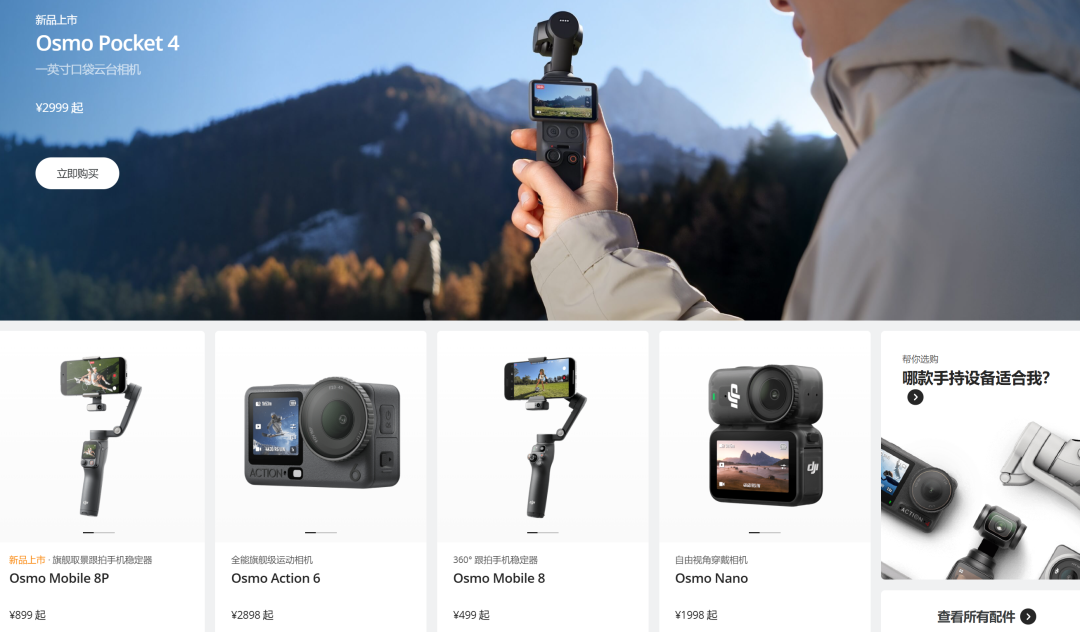
Image Source: DJI Official Website
A compact gimbal camera that met young consumers' demands for video stabilization and casual shooting in daily life—that's why it went viral.
Within the 100+ gram DJI Pocket 3 lies over a decade of DJI's refined technology. The tiny micro-gimbal houses a three-axis stabilization motor, with control algorithms predicting user movement for stabilization and an ISP chip delivering superb imaging quality.
DJI's cultivated supply chain also provides cost advantages, creating a new barrier.
During the 2025 Double 11 shopping festival, as rumors swirled about gimbal camera products from Insta360, Honor, OPPO, and vivo, the DJI Pocket 3's price dropped by 700 yuan to 2,799 yuan.
According to media reports, some manufacturers discovered after cost calculations that they would have virtually no profit margin at the same price, while DJI still enjoyed healthy gross margins.
This gave many smartphone manufacturers pause.
However, DJI's core drone business is contracting.
According to Statista, the global consumer drone market reached approximately $4.27 billion in 2025, growing only 7% year-over-year, with a projected compound annual growth rate of just 3.4% over the next five years—indicating a mature market.
Moreover, DJI drones face U.S. sanctions and stricter domestic regulations.
With its former cash cow slowing down, the imaging line has become a critical second growth engine that must be defended.
Wang Tao emphasized in media interviews that the imaging line would become the 'top priority aside from aircraft,' even predicting that DJI would surpass Sony as a comprehensive imaging company within a decade.
And into this grand plan suddenly barges in Insta360.
04 Insta360 Is No Imitator
Insta360 dares to act this way because it is also a technology-driven hard tech company.
Starting with panoramic cameras, Insta360 dominated the global panoramic camera market with an 80%+ share, extending into all-scenario imaging.
Through the reuse of stabilization and imaging algorithms, along with Liu Jingkang's preference for modular design, Insta360 has launched unique products like the GO series thumb-worn cameras, ONE R modular action cameras, and Ace series standard action cameras.
Subsequently, Insta360 overcame technical hurdles like micro-gimbal stabilization and released the Yingling Antigravity panoramic drone in 2025.
Through these diverse technological breakthroughs, Insta360 has also mastered the core technologies for manufacturing gimbal cameras.
According to National Business Daily, the Insta360 Luna project was initiated in 2020, with its first Demo inspired by the company's own ONE R panoramic action camera.
Luna underwent six years of development before finally reaching mass production.
Insta360's confidence also stems from its cash reserves.
As of Q1 2025, the company had nearly 4 billion yuan in current assets, with a compound annual revenue growth rate exceeding 65% over the past three years.
Why is Insta360 entering drone, action camera, and gimbal camera markets dominated by DJI?
Essentially, it has no choice.
Panoramic cameras are a niche category. Even as the global market leader, the ceiling is visible, necessitating category expansion.
According to Insta360's 2025 annual report, annual revenue reached 9.741 billion yuan, up 74.76% year-over-year, but net profit attributable to shareholders declined by 6.62%.
In Q1 2026, revenue was 2.481 billion yuan, up 83.11% year-over-year, but net profit attributable to shareholders halved (down 52% YoY), with the net profit margin falling to just 1.31%.
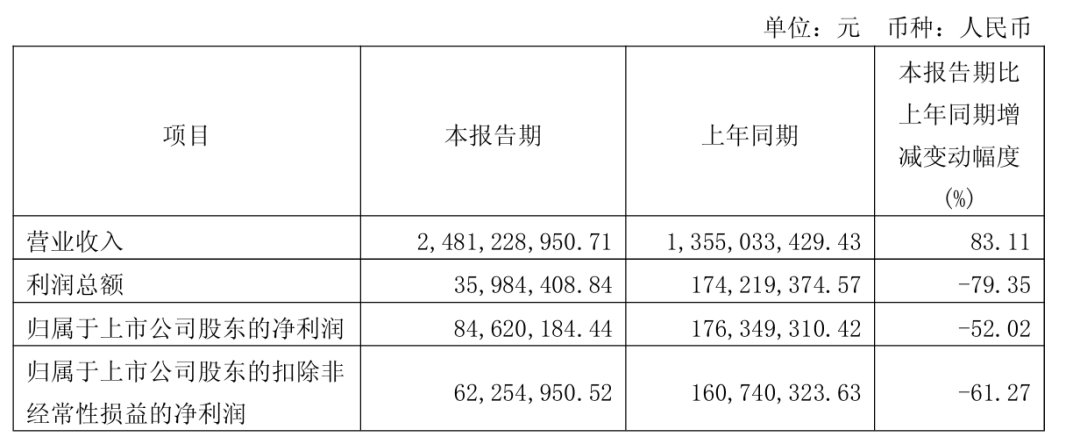
Image Source: Insta360 Financial Report
Insta360 attributed this to increased R&D investment. In 2025, R&D spending reached 1.53 billion yuan, nearly doubling; in Q1 2026, R&D spending had already doubled year-over-year.
Yet, Insta360's stock price has now fallen over 50% from its historic high, and the capital markets desperately need a new narrative.
It must be noted:
What makes Insta360 unique—and what DJI fears about Insta360—is that Insta360 won't simply follow with a me-too product.
After using the Insta360 Luna Ultra for a few days, this author found its strengths and weaknesses equally apparent.
The Insta360 Luna Ultra excels with Leica support, delivering more beautiful skin tones in portraits, brighter and more vibrant images. Its detachable screen can be easily separated and reattached, even featuring a built-in microphone—highly practical for selfies and emergencies—along with a conveniently placed independent zoom rocker.
For ordinary people who enjoy documenting daily life, traveling, and are not skilled at post-production, the Insta360 Luna Ultra may be easier to use than the DJI Pocket 4P.
Of course, this author has also pre-ordered the DJI Pocket
-
![]()
Two Key Moves in a Month! This Optical Giant is Quietly Shifting Tracks
-
![]()
Strong Alliance Unveiled! CooperVision and Eb Medical Forge Strategic Partnership
-
![]()
Is AI-Powered Shopping Really Worth It or Not Necessary At All?
-
![]()
Doushengsheng: Is It Really 'Stealing the Base'?
-
![]()
Dealer Service Operation Capability | After-sales Customer Retention: Three Key Strategies for Attracting Customers with Competitive Pricing
-
![]()
Revealed: CXMT’s New Wafer Fab Set to Establish Presence Here
-
![]()
Is Ant Afu Facing Its First Leadership Shuffle? Official Statement Dismisses Claims as Baseless
-
![]()
Pixel 11 Specs and Price Leaked Early: Price Hike of $100, Yet Memory Trimmed to 12GB