Qingdao's first batch of Baidu self-driving cars officially hit the road for testing
 01/04 2026
 873
873
Qingdao sees another round of self-driving car road tests.
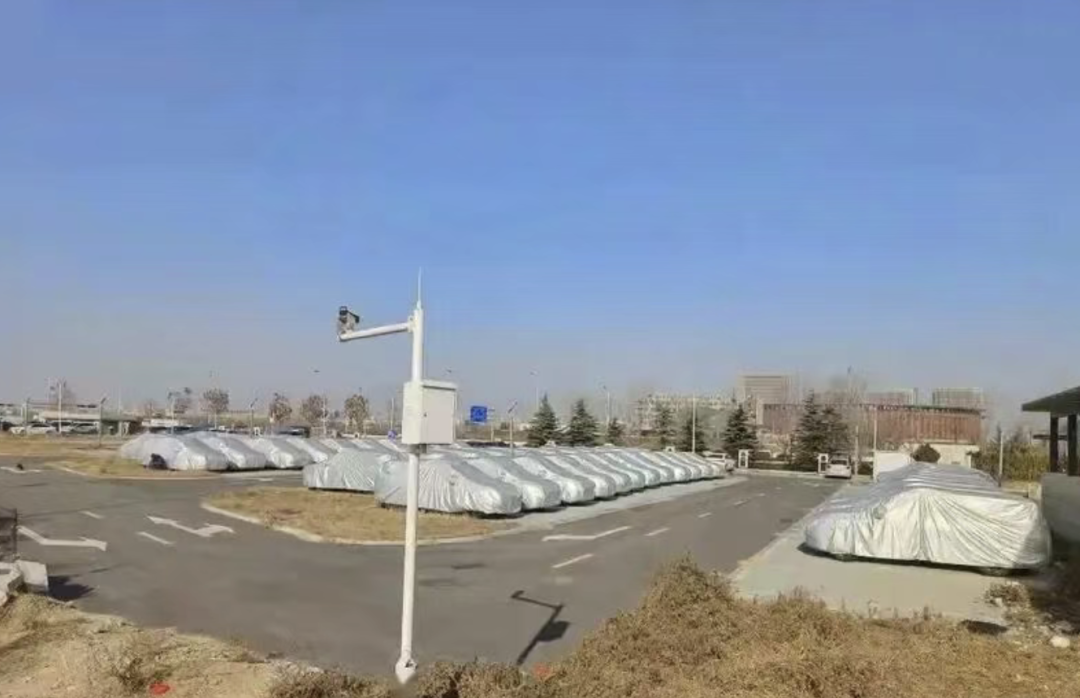
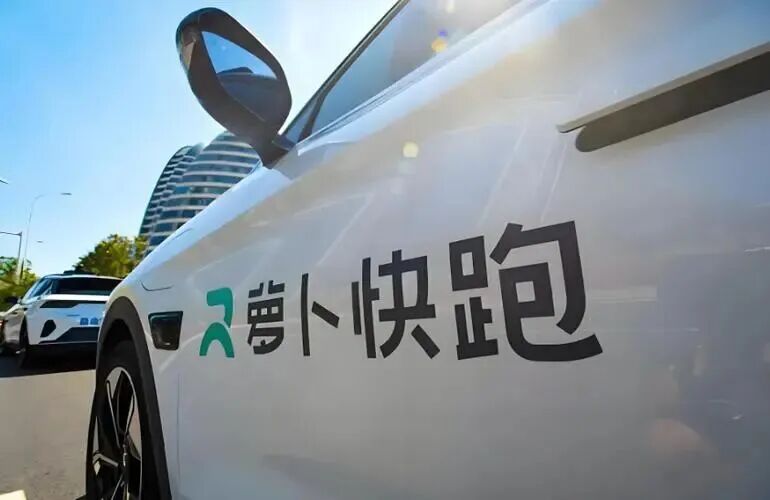
On December 31, 2025, the first batch of 50 self-driving cars from Baidu's self-driving brand, Luobo Kuaipao, officially hit the road for testing in Chengyang District, Qingdao, after obtaining test licenses.
This is Qingdao's first-ever road test for unmanned passenger vehicles, following the deployment of 1,200 unmanned delivery vehicles.
Earlier, on December 22, Luobo Yunli (Qingdao) Technology Co., Ltd. was officially registered. It is wholly owned by Luobo Yunli (Beijing) Technology Co., Ltd., an affiliate of Luobo Kuaipao. Its business scope includes the development of basic and applied software for artificial intelligence, computer system services, internet data services, data processing and storage support services, information system integration services, and information system operation and maintenance services.
This marks the first deployment of Baidu's self-driving brand, Luobo Kuaipao, in Shandong.
According to previous media reports, the 50 new vehicles deployed by Luobo Kuaipao in Qingdao feature the Jiangling Group logo and exclusive blue stripes. They are equipped with Baidu's sixth-generation APOLLO intelligent system, consistent with models operating nationwide.
According to data revealed at the 2025 Baidu World Conference, Luobo Kuaipao has been deployed in 22 cities, including Beijing, Shanghai, Wuhan, Shenzhen, Hong Kong, Dubai, and Abu Dhabi, since the beginning of the year. It has accumulated 140 million kilometers of fully autonomous driving mileage, provided over 17 million trips, and received over 250,000 fully autonomous orders per week. This means Luobo Kuaipao averages about 36,000 orders per day, with one order received every two seconds.
Additionally, Luobo Kuaipao is accelerating its global expansion, having recently obtained testing approval in cities like Dubai and London this year.
There is an important backdrop to Luobo Kuaipao's deployment in Qingdao.
On December 15, 2025, the Ministry of Industry and Information Technology officially announced China's first batch of L3-level autonomous driving vehicle access permits. Two models, the Changan Deepal SL03 and the Arcfox Alpha S6, were approved for road trials. On December 20, China's first dedicated L3-level autonomous driving license plate, "Yu AD0001Z," was issued in Chongqing.
This signifies a significant acceleration in the future adoption of autonomous driving.
Luobo Kuaipao's deployment in Qingdao also signals Baidu's self-driving division's move to capitalize on favorable policies and accelerate its layout (layout). There are hopes for establishing a regional headquarters in Qingdao and intensifying its presence across Shandong.
Any new innovation requires pioneers to forge a replicable path in terms of regulations and implementation.
As a key hub for intelligent connected vehicles, Qingdao boasts over 200 test roads. Previously, the large-scale adoption of unmanned delivery vehicles in Qingdao set a national benchmark, becoming a key focus for promotion at the provincial level. (Related reading: Why is Qingdao the global leader in autonomous vehicles?)
Amid intense competition in the new energy vehicle industry, existing vehicle brands and production bases across regions are poised for a significant reshuffle. With the maturation of technologies like artificial intelligence large models, future competition in the new energy vehicle industry will truly enter an era defined by software and widespread adoption of autonomous driving. At this juncture, open testing and data accumulation around application scenarios are crucial.
For Qingdao, which missed opportunities in new energy vehicle manufacturing, landing regional headquarters related to the future application and operation of self-driving technology and introducing key technologies like LiDAR, in-vehicle chips, and cameras in the industrial sector could still turn the tide. At the very least, it would ensure Qingdao's presence in the national wave of intelligent connected vehicles.
Nationwide, the openness of application scenarios and operation of autonomous vehicles will be a focal point of competition among cities in the future. Wuhan has achieved multiple "national firsts" in the field of unmanned passenger vehicles. Shunde District in Foshan saw the launch of several autonomous vehicle projects in the fourth quarter of this year, including the Jiushi Intelligent Unmanned Vehicle Logistics Operation Center and the Luobo Kuaipao South China Operation Headquarters.
Qingdao's early efforts in becoming the "global leader in autonomous vehicles" have already established a distinct brand. This model also provides a valuable reference for the city's layout (layout) of emerging industries such as low-altitude economies and embodied intelligence.
Whether for self-driving vehicles, low-altitude economies, or embodied intelligence, the core sources of innovation and foundational advancements will always be in first-tier cities like Beijing, Shanghai, Guangzhou, and Shenzhen.
However, testing, feedback, and refinement are essential steps in the deployment of emerging industries, presenting abundant business opportunities.
Moreover, while opening up application scenarios may seem straightforward, it is far more challenging in practice. For cutting-edge industries, scenario openness is actually a process of testing, feedback, refinement, and improvement, requiring close collaboration between R&D innovation and key industrial chains.
In summary, the question is whether Qingdao can provide comprehensive application testing scenarios for industries like electric vertical takeoff and landing aircraft (eVTOLs) and humanoid robots, offering them an opportunity for pilot testing prior to large-scale industrialization and commercialization. By doing so, Qingdao could attract related regional operation headquarters and even entire vehicle and key industrial chain setups.
We have summarized three key points:
1
First, new innovations should be piloted before widespread promotion, adopting a step-by-step approach.
Self-driving vehicles have long been a controversial field. Concerns include job displacement and disruptions to normal road traffic.
This is true in Wuhan, and the same applies to Qingdao.
The issue of machines replacing human labor has existed since the Industrial Revolution. The current replacement by AI is essentially an extension of that trend. It does not mean complete replacement but rather serves as a tool for human use. Thus, those who first master and utilize AI often reap the benefits first.
Regarding traffic impact, Qingdao has taken a proactive approach by opening road access for autonomous vehicles and providing policy support for large-scale applications. Additionally, the choice of open areas is strategic.
Baidu's Luobo Kuaipao road tests in Qingdao are not conducted in the core urban area but start in Chengyang. Compared to the core urban area, Chengyang has a larger jurisdiction, better road conditions, and lower vehicle density, making the testing environment relatively controllable.
Of course, considering the public sentiment during the initial operation of Luobo Kuaipao in Wuhan and unmanned delivery vehicles in Qingdao, this places higher demands on opinion handling and public sentiment guidance in the respective districts. It also requires greater societal tolerance for innovations that enhance public service convenience.
Moreover, the widespread adoption of self-driving technology will not happen overnight but will be a gradual process. However, this trend is irreversible.
Just as 19th-century workers could not stop the advent of the steam engine, we cannot prevent the arrival of Robotaxi.
2
Second, focus on scenario-driven development to attract more leading companies to establish testing and training centers along with related R&D teams.
Taking autonomous vehicles as an example, while they are equipped with an "intelligent brain" and advanced perception and decision-making systems, comparable to experienced drivers, their deployment in Qingdao requires extensive testing, feedback, and refinement based on local maps.
For instance, considering Qingdao's hilly terrain, Neolix vehicles have optimized their skateboard chassis to ensure sufficient climbing power and safe deceleration on downhills. They also possess adaptability to complex environments such as nighttime, rainy days, foggy days, dirt roads, and narrow roads. Millisecond-level data return and remote safety systems are on standby to take over at any moment, comprehensively mitigating driving risks.
Taking embodied intelligence as another example, in March, Qingji stated in "Qingdao's Challenge in Pursuing the Trillion-Dollar Humanoid Robot Sector" that Qingdao should not simply become an application scenario or production base for humanoid robots. Instead, it should strive to introduce platforms related to R&D innovation and application testing (rather than foundational innovation) to Qingdao, which presents a greater challenge.
It is reported that the Qingdao Embodied Intelligence Robot Public Training Ground, jointly operated by the Qingdao Data Group and multiple parties, was officially unveiled. This is also China's first embodied intelligence training platform focused on manufacturing, home, healthcare, and marine-specific scenarios.
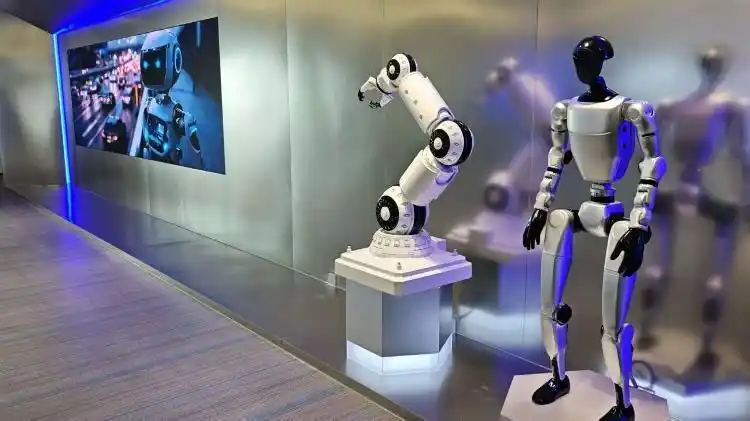
The training ground addresses issues faced by local enterprises and universities, such as a lack of robot skills, high training costs, and fragmented data. Its multimodal reasoning large model provides cost-effective and efficient training services, filling gaps in industrial infrastructure.
At the industrial chain level, it collaborates upwards with companies like Guohua Intelligence to promote the localization of core components and reduce foreign dependence. Downwards, it empowers Qingdao's advantageous sectors such as manufacturing, healthcare, and marine industries to accelerate the large-scale deployment of technologies. In the middle, it reduces innovation costs for AI enterprises through service platforms, aiding product iteration. Simultaneously, the training ground lowers the threshold for "smart transformation and digital transformation" among small and medium-sized enterprises, cultivates professional talent through industry-university-research collaboration, and promotes technological services in People's wellbeing (livelihood) areas such as elderly care and accessibility.
The same principle applies to the layout (layout) of the low-altitude economy industry.
Leveraging the existing runways, aprons, meteorological data, and other resources of Liuting Airport, the focus is on establishing an airspace management center and flight test center for the entire East China region, centered around electric vertical takeoff and landing aircraft (eVTOLs) and drones. Subsequently, key service sectors (such as maintenance and training) and manufacturing segments related to the low-altitude economy will be heavily layout (laid out) around these national-level platforms.
The 2025 government work report of Chengyang District further proposes deepening cooperation with the China Academy of Civil Aviation Science and Technology and China Electronics Technology Group Corporation to strive for demonstrations in four areas, including testing and verification and integrated flight. It also aims to build and strengthen chains through nine tasks, such as talent cultivation and industrial agglomeration, create a low-altitude flight test site, vie for national-level platform demonstrations, and establish a low-altitude equipment airworthiness testing base serving the northern regions of the Yangtze River.
3
Third, strive for opportunities to host potential data centers and regional operation headquarters of leading companies in the future.
In this regard, Shunde District in Foshan has taken the lead.
On October 28, Jiushi (Suzhou) Intelligent Technology Co., Ltd. officially signed an agreement with Guangdong Shunkong Science, Industry, and Trade Co., Ltd. to jointly establish the Jiushi Intelligent Unmanned Vehicle Logistics Operation Center project in Shunde District, Foshan. The project will focus on the operation and after-sales support of unmanned logistics equipment, creating a smart unmanned vehicle operation hub covering South China.
In early December, the Luobo Kuaipao South China Operation Headquarters officially settled in Shunde. According to Record Filing Information (filing information), the project has a total investment of approximately 18 million yuan and aims to build a headquarters for a demonstration project of unmanned ride-hailing services relying on intelligent algorithms and vehicle-road coordination technology. The project includes functional areas such as research and study, exhibition halls, 5G cloud warehouses, office areas, and operation and maintenance workshops. It will be managed by Luobo Kuaipao (Foshan) Technology Co., Ltd.
For Qingdao, it is equally important to actively attract regional headquarters of leading companies like Neolix and Luobo Kuaipao. These regional headquarters should not be simple marketing regional headquarters but should aim for regional headquarters with functions such as platform operation and data centers.
Simultaneously, leveraging the diverse data generated from unmanned passenger vehicle and delivery vehicle scenarios and delving into the value of this data to lay the foundation for the citywide construction and operation of an integrated vehicle-road-cloud system is also a viable direction.
Additionally, whether it is self-driving passenger vehicles like Luobo Kuaipao or unmanned delivery vehicle operators like Neolix and Jiushi Intelligent, all are actively expanding overseas.
Qingdao's port and openness advantages are precisely what many companies need for their overseas expansion, requiring citywide coordination.
-
![]()
Net Profit Surges 13.65% Year-on-Year! Yutong Optics Reports RMB 1.782 Billion in H1 Revenue
-
![]()
Q2 Net Profit Slashes Losses by 80%! Has Costar Emerged from Its Darkest Hour?
-
AI Agents: The Paradigm Shift from 'Conversation' to 'Execution'
-
NVIDIA Takes Bold Strides to Lead in Both Hardware and Software Realms
-
![]()
It's Hard to Build Cars, Even Harder to Build Humans, and XPENG is Doing Both
-
![]()
Valuation Soars by $57 Billion: Three Entrepreneurs Born in the 1980s Forge an AI Unicorn Now Suddenly on the Market
-
![]()
How Can We Achieve the Goal of 100,000 Hydrogen Vehicles by 2030?
-
![]()
July Online Market for Consumer-Grade Sports Cameras: Robust Double-Digit Growth in Sales Volume and Value, Mid-Range Products Fuel Market Expansion